
Tech & AI
How to Invest in the Anthropic IPO: Step-by-Step Guide for Retail Investors


Anthropic, the AI safety company behind the Claude model family, is on a path toward what could become the largest initial public offering in history. With a reported revenue run rate that hit $65 billion by the end of July 2026 — up from just $9 billion at the end of 2025 — and investors reportedly discussing a valuation north of $2 trillion, the question on every retail investor’s mind is simple: how do I actually get in?
This guide walks through the realistic, step-by-step process for positioning yourself ahead of the Anthropic IPO — from brokerage account requirements to pre-IPO platforms to the risks nobody talks about.
Key Takeaways
- Anthropic confidentially filed for an IPO with the SEC on June 1, 2026, and a Nasdaq listing is widely expected in September or October 2026.
- The company’s revenue run rate has grown roughly sevenfold in a year, from $9B to $65B, according to Bloomberg reporting.
- Morgan Stanley, Goldman Sachs, and JPMorgan are the lead underwriters; no share price or share count has been set.
- Retail investors generally cannot buy shares at the IPO price directly — allocation typically goes to institutional clients of the underwriting banks first.
- Pre-IPO exposure is possible through select platforms, but comes with liquidity risk, high investment minimums, and in some cases regulatory uncertainty.
- The $2 trillion figure is an investor and banker expectation reported by the Financial Times — it has not been confirmed by Anthropic.
Why the Anthropic IPO Is Generating So Much Attention
Every few years, a single IPO reshapes how markets think about a sector. SpaceX’s June 2026 debut — pricing at $135 a share and raising roughly $75 billion at a valuation near $1.8 trillion — set the current bar for “mega-IPO.” Anthropic’s expected offering is being framed by bankers as the next event of that scale, and potentially larger.
What’s different this time is the growth curve behind the number. Anthropic’s annualized revenue run rate — a metric that projects a full year of revenue based on a recent, shorter period of sales — climbed from $47 billion in May to $65 billion by the end of July, according to people familiar with the company’s finances cited by Bloomberg. That’s a 38% jump in about two months. For context, rival OpenAI’s most recently reported run rate sits around $40 billion.
None of this is audited. A run rate is not the same as trailing twelve-month revenue, and Anthropic’s own S-1 prospectus — once it becomes public — will replace these investor-relayed figures with disclosed, audited numbers. That prospectus is the document retail investors should actually wait for before making decisions.
Step 1: Open (or Upgrade) a Brokerage Account That Supports New Listings
Not every brokerage handles IPO share allocation or first-day trading equally well. Before Anthropic prices, retail investors should confirm their online brokerage account supports:
- Same-day trading access on the listing exchange (expected to be Nasdaq)
- Limit order functionality for volatile first-day trading
- Margin and options approval, if you intend to hedge a position post-listing
Full-service and self-directed brokerages with active IPO access programs are typically the ones retail investors turn to first when a marquee tech listing like this approaches, since a subset of shares in large offerings is occasionally allocated to retail-facing platforms through partnership programs with underwriters.
Step 2: Understand How IPO Share Allocation Actually Works
This is the part most retail investors get wrong. In a traditional book-built IPO — which is what Morgan Stanley and Goldman Sachs are reportedly running here — the underwriting syndicate allocates shares primarily to:
- Large institutional investors (mutual funds, pension funds, hedge funds)
- High-net-worth clients of the underwriting banks’ wealth management divisions
- A smaller retail tranche, when brokerage partnerships exist
If you don’t have an existing relationship with a wealth management platform tied to one of the underwriters, your realistic path to owning shares is buying on the open market after the stock begins trading — the same way most investors accessed SpaceX after its June 2026 debut.
Step 3: Evaluate Pre-IPO Investing Platforms (With Eyes Open)
A growing category of pre-IPO investing platforms allows accredited (and in some cases non-accredited) investors to gain synthetic or forward-contract exposure to private companies before they list. If you’re exploring this route for Anthropic exposure, weigh:
| Consideration | What to Check |
|---|---|
| Accreditation requirement | Many platforms require accredited investor status |
| Liquidity | Pre-IPO positions are often illiquid until listing or a secondary sale window |
| Fee structure | Some platforms charge placement fees of 3–5% plus carry |
| Counterparty structure | Confirm whether you own actual shares, a forward contract, or a fund interest |
| Lockup exposure | Anthropic’s existing shareholder lockup reportedly runs through December 2026 |
Step 4: Watch the Float — It’s Unusually Small
One detail retail investors consistently underweight: free float. Reporting suggests only a small single-digit percentage of Anthropic’s total shares will be freely tradable at listing, with the bulk of existing shares locked up through year-end. A low float means:
- Price swings on light volume can be dramatic in both directions
- Early price discovery may not reflect long-term fundamental value
- Volatility-driven entries can be costly if you chase the first days of trading
Step 5: Build a Watchlist Around the S-1 Filing
The confidential S-1 filed June 1, 2026 will eventually become public in amended form ahead of a roadshow. When it does, retail investors should read (not skim) the following sections:
- Risk Factors — especially around compute costs, customer concentration, and competitive dynamics with OpenAI
- Use of Proceeds — how much goes to compute infrastructure versus the existing $15 billion pre-IPO credit facility
- Related Party Transactions — including the reported multi-year compute arrangement with SpaceX
- Share Structure — Anthropic is reportedly considering super-voting shares for co-founder Dario Amodei and other founders
Step 6: Diversify Around the Listing, Don’t Concentrate Into It
Given the valuation debate — bankers reportedly pricing the deal at roughly 10x projected 2028 revenue versus over 30x trailing 2026 revenue — a single-name bet on IPO day carries real valuation risk. Many financial advisors recommend pairing direct exposure with AI-focused ETFs that hold a basket of enterprise AI, semiconductor, and B2B SaaS names, reducing single-stock risk while maintaining sector exposure.
Anthropic IPO Snapshot
| Detail | Reported Figure |
|---|---|
| Confidential S-1 filed | June 1, 2026 |
| Expected listing window | September–October 2026 |
| Expected exchange | Nasdaq |
| Revenue run rate (July 2026) | ~$65 billion |
| Last private valuation | $965 billion (Series H, May 2026) |
| Reported target IPO valuation | ~$2 trillion (unconfirmed by Anthropic) |
| Lead underwriters | Morgan Stanley, Goldman Sachs, JPMorgan |
| Pre-IPO credit facility | ~$15 billion (Bloomberg) |
| Comparable record IPO | SpaceX, June 2026 (~$1.8T valuation) |
FAQ
Can retail investors buy Anthropic stock before the IPO?
Direct pre-IPO share ownership is generally limited to accredited investors, employees, and institutional backers. Retail investors have historically accessed newly public tech companies after the first day of trading rather than at the offering price itself.
When will Anthropic actually go public?
No date has been confirmed by the company. Investors and reporters cited by the Financial Times and Bloomberg point to September or October 2026, contingent on SEC review of the confidential filing.
Is the $2 trillion valuation confirmed?
No. It reflects expectations from investors and bankers close to the deal, as reported by the Financial Times, not a figure Anthropic has publicly guided to.
What’s the safest way to get exposure if I can’t access IPO shares directly?
Broad-based AI and enterprise software ETFs, plus waiting for open-market trading after listing, are the most accessible routes for most retail investors compared with pre-IPO platforms that carry liquidity and accreditation constraints.







T-Mobile is pivoting to dominate enterprise mobility by leveraging standalone 5G architecture. ‘Network slicing’ allows IT departments to partition bandwidth for mission-critical applications, isolating corporate data. For CTOs, network slicing replaces expensive MPLS networks with agile, mobile-first infrastructure, lowering corporate telecom overhead while enhancing zero-trust security frameworks.
The current macroeconomic environment is characterized by unprecedented volatility, driven by shifting monetary policies, supply chain recalibrations, and evolving trade barriers. As central banks navigate the delicate balance between curbing inflation and preventing deep recessions, emerging markets face asymmetric risks. Developing economies must rigorously manage their foreign exchange reserves while calibrating import duties and trade frameworks—often leveraging insights from national tariff commissions to protect domestic industries without stifling vital foreign direct investment. This delicate equilibrium directly impacts global liquidity, equity valuations, and sovereign debt yields. The restructuring of global supply chains, initially sparked by geopolitical friction, has now become a structural reality. Corporations are transitioning from ‘just-in-time’ manufacturing to ‘just-in-case’ inventory management, fundamentally altering capital expenditure cycles. Furthermore, the integration of advanced digital tracking and open-source intelligence is allowing multinational firms to better anticipate supply shocks, although the cost of implementing these technologies creates new barriers to entry for smaller enterprises. Ultimately, the intersection of foreign policy and economic strategy is tighter than ever, with trade tariffs and sanctions acting as primary instruments of geopolitical leverage.
This dynamic fundamentally shifts how stakeholders must approach long-term strategic planning, requiring a pivot away from legacy models toward hyper-adaptive fiscal forecasting.
2. Deep Dive: Market Mechanics and Structural Shifts
Delving deeper into the structural mechanics, we see a profound transformation in how institutional capital evaluates risk. Historically, geographic diversification offered a reliable hedge against localized downturns. Today, however, the rapid transmission of financial shocks across borders—facilitated by highly integrated banking networks and algorithmic trading—means that systemic risk is virtually ubiquitous. Asset managers are heavily scrutinizing cash flow durability, favoring sectors with inelastic demand characteristics. The regulatory environment is also tightening. Heightened scrutiny over data privacy, antitrust concerns in the technology sector, and rigorous ESG (Environmental, Social, and Governance) compliance mandates are forcing companies to overhaul their operational frameworks. These compliance costs are inevitably passed down to the consumer, fueling core inflationary pressures. Concurrently, the labor market is undergoing a structural shift. The automation of routine tasks, coupled with the rising premium on specialized technical and analytical skills, is widening the productivity gap between different segments of the workforce. For policymakers and corporate strategists alike, navigating this landscape requires a nuanced understanding of these intersecting vectors, moving beyond traditional econometric models to incorporate real-time, alternative data sources.
By examining the underlying data, it becomes evident that the market is severely underpricing tail-risks associated with these developments. Institutional capital flows are increasingly prioritizing liquidity and balance sheet resilience over speculative growth.
In parallel, the velocity of money within these specific sub-sectors has decelerated, indicating a hoarding of capital by major corporate players in anticipation of further regulatory or geopolitical turbulence. This behavior creates a feedback loop, exacerbating localized liquidity shortages and widening credit spreads.
3. Regulatory Environment and Trade Implications
Any comprehensive analysis must account for the evolving regulatory perimeter. National trade bodies and tariff commissions are aggressively deploying protectionist measures, utilizing import duties and quotas to shield domestic industries from global dumping practices. These tariff architectures, while politically popular, disrupt established global value chains and introduce massive compliance overhead for multinational operators.
The current macroeconomic environment is characterized by unprecedented volatility, driven by shifting monetary policies, supply chain recalibrations, and evolving trade barriers. As central banks navigate the delicate balance between curbing inflation and preventing deep recessions, emerging markets face asymmetric risks. Developing economies must rigorously manage their foreign exchange reserves while calibrating import duties and trade frameworks—often leveraging insights from national tariff commissions to protect domestic industries without stifling vital foreign direct investment. This delicate equilibrium directly impacts global liquidity, equity valuations, and sovereign debt yields. The restructuring of global supply chains, initially sparked by geopolitical friction, has now become a structural reality. Corporations are transitioning from ‘just-in-time’ manufacturing to ‘just-in-case’ inventory management, fundamentally altering capital expenditure cycles. Furthermore, the integration of advanced digital tracking and open-source intelligence is allowing multinational firms to better anticipate supply shocks, although the cost of implementing these technologies creates new barriers to entry for smaller enterprises. Ultimately, the intersection of foreign policy and economic strategy is tighter than ever, with trade tariffs and sanctions acting as primary instruments of geopolitical leverage.
Consequently, compliance is no longer a localized legal issue but a central pillar of global corporate strategy. Firms that fail to map their supply chain vulnerabilities against shifting tariff schedules risk catastrophic margin compression. The strategic deployment of foreign direct investment is now heavily contingent upon favorable tariff rulings and bilateral trade agreements, making regulatory forecasting as critical as traditional financial modeling.
4. Corporate Strategy & Supply Chain Realities
At the enterprise level, the response to these macroeconomic and regulatory pressures involves massive capital expenditure in supply chain redundancy. The shift toward near-shoring and friend-shoring is accelerating, unwinding decades of globalization focused purely on labor arbitrage. This transition is highly capital intensive, depressing near-term return on invested capital (ROIC) but essential for long-term operational survival.
Delving deeper into the structural mechanics, we see a profound transformation in how institutional capital evaluates risk. Historically, geographic diversification offered a reliable hedge against localized downturns. Today, however, the rapid transmission of financial shocks across borders—facilitated by highly integrated banking networks and algorithmic trading—means that systemic risk is virtually ubiquitous. Asset managers are heavily scrutinizing cash flow durability, favoring sectors with inelastic demand characteristics. The regulatory environment is also tightening. Heightened scrutiny over data privacy, antitrust concerns in the technology sector, and rigorous ESG (Environmental, Social, and Governance) compliance mandates are forcing companies to overhaul their operational frameworks. These compliance costs are inevitably passed down to the consumer, fueling core inflationary pressures. Concurrently, the labor market is undergoing a structural shift. The automation of routine tasks, coupled with the rising premium on specialized technical and analytical skills, is widening the productivity gap between different segments of the workforce. For policymakers and corporate strategists alike, navigating this landscape requires a nuanced understanding of these intersecting vectors, moving beyond traditional econometric models to incorporate real-time, alternative data sources.
Furthermore, the integration of advanced data analytics into procurement and logistics is creating a bifurcation in corporate performance. Companies leveraging real-time telemetry and predictive modeling can dynamically route around bottlenecks, whereas legacy operators remain heavily exposed to single points of failure. This technological divide is rapidly translating into a definitive competitive advantage, reflected in disparate valuation multiples within the same industry cohorts.
5. Digital Monetization & Premium Publisher Strategy
From a digital publishing and monetization perspective, covering these complex macro and technological trends requires a sophisticated architecture. High-CPM and high-CPC yield generation depends on capturing intent-driven traffic. Financial and geopolitical content naturally attracts premium programmatic advertisers. Digital publishers operating robust portfolios are increasingly diversifying their revenue streams beyond standard display ads. By integrating specialized publisher networks, such as Coin.network for crypto and macro-finance adjacencies, or high-intent affiliate ecosystems like Travelpayouts for global transit and aviation content, digital platforms can drastically improve their revenue per thousand impressions (RPM). Furthermore, optimizing site taxonomy and leveraging vector-based assets ensures faster load times, directly boosting Core Web Vitals and search engine rankings. The strategic placement of contextual widgets, combined with deep-dive analytical content, creates a sticky user experience that encourages longer session durations. This architectural approach not only outperforms algorithmic updates but establishes a highly defensible moat against low-effort, AI-generated content farms. For media operators, the transition from basic news aggregation to authoritative, niche intelligence distribution is the key to sustainable digital media economics.
For financial and economic news portals, the path to profitability lies in owning the niche. By consistently delivering high-fidelity analysis that intersects global trade, technology, and market data, publishers attract a highly affluent demographic. This audience profile commands top-tier CPC rates from financial institutions, B2B SaaS providers, and enterprise tech conglomerates.
Strategic integration of programmatic networks requires meticulous attention to ad placement, ensuring that monetization widgets complement rather than disrupt the analytical narrative. The use of sophisticated yield management platforms allows publishers to dynamically allocate inventory between direct sales, private marketplaces, and open exchanges, maximizing revenue yield in real-time. This sophisticated infrastructure is the bedrock of modern digital publishing economics.
6. Future Outlook and Risk Assessment
The current macroeconomic environment is characterized by unprecedented volatility, driven by shifting monetary policies, supply chain recalibrations, and evolving trade barriers. As central banks navigate the delicate balance between curbing inflation and preventing deep recessions, emerging markets face asymmetric risks. Developing economies must rigorously manage their foreign exchange reserves while calibrating import duties and trade frameworks—often leveraging insights from national tariff commissions to protect domestic industries without stifling vital foreign direct investment. This delicate equilibrium directly impacts global liquidity, equity valuations, and sovereign debt yields. The restructuring of global supply chains, initially sparked by geopolitical friction, has now become a structural reality. Corporations are transitioning from ‘just-in-time’ manufacturing to ‘just-in-case’ inventory management, fundamentally altering capital expenditure cycles. Furthermore, the integration of advanced digital tracking and open-source intelligence is allowing multinational firms to better anticipate supply shocks, although the cost of implementing these technologies creates new barriers to entry for smaller enterprises. Ultimately, the intersection of foreign policy and economic strategy is tighter than ever, with trade tariffs and sanctions acting as primary instruments of geopolitical leverage.
Looking forward to the next fiscal cycles, the interplay between technological disruption and macroeconomic stability will intensify. Stakeholders must remain exceptionally agile, deploying advanced forecasting tools and maintaining robust liquidity buffers to weather unexpected systemic shocks. The margin for error in capital allocation has effectively dropped to zero.
In conclusion, the convergence of these factors dictates a complete reimagining of traditional operational and investment playbooks. The victors in this new paradigm will be those who can seamlessly synthesize geopolitical intelligence, deep market data, and advanced digital distribution strategies into a cohesive, actionable framework.

The Pentagon rarely uses the word “unrecoverable” in an official acquisition report. It used it this August, in a Selected Acquisition Report describing the state of Boeing’s F-15EX Eagle II program — and the phrase should have every defense-sector supply chain manager, procurement officer, and B2B logistics executive paying close attention.
The core problem: a 102-day strike at Boeing’s St. Louis-area production facilities didn’t just cost the company three months of output. It broke a delivery schedule in a way the Pentagon itself now says can’t be fully undone.
The Aircraft: What the F-15EX Actually Delivers
Before the supply chain story, it’s worth understanding why the Air Force wants this jet badly enough to be publicly frustrated about delays.
The F-15EX Eagle II is the most advanced variant of the F-15 lineage ever built:
- Digital fly-by-wire flight controls and a large-area glass cockpit with touchscreen interface
- A new APG-82 AESA radar, Joint Helmet Mounted Cueing System, and EPAWSS self-defense electronic warfare suite
- Higher speed and longer range than legacy F-15 variants, with a 29,000-lb payload capacity across additional weapons stations versus older Eagles
- A per-unit flyaway cost of roughly $90–93 million, with a 30-year, 104-jet program lifecycle cost estimated at $30–35 billion — a figure that compares favorably to stealth alternatives on a pure cost basis
The Air Force has committed to replacing aging F-15C/D fleets — including 36 jets slated to permanently replace 48 legacy Eagles at Kadena Air Base, Okinawa — with the EX variant, making this as much an Indo-Pacific readiness story as a domestic manufacturing one.
The Strike: 102 Days That Broke a Production Curve
Roughly 3,000+ Boeing machinists in the St. Louis region — spanning facilities in St. Louis, St. Charles, and Mascoutah, Illinois — walked off the job on August 4, 2025. The strike didn’t end until November 13–17, 2025, a complete production halt of more than three months.
Before the walkout, Boeing’s plan was aggressive but achievable:
- Deliver a full dozen Lot 2 Eagle IIs by the end of calendar 2025
- Ramp to an assembly rate of two jets per month by early 2026
- Maintain the program’s prior track record of staying within cost, schedule, and performance baselines — with all Lot 1 aircraft already delivered on time
The strike erased that runway entirely. Then–Air Force chief of staff nominee Gen. Kenneth Wilsbach confirmed the delay in written Senate testimony well before the strike even ended, warning lawmakers that overseas deliveries — including to Kadena — would be pushed into 2026.
Why the Pentagon Called the Slip “Unrecoverable”
Here’s the detail that separates this piece from standard defense-news coverage: the August 2026 Selected Acquisition Report doesn’t just describe a delay — it describes a structural, non-recoverable schedule slip.
- Boeing’s original contract required all 12 Lot 3 jets delivered in early calendar 2026.
- Instead, only about six will arrive by year’s end.
- The report explicitly frames this shortfall as permanent — the missed units are not simply “coming later,” they represent lost production capacity the line cannot make up under current constraints.
The Real Bottleneck: Parts Shortages Compounding the Strike
This is the angle that pure aviation-hobbyist coverage tends to skip, but that matters enormously to defense-sector procurement and supply chain software buyers: the strike exposed — and worsened — a parts shortage that predates it.
- Elbit-built large-area displays and low-profile head-up displays, which give the Eagle II its signature glass cockpit, are running short.
- General Electric F110 engines, the powerplant behind the jet’s performance envelope, face their own allocation constraints.
- Collins-made ejection seat cartridges round out the list of critical, single-source components.
Stockpiled inventory built up before the strike was sufficient to cover Lot 1B production. Everything after that is exposed. The Pentagon has resorted to borrowing-and-payback arrangements with foreign military sales customers — essentially reallocating parts earmarked for allied buyers back to U.S. production lines, then repaying the debt later — just to keep the line moving. That’s not a sustainable long-term fix; it’s a stopgap that shifts risk onto allied delivery schedules instead of eliminating it.
What This Means for Defense Contractors and Suppliers
For B2B readers in the defense and aerospace supply chain space, the actionable takeaways are:
- Single-source component risk is now a headline Pentagon concern, not a theoretical one. Any supplier or integrator still running single-vendor sourcing on flight-critical components (displays, engines, ejection systems) should expect increased scrutiny — and increased opportunity for qualified second-source suppliers.
- Supply chain visibility software and multi-tier risk modeling tools are likely to see increased defense-sector procurement interest as primes try to avoid a repeat of the Elbit/GE bottleneck on other programs.
- Labor relations at unionized aerospace primes are now a directly quantifiable program risk, one the Pentagon is willing to describe in a public acquisition document. Expect this to influence how future defense contracts price in labor-disruption contingencies.
- The F-15EX buy itself may be doubling in size even as the current lots run behind — the same Selected Acquisition Report flagged new cost and schedule uncertainty tied to an expanded production run, including warnings that radar, mission computer, electronic warfare, and engine systems could become obsolete over a longer timeline, requiring a “significant redesign effort” whose full cost hasn’t yet been estimated.
What Competitors Are Missing
Most defense trade coverage of the F-15EX delays stopped reporting once the strike itself ended in November 2025. The more important story — the one buried in an August 2026 acquisition document most outlets haven’t dug into — is that the schedule damage from that strike is now classified by the Pentagon as permanent, and that a second, ongoing bottleneck (Elbit displays and GE F110 engines) means the program isn’t fully back to healthy even ten months after the picket lines came down.
Timeline at a Glance
- Aug. 4, 2025 — St. Louis strike begins
- Oct. 2025 — Wilsbach confirms delivery delays in Senate testimony
- Nov. 13–17, 2025 — Strike ends
- Nov. 26, 2025 — First post-strike F-15EX delivered (142nd Wing, Portland ANG)
- Feb. 2026 — Air Force confirms delayed Kadena Air Base deployment
- Apr.–Jun. 2026 — Boeing targets doubling production rate to two jets/month
- Aug. 2026 — Selected Acquisition Report flags “unrecoverable delays” and parts shortages
People also Ask :
Q: Why are F-15EX Eagle II deliveries delayed?
A 102-day strike at Boeing’s St. Louis-area facilities (August–November 2025) halted F-15EX production, and a 2026 Pentagon acquisition report calls the resulting schedule slip “unrecoverable” — only about six of the contracted 12 Lot 3 jets will arrive by the end of 2026 instead of all 12 in early 2026. Ongoing shortages of Elbit-built cockpit displays and GE F110 engines are compounding the delay.

Nintendo released Mario Kart 8 Deluxe Version 4.0.0 on September 1, 2026, without prior announcement, adding Nintendo Switch 2-exclusive 8-player local split-screen support, CameraPlay integration, sharper visuals on high-resolution displays, faster loading times, and a small racing-speed increase equivalent to one coin’s worth of boost. The update marks a notable technical milestone for a title that first launched on Wii U in 2014, nearly a decade before this patch.
Version 4.0.0 Patch Notes at a Glance
| Feature | Detail | Platform Requirement |
|---|---|---|
| 8-player local split-screen | Expands local multiplayer from 4-player max to 5–8 players on one console | Switch 2 only |
| Controller requirement for 8 players | Up to 7 standard Switch controllers (Joy-Con or Pro Controller) + at least 1 Joy-Con 2 or Switch 2 Pro Controller | Switch 2 only |
| CameraPlay support | Displays player faces on-screen during races via USB camera (sold separately) | Switch 2; works in 2–4 player local multiplayer and online play |
| Online CameraPlay requirement | Must be in an active GameChat session; footage/audio sent only to GameChat members | Switch 2 + Nintendo Switch Online |
| Display upgrade | Support for Switch 2 display and high-resolution TVs, sharper visuals | Switch 2 |
| Load time reduction | Shortened loading before races and battles | All supported platforms |
| Player speed increase | Equivalent to one coin’s worth of speed boost, applied race-wide | All supported platforms |
| Boo item adjustment | No speed reduction while invisible via Boo, even off-road | All supported platforms |
| Booster Course Pass addition | “96 Races” option added to VS Race rule settings | Players with Booster Course Pass (2022 DLC, 48 remastered courses) |
| Release date | September 1, 2026 | — |
| Cost | Free update | — |
Sources: Nintendo official support page/patch notes, as reported by Nintendo Life, Shacknews, Siliconera, GoNintendo, Nintendo Everything, and Northeast Times — all Sept. 1–2, 2026.
Deep Dive: Why an Eight-Player Update to a Nine-Year-Old Game Matters
The Technical Feat Underneath the Feature
It’s easy to treat “8-player split-screen” as a simple headline feature, but the underlying engineering challenge is genuinely significant for a title of this age. Mario Kart 8 Deluxe originated as a Wii U game in 2014 before arriving on the original Nintendo Switch in 2017 — meaning this update asks hardware and a game engine built for a prior console generation to simultaneously render eight independent race views on a single screen, each requiring its own camera perspective, track geometry, opponent positions, and UI elements. Doubling the previous four-player local multiplayer ceiling to eight represents a meaningfully higher per-frame rendering and processing load, which is precisely why this capability arrives specifically as a Switch 2-exclusive feature rather than extending to the original Switch hardware — the older console’s processing headroom likely can’t support the doubled simultaneous rendering demand.
The Controller Requirement Reveals Nintendo’s Broader Switch 2 Ecosystem Strategy
The specific controller rule buried in the patch notes is worth unpacking: players can connect up to seven standard Nintendo Switch controllers (either Joy-Con or Pro Controllers from the prior console generation), but reaching the full eight-player count requires at least one Joy-Con 2 or Nintendo Switch 2 Pro Controller specifically. This detail functions as a soft incentive for existing Switch owners upgrading to Switch 2 to also purchase at least one piece of new-generation controller hardware, rather than assuming their full existing controller collection will suffice for the marquee new feature — a subtle but real cost consideration for larger families or groups planning to use this mode regularly.
CameraPlay Extends a Feature Debuted in Mario Kart World
CameraPlay is not an entirely new Nintendo concept — the feature previously appeared in Mario Kart World, the Switch 2’s flagship launch racing title — meaning this update effectively backports a Switch 2-era social feature into the older, still enormously popular Mario Kart 8 Deluxe rather than introducing a wholly new capability to the platform. The privacy-conscious design is worth noting for parents or privacy-cautious players: camera footage and microphone audio are explicitly limited to members of an active GameChat session when used online, and the feature can be toggled on or off independently in local multiplayer modes, meaning it’s opt-in rather than a background always-on capture.
The Gameplay-Balance Changes Are Small But Will Matter to Competitive Players
Beyond the headline Switch 2 features, two subtler adjustments deserve attention from the competitive and speedrunning community specifically. First, the race-wide speed increase — described as equivalent to the boost previously granted by collecting coins — effectively raises the baseline pace of every race for every player, which means existing time trial records and established optimal racing lines may shift as the community recalibrates to the new baseline speed. Second, the removal of the speed penalty while invisible via the Boo item (including in off-road areas) meaningfully increases Boo’s competitive value as a defensive and mobility item, since players can now use its invisibility window to cut through rough terrain at full speed without the usual off-road speed penalty — a change likely to influence competitive item-usage strategy going forward.
The Booster Course Pass Gets a Quiet But Meaningful Addition
For the subset of players who purchased the Booster Course Pass — the 2022 downloadable content expansion that added 48 remastered courses from prior Mario Kart titles — this update adds a “96 Races” option to the VS Race rule settings, letting players configure marathon-length race sessions spanning the game’s full expanded course roster in a single continuous session, a quality-of-life addition for dedicated players hosting extended local or online play sessions.
Part of a Broader, Rapid-Fire Pattern of Free Switch 2 Updates
This release did not arrive in isolation: Nintendo shipped a comparable Switch 2 enhancement update for Pikmin 3 Deluxe just one day earlier, on August 31, 2026. Taken together, the pattern suggests Nintendo is actively working through a backlog of popular existing Switch titles, adding free Switch 2-specific enhancements at a rapid, unannounced cadence rather than bundling such updates into a single major event — a strategy that rewards players who regularly check for updates rather than waiting for official pre-announcements, since neither the Mario Kart 8 Deluxe nor Pikmin 3 Deluxe updates were previewed in advance.
Actionable Takeaways for Players
- Confirm you have the right controller mix before attempting 8-player mode. You’ll need up to seven standard Joy-Con or Pro Controllers plus at least one Joy-Con 2 or Switch 2 Pro Controller specifically — check your existing controller inventory against this requirement before planning a large game-night session.
- Purchase a compatible USB camera separately if you want CameraPlay. The feature requires an additional USB camera accessory not included with the console or game, and works differently depending on whether you’re playing locally (2–4 players) or online (requires active GameChat).
- Expect your existing time trial records to feel slightly different post-update. The race-wide speed increase means personal bests set before Version 4.0.0 may no longer directly reflect the current baseline pace — recalibrate expectations rather than assuming a regression in skill.
- Reconsider Boo’s competitive value in your item strategy. With the off-road speed penalty removed during Boo’s invisibility window, the item is now meaningfully stronger for cutting corners and traversing rough terrain — worth prioritizing differently than before the patch if you play competitively.
- Check for unannounced Nintendo updates on other older titles you own regularly. Given the pattern of back-to-back, no-notice updates (Pikmin 3 Deluxe, then Mario Kart 8 Deluxe), other older Nintendo Switch titles in your library may receive similar free Switch 2 enhancements without advance notice — periodic manual update checks are worthwhile.
Frequently Asked Questions
How do I play 8-player split-screen in Mario Kart 8 Deluxe? You need a Nintendo Switch 2 console, Version 4.0.0 or later of the game, and up to seven standard Nintendo Switch controllers (Joy-Con or Pro Controller) plus at least one Joy-Con 2 or Nintendo Switch 2 Pro Controller — 8-player split-screen is exclusive to Switch 2 hardware and is not available on the original Switch.
What do I need for CameraPlay in Mario Kart 8 Deluxe? CameraPlay requires a Nintendo Switch 2 console and a USB camera purchased separately; it works in local multiplayer for 2–4 players and in online play, though online use requires an active GameChat session, and camera footage plus microphone audio is only shared with members of that session.
Does Mario Kart 8 Deluxe Version 4.0.0 work on the original Nintendo Switch? Some elements, including the loading time improvements and the race-wide speed increase, apply broadly, but the headline features — 8-player split-screen, CameraPlay, and high-resolution display support — are exclusive to Nintendo Switch 2 hardware.
Did Mario Kart 8 Deluxe’s speed change affect existing time trial records? Yes — Version 4.0.0 increased player speed during races by an amount equivalent to one coin’s worth of boost, applied game-wide, meaning existing time trial records and established optimal racing techniques may be affected by the new baseline pace.

US Impeachment Talk and White House Press Secretary Changes: What the Record Shows

2026 Economic Outlook: Investment Tips for Pakistani Investors

Anduril’s $6.6 Billion Submarine Shipyard Plan Explained

Life Insurance Comparison: Term vs. Whole Life and What Each Actually Costs

Stock Market Today: Nasdaq Hits Record High as Dow and S&P 500 Stumble on Middle East Diplomatic Shifts

Energy Market Spikes vs. Consumer App Data: What GasBuddy and Crude Prices Signal for Inflation

China’s FTAAP Push for APEC 2026 in Shenzhen: US Tariffs and Unite Asia-Pacific

AI Stocks Slide After Industry Leaders Call for a Development Slowdown

Singapore Stocks vs. Japan Stocks: Safe Havens in the Asian Economic Slowdown

Agentic AI in Finance: How Artificial Intelligence Is Replacing Routine Tasks on Wall Street

Fiscal Deficit and Public Debt

T-Mobile’s Enterprise Push and the Evolution of Modern Corporate Mobility Solutions

Enterprise Generative AI ROI 2026: The Adoption-to-Impact Gap Explained

Climate Finance and the Economic Reality of Passing 1.5°C

Business Insurance for Digital Exports: Protecting Your Company in the AI Era

Real Estate Crash Predictions 2026: Data-Backed Regional Guide
Unrecoverable Delays: How the St. Louis Strike Crippled Boeing’s F-15EX Eagle II

What is a “Lead-Left” Bank? Unpacking Morgan Stanley’s Role in Anthropic’s Mega-IPO
How to Invest in the Anthropic IPO: Step-by-Step Guide for Retail Investors
Mario Kart 8 Deluxe 4.0.0 Patch Notes: 8-Player Split Screen & CameraPlay

Top 15 Stocks for Investment in 2026 in PSX: Your Complete Guide to Pakistan’s Best Investment Opportunities

Debunking IMF Program Myths: Reconfiguring Engagement for True National Ownership in a Volatile World

China Economy 2026: Property Crisis, AI Investment & Export Surplus Explained

Top 10 Mutual Fund Managers in Pakistan for Investment in 2026: A Comprehensive Guide for Optimal Returns
China’s 50% Domestic Equipment Rule: The Semiconductor Mandate Reshaping Global Tech

What the U.S. Attack on Venezuela Could Mean for Oil and Canadian Crude Exports: The Economic Impact

15 Most Lucrative Sectors for Investment in Pakistan: A 2025 Data-Driven Analysis

Pakistan’s Export Goldmine: 10 Game-Changing Markets Where Pakistani Businesses Are Winning Big in 2025

Pakistan’s Stock Market Renaissance: How 2025’s Hottest Investment Opportunity Is Democratizing Wealth—A Complete Beginner’s Guide
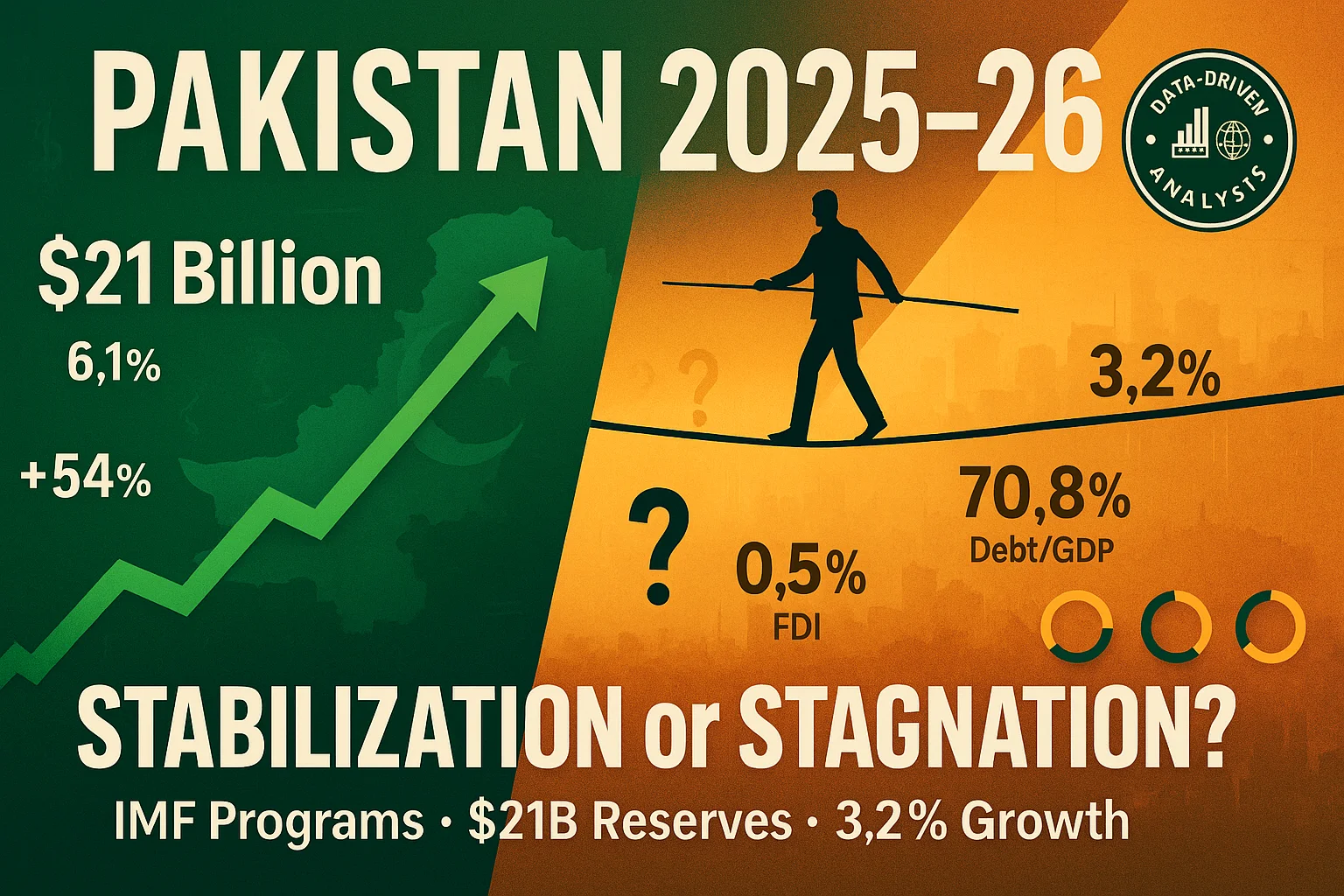
Pakistan’s Economic Outlook 2025: Between Stabilization and the Shadow of Stagnation

The Institutional Era: A Comprehensive Cryptocurrency Investment Analysis for 2026
China’s Property Woes Could Last Until 2030—Despite Beijing’s Best Censorship Efforts
Real Estate Crash Predictions 2026: Data-Backed Regional Guide

Best Investments in Pakistan 2026: Top 10 Low-Price Shares and Long-Term Picks for the PSX

How to Become an Active Taxpayer on Pakistan’s FBR Active Taxpayer List (ATL) in 2026: A Step-by-Step Guide

The Contours of 21st-Century Geopolitics Will Become Clearer in 2026: A New World Is Starting to Emerge
DBS Hits S$1 Billion AI Value Milestone — But Agentic AI Poses Talent Challenges for Singapore Banks

🌍 Davos 2026: The World Economic Forum Annual Meeting Sets the Stage for Global Transformation
Agentic AI in Finance: How Artificial Intelligence Is Replacing Routine Tasks on Wall Street

AI Impact on Wages 2026: Productivity Soars, Paychecks Stagnate
-
Markets & Finance10 months ago
Top 15 Stocks for Investment in 2026 in PSX: Your Complete Guide to Pakistan’s Best Investment Opportunities
-
Analysis9 months ago
Debunking IMF Program Myths: Reconfiguring Engagement for True National Ownership in a Volatile World
-
Analysis4 months ago
China Economy 2026: Property Crisis, AI Investment & Export Surplus Explained
-
Investment10 months ago
Top 10 Mutual Fund Managers in Pakistan for Investment in 2026: A Comprehensive Guide for Optimal Returns
-
Asia10 months ago
China’s 50% Domestic Equipment Rule: The Semiconductor Mandate Reshaping Global Tech
-
Global Economy10 months ago
What the U.S. Attack on Venezuela Could Mean for Oil and Canadian Crude Exports: The Economic Impact
-
AI10 months ago
15 Most Lucrative Sectors for Investment in Pakistan: A 2025 Data-Driven Analysis
-
Exports10 months ago
Pakistan’s Export Goldmine: 10 Game-Changing Markets Where Pakistani Businesses Are Winning Big in 2025