
FED
The Fed’s 10–2 Hold: Why Two Dissenters Wanted a Rate Hike

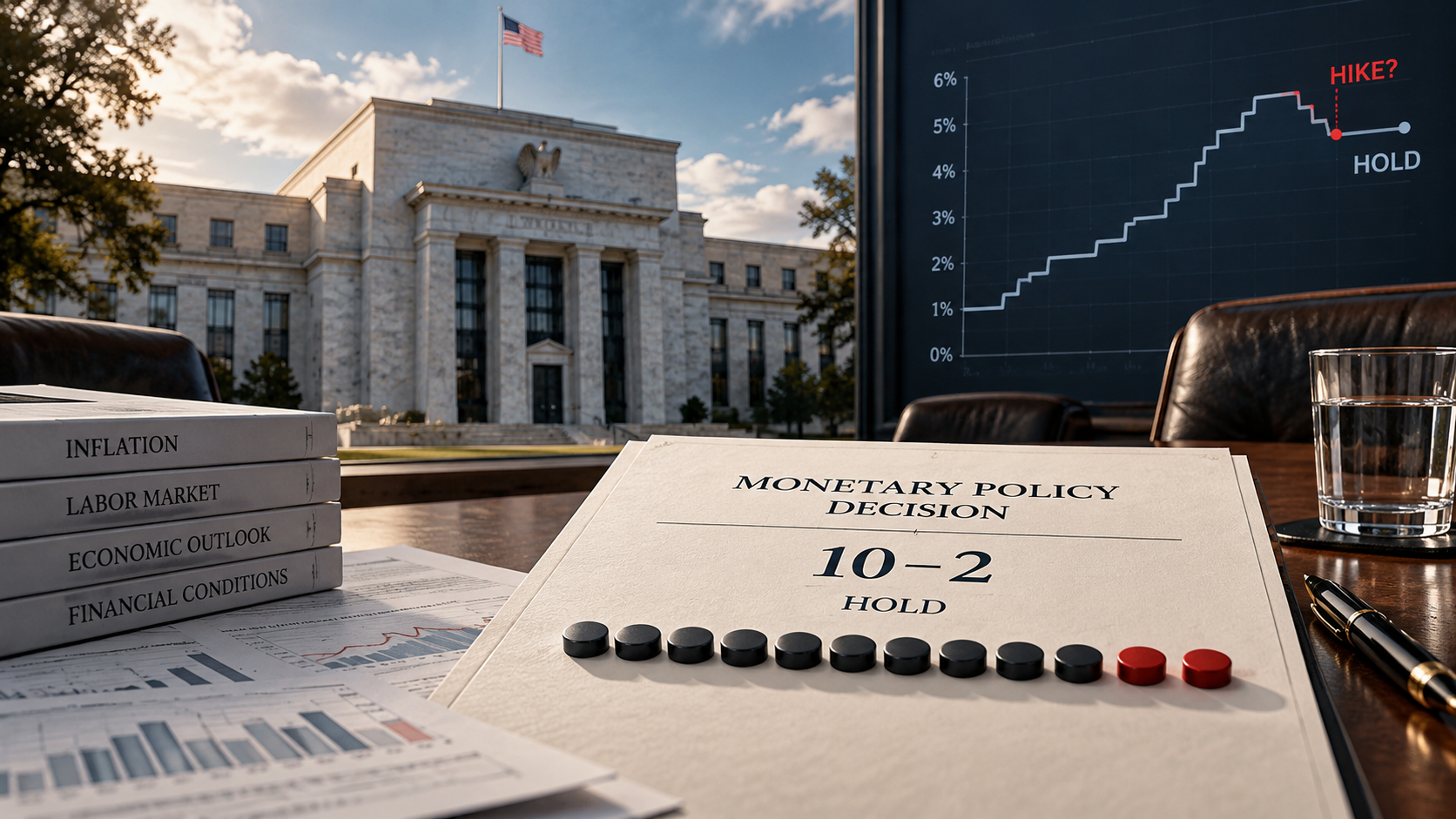
The Federal Reserve’s decision to keep interest rates unchanged conceals a deeper disagreement over inflation, economic resilience and the risks of waiting. For Pakistan and other emerging economies, the consequences could extend well beyond Washington.
The most revealing aspect of the US Federal Reserve’s latest interest-rate decision was not what the central bank did, but what two of its policymakers believed it should have done.
On October 28, the Federal Open Market Committee (FOMC) voted 10–2 to maintain its benchmark interest-rate range at 3.75–4.00 per cent. The decision was widely anticipated. Yet Federal Reserve Governor Lisa Cook and Cleveland Fed President Beth Hammack broke with the majority, favouring an immediate increase of 25 basis points.
Their dissent exposed a disagreement that may shape monetary policy well beyond the United States: how much longer can central banks afford to wait when economic growth remains resilient, inflation is persistently above target, and geopolitical conflict is pushing energy prices higher?
The answer matters not only to American households and investors. It also matters to economies such as Pakistan, where expensive imported energy, exchange-rate pressures and already-high borrowing costs leave policymakers with limited room for manoeuvre.
The Fed’s decision, confirmed in its official October 28 statement, was therefore more than an ordinary pause. It was a reminder that the struggle against inflation may be entering another difficult phase.
Two dissenters, one uncomfortable question
A split vote does not necessarily reveal a central bank in disarray. Monetary policy is designed to accommodate differences of judgment, particularly when economic conditions are uncertain.
What makes the October dissent significant is its direction.
Both Cook and Hammack wanted tighter monetary policy, not lower borrowing costs. They were prepared to increase rates immediately while the majority preferred to collect more evidence before acting.
That distinction is important.
In September, the Fed had already raised its benchmark rate by a quarter percentage point, with all 12 voting members supporting the decision, as recorded in the September FOMC minutes. The October disagreement was therefore not the beginning of a shift from easing to tightening. That shift had already occurred.
Rather, it concerned the appropriate speed of further tightening.
Hammack’s position was consistent with her previous preference for a firmer response to inflation. Cook’s dissent attracted particular attention because she had supported the September consensus and her October vote represented a more unexpected departure from the majority.
Still, the vote alone cannot establish every aspect of either policymaker’s reasoning. Their recorded opposition demonstrates a preference for raising rates immediately; more detailed conclusions about their individual calculations would require further public explanations.
The underlying policy question is nevertheless clear. Would another increase now reduce the likelihood of more aggressive action later? Or would tightening before the full effects of September’s increase become visible unnecessarily damage an otherwise healthy economy?
There are legitimate arguments on both sides.
The hawkish case rests on preventing inflation from becoming entrenched. The case for patience rests on recognising that monetary policy operates with a delay and that higher interest rates cannot directly resolve disruptions to global energy supplies.
The danger lies in treating either position as an obvious answer to a problem that is anything but simple.
An inflation problem that interest rates cannot solve alone
The latest inflation figures explain why the debate has become so difficult.
According to the US Bureau of Economic Analysis, the Personal Consumption Expenditures (PCE) price index increased by 3.6 per cent in the year to September, compared with 3.4 per cent in August. Core PCE inflation, which excludes food and energy, reached 3.1 per cent year on year.
Both readings remained above the Fed’s 2 per cent inflation target.
There is an important statistical qualification. The separate third-quarter GDP report showed core PCE prices increasing at a 2.5 per cent annualised quarterly rate, down from 3.3 per cent in the preceding quarter. That suggests some moderation in quarterly underlying inflation momentum even as the year-on-year measure remained elevated.
These different readings help explain why sensible policymakers can interpret the same economic landscape differently.
Inflation is not necessarily accelerating uniformly across the economy. Yet neither is there convincing evidence that the problem has been defeated.
The Middle East conflict has made that judgment considerably harder.
Brent crude traded around $115 a barrel in late October as threats to Gulf shipping, attacks involving regional energy infrastructure and uncertainty surrounding diplomatic negotiations sustained a significant geopolitical risk premium.
A Qatari-mediated proposal to end the conflict offered a possible diplomatic opening, but Iranian officials disputed the acceptability of the ideas presented. As Reuters reported, hopes of negotiations were competing with fears of further escalation.
For central banks, this creates an especially troublesome form of inflation.
An oil-price shock increases transport, manufacturing and distribution costs. Airlines face higher fuel bills. Businesses pay more to move goods. Households face more expensive petrol, electricity and everyday necessities.
Eventually, companies may pass those costs on to customers.
A central bank cannot produce another barrel of oil by raising its policy rate. Nor can it reopen a threatened shipping route or negotiate a ceasefire.
What it can do is restrain demand and attempt to prevent temporary price increases from spreading into wages, services and longer-term inflation expectations.
That is the economic logic behind a stronger monetary-policy response to an energy shock.
But it also creates a danger: higher borrowing costs may weaken investment, employment and consumption without addressing the original disruption.
The real test is whether the shock remains concentrated in particular prices or develops into a persistent increase across the economy.
That distinction should determine the Fed’s response more than the daily movement of crude oil.
Strong growth is both reassurance and a warning
Economic growth complicates the argument further.
The US economy expanded at a 3.4 per cent annualised rate during the third quarter of 2026, accelerating from 2.2 per cent in the previous quarter, according to the Commerce Department’s advance GDP estimate.
The figures suggest that the American economy continues to demonstrate considerable resilience despite elevated interest rates and geopolitical uncertainty.
They also explain the Fed’s decision to upgrade its assessment of economic activity from a solid to a strong pace of expansion.
Yet strong growth can carry two competing implications.
For optimists, it demonstrates that the economy can expand without immediately collapsing under the weight of tighter monetary policy. Stronger productivity and capital investment, particularly in artificial intelligence and associated infrastructure, may be increasing the economy’s productive capacity.
For inflation hawks, resilient spending creates a different concern. If businesses and consumers continue to spend strongly despite higher borrowing costs, demand may remain too robust for inflation to return comfortably to target.
Fed Chair Kevin Warsh has emphasised the possibility that productivity improvements could allow the economy to grow more rapidly without generating corresponding inflation.
That argument deserves serious consideration. Productivity growth can increase the supply of goods and services, helping an economy absorb stronger demand.
But technological optimism cannot substitute for evidence.
The benefits of artificial intelligence may ultimately be substantial, yet they are difficult to measure precisely while investment is still concentrated in infrastructure, computing capacity and data centres.
Moreover, those investments themselves require electricity, capital equipment, construction and financing.
A technology-led expansion can strengthen future productive capacity while simultaneously creating near-term pressures on resources and borrowing markets.
There are also signs that the economic picture is less uniformly strong than the GDP headline suggests. Although consumption contributed significantly to third-quarter growth, inflation-adjusted consumer spending was essentially unchanged in September.
The Fed must therefore avoid two symmetrical mistakes: assuming every strong growth figure proves overheating, or assuming future productivity gains will automatically neutralise persistent inflation.
Why waiting may be prudent — and why it may be costly
Central banks are often criticised for acting too late. They should also be judged on the risks of acting too aggressively.
A quarter-point rate increase may appear modest. But its effects do not stop at financial-market pricing.
Higher policy rates influence mortgage costs, corporate financing, consumer credit, business expansion and, eventually, employment.
Those effects unfold over time. Some borrowers face the impact immediately; others experience it only when existing financing arrangements expire or new investment decisions become necessary.
The September increase has not yet fully worked its way through the American economy.
The majority’s decision to pause can therefore be defended as an attempt to avoid cumulative overtightening.
Warsh has also argued that strong growth does not, by itself, establish that the economy is overheating. As Reuters reported on October 30, he has pointed to uncertainty about the economy’s sustainable growth rate, particularly when technological improvements may be changing productivity.
But the argument for patience has a weakness of its own.
Inflation expectations can be difficult to control once households and businesses begin treating higher prices as a permanent feature of economic life.
If the public loses confidence that inflation will return to the target, policymakers may eventually need a more severe tightening cycle to restore credibility.
The two dissenters were effectively challenging the majority’s assessment of that risk.
Neither the Fed’s caution nor the dissenters’ urgency should be mistaken for certainty.
The best monetary policy is not necessarily the most aggressive. It is the policy that responds proportionately to reliable evidence while retaining the capacity to change course.
Financial markets are already looking beyond October
The reaction in financial markets provides another reason not to interpret the Fed’s decision in isolation.
Investors had largely anticipated an October pause, and the initial response was relatively restrained.
However, expectations for December remained firmly tilted towards another increase.
By October 30, interest-rate futures implied roughly an 80 per cent probability of a quarter-percentage-point rise at the Fed’s December 8–9 meeting, according to Reuters.
Such probabilities are not commitments by central banks. They represent market expectations at a particular moment and can change quickly when fresh information becomes available.
The bond market has also been adjusting to the prospect of prolonged monetary restraint.
The benchmark 10-year US Treasury yield traded around 5 per cent following the Fed’s announcement, reflecting the influence of inflation expectations, interest-rate uncertainty and broader bond-market conditions.
Gold, meanwhile, came under pressure as stronger US growth and persistent inflation reinforced the prospect of further tightening. On October 30, Reuters reported that spot gold had fallen below $4,000 an ounce.
These movements should not be attributed entirely to the October vote. They reflect a changing combination of economic data, geopolitical developments, investor positioning and anticipated future policy.
The wider significance is that markets increasingly have to price the possibility that borrowing costs will remain elevated for longer than previously expected.
That prospect matters especially to countries dependent on international financing.
Why Pakistan cannot afford to ignore the Fed
For Pakistan, the implications are more immediate than the geographical distance from Washington might suggest.
On October 26, just two days before the Fed’s announcement, the State Bank of Pakistan raised its benchmark interest rate by 50 basis points to 12 per cent, effective the following day.
The increase reflected deteriorating inflation risks associated with higher global energy prices and the continuing Middle East conflict, according to the SBP’s policy-rate notification and its monetary-policy assessment.
The coincidence of the two decisions illustrates how a common global shock can confront very different economies with similar monetary-policy dilemmas.
Pakistan is particularly vulnerable because its energy requirements depend heavily on imported fuel.
When oil prices rise, the effects can spread through the economy: higher petroleum import bills, pressure on the current account, increased transportation costs, more expensive electricity generation and rising production costs for businesses.
The consequences are not confined to inflation statistics.
Export-oriented manufacturers already competing in difficult international markets may struggle with expensive energy and financing. Smaller businesses can postpone expansion. Households face reduced purchasing power.
A more hawkish Federal Reserve creates an additional challenge.
Higher US interest rates can make dollar-denominated assets more attractive, potentially drawing capital away from emerging markets and increasing the financing costs faced by riskier borrowers.
For Pakistan, this can complicate external borrowing conditions and exchange-rate management, although the direction of the rupee ultimately depends on several domestic and international factors.
A stronger dollar, if it materialises, would amplify the local-currency cost of dollar-priced imports. It could also increase the rupee value of certain foreign-currency debt obligations.
The SBP does not have to mirror the Fed’s decisions mechanically. Its monetary policy must respond to Pakistan’s inflation outlook, domestic economic activity, exchange-rate conditions and external financing needs.
Nevertheless, it cannot formulate policy as though global dollar interest rates were irrelevant.
This is the central dilemma for vulnerable emerging economies: fighting inflation through higher rates can help preserve financial stability, but doing so also imposes substantial costs on investment and economic recovery.
The alternative — allowing inflation expectations and exchange-rate pressures to deteriorate — can be even more damaging.
Pakistan needs a policy response that recognises both risks.
Monetary discipline must be accompanied by credible fiscal management, more efficient energy use, improved export competitiveness and policies that reduce structural dependence on costly imported fuel.
Otherwise, the burden of responding to every external shock will continue falling disproportionately on interest rates.
A wider test for central-bank independence
The Fed’s October decision also raises questions about how central banks communicate uncertainty.
Warsh has announced that the Fed will retain eight scheduled annual meetings but dedicate one meeting in 2027 exclusively to longer-term monetary-policy strategy, without an expected interest-rate vote or policy statement. He envisages two such strategy meetings in 2028.
The proposal, detailed by Reuters, may create more space for strategic discussions.
That could be useful when central banks are confronting structural changes involving artificial intelligence, productivity, global trade and energy security.
Yet any reduction in scheduled rate-setting opportunities deserves careful scrutiny.
Central banks retain the capacity to act between scheduled meetings when circumstances demand it. Even so, regular decisions and transparent communication help households, businesses and financial markets understand how monetary authorities interpret changing conditions.
A central bank’s independence is strengthened not merely by its freedom to choose interest rates, but by its willingness to explain the reasoning behind those choices.
The October dissent provides an opportunity to demonstrate that disagreement can coexist with institutional credibility.
December will be a test of judgment, not just resolve
The next Fed meeting, scheduled for December 8–9, will arrive after further evidence on inflation, employment and economic activity.
Those figures may strengthen the argument for another increase. They may also reveal that the existing policy stance is beginning to restrain demand.
The trajectory of oil prices will remain crucial.
A credible diplomatic breakthrough in the Middle East could reduce energy-market uncertainty and relieve some inflationary pressure.
Continued disruption, by contrast, could intensify the danger of wider price increases.
But it would be a mistake to make the Fed’s December decision depend on oil prices alone. The more important question is whether the underlying inflation process is becoming more persistent and whether expectations remain anchored.
That is ultimately what separates prudent monetary policy from a mechanical response to volatile headlines.
The two dissenters have raised a serious warning: the cost of waiting may be increasing.
The majority has raised an equally important consideration: the cost of acting before the evidence is sufficiently clear may also be substantial.
For countries such as Pakistan, there is a lesson in this disagreement. Monetary stability cannot be built on the assumption that global shocks will quickly disappear or that international financing will always remain affordable.
The Fed’s October decision did not settle the debate over the next increase in interest rates. It revealed how difficult that debate has become.
The real danger is not that the Federal Reserve disagrees about when to tighten. It is that a world already struggling with expensive energy, persistent inflation and slowing purchasing power may discover that every available policy choice carries a considerable economic cost.







Kevin Warsh’s nomination as chair could spark sweeping changes to the central bank—if he can navigate the political gauntlet ahead
President Donald Trump nominated Kevin Warsh as the next Federal Reserve chair on January 30, ending months of speculation and launching what promises to be one of the most consequential leadership transitions in the central bank’s modern history. The choice of Warsh, a former Fed governor who has publicly called for “regime change” at the institution, signals an impending reconsideration of the Fed’s expanded mandate and operational independence—even as markets rallied on relief that Trump selected a relatively orthodox candidate over potentially more pliable alternatives.
The announcement, delivered via Truth Social with characteristic Trumpian superlatives, positions Warsh to succeed Jerome Powell when his term expires in May. Yet beneath the market’s initial sigh of relief—the dollar surged nearly one percent while gold plummeted almost five percent—lies a more complex and potentially destabilizing dynamic. Warsh arrives at the Fed not as a continuity candidate but as an avowed critic who has spent years arguing that the institution has strayed dangerously from its core mission, expanded its balance sheet recklessly, and lost the credibility necessary to anchor inflation expectations.
“The credibility deficit lies with the incumbents that are at the Fed, in my view,” Warsh declared during a CNBC interview last July, using language rarely directed at the central bank by prospective chairs. This forthright assessment of the institution he now seeks to lead encapsulates the tension at the heart of his nomination: Warsh brings impeccable credentials and crisis-tested experience from his 2006-2011 tenure as a Fed governor during the global financial meltdown, yet he returns as something closer to a reformer than a steward.
The case for overhaul
Warsh’s critique of the Federal Reserve extends well beyond the tactical disagreements over interest rate policy that typically animate debates about monetary management. Instead, he has articulated a fundamental challenge to what he characterizes as “mission creep”—the Fed’s gradual expansion into climate risk assessment, diversity initiatives, and an arsenal of unconventional policy tools that, in his view, have politicized the institution and undermined its independence.
During an April lecture hosted by the Group of Thirty, Warsh argued that “the Fed’s current wounds are largely self-inflicted.” His prescription involves what he has termed a new “Treasury-Fed accord,” invoking the 1951 agreement that liberated the central bank from its obligation to support government bond prices. Such an accord, Warsh contends, would establish clearer boundaries around the Fed’s balance sheet management and restore a division of labor between monetary and fiscal authorities that has eroded over successive crises.
The intellectual coherence of Warsh’s position stands in stark contrast to the political pressures that brought him to this juncture. Trump has berated Powell relentlessly for maintaining rates he considers excessively restrictive, demanded cuts to levels historically associated with economic distress, and even launched a Justice Department criminal investigation into the Fed chair over renovation cost overruns—an episode that shocked senators from both parties and raised profound questions about central bank independence. Trump praised Warsh effusively, predicting he would “go down as one of the GREAT Fed Chairmen, maybe the best,” yet this endorsement comes freighted with expectations that may prove incompatible with the institutional reforms Warsh has long advocated.
The paradox of the hawk turned dove
Warsh built his reputation during his first Fed stint as an inflation hawk who frequently warned of price pressures that never materialized. During the recovery from the 2008 crisis, when unemployment hovered near ten percent, he persistently cautioned about upside inflation risks—a position that, in retrospect, appears to have unnecessarily constrained the Fed’s support for a struggling economy. This history makes his recent evolution toward endorsing rate cuts all the more noteworthy, and potentially suspect.
The transformation appears rooted in Warsh’s conviction that artificial intelligence and deregulation are ushering in a productivity renaissance that will allow faster growth without inflation—a thesis he outlined in a January 2025 Wall Street Journal column arguing that “the Trump administration’s strong deregulatory policies, if implemented, would be disinflationary” and that cuts in government spending would further reduce price pressures. This theoretical framework conveniently aligns with Trump’s political imperatives, raising questions about whether Warsh’s intellectual journey reflects genuine economic analysis or strategic positioning for the role he now seeks.
Markets appear uncertain how to reconcile these competing signals. As reported by Bloomberg, the dollar and short-dated Treasuries rallied on relief that Trump selected Warsh “rather than someone seen as more willing to ignore inflation and slash interest rates,” yet analysts remain skeptical about his newfound accommodation. Deutsche Bank analysts suggested they “do not view him as structurally dovish” despite his recent rhetoric, while University of Michigan economist Justin Wolfers noted that Warsh’s hawkish record represents “exactly not who the president wants,” raising concerns that “deals were made.”
The confirmation crucible
Even assuming Warsh’s nomination survives the Senate Banking Committee—itself far from assured—he faces structural constraints that may frustrate both his reformist ambitions and Trump’s demand for aggressive rate cuts. Interest rate decisions are made not by the chair alone but by the twelve-member Federal Open Market Committee, which includes seven governors and five rotating regional bank presidents. As the Council on Foreign Relations observed, “while the chair presides over the committee, he cannot dictate policy without securing the support of a majority of its members.”
Current committee members have shown little appetite for the dramatic easing Trump envisions. The Fed’s December projections indicated just one quarter-point cut expected in 2026, with policymakers citing inflation that remains stubbornly above the two percent target at 2.7 percent. Warsh would need to build consensus among colleagues, some of whom may view his appointment as a politicization of the central bank, at precisely the moment when his patron demands results that economic conditions may not justify.
The confirmation process itself has become unexpectedly treacherous. Senator Thom Tillis of North Carolina, a crucial Republican vote on the narrowly divided Banking Committee, has vowed to oppose any Fed nominee until the Justice Department probe of Powell is resolved—a probe widely viewed as political retaliation. As NBC News reported, Senate Majority Leader John Thune acknowledged that without Tillis’s support, Warsh could “probably not” win confirmation. Democratic senators, meanwhile, have denounced the nomination as fundamentally compromised, with Senator Elizabeth Warren calling on Republicans to block the pick unless Trump ends his “witch hunts” against Powell and Governor Lisa Cook.
Global reverberations
The implications extend well beyond domestic monetary policy. Warsh’s potential chairmanship arrives at a moment of extraordinary fragility in the international financial architecture. Trump’s erratic foreign policy—including threats against Greenland and sweeping tariff proposals—has already undermined confidence in American institutions. The spectacle of a president openly attempting to bend the Fed to his will, backed by criminal investigations and threats to fire sitting governors, has sent a chilling message to central bankers and finance ministers worldwide about the durability of American commitment to rules-based governance.
Atlantic Council experts noted that “if Warsh wants to cement the Fed’s standing, he will need to act—and be seen to act—as an independent guardian of price stability and full employment.” Yet achieving this will require navigating between Trump’s demands for accommodation and the Fed’s institutional imperative to maintain credibility. The risk is that Warsh becomes neither effective reformer nor trusted independent actor, but rather a chair whose every decision is scrutinized for evidence of political influence—a dynamic that could prove far more corrosive to Fed independence than any specific policy choice.
Markets have begun pricing in these uncertainties. The initial relief that greeted Warsh’s selection has given way to more sober assessments as investors contemplate the path ahead. According to CNBC, precious metals experienced historic volatility, with silver plunging thirty percent in its worst day since 1980—a dramatic unwinding of positions that had accumulated amid fears of Fed politicization and dollar debasement. This suggests markets are betting that Warsh will prove more institutionally conservative than feared, yet they remain vigilant for signs that political pressures will overwhelm technocratic judgment.
The productivity wager
At the core of Warsh’s intellectual framework lies a bet on supply-side transformation. He contends that artificial intelligence, deregulation, and efficiency gains can deliver the holy grail of economic policy: robust growth with subdued inflation. If correct, this would allow the Fed to cut rates while maintaining price stability, satisfying Trump’s political demands without sacrificing the institution’s credibility.
Yet this argument confronts considerable skepticism. The promised productivity boom from previous technological revolutions—personal computers, the internet, mobile computing—took years to materialize in aggregate statistics, and often arrived alongside disruptive transitions that central banks struggled to navigate. Warsh has criticized the Fed’s “bloated balance sheet” and called for significant reductions as reported by Yahoo Finance, but shrinking the balance sheet while simultaneously cutting rates presents technical and communications challenges that could roil markets accustomed to the Powell Fed’s cautious incrementalism.
Moreover, the productivity thesis serves conveniently to reconcile Warsh’s hawkish past with his dovish present, raising questions about whether it represents rigorous analysis or motivated reasoning. If inflation proves more persistent than his framework suggests—whether due to Trump’s tariffs, immigration restrictions, or other supply constraints—Warsh will face an excruciating choice between vindicating his intellectual evolution by staying accommodative or reverting to his inflation-fighting instincts and incurring presidential wrath.
Powell’s shadow
One factor that may complicate Warsh’s transition has received insufficient attention: Jerome Powell could choose to remain on the Board of Governors even after his chairmanship expires. While most chairs have resigned entirely upon losing their leadership role, Powell’s term as a governor extends until early 2028, and there are indications he may stay to serve as a counterweight to political pressure.
Such a scenario would present Warsh with a formidable challenge. Powell commands enormous respect within the institution and global financial community, having navigated the pandemic recession, the subsequent inflation surge, and now Trump’s unprecedented assault on Fed independence with a calm determination that has largely maintained market confidence. His presence on the board as a voting member would serve as a constant reminder of alternative approaches and potentially rally committee members resistant to Warsh’s reforms or susceptible to presidential pressure.
The way forward
Kevin Warsh’s nomination represents a pivotal moment for American economic governance. His potential chairmanship could catalyze an overdue reckoning with the Fed’s expanded mandate, bloated balance sheet, and tendency toward what he views as technocratic overreach. Alternatively, it could mark the beginning of a more politically pliable central bank that subordinates rigorous economic analysis to executive branch preferences—precisely the outcome that central bank independence was designed to prevent.
The most likely path lies somewhere between these extremes. Warsh possesses the credentials and crisis experience to command respect, the intellectual framework to justify policy choices that may diverge from both Trump’s demands and the Powell Fed’s approach, and sufficient political acumen to navigate the treacherous confirmation process ahead. Yet he assumes office at a moment when the Fed’s independence has never been more contested, when inflation remains above target despite three rate cuts, when fiscal deficits are expanding rapidly, and when global economic conditions remain volatile and uncertain.
The ultimate test will be whether Warsh can execute his vision of Fed reform while maintaining the institution’s credibility and independence—or whether the political circumstances of his appointment will overwhelm his reformist intentions, leaving the Federal Reserve neither fish nor fowl but rather an institution fundamentally changed in ways that undermine its effectiveness. For investors, policymakers, and citizens navigating an increasingly uncertain economic landscape, the answer to this question will shape not just interest rates and inflation outcomes, but the very architecture of American economic governance for decades to come.
As markets digest the Warsh nomination and prepare for his confirmation hearings in the spring, one reality has become clear: the Powell era’s studied pragmatism and consensus-driven incrementalism is ending. What replaces it—whether constructive reform or corrosive politicization—remains the most consequential economic policy question of 2026.

The Fed’s 10–2 Hold: Why Two Dissenters Wanted a Rate Hike

US Impeachment Talk and White House Press Secretary Changes: What the Record Shows

2026 Economic Outlook: Investment Tips for Pakistani Investors

Anduril’s $6.6 Billion Submarine Shipyard Plan Explained

Life Insurance Comparison: Term vs. Whole Life and What Each Actually Costs

Stock Market Today: Nasdaq Hits Record High as Dow and S&P 500 Stumble on Middle East Diplomatic Shifts

Energy Market Spikes vs. Consumer App Data: What GasBuddy and Crude Prices Signal for Inflation

China’s FTAAP Push for APEC 2026 in Shenzhen: US Tariffs and Unite Asia-Pacific

AI Stocks Slide After Industry Leaders Call for a Development Slowdown

Singapore Stocks vs. Japan Stocks: Safe Havens in the Asian Economic Slowdown

Agentic AI in Finance: How Artificial Intelligence Is Replacing Routine Tasks on Wall Street

Fiscal Deficit and Public Debt

T-Mobile’s Enterprise Push and the Evolution of Modern Corporate Mobility Solutions

Enterprise Generative AI ROI 2026: The Adoption-to-Impact Gap Explained

Climate Finance and the Economic Reality of Passing 1.5°C

Business Insurance for Digital Exports: Protecting Your Company in the AI Era
Real Estate Crash Predictions 2026: Data-Backed Regional Guide

Unrecoverable Delays: How the St. Louis Strike Crippled Boeing’s F-15EX Eagle II

What is a “Lead-Left” Bank? Unpacking Morgan Stanley’s Role in Anthropic’s Mega-IPO

How to Invest in the Anthropic IPO: Step-by-Step Guide for Retail Investors

Top 15 Stocks for Investment in 2026 in PSX: Your Complete Guide to Pakistan’s Best Investment Opportunities
China Economy 2026: Property Crisis, AI Investment & Export Surplus Explained
Debunking IMF Program Myths: Reconfiguring Engagement for True National Ownership in a Volatile World
Top 10 Mutual Fund Managers in Pakistan for Investment in 2026: A Comprehensive Guide for Optimal Returns
China’s 50% Domestic Equipment Rule: The Semiconductor Mandate Reshaping Global Tech
What the U.S. Attack on Venezuela Could Mean for Oil and Canadian Crude Exports: The Economic Impact

15 Most Lucrative Sectors for Investment in Pakistan: A 2025 Data-Driven Analysis
How to Invest in the Anthropic IPO: Step-by-Step Guide for Retail Investors
Real Estate Crash Predictions 2026: Data-Backed Regional Guide
Pakistan’s Export Goldmine: 10 Game-Changing Markets Where Pakistani Businesses Are Winning Big in 2025
The Institutional Era: A Comprehensive Cryptocurrency Investment Analysis for 2026
Pakistan’s Stock Market Renaissance: How 2025’s Hottest Investment Opportunity Is Democratizing Wealth—A Complete Beginner’s Guide
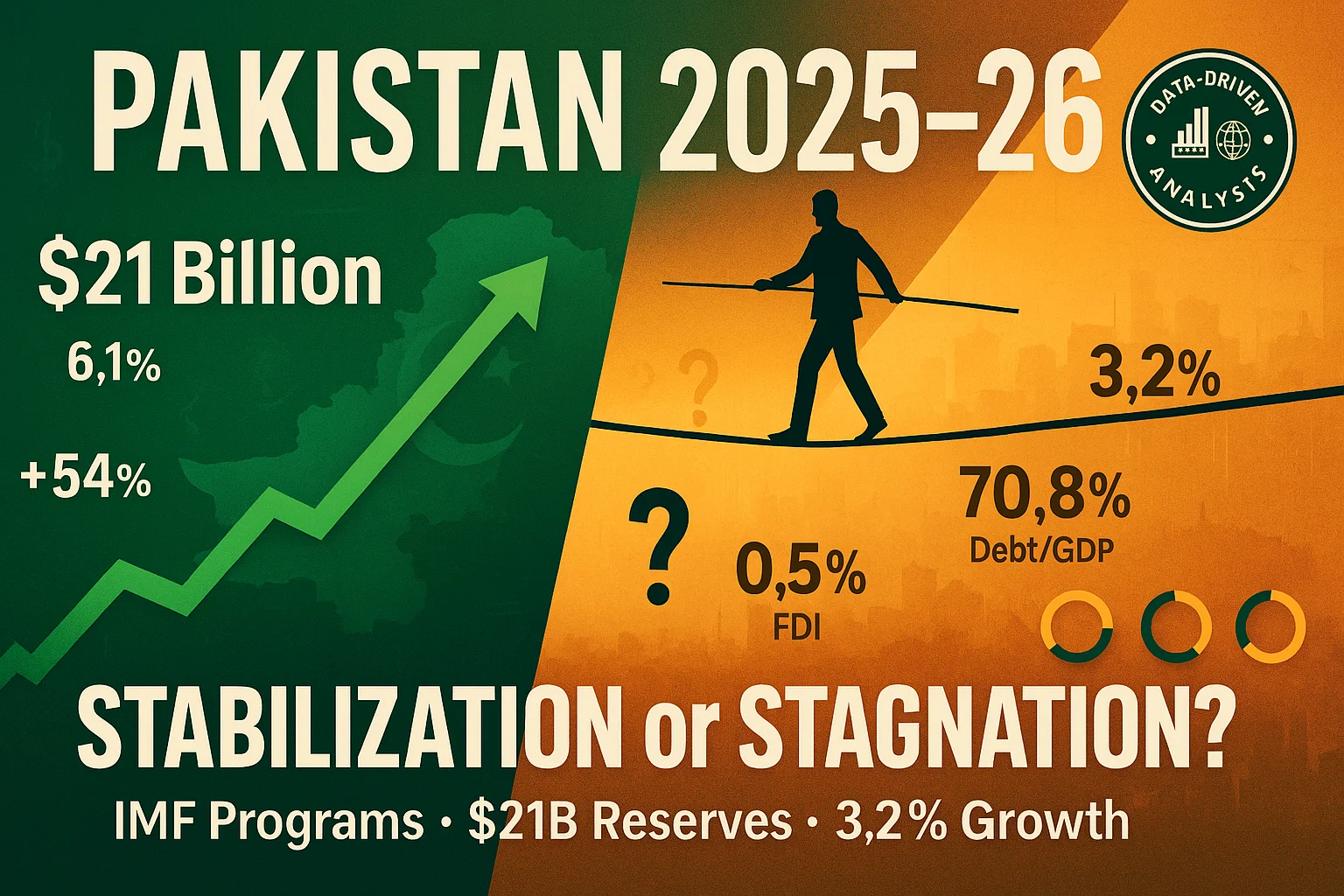
Pakistan’s Economic Outlook 2025: Between Stabilization and the Shadow of Stagnation
China’s Property Woes Could Last Until 2030—Despite Beijing’s Best Censorship Efforts
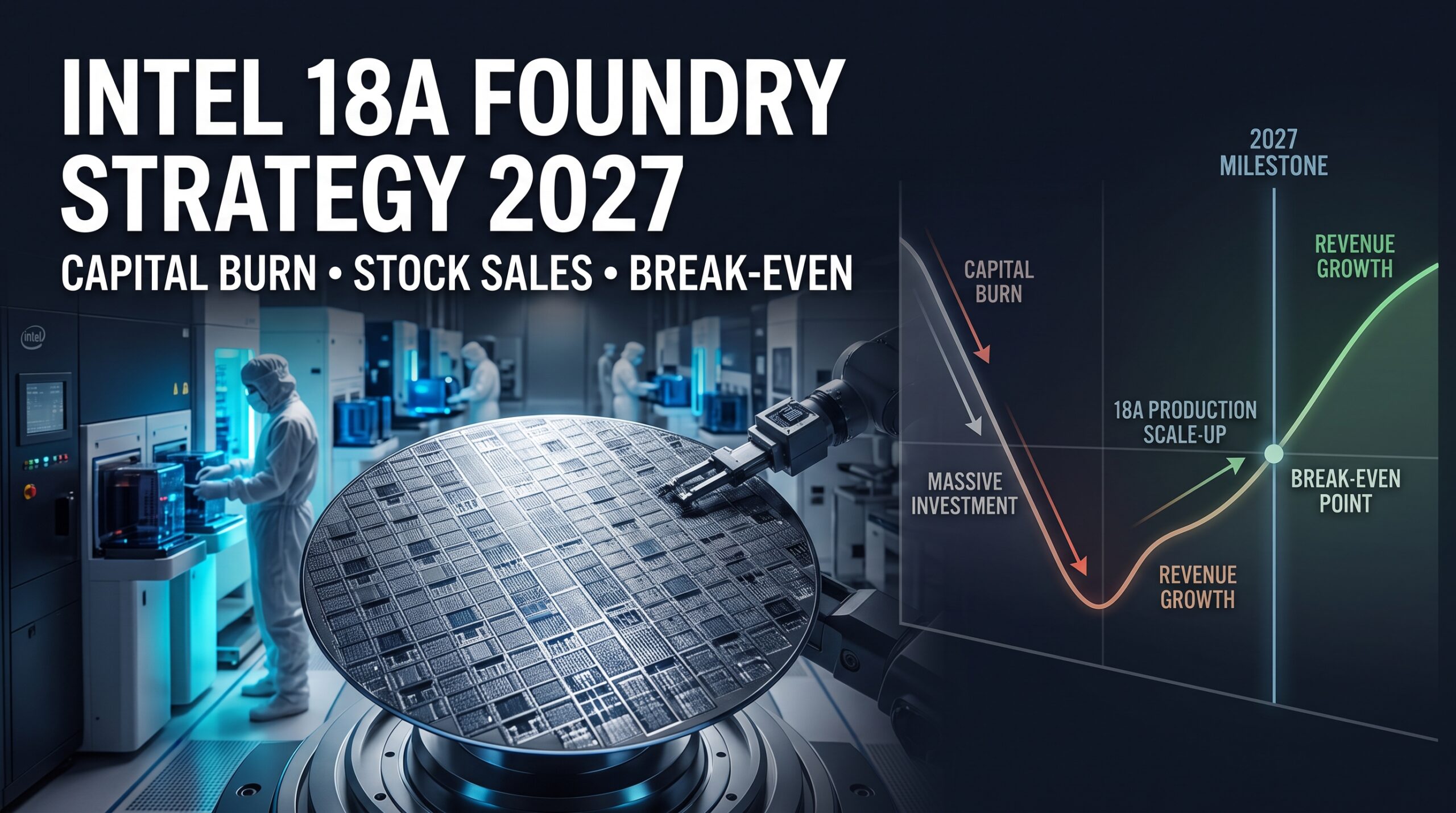
Intel 18A Foundry Strategy 2027: Capital Burn, Stock Sales & Break-Even Timeline

Best Investments in Pakistan 2026: Top 10 Low-Price Shares and Long-Term Picks for the PSX
Agentic AI in Finance: How Artificial Intelligence Is Replacing Routine Tasks on Wall Street
China’s FTAAP Push for APEC 2026 in Shenzhen: US Tariffs and Unite Asia-Pacific

How to Become an Active Taxpayer on Pakistan’s FBR Active Taxpayer List (ATL) in 2026: A Step-by-Step Guide
DBS Hits S$1 Billion AI Value Milestone — But Agentic AI Poses Talent Challenges for Singapore Banks
-
Markets & Finance10 months ago
Top 15 Stocks for Investment in 2026 in PSX: Your Complete Guide to Pakistan’s Best Investment Opportunities
-
Analysis4 months ago
China Economy 2026: Property Crisis, AI Investment & Export Surplus Explained
-
Analysis9 months ago
Debunking IMF Program Myths: Reconfiguring Engagement for True National Ownership in a Volatile World
-
Investment10 months ago
Top 10 Mutual Fund Managers in Pakistan for Investment in 2026: A Comprehensive Guide for Optimal Returns
-
Asia10 months ago
China’s 50% Domestic Equipment Rule: The Semiconductor Mandate Reshaping Global Tech
-
Global Economy10 months ago
What the U.S. Attack on Venezuela Could Mean for Oil and Canadian Crude Exports: The Economic Impact
-
AI10 months ago
15 Most Lucrative Sectors for Investment in Pakistan: A 2025 Data-Driven Analysis
-
Tech & AI2 months ago
How to Invest in the Anthropic IPO: Step-by-Step Guide for Retail Investors