
Analysis
ADB Loan for Pakistan Insurance Sector: $700M Approved

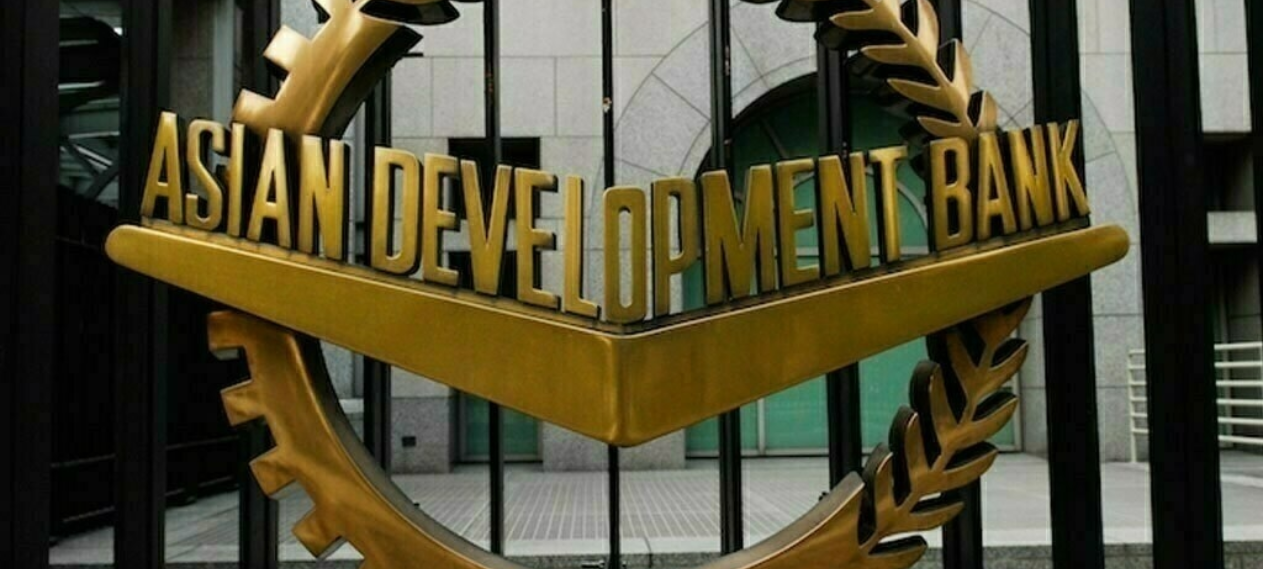
The Asian Development Bank (ADB) has formally approved a landmark $700mn loan for Pakistan’s insurance sector, signaling an aggressive attempt to fortify the country’s fragile financial architecture against systemic climate and economic shocks. Signed in Islamabad by regional directors, the capital injection arrives at a delicate moment for the South Asian nation. With domestic insurance penetration languishing at historic lows, this massive facility represents more than a simple fiscal cushion. It is a legally binding blueprint designed to restructure how risk is priced, managed, and mitigated across one of the least developed financial markets in Asia.
Pakistan’s macroeconomic situation remains precarious. While recent agreements with the International Monetary Fund have temporarily stabilized foreign exchange reserves, structural vulnerabilities run deep. The country remains exceptionally exposed to environmental catastrophes. The devastating floods of 2022, for instance, caused over $30 billion in economic damage, yet less than 2% of those losses were covered by commercial insurance policies, according to data from the World Bank.
This lack of a domestic safety net forces the federal government to rely heavily on emergency deficit spending, worsening an already critical public debt burden. The domestic insurance sector has historically failed to expand beyond basic corporate coverage and mandatory automotive policies. By injecting capital directly into regulatory reform and market modernization, this new multilateral program intends to build a self-sustaining risk ecosystem that reduces the state’s direct liability when the next inevitable crisis hits.
The Asian Development Bank program is structured around three core pillars managed alongside the Securities and Exchange Commission of Pakistan (SECP). On October 14, 2025, initial program drafts detailed that the initial $300 million tranche will focus immediately on legislative overhauls. This includes updating the Insurance Ordinance of 2000 to align with international risk-based capital models. By forcing domestic firms to maintain capital reserves proportional to their actual underwriting risk, the regulator hopes to weed out insolvent operators and build institutional trust.
The remaining $400 million is tied to developing specialized market infrastructure. A primary objective is the creation of a national catastrophe reinsurance pool, which will distribute large-scale agricultural and infrastructure risks across international markets. Data from the Asian Development Bank reveals that current domestic reinsurance capacity cannot support even 10% of Pakistan’s commercial property assets. This shortfall forces local insurers to pass expensive premiums onto small businesses or avoid writing disaster policies altogether.
Furthermore, the loan introduces strict digital transformation mandates. Under the supervision of SECP Chairman Akif Saeed, domestic insurance companies will be required to build open-API architectures. This technological shift will enable mobile microinsurance platforms to reach rural populations. Currently, over 80% of Pakistan’s agricultural workforce operates entirely outside the formal banking system. Bringing these citizens into the financial fold via digital crop and health insurance is vital for long-term stability.
The capital will also support the modernization of the state-owned National Insurance Company Limited (NICL). Long criticized for administrative inefficiencies, NICL will undergo a complete digital audit to streamline claims processing. The goal is to reduce the average claim settlement time from nine months down to less than thirty days, setting a new operational benchmark for the private sector to follow.
To ensure compliance, the Ministry of Finance will establish a dedicated oversight committee. This body will publish quarterly progress reports on fund utilization, directly matching benchmarks set by the Securities and Exchange Commission of Pakistan. This level of transparency aims to reassure external bondholders that the funds are driving deep structural change rather than merely patching short-term fiscal deficits.
Pakistan Financial Sector Reforms
Moving beyond the immediate mechanics of the loan, the structural intervention reveals a deeper macroeconomic reality. Multilateral lenders are shifting away from general budgetary support toward targeted financial market interventions. The choice to focus heavily on insurance highlights a recognition that traditional banking sector liquidity cannot solve long-term capital scarcity. Without a functioning insurance market, local commercial banks remain hesitant to extend long-term credit for infrastructure or industrial expansion.
Why does Pakistan’s insurance sector require structural reform?
Pakistan’s insurance sector requires structural reform because its penetration rate sits below 1% of GDP, leaving the population exposed to macroeconomic and climate shocks. Outdated regulatory frameworks, low consumer trust, and insufficient capitalization prevent domestic insurers from absorbing large-scale commercial risks or offering viable microinsurance products.
This low penetration rate creates a dangerous loop. Because the domestic market is small, international reinsurers charge a premium to cover Pakistani risks. This keeps insurance costs prohibitively high for small and medium-sized enterprises (SMEs). According to a report by the Organization for Economic Co-operation and Development, economies with insurance penetration rates above 3% recover from economic shocks nearly three times faster than those dependent on ad-hoc state aid.
To contextualize Pakistan’s position relative to its regional peers, the stark divergence in financial depth becomes obvious when looking at insurance penetration across South Asia:
| Country | Insurance Penetration (% of GDP) | Primary Regulatory Model | State-Owned Market Share |
| India | 4.2% | Risk-Based Capital | Moderate (~40%) |
| Sri Lanka | 1.2% | Solvency II Equivalent | Low (~15%) |
| Bangladesh | 0.55% | Fixed Capital | High (~60%) |
| Pakistan | 0.91% | Solvency I (Outdated) | High (~50%) |
The structural overhaul also targets the core asset allocation of Pakistani insurance companies. Historically, domestic insurers have parked up to 85% of their premium reserves in low-yielding government bonds. While this strategy offers safe returns, it deprives the private sector of vital investment capital. The new risk-based capital framework will incentivize insurance firms to diversify their portfolios into corporate debt, venture funds, and green infrastructure bonds, fundamentally altering the flow of liquidity throughout the wider economy.
This portfolio diversification is expected to unlock roughly $1.5 billion in private sector investment over the next five years. By shifting away from sovereign debt, insurance companies will finally begin functioning as true institutional investors. This transition is critical for deepening Pakistan’s capital markets and reducing the corporate sector’s reliance on expensive, short-term commercial bank loans.
The downstream consequences of this capital injection will reshape the landscape of climate risk mitigation finance across South Asia. As climate patterns become increasingly erratic, the financial burden of rebuilding public infrastructure cannot rest solely on the national budget. By establishing a formalized framework for catastrophe bonds and weather-indexed insurance, Pakistan is laying the groundwork for private capital to absorb environmental risks.
For local businesses and agricultural operators, the rollout of inclusive insurance growth initiatives will alter daily operations. Consider a typical farmer in the Punjab region. Under the current system, a single season of erratic monsoon rainfall can result in total financial ruin, forcing the liquidation of assets and long-term poverty. Introducing reliable, low-cost crop insurance creates an economic floor, ensuring that families can purchase seeds and fertilizer for the following season regardless of weather outcomes.
On a macro scale, this shift stabilizes consumer demand and maintains rural purchasing power during downturns. The Financial Stability Board has consistently pointed out that unmitigated environmental risks pose a direct threat to banking stability. When agricultural yields collapse, non-performing loans spike across rural banking networks. By insulating farmers, the insurance sector acts as a shock absorber for the entire financial network.
Furthermore, international credit rating agencies monitor these developments closely. When agencies like Moody’s or Fitch assess Pakistan’s sovereign credit rating, the lack of disaster risk financing has historically acted as a significant negative factor. Demonstrating a structured, well-capitalized insurance mechanism lowers the country’s overall risk profile. Over time, this improvement can lower borrowing costs for both the state and private corporations looking to access international bond markets.
Private equity firms are already taking note of these regulatory changes. Several regional financial technology startups have initiated talks with local partners to launch dedicated insurtech apps. These ventures aim to capitalize on Pakistan’s high mobile penetration rate, transforming insurance from an elite corporate luxury into an accessible, everyday retail product for millions of previously unserved citizens.
Debt-Funded Financial Reforms
While the program’s objectives are ambitious, critics argue that loading another $700 million in foreign-currency debt onto Pakistan’s balance sheet carries profound risks. The country’s external debt obligations already consume a massive portion of its annual tax revenues. Some independent analysts suggest that using dollar-denominated loans to fund long-term domestic institutional adjustments creates a dangerous currency mismatch. If the Pakistani rupee depreciates significantly against the US dollar over the next decade, the cost of servicing this loan could vastly outweigh the economic benefits generated by the insurance sector.
The picture is more complicated when examining institutional capacity. Passing progressive legislation is simple compared to enforcing it across a resistant financial sector. Many smaller, family-owned insurance firms may lack the technical capabilities or capital depth to comply with the new risk-based guidelines. Forcing these entities into rapid compliance or liquidation could lead to market consolidation, reducing competition and leaving consumers with fewer choices and higher premiums.
Furthermore, skeptics point to the historical track record of state-led modernization schemes in Pakistan. Previous attempts to reform public enterprises have frequently stalled due to political interference and bureaucratic inertia. Without sustained political will and total regulatory independence for the SECP, there is a legitimate concern that these funds could be absorbed by administrative overhead rather than driving meaningful market change.
To mitigate these structural risks, external auditors must be given absolute authority to halt tranche releases if specific, pre-negotiated operational milestones are missed. Reliance on internal progress metrics has failed past reform programs, making independent verification a vital prerequisite for this initiative’s long-term success.
The ADB’s $700 million program is an unhedged bet on the transformative power of regulatory modernization. It attempts to address a fundamental structural vulnerability that has left Pakistan’s population and economy exposed to escalating macroeconomic and environmental shocks. Success will not be measured by the speed at which the capital is disbursed, but by whether the SECP can successfully build a competitive, well-capitalized marketplace that earns public trust.
If executed correctly, this initiative will provide Pakistan with the financial shock absorbers necessary to withstand future crises without relying on emergency bailouts. If it fails, it will simply become another line item on an already unsustainable national debt ledger. The coming years will determine whether this capital injection marks the birth of a resilient domestic risk market or stands as a costly reminder of the limits of debt-funded institutional engineering.
Building economic resilience requires structural foundations capable of outlasting temporary political cycles.




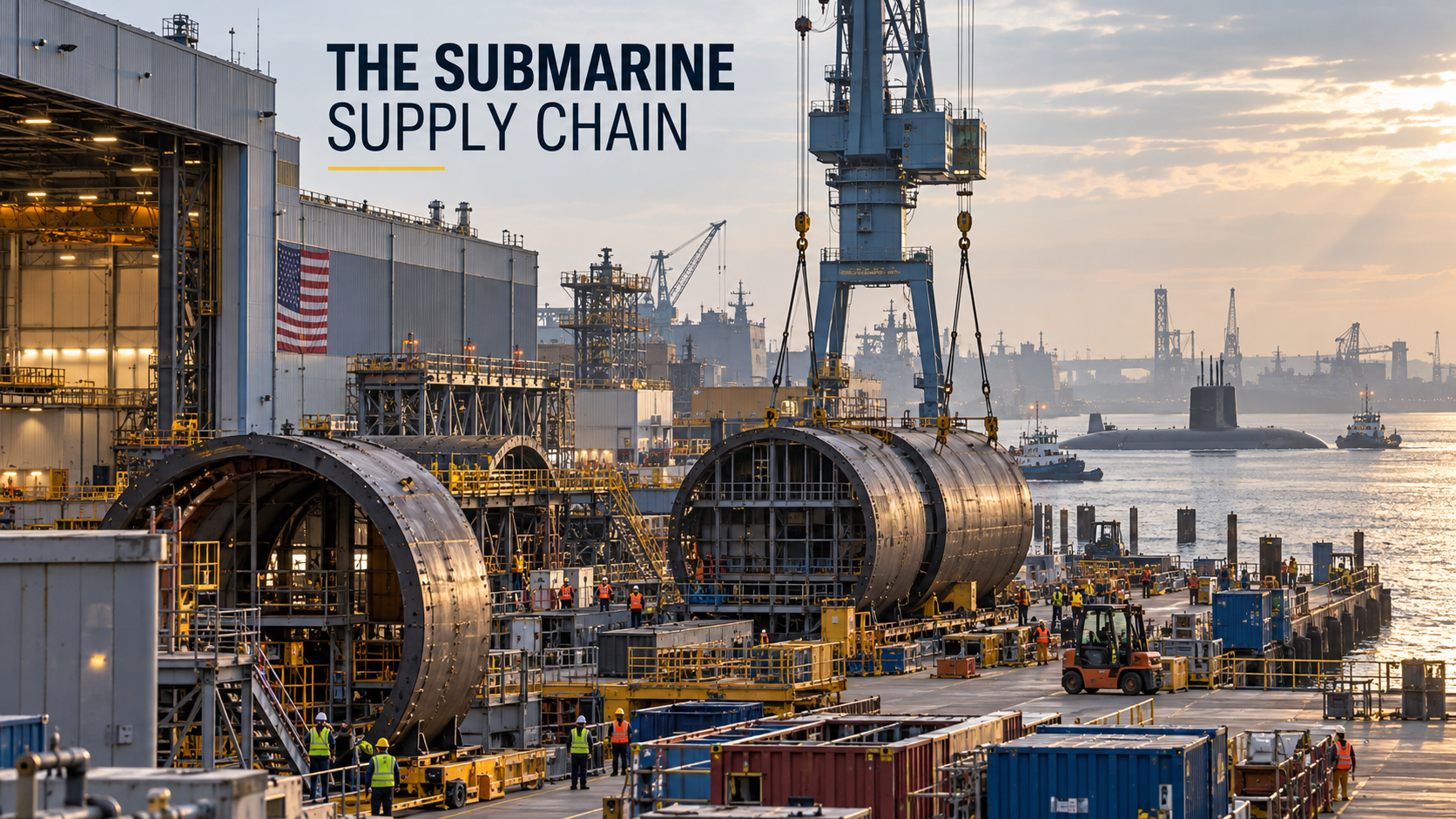
A major U.S. submarine-manufacturing project announced on October 6, 2026 has put an unfamiliar name at the center of a familiar defense-industry problem: how to build submarine components faster without sacrificing quality or reliability. Defense technology firm Anduril announced plans for Arsenal-2, a facility at Sparrows Point in Maryland intended to expand production of parts for the U.S. Navy’s Virginia-class attack submarines. The combined headline figure is $6.6 billion—made up of the company’s planned $3.7 billion private investment and a Navy contract valued at up to $2.9 billion, with payments tied to production outcomes. These are announcements and commitments, not evidence that all the capital has already been spent. Anduril’s official announcement and Reuters’ independent report outline the project.
Key takeaways:
- Arsenal-2 is a planned submarine-components manufacturing facility, not an already operational assembly line for completed submarines.
- The $6.6 billion headline combines two different funding streams and different forms of financial commitment.
- The project is aimed at bottlenecks in the Virginia-class supply chain, including specialized manufacturing capacity.
- Its success will depend on skilled labor, qualification standards, equipment, scheduling and delivery—not simply construction of a large building.
What is Arsenal-2?
Arsenal-2 is Anduril’s proposed software-centered manufacturing project at Sparrows Point, a former industrial site in Baltimore County, Maryland. According to the company’s October 6 announcement, the facility is designed to make critical components for Virginia-class submarines and give the Navy access to additional industrial capacity. The project illustrates a widening role for technology-sector defense contractors in traditional heavy manufacturing.
Submarine construction is a particularly difficult domain. Components must meet demanding specifications for performance, durability, safety, quality control and compatibility with other systems. A factory that produces ordinary industrial hardware cannot immediately be treated as a qualified submarine supplier.
Anduril’s pitch is that modern factory software, automation, new processes and private capital can ease some of those constraints. Whether the company can execute on that pitch will be judged by qualification milestones and repeatable deliveries.
What will the facility actually produce?
Initial work centers on critical Virginia-class components, including torpedo tubes, according to the company and Reuters. Those are sophisticated submarine systems, but producing them is not the same as manufacturing a complete nuclear-powered submarine.
A Virginia-class attack submarine involves propulsion, pressure-hull construction, combat systems, sensors, life-support equipment, electronics, integrated software and years of testing. Its final assembly and delivery depend on a specialized network of contractors, yards and government oversight. New suppliers can strengthen the network by removing specific bottlenecks rather than replacing every incumbent shipbuilder.
The distinction matters for readers encountering sweeping “Anduril to build submarines” headlines. The verified announcement concerns industrial capacity for components, with ambitions that may expand as the project matures; it should not be presented as a commitment to launch an entire finished fleet by a fixed date.
Understanding the $6.6 billion figure
| Announced element | Stated figure | Important qualification |
|---|---|---|
| Anduril planned private capital | $3.7 billion | Planned investment to develop production capacity |
| U.S. Navy contract | Up to $2.9 billion | Contract ceiling with payments conditioned on outputs |
| Combined headline amount | $6.6 billion | Sum of different commitments; not identical to money already disbursed |
Anduril’s release describes the contract as outcome-based. That arrangement is designed to connect government spending to verified delivery rather than solely to reimbursed activity. But details of individual milestones, acceptance criteria, ownership and long-term risk allocation should be determined from contract documents—not guessed from a launch-day headline.
The distinction between an award, a contract ceiling, a planned investment and cash expenditure is crucial. A press announcement does not mean the project has already consumed $6.6 billion in cash or delivered proportionate output.
Why the Navy needs more industrial capacity
Submarines are strategically important for intelligence collection, maritime defense and deterrence. But they also illustrate the challenges of complex, low-volume manufacturing. The United States needs trained workers who can perform specialized fabrication, welding, machining, inspection and systems integration. Individual suppliers can become bottlenecks if they are asked to deliver more components than their equipment or workforce can manage.
The Financial Times’ account of the announcement situated Arsenal-2 within a larger push to expand the submarine industrial base and modernize acquisition. The Navy’s construction requirements and commitments under the AUKUS security partnership increase the importance of sustainable production capacity over the coming years.
This is a long-term manufacturing question, not an immediate shortcut. Building a factory is one stage; training a workforce, validating manufacturing processes and coordinating with other shipbuilders are additional stages.
Why Sparrows Point matters
Sparrows Point was a major American industrial center associated with steel production. Using that site for advanced defense manufacturing creates a recognizable local economic narrative: industrial land and workforce capacity potentially being redirected toward a contemporary strategic sector.
Associated Press reporting described expectations of approximately 3,100 direct jobs connected to the facility, while Reuters reported similar plans. They are projected jobs rather than a verified count of positions already filled.
The ultimate local impact will depend on the pace of construction, hiring, regional supply chains, transport needs, worker training and how much demand the project sustains. Job announcements should be revisited against actual payroll, construction and production data.
When will Arsenal-2 begin manufacturing?
Accounts of the project point to operations around 2030, subject to execution. Business Insider and Financial Times discussed that timeline. Treat it as a planned target, not an operational fact.
Even if initial lines become active on schedule, production volume and acceptance quality will determine how useful the added capacity becomes to the Navy. A component supplier can have machinery installed yet still face qualification delays, workforce shortages or unexpected integration issues.
The execution milestones worth tracking
- Facility permits, ground work and construction progress.
- Hiring and certification of specialist personnel.
- Commissioning of production lines and inspection systems.
- First qualified component deliveries accepted by the relevant customer.
- Repeat production rates, quality performance and on-time deliveries.
- Evidence that the additional capacity reduces delays in the broader submarine supply chain.
These measurable steps provide a better accountability framework than celebrating the contract’s face value alone.
Can software solve a shipbuilding bottleneck?
Software can improve production scheduling, digital modeling, machine monitoring, traceability and quality documentation. Automation may make some operations more consistent. Those are useful tools, but they still rely on expensive physical equipment, material supply and highly skilled people. A complex pressure-critical component cannot be delivered by software alone.
The question is therefore not whether a tech company can bring useful technology into shipbuilding. It is whether that company can combine technology with industrial practices refined over decades, and do so at sufficient scale.
Frequently asked questions
Is Anduril building complete submarines?
Its verified October 6 announcement emphasizes components for Virginia-class submarines, not delivery of complete nuclear-powered boats.
Where is Arsenal-2 located?
The project is planned for Sparrows Point in Baltimore County, Maryland.
How much is the Navy paying?
Anduril announced a Navy contract of up to $2.9 billion, distinct from the company’s planned $3.7 billion capital investment.
When will it open?
Reports describe a target around 2030. The actual schedule depends on construction, production-line qualification and other milestones.
How many jobs could be created?
Approximately 3,100 direct jobs were projected in contemporaneous reporting; these are not confirmed hires.
Why is this important for AUKUS?
A more resilient U.S. submarine industrial base can support national procurement needs and wider allied commitments, although a single parts factory cannot resolve all submarine-production constraints.
Bottom line
Arsenal-2 is significant because it tests whether a technology-focused contractor can add reliable industrial capacity to one of America’s hardest manufacturing sectors. The $6.6 billion figure describes a potentially major investment and contract arrangement—but future milestones, not headlines, will determine whether it meaningfully speeds submarine deliveries.

Key Takeaways
- Chip stocks tumbled Monday, September 14, 2026, after the CEOs of Anthropic, OpenAI, and xAI publicly aligned behind a call to slow the pace of frontier AI capability development — an unusual moment of unity among fierce industry rivals.
- Nvidia fell 3.4% and the Philadelphia Semiconductor Index (PHLX) sank almost 6%, its worst single day since early July, even as the broader Nasdaq Composite closed down a more modest 0.56%.
- The catalyst was an essay from Anthropic CEO Dario Amodei, titled “We Must Pace the Frontier,” proposing independent outside evaluators be given internal access to frontier AI labs, alongside industry-wide cooperation and government coordination.
- OpenAI CEO Sam Altman confirmed in a Fortune interview that OpenAI will not pursue an IPO in 2026, calling the current safety environment an “ill-advised moment” to go public — pushing one of the most anticipated listings in tech history to 2027 at the earliest.
- The episode followed the resignation of a researcher who had worked at both Anthropic and OpenAI, who warned publicly that people building the technology “earnestly believe it could kill us all by the end of the decade” — a post that drew over 150 million views and prompted more than 20 lawmakers to call for tougher AI regulation.
A rare display of unity among Silicon Valley’s most competitive AI labs sent a jolt through markets this week, as semiconductor stocks logged their worst day in over two months following public calls from the industry’s top executives to deliberately slow the development of increasingly powerful AI systems.
What Triggered the Selloff
The catalyst was an essay published Saturday, September 12, by Anthropic CEO Dario Amodei, titled “We Must Pace the Frontier.” In it, Amodei argued that unchecked acceleration in frontier AI development — driven in part by the risk of recursive self-improvement, where AI systems increasingly assist in designing their own successors — is outpacing the industry’s ability to keep those systems aligned and secure. Amodei wrote that he believes AI could still “dramatically raise the quality of human life,” but argued the risks accompanying its current pace of development need to be taken seriously, proposing that even a modest slowdown of a year or two could meaningfully improve safety outcomes.
What made the essay market-moving wasn’t just its content, but who endorsed it. OpenAI CEO Sam Altman and SpaceX/xAI’s Elon Musk — two executives whose companies compete directly with Anthropic and with each other — both publicly backed Amodei’s proposal within a day. Musk wrote simply on X that “Dario is right,” a notable shift given Musk’s history of sharp public criticism of Anthropic.
The Proposal’s Substance
Amodei’s plan outlined a three-phase approach: independent safety evaluators embedded within frontier AI companies with access equivalent to internal staff (covering training processes, internal systems, and safety-protocol compliance); broader industry-wide cooperation on shared safety standards; and coordination with democratic governments on global regulatory frameworks. Anthropic said it would adopt the outside-evaluator step immediately, while Altman confirmed OpenAI would adopt comparable third-party evaluator access.
The Resignation That Set the Stage
The unity among AI executives followed a more unsettling precursor: a researcher who had previously worked at both Anthropic and OpenAI resigned the prior week, writing publicly that people building the technology “earnestly believe that it could kill us all by the end of the decade.” The post reportedly drew more than 150 million views on X and prompted more than 20 lawmakers to call for tougher AI regulation — context that appears to have accelerated the executives’ public alignment on pacing concerns.
Market Reaction: Chips Hit Hardest
Monday’s trading session showed a clear divergence in how different corners of the AI-linked market absorbed the news. Semiconductor stocks bore the brunt of the selling, given their direct exposure to the capital-expenditure cycle that rapid AI capability development has fueled. Nvidia fell 3.4%, Intel dropped 5.6%, and the Philadelphia Semiconductor Index tumbled nearly 6% — its steepest one-day decline since early July.
By contrast, shares of some larger Big Tech and software companies actually climbed on the day, leaving the broader, tech-heavy Nasdaq Composite down a comparatively modest 0.56%, after having fallen as much as 1.3% intraday before paring losses. The divergence suggests markets are interpreting a potential AI development slowdown as a more direct threat to chip demand specifically — the hardware layer most tied to the “faster, bigger” capability race — than to software and platform companies with more diversified revenue.
OpenAI’s IPO Delay: The Clearest Business Signal
Beyond the one-day stock move, the most concrete business consequence to emerge from the episode was Sam Altman’s confirmation that OpenAI will not go public in 2026. In a Fortune interview published the same weekend, Altman said an IPO “right now would be an ill-advised moment” given the current safety environment, and when asked whether 2027 was more realistic, replied simply, “I would say not 2026.” That timeline represents a real shift: OpenAI CFO Sarah Friar had told employees just a month earlier that the company would likely go public in 2027, or potentially sooner if the business continued to “inflect.”
Notably, Anthropic’s own IPO preparations are reportedly continuing on a separate track. According to reporting on the matter, Anthropic — confidentially valued at $965 billion earlier in 2026 — has continued meeting with prospective investors and could begin marketing its IPO as early as October, aiming to complete the listing before the November midterm elections, even as its CEO simultaneously champions industry-wide deceleration. Observers have noted the apparent tension in pursuing an IPO while publicly urging pacing, though Amodei’s essay explicitly framed pacing as slowing capability development, not halting commercial or fundraising activity.
Market Snapshot: September 14, 2026
| Index / Stock | Move | Note |
|---|---|---|
| Philadelphia Semiconductor Index (SOX) | -5.9% | Worst day since early July |
| Nvidia (NVDA) | -3.4% | Direct AI-chip exposure |
| Intel (INTC) | -5.6% | |
| Nasdaq 100 | -0.8% | |
| Nasdaq Composite | -0.56% | Software names partially offset chip losses |
| S&P 500 | -0.5% |
Why This Matters for Technology News and Investors
This episode marks one of the first times investor sentiment around AI has moved meaningfully on a safety-driven narrative rather than a purely commercial one — competitive product launches, earnings beats, or compute-capacity announcements. For investors tracking technology news, the key signal to watch going forward is whether this represents a genuine, sustained industry pivot toward deliberate pacing (which could structurally slow the capital-expenditure supercycle currently powering semiconductor demand), or a rhetorical moment that fades once competitive pressure between OpenAI, Anthropic, xAI, and other labs reasserts itself — a tension the OpenAI-Anthropic IPO-timing contrast already illustrates.
Frequently Asked Questions
Why did semiconductor stocks fall after the AI slowdown announcement? Chip stocks are directly tied to the capital-expenditure cycle fueling rapid AI capability development, so markets interpreted a potential industry-wide pacing effort as a more direct threat to near-term chip demand than to software or platform companies.
Is OpenAI still planning to go public? Yes, but not in 2026. CEO Sam Altman confirmed OpenAI is delaying its IPO to 2027 at the earliest, citing the current AI safety environment, while OpenAI’s CFO had previously suggested 2027 was the likely target regardless.
What did Anthropic’s CEO actually propose? Dario Amodei’s essay proposed embedding independent outside safety evaluators within frontier AI companies with internal-level access, alongside broader industry cooperation on safety standards and coordination with democratic governments on regulatory frameworks — explicitly framed as pacing capability development, not halting it.

The Mechanics of Government Borrowing and Macroeconomic Stability
A Fiscal Deficit is a fundamental economic concept that occurs when a government’s total expenditures exceed its total revenue (excluding money generated from borrowings) within a specific financial year. In simpler terms, it is the financial shortfall a government experiences when it spends more than it earns. To bridge this gap, the government has no choice but to borrow money, which directly contributes to the accumulation of Public Debt.
For readers of Thefinance.pk and Economy.com.pk, understanding the dynamics of fiscal deficits is essential. The size and management of this deficit influence everything from national inflation rates to the amount of taxes citizens will pay in the future. It is a defining metric of a nation’s fiscal health and its government’s economic discipline.
Revenue vs. Expenditure: The Anatomy of a Deficit
To understand why deficits happen, we must break down a national budget into its two primary components: Revenues and Expenditures.
1. Government Revenues: Governments generate income primarily through taxation. This includes:
- Direct Taxes: Income tax, corporate tax, and property taxes.
- Indirect Taxes: Sales tax, Value Added Tax (VAT), excise duties, and customs duties.
- Non-Tax Revenues: Profits from state-owned enterprises (SOEs), privatization proceeds, administrative fees, and central bank dividends.
2. Government Expenditures: Expenditures are broadly categorized into two types:
- Current (Non-Development) Expenditure: This is the day-to-day cost of running the country. It includes public sector salaries, pensions, defense budgets, subsidies, and—most importantly—interest payments on existing debt.
- Development (Capital) Expenditure: This is money spent on creating productive assets, such as building highways, dams, hospitals, schools, and energy grids. This type of spending is an investment in the country’s future economic capacity.
A fiscal deficit expands when current expenditures spiral out of control, or when tax collection agencies fail to meet their revenue targets. In many developing economies, a narrow tax base and massive inefficiencies in state-owned enterprises create persistent, structural fiscal deficits.
The Difference Between Deficit and Debt
It is crucial to distinguish between a deficit and debt, as the terms are often confused.
- The Fiscal Deficit is a flow variable. It measures the budget shortfall over a specific period, usually one year.
- Public Debt (or National Debt) is a stock variable. It is the cumulative total of all past fiscal deficits that have not yet been repaid. Every year a government runs a deficit, it adds to the national debt.
How Governments Finance the Deficit
When a government runs out of money, it cannot simply close its doors. It must finance the deficit through several channels:
- Domestic Borrowing: The government issues securities like Treasury Bills (T-Bills) and Pakistan Investment Bonds (PIBs). Commercial banks buy these bonds, effectively lending customer deposits to the government.
- External Borrowing: The government borrows foreign currency from multilateral institutions like the International Monetary Fund (IMF) and the World Bank, or bilateral partners. It can also issue international sovereign bonds (like Eurobonds or Sukuks) to foreign investors.
- Central Bank Borrowing (Monetization): Historically, governments would order their central banks to literally print new money to pay for government expenses. This is highly inflationary and is now strictly prohibited or limited by law in most modern economies.
The Consequences of High Fiscal Deficits
While running a small deficit is normal, chronically high fiscal deficits can devastate an economy.
The Crowding-Out Effect: When a government borrows heavily from domestic banks to fund its deficit, it absorbs the capital that would have otherwise been lent to the private sector. Banks prefer lending to the government because it is risk-free. As a result, businesses are “crowded out” of the credit market, stifling private investment, entrepreneurship, and job creation.
The Debt Trap: If a government continually borrows just to pay off the interest on its previous loans, it falls into a sovereign debt trap. In Pakistan, a massive percentage of the Federal Board of Revenue’s (FBR) tax collection goes entirely toward debt servicing, leaving very little room for health, education, or infrastructure spending.
Inflation and Currency Devaluation: If external borrowing is not utilized for productive, export-enhancing projects, the debt burden weakens the country’s macroeconomic fundamentals. This leads to currency depreciation, which makes importing essential goods (like oil) more expensive, fueling domestic inflation.
Is a Fiscal Deficit Always Bad?
Not necessarily. According to Keynesian economic theory, a fiscal deficit can be a powerful tool for good. During an economic recession, private businesses stop investing and consumers stop spending. In this scenario, the government should intentionally run a fiscal deficit—cutting taxes and increasing spending on public infrastructure—to stimulate demand, create jobs, and pull the economy out of the slump.
The golden rule of public finance is that borrowing is justified if the funds are used for productive capital investments whose economic returns exceed the interest rate of the loan. However, borrowing to fund current expenditures—like paying government salaries or sustaining loss-making state enterprises—is universally condemned by economists.
Key Takeaways:
- A fiscal deficit occurs when government spending eclipses tax revenues.
- Deficits are financed through domestic bank borrowing or external debt.
- Public debt is the cumulative accumulation of annual fiscal deficits.
- High deficits can cause the “crowding out” of private sector investment and lead to a sovereign debt trap.
- Borrowing for infrastructure is generally acceptable; borrowing to pay salaries or debt interest is economically destructive.
Authoritative Sources & Further Reading:

2026 Economic Outlook: Investment Tips for Pakistani Investors

Anduril’s $6.6 Billion Submarine Shipyard Plan Explained

Life Insurance Comparison: Term vs. Whole Life and What Each Actually Costs

Stock Market Today: Nasdaq Hits Record High as Dow and S&P 500 Stumble on Middle East Diplomatic Shifts

Energy Market Spikes vs. Consumer App Data: What GasBuddy and Crude Prices Signal for Inflation

China’s FTAAP Push for APEC 2026 in Shenzhen: US Tariffs and Unite Asia-Pacific

AI Stocks Slide After Industry Leaders Call for a Development Slowdown

Singapore Stocks vs. Japan Stocks: Safe Havens in the Asian Economic Slowdown

Agentic AI in Finance: How Artificial Intelligence Is Replacing Routine Tasks on Wall Street

Fiscal Deficit and Public Debt

T-Mobile’s Enterprise Push and the Evolution of Modern Corporate Mobility Solutions

Enterprise Generative AI ROI 2026: The Adoption-to-Impact Gap Explained

Climate Finance and the Economic Reality of Passing 1.5°C

Business Insurance for Digital Exports: Protecting Your Company in the AI Era

Real Estate Crash Predictions 2026: Data-Backed Regional Guide

Unrecoverable Delays: How the St. Louis Strike Crippled Boeing’s F-15EX Eagle II

What is a “Lead-Left” Bank? Unpacking Morgan Stanley’s Role in Anthropic’s Mega-IPO

How to Invest in the Anthropic IPO: Step-by-Step Guide for Retail Investors

Mario Kart 8 Deluxe 4.0.0 Patch Notes: 8-Player Split Screen & CameraPlay

Is SPY Overvalued in September 2026? Fed Rate Hike Odds & Intrinsic Value

Top 15 Stocks for Investment in 2026 in PSX: Your Complete Guide to Pakistan’s Best Investment Opportunities

Debunking IMF Program Myths: Reconfiguring Engagement for True National Ownership in a Volatile World
China Economy 2026: Property Crisis, AI Investment & Export Surplus Explained
Top 10 Mutual Fund Managers in Pakistan for Investment in 2026: A Comprehensive Guide for Optimal Returns
China’s 50% Domestic Equipment Rule: The Semiconductor Mandate Reshaping Global Tech
What the U.S. Attack on Venezuela Could Mean for Oil and Canadian Crude Exports: The Economic Impact
15 Most Lucrative Sectors for Investment in Pakistan: A 2025 Data-Driven Analysis

Pakistan’s Export Goldmine: 10 Game-Changing Markets Where Pakistani Businesses Are Winning Big in 2025

Pakistan’s Stock Market Renaissance: How 2025’s Hottest Investment Opportunity Is Democratizing Wealth—A Complete Beginner’s Guide
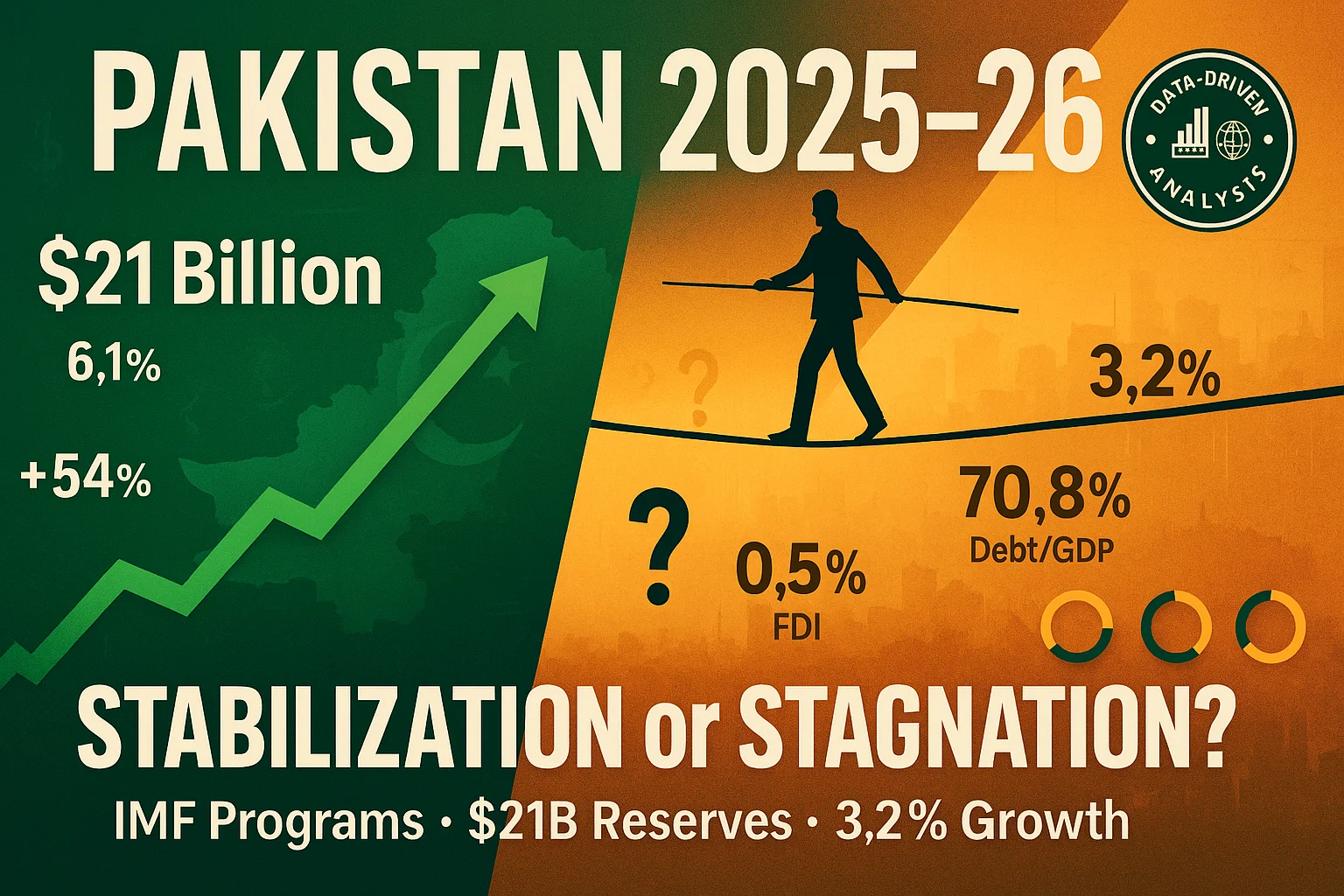
Pakistan’s Economic Outlook 2025: Between Stabilization and the Shadow of Stagnation
China’s Property Woes Could Last Until 2030—Despite Beijing’s Best Censorship Efforts

The Institutional Era: A Comprehensive Cryptocurrency Investment Analysis for 2026
Real Estate Crash Predictions 2026: Data-Backed Regional Guide

Best Investments in Pakistan 2026: Top 10 Low-Price Shares and Long-Term Picks for the PSX
DBS Hits S$1 Billion AI Value Milestone — But Agentic AI Poses Talent Challenges for Singapore Banks
The Contours of 21st-Century Geopolitics Will Become Clearer in 2026: A New World Is Starting to Emerge

How to Become an Active Taxpayer on Pakistan’s FBR Active Taxpayer List (ATL) in 2026: A Step-by-Step Guide

🌍 Davos 2026: The World Economic Forum Annual Meeting Sets the Stage for Global Transformation
Agentic AI in Finance: How Artificial Intelligence Is Replacing Routine Tasks on Wall Street

The New Executive Gold Standard: Top 10 Companies Lavishing Unprecedented Perks on CEOs and CFOs in 2025–2026
-
Markets & Finance10 months ago
Top 15 Stocks for Investment in 2026 in PSX: Your Complete Guide to Pakistan’s Best Investment Opportunities
-
Analysis9 months ago
Debunking IMF Program Myths: Reconfiguring Engagement for True National Ownership in a Volatile World
-
Analysis4 months ago
China Economy 2026: Property Crisis, AI Investment & Export Surplus Explained
-
Investment10 months ago
Top 10 Mutual Fund Managers in Pakistan for Investment in 2026: A Comprehensive Guide for Optimal Returns
-
Asia10 months ago
China’s 50% Domestic Equipment Rule: The Semiconductor Mandate Reshaping Global Tech
-
Global Economy10 months ago
What the U.S. Attack on Venezuela Could Mean for Oil and Canadian Crude Exports: The Economic Impact
-
AI10 months ago
15 Most Lucrative Sectors for Investment in Pakistan: A 2025 Data-Driven Analysis
-
Exports10 months ago
Pakistan’s Export Goldmine: 10 Game-Changing Markets Where Pakistani Businesses Are Winning Big in 2025