
Free Trade Area (FTA)
China’s FTAAP Push for APEC 2026 in Shenzhen: US Tariffs and Unite Asia-Pacific


China is preparing to use its hosting of the Asia-Pacific Economic Cooperation (APEC) forum in 2026 to revive one of the world’s most ambitious trade ideas — the Free Trade Area of the Asia-Pacific (FTAAP). The move is widely seen as both a strategic taunt to the United States and a goodwill gesture to Asia.
As host of the 33rd APEC Economic Leaders’ Meeting in Shenzhen, Beijing is positioning itself as the champion of open, multilateral trade at a time when Washington is embracing protectionism.
What is FTAAP and Why Does It Matter Now?
The Free Trade Area of the Asia-Pacific (FTAAP) is a proposed mega-regional trade agreement that would cover all 21 APEC member economies.
APEC’s official history shows the concept was first proposed by the APEC Business Advisory Council (ABAC) in 2004 and formally endorsed by leaders in 2006 as a long-term prospect. It was given major momentum with the adoption of the Beijing Roadmap for APEC’s Contribution to the Realization of the FTAAP in 2014.
The scale is massive. APEC’s 21 members account for over 60% of global GDP and nearly half of world trade, with a combined population of 2.9 billion people. According to USTR data, APEC GDP reached an estimated $67.8 trillion in 2024.
Despite its potential, FTAAP has lain dormant due to geopolitical rivalries, the collapse of WTO Doha talks, and competing regional deals.
APEC 2026: Why Shenzhen Changes Everything
This will be China’s third time hosting APEC and the first in 12 years. Chinese President Xi Jinping announced that Shenzhen will host the 2026 leaders’ meeting from November 18-19, 2026, calling the city a “miracle in world development”.
China’s state media confirmed the APEC CEO Summit 2026 will be held in Shenzhen on Nov 17-18, with the theme “Building an Asia-Pacific Community to Prosper Together”. China Daily reports the agenda will focus on building the FTAAP, alongside digital economy, AI, and sustainable development.
China has chosen three priorities for its host year: Openness, Innovation, and Cooperation. Advancing FTAAP is central to the Openness pillar.
Chinese Vice Minister of Commerce Li Chenggang said China wants to use the 20th anniversary of FTAAP as an opportunity to promote coordinated development of regional trade rules. Indonesia’s official Antara news agency reported that Chinese officials are seeking an “agreement to implement” FTAAP at this year’s forum.
The Two Pathways: RCEP and CPTPP
APEC itself does not negotiate tariffs; it incubates ideas. The consensus view is that FTAAP will be built by merging existing mega-deals.
APEC’s own research identifies RCEP and CPTPP as the two key pathways to FTAAP.
| Feature | RCEP | CPTPP | Proposed FTAAP |
|---|---|---|---|
| Members | 15 (includes China, 12 APEC members) | 12 (11 APEC members, no US or China yet) | All 21 APEC economies including US, China, Russia |
| Standard | Moderate, flexible | Very high standard | High-quality, comprehensive |
| Status | In force since Jan 2022 | In force, China has applied to join | Vision, under study |
Chinese President Xi Jinping said at the 2024 APEC meeting that RCEP and CPTPP should “align with each other and progress together so as to inject impetus into the development of the FTAAP.”
This alignment is strategic. APEC’s Putrajaya Vision 2040, adopted in 2020, reaffirms FTAAP as a major instrument to further regional economic integration and is central to the Aotearoa Plan of Action.
Taunting the US, Tantalising Asia: The Geopolitics
Why China wants it: For Beijing, FTAAP counters pressure from the US and EU over its export practices and allows Chinese exporters — a backbone of the world’s second-largest economy — to ship at lower costs. More importantly, it casts China as the defender of free trade.
Why the US will resist: APEC makes decisions by consensus, not majority vote, giving Washington effective veto power. Analysts note Donald Trump’s opposition to multilateral deals makes an APEC-wide agreement unlikely.
Trump opposes multilateral trade deals and imposed tariffs of more than 100% on Chinese imports during his first term, and again in 2025. China has filed multiple complaints to the WTO, accusing the US of undermining the rules-based multilateral trading system with reckless tariffs and warning that US tariffs violate WTO rules and cause global turbulence.
Experts argue Washington fears China could use other FTAAP members as “stepping stones to export goods to the US.”
As Christopher Beddor of Gavekal Dragonomics noted in the SCMP piece, “Pushing on the [FTAAP] may or may not lead to substantive deliverables, but simply keeping it in the headlines can allow China to portray itself as a champion of open trade.”
Will FTAAP Actually Happen in 2026?
Short answer: A full treaty is unlikely, but a major political declaration is highly probable.
- Consensus hurdle: All 21 economies, including the US and Russia, must agree.
- US-China rivalry: Fundamental disagreement on trade governance.
- Low-hanging fruit strategy: Instead of a full FTA, China is likely to push for an updated “Beijing Roadmap 2.0”, a feasibility study, or new guidelines on next-generation issues like digital trade, green economy, and supply chain connectivity.
Even without a deal, Beijing wins goodwill. For Southeast Asian manufacturing powerhouses already bound to China via RCEP, any move to cut export costs is welcome.
Conclusion: More Than a Trade Deal
China’s FTAAP bid for APEC 2026 is less about signing a treaty in Shenzhen and more about narrative control. While the US uses tariffs as an economic and geopolitical tool, China is using APEC’s host chair to propose action, integration, and cost-cutting.
If successful, it would be the largest free trade area in history. If blocked, it still allows Beijing to portray Washington as the obstacle to regional prosperity — a powerful message for Asia.
SEO Keywords to target: FTAAP, Free Trade Area of the Asia-Pacific, APEC 2026 Shenzhen, APEC China 2026, RCEP CPTPP FTAAP, Putrajaya Vision 2040, China US trade war APEC
FAQ
Q: When and where is APEC 2026?
A: The 33rd APEC Economic Leaders’ Meeting will be held in Shenzhen, China from November 18-19, 2026, with the CEO Summit on Nov 17-18.
Q: What countries are in FTAAP?
A: All 21 APEC members: Australia, Brunei, Canada, Chile, China, Hong Kong, Indonesia, Japan, South Korea, Malaysia, Mexico, New Zealand, Papua New Guinea, Peru, Philippines, Russia, Singapore, Taiwan, Thailand, US, Vietnam.
Q: What is the difference between RCEP, CPTPP and FTAAP?
A: RCEP and CPTPP are existing regional agreements covering 15 and 12 countries respectively. FTAAP is the proposed overarching agreement that would merge them into one covering all 21 APEC economies.







China’s FTAAP Push for APEC 2026 in Shenzhen: US Tariffs and Unite Asia-Pacific

AI Stocks Slide After Industry Leaders Call for a Development Slowdown

Singapore Stocks vs. Japan Stocks: Safe Havens in the Asian Economic Slowdown

Agentic AI in Finance: How Artificial Intelligence Is Replacing Routine Tasks on Wall Street

Fiscal Deficit and Public Debt

T-Mobile’s Enterprise Push and the Evolution of Modern Corporate Mobility Solutions

Enterprise Generative AI ROI 2026: The Adoption-to-Impact Gap Explained

Climate Finance and the Economic Reality of Passing 1.5°C

Business Insurance for Digital Exports: Protecting Your Company in the AI Era

Real Estate Crash Predictions 2026: Data-Backed Regional Guide

Unrecoverable Delays: How the St. Louis Strike Crippled Boeing’s F-15EX Eagle II

What is a “Lead-Left” Bank? Unpacking Morgan Stanley’s Role in Anthropic’s Mega-IPO

How to Invest in the Anthropic IPO: Step-by-Step Guide for Retail Investors

Mario Kart 8 Deluxe 4.0.0 Patch Notes: 8-Player Split Screen & CameraPlay

Is SPY Overvalued in September 2026? Fed Rate Hike Odds & Intrinsic Value

Intel 18A Foundry Strategy 2027: Capital Burn, Stock Sales & Break-Even Timeline
Trump Approval Hits 33% Low: What It Means for Markets & Midterms

Crypto Trading: Why AI Tools Are Changing Gen Z Investing

AI Creator Deals: How Contracts Protect Influencers

Gen Z AI Skills: Online Degrees That Boost Job Prospects

Top 15 Stocks for Investment in 2026 in PSX: Your Complete Guide to Pakistan’s Best Investment Opportunities

Debunking IMF Program Myths: Reconfiguring Engagement for True National Ownership in a Volatile World

Top 10 Mutual Fund Managers in Pakistan for Investment in 2026: A Comprehensive Guide for Optimal Returns

What the U.S. Attack on Venezuela Could Mean for Oil and Canadian Crude Exports: The Economic Impact
China’s 50% Domestic Equipment Rule: The Semiconductor Mandate Reshaping Global Tech
15 Most Lucrative Sectors for Investment in Pakistan: A 2025 Data-Driven Analysis
Pakistan’s Export Goldmine: 10 Game-Changing Markets Where Pakistani Businesses Are Winning Big in 2025

Pakistan’s Stock Market Renaissance: How 2025’s Hottest Investment Opportunity Is Democratizing Wealth—A Complete Beginner’s Guide
Pakistan’s Economic Outlook 2025: Between Stabilization and the Shadow of Stagnation
China’s Property Woes Could Last Until 2030—Despite Beijing’s Best Censorship Efforts

Best Investments in Pakistan 2026: Top 10 Low-Price Shares and Long-Term Picks for the PSX

How to Become an Active Taxpayer on Pakistan’s FBR Active Taxpayer List (ATL) in 2026: A Step-by-Step Guide
The Contours of 21st-Century Geopolitics Will Become Clearer in 2026: A New World Is Starting to Emerge
🌍 Davos 2026: The World Economic Forum Annual Meeting Sets the Stage for Global Transformation

The Institutional Era: A Comprehensive Cryptocurrency Investment Analysis for 2026

The New Executive Gold Standard: Top 10 Companies Lavishing Unprecedented Perks on CEOs and CFOs in 2025–2026
DBS Hits S$1 Billion AI Value Milestone — But Agentic AI Poses Talent Challenges for Singapore Banks

After Four Decades of Decline, Can Private Ownership Save Pakistan’s National Airline?
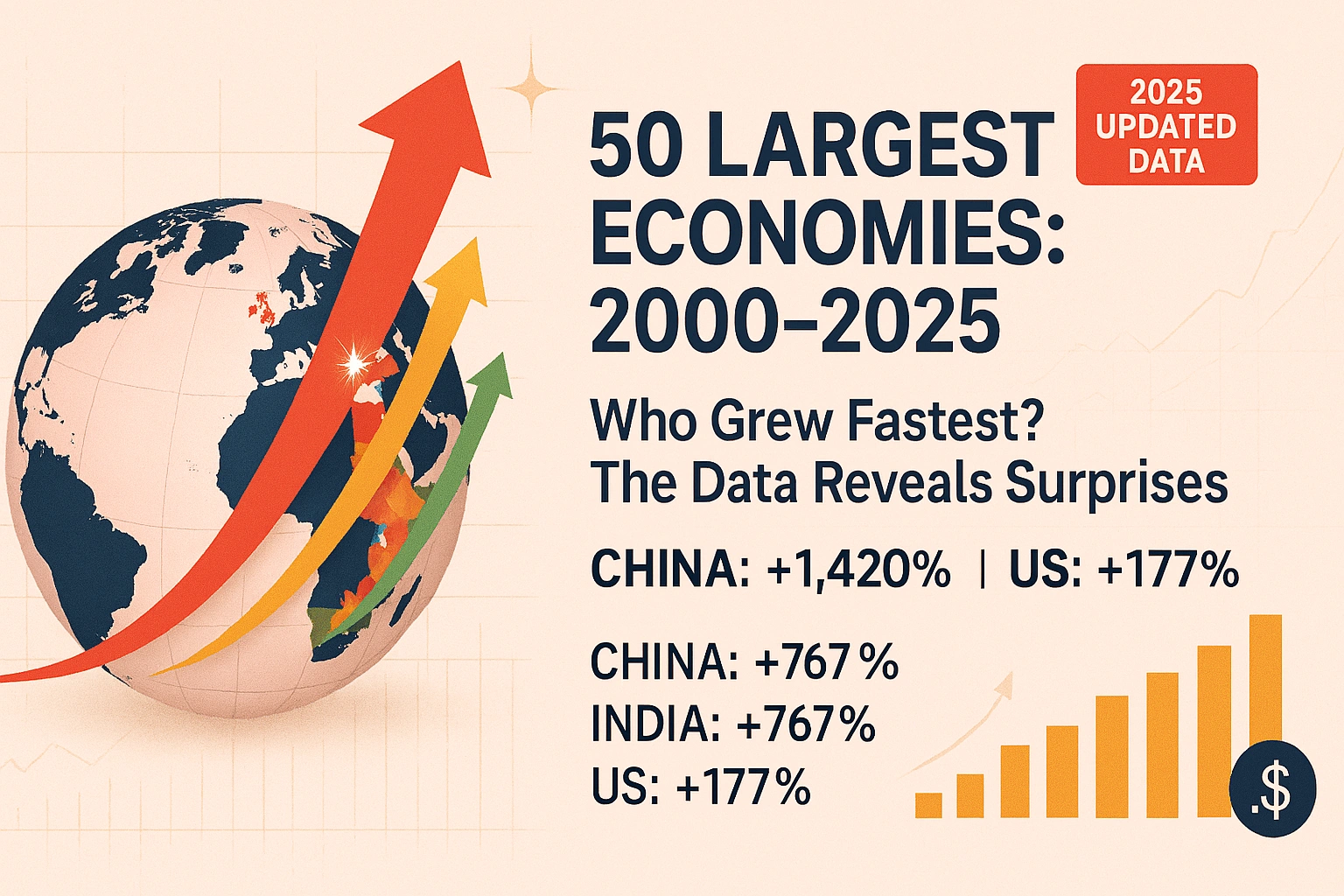
The World’s 50 Largest Economies: A 25-Year Growth Trajectory Analysis (2000-2025)

Resource Wealth and Geopolitical Vulnerability: Understanding Recent US Foreign Policy Toward Venezuela, Greenland, and Iran
-
Markets & Finance8 months ago
Top 15 Stocks for Investment in 2026 in PSX: Your Complete Guide to Pakistan’s Best Investment Opportunities
-
Analysis7 months ago
Debunking IMF Program Myths: Reconfiguring Engagement for True National Ownership in a Volatile World
-
Investment8 months ago
Top 10 Mutual Fund Managers in Pakistan for Investment in 2026: A Comprehensive Guide for Optimal Returns
-
Global Economy9 months ago
What the U.S. Attack on Venezuela Could Mean for Oil and Canadian Crude Exports: The Economic Impact
-
Asia9 months ago
China’s 50% Domestic Equipment Rule: The Semiconductor Mandate Reshaping Global Tech
-
AI9 months ago
15 Most Lucrative Sectors for Investment in Pakistan: A 2025 Data-Driven Analysis
-
Exports9 months ago
Pakistan’s Export Goldmine: 10 Game-Changing Markets Where Pakistani Businesses Are Winning Big in 2025
-
Global Economy9 months ago
Pakistan’s Stock Market Renaissance: How 2025’s Hottest Investment Opportunity Is Democratizing Wealth—A Complete Beginner’s Guide