
Business
How Generational Wealth Transfer Will Reshape China’s Economy

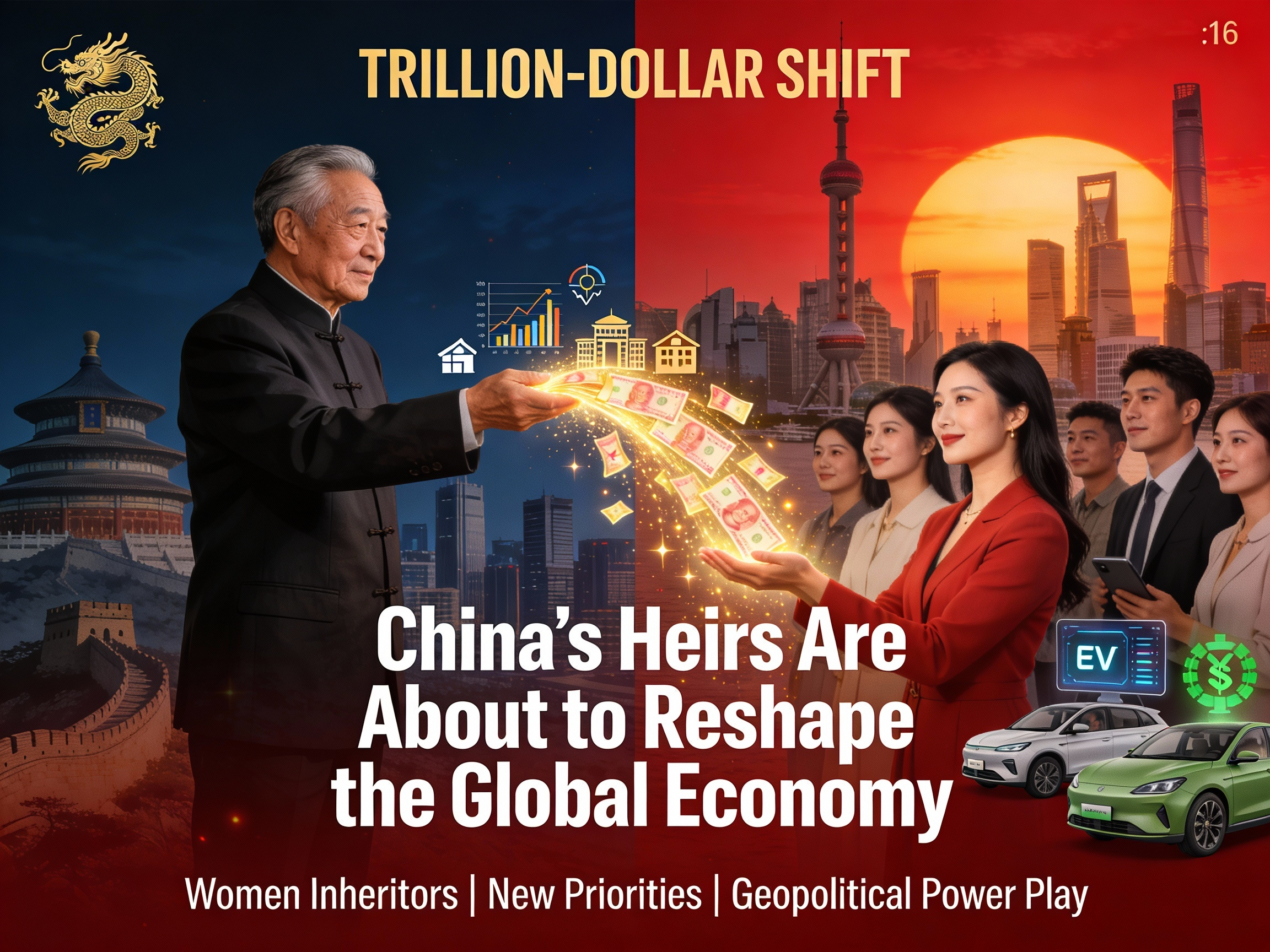
In the hushed private banking suites of Hong Kong and Singapore, a seismic shift is underway. Family patriarchs who built empires from rubble in the decades following China’s economic reforms now face an inescapable reality: their heirs—globally educated, digitally native, and values-driven—are preparing to inherit the largest concentration of private wealth in human history. This transition will do more than shuffle assets between generations. It will fundamentally recalibrate how capital flows through the world’s second-largest economy, reshape consumption patterns from property to experiences, and accelerate an eastward tilt in global financial power that began quietly but now moves with tectonic force.
The generational wealth transfer in China represents far more than inheritance planning. It is the economic inflection point where demographic destiny meets accumulated prosperity, where women inheritors will command unprecedented financial influence, and where the fraying social contract around property wealth collides with the imperatives of a consumption-driven future. The implications span geopolitics, fiscal sustainability, market architecture, and the lived reality of hundreds of millions of Chinese families navigating the most rapid aging process any major economy has ever experienced.
The Scale: Beyond Previous Estimates
Global wealth transfer projections have escalated dramatically. Cerulli Associates estimates that $124 trillion will change hands worldwide by 2048, surpassing total global GDP. UBS’s Global Wealth Report 2025 refined these figures, projecting over $83 trillion in transfers over the next 20–25 years, with $74 trillion moving between generations and $9 trillion transferring laterally between spouses.
For China specifically, the numbers have evolved beyond the 2023 Hurun estimate of $11.8 trillion over 30 years. UBS now projects mainland China will see more than $5 trillion in intergenerational wealth movement over the next two decades—a figure likely conservative given China’s billionaire population expanded by over 380 individuals daily in 2024. When combined with Oliver Wyman’s estimate that $2.7 trillion will transfer across Asia-Pacific by 2030, with Global Chinese families representing a substantial portion, the true scale approaches $6–7 trillion for Greater China through 2030 alone.
This wealth concentration is staggering. China’s projected transfers approach 30–35% of its current nominal GDP, creating both opportunity and peril. The wealth is highly concentrated: research indicates the top 1% of Chinese households control approximately one-third of the nation’s private wealth, five times more than the bottom 50% combined. How this capital reallocates will determine whether China navigates its demographic transition with economic resilience or faces a corrosive wealth effect that deepens consumption malaise.

The Demographic Imperative: Aging at Unprecedented Speed
China is experiencing the most compressed aging trajectory of any major economy in modern history. United Nations and World Bank projections show the population aged 65 and above doubling from 172 million (12.0%) in 2020 to 366 million (26.0%) by 2050. Some forecasts push this to 30% or higher, approaching Japan’s current super-aged society status but at a far earlier stage of per capita income development.
The dependency mathematics are brutal. China’s old-age dependency ratio—the number of retirees per working-age adult—will surge from approximately 0.13 in 2015 to 0.47–0.50 by 2050, mirroring the United Kingdom’s current burden. By 2050, China will transition from eight workers per retiree today to just two, straining pension systems, healthcare infrastructure, and family support networks simultaneously.
Unlike Western economies that grew wealthy before aging, China confronts what analysts term “growing old before growing rich.” China’s 65+ population is projected to reach 437 million by 2051, representing 31% of the total population—the largest elderly cohort on Earth. This creates fiscal pressures demanding over 10 million annual pension claimants by current trajectories, even as the working-age population contracts by an estimated 125 million between 2020 and 2050.
The demographic crisis is no longer theoretical. China’s population declined by 2.08 million in 2023, with the death rate reaching its highest level since 1974. The total fertility rate collapsed to 1.09 in 2022, well below replacement. Life expectancy, meanwhile, climbed to 77.5 years and is expected to reach 80 by 2050, with women averaging 88 years. These twin forces—collapsing births and extended longevity—create the conditions for history’s largest intergenerational asset transfer within a society still building its social safety net.
Property’s Wealth Effect: From Cornerstone to Constraint
For two decades, residential property served as China’s primary wealth accumulation vehicle. Urban households hold 70% of their assets in real estate, making housing the foundation of middle-class prosperity. Between 2010 and 2020, property prices in China’s top 70 cities surged nearly 60%, minting millionaires and cementing the conviction that real estate only appreciates.
Since 2021, that narrative has shattered. Housing prices have declined year-over-year for over four years, falling 3.8% in 2025 with forecasts projecting a further 0.5% drop in 2026 before modest stabilization in 2027. The property downturn has erased trillions in perceived wealth. Developers from Evergrande to Country Garden to Vanke—once symbols of unstoppable growth—now face distressed debt restructuring. In 2025, real estate investment fell 14.7%, new home sales dropped 8%, and the sector’s inventory-to-sales ratio reached 27.4 months in major cities, nearly double the healthy market threshold.
The negative wealth effect is profound. Households feel poorer, save more, and consume less. Over the past five years, household bank deposits nearly doubled to 160 trillion yuan ($22 trillion) by mid-2025—a defensive posture reflecting shattered confidence. Retail sales growth stagnated to barely 1% year-over-year by late 2025, with consumption contributing an estimated 1.7 percentage points to GDP growth, down from historical averages above 3 percentage points.
This creates a paradox for wealth transfer. Older generations hold substantial real estate assets acquired at lower valuations, but declining prices mean the inherited property wealth will be less valuable than anticipated. Meanwhile, younger cohorts who cannot afford today’s prices despite declines face reduced intergenerational support, as parents’ wealth is trapped in illiquid, depreciating assets. The property crisis doesn’t just constrain consumption today—it diminishes the wealth being transferred tomorrow.
Women Inheritors: The Silent Revolution in Capital Control
Perhaps no dimension of China’s generational wealth transfer has received less attention—or carries more transformative potential—than the shift of assets to women. Globally, Bank of America research estimates that women will receive approximately 70% of the $124 trillion great wealth transfer, with $47 trillion going directly to younger female heirs and $54 trillion passing to surviving spouses (95% of whom are women, given women’s longer life expectancy).
In China, this dynamic is amplified by cultural evolution and longevity gaps. Chinese women now live an average of 6–8 years longer than men, meaning widows will control substantial assets for extended periods before passing them to children. UBS highlights that approximately $9 trillion globally will move “sideways” to female spouses before generational transfer, reshaping who controls family capital.
Yet Chinese women historically faced systematic disadvantages in asset accumulation. Research shows only 37.9% of Chinese women own housing property (including co-ownership), compared to 67.1% of men. Among married individuals, just 13.2% of women hold property titles solely, versus 51.7% of married men. Sons receive more intergenerational transfers for housing than daughters, perpetuating gender wealth gaps.
The wealth transfer presents an opportunity to rebalance these inequities. Evidence from Next Generation wealth studies in Asia suggests younger Asian female inheritors prioritize impact investing, ESG-focused allocations, and portfolio diversification away from real estate toward equities and alternatives at higher rates than male counterparts or previous generations. Female wealth management clients demonstrate less emotional volatility, greater research diligence, and longer holding periods—traits that could channel inherited capital toward productive investment rather than speculative churning.
If Chinese women gain majority control over family wealth through inheritance and survivorship, investment patterns will shift toward healthcare, education, sustainability, and consumer services—sectors aligned with longer-term value creation. This contrasts with the property-speculation and heavy-industry bias that characterized first-generation male wealth builders. The gender dimension of China’s wealth transfer may prove as economically consequential as the generational one.
Fiscal Pressures and the Pension Crisis
China’s implicit social contract is fraying. For decades, families bore primary responsibility for elderly care, supported by high savings rates and multigenerational households. That model is collapsing. The one-child policy (1979–2015) means today’s elderly have five to six surviving children on average, but younger cohorts born in the late 1950s–1960s have fewer than two children. By 2050, many elderly will lack familial caregivers entirely.
Pension coverage remains incomplete. While urban workers enjoy basic pension schemes, rural residents and informal workers face gaps. The system runs deficits in multiple provinces, requiring central government transfers. As the dependency ratio surges, pension obligations will consume escalating shares of government budgets. Projections suggest pension liabilities could reach 53% of the population by 2050, an unsustainable burden without reform.
Healthcare costs compound the problem. China has 10 million citizens with Alzheimer’s and related dementias, a figure expected to approach 40 million by 2050. The prevalence of chronic diseases—cardiovascular conditions, cancer, diabetes—is rising as the population ages. An estimated 108–136 million Chinese lived with disabilities in 2020, projected to exceed 170 million by 2030, with over 70% being elderly by 2050.
The wealth transfer intersects these fiscal pressures in two ways. First, if inherited wealth enables families to self-fund elderly care, it reduces state burdens. Second, taxation of wealth transfers could provide revenue for social programs—though China currently levies no inheritance or gift taxes. The policy choice looms: allow dynastic wealth accumulation, or implement progressive transfer taxation to fund public services. Either path reshapes economic outcomes profoundly.
Investment Reallocation: From Concrete to Innovation
The property crisis is forcing a capital reallocation that the wealth transfer will accelerate. With real estate no longer a reliable store of value, Chinese households are diversifying. Despite the downturn, household savings of 160 trillion yuan provide fuel for new investment. Currently, only 5% of household wealth is allocated to equities, compared to 60% in real estate—leaving vast room for portfolio rebalancing.
Government policy encourages this shift. China’s onshore bond issuance grew from $17.2 trillion in 2020 to $24.1 trillion in 2024, absorbing domestic savings to fund R&D (up 8.9% year-over-year in 2024) and industrial subsidies. Retail investors drive 90% of stock market trades, and AI-led optimism fueled equity market rallies in 2025, redirecting household capital toward technology and innovation.
Next-generation inheritors amplify this trend. Surveys show 61% of Millennial and Gen Z high-net-worth individuals are willing to invest in high-growth niche markets, including private equity, cryptocurrencies, and alternative assets. By January 2025, Asian HNWIs held 15% of portfolios in alternatives—substantially higher than previous generations. Young Chinese inheritors prioritize digital efficiency, exclusive investments, and ESG impact, not legacy real estate empires.
This reallocation matters geopolitically. If Chinese capital flows toward domestic innovation, green technology, and healthcare rather than overseas property or dollar-denominated assets, it reinforces economic self-reliance and the “dual circulation” strategy. Conversely, if wealthy families diversify offshore—through Hong Kong family offices, Singapore trusts, or Western equities—it represents capital flight that undermines Beijing’s policy objectives.
Geopolitical Implications: The Eastward Tilt Accelerates
China’s wealth transfer does not occur in isolation. It coincides with a broader shift in global wealth concentration. UBS reports that the US and China jointly account for over half of all personal wealth globally. In 2024, China added more than 380 new millionaires daily, trailing only the US (~1,000 daily). By 2029, UBS projects 5.34 million new dollar millionaires globally, with the majority concentrated in the US and China.
Asia-Pacific’s share of global private wealth climbed from 6% in 2000 to 21% today, with projections reaching 25% by 2029 ($99 trillion). Within Asia, China remains the anchor. Hong Kong and Singapore have emerged as wealth management hubs, with 80% of capital inflows originating within Asia, signaling the region is no longer merely participating in global finance—it is driving it.
The geopolitical implications are stark. As Chinese capital remains concentrated in Asia, Western financial institutions lose influence. Dollar hegemony faces subtle erosion as Asian wealth managers, family offices, and UHNW individuals transact increasingly in yuan, Hong Kong dollars, and regional currencies. Trade flows follow capital flows: wealthy Asian inheritors invest in regional supply chains, technology ecosystems, and consumption markets, accelerating economic integration independent of Western-led globalization.
The wealth transfer also intersects US-China strategic competition. Technology transfers, intellectual property, and corporate control hinge on who owns equity stakes. If Chinese inheritors diversify into Western tech, real estate, and infrastructure, it raises national security concerns. Conversely, if Western investors are excluded from Chinese family enterprises during succession, it fragments global markets. The great wealth transfer is not merely economic—it is a contest for future geopolitical leverage.
The Next Generation: Values, Governance, and Succession Challenges
Family business research reveals deep generational contrasts in Asia. First-generation Chinese entrepreneurs—often China-based, control-oriented, and legacy-focused—built fortunes through relentless execution in manufacturing, real estate, and export industries. Their successors, by contrast, are globally educated, culturally agile, and drawn to impact investing, philanthropy, and flexible governance.
The succession gap is real. Asia Generational Wealth Report 2025 found 72% of founders see children as likely successors, yet 24% believe successors are underprepared. Diverging aspirations complicate transitions: NextGen prioritizes starting ventures and social impact over preserving family businesses. Without careful governance, succession failures could destroy enterprise value, disrupt employment, and fragment wealth.
China’s legal infrastructure for wealth transfer remains underdeveloped. The country has no inheritance or gift taxes, creating planning uncertainty if such levies are introduced. Family trusts, once rare, are expanding but face regulatory ambiguity. In 2025, Shanghai and Beijing introduced real estate trust registrations, allowing property transfers into trusts for estate planning—a breakthrough, but one limited to pilot cities.
Successful wealth transfers require not just legal structures but also family communication. Yet research shows fewer than 25% of families globally discuss succession openly, and over 38% of women avoid these conversations entirely. In China, where filial piety and hierarchy traditionally govern family dynamics, frank discussions about mortality, asset division, and successor capability remain culturally fraught. The result: avoidable disputes, suboptimal succession, and value destruction.
Market Implications: Consumption, Credit, and Growth
China’s wealth transfer will shape macroeconomic trajectories through consumption, credit demand, and investment priorities. If inherited wealth boosts household confidence, consumption could recover from its current doldrums. Morgan Stanley economists argue that halting property market declines is “crucial to mitigate the negative wealth effect on household consumption,” and that “restoring confidence in this key asset class will be instrumental in unlocking spending power across the economy.”
Yet the timing is uncertain. Even if property prices stabilize in late 2026 or 2027, consumer sentiment recovers slowly. Many households prioritize debt repayment and savings over consumption. Younger buyers face job insecurity and modest income growth, opting for rentals over purchases. Demand remains reasonably strong among first-time buyers and families seeking school-district housing, but large-scale investment appetite for new residential construction is subdued.
The credit channel also matters. If wealth transfers enable heirs to pay down debt, household leverage declines, strengthening balance sheets but reducing credit-fueled growth. Alternatively, if heirs borrow against inherited assets to fund consumption or investment, it extends the credit cycle. China’s household bad loan ratio reached 1.33% in the first half of 2025, exceeding the corporate ratio for the first time—a warning signal amid ongoing property and labor market pressures.
For policymakers, the wealth transfer represents both opportunity and risk. If managed well—through inheritance taxation that funds social programs, governance frameworks that enable smooth succession, and policies encouraging productive investment—it could support sustainable growth. If mismanaged—allowing dynastic concentration, capital flight, or succession disputes—it exacerbates inequality, undermines social cohesion, and slows economic dynamism.
Conclusion: A Crossroads for China’s Economic Future
China’s generational wealth transfer is not merely a demographic footnote. It is the economic event that will define the next two decades. The confluence of the world’s largest elderly population, the fastest aging process any major economy has experienced, and the most compressed wealth accumulation in modern history creates conditions without historical precedent.
The outcomes are not predetermined. If property markets stabilize and inherited wealth channels toward consumption, China could sustain 4–5% GDP growth through the 2030s, navigating the middle-income trap. If women inheritors allocate capital toward innovation, sustainability, and services, China’s economic structure diversifies beyond manufacturing and real estate. If family businesses transition smoothly to prepared successors, enterprise value compounds across generations, supporting employment and tax revenues.
Conversely, if property wealth evaporates, consumption stagnates, and fiscal burdens overwhelm government capacity, China risks Japan-style secular stagnation—or worse, given its earlier stage of development. If dynastic wealth concentrates without redistribution, inequality ignites social tensions. If capital flees offshore, Beijing’s policy autonomy erodes.
For global markets, the implications are profound. The shift of trillions in private wealth from aging entrepreneurs to younger, female, globally integrated inheritors will reshape capital flows, trade patterns, and geopolitical alignments. The eastward tilt of economic power, already underway, will accelerate. Investors, policymakers, and strategists who understand this transition will position themselves for the opportunities it creates. Those who ignore it will be blindsided.
China is at a crossroads. The great wealth transfer will determine which path it takes…..







The New Risk Frontier of Digital Exports
As software, AI models, digital media, and cross-border SaaS platforms dominate global trade, traditional commercial property and casualty insurance is no longer sufficient. Digital exporters face complex liabilities ranging from cross-border data privacy breaches and algorithmic bias claims to intellectual property infringement in foreign jurisdictions. In 2026, protecting a borderless digital enterprise requires specialized insurance coverage tailored to intangible asset risks.
Failing to secure robust digital export insurance can expose founders and shareholders to catastrophic lawsuits originating from overseas regulatory bodies.
Essential Coverages for Digital Export Enterprises
Cyber Liability and Algorithmic Error Coverage
If an AI model or software product exported overseas malfunctions or suffers a data breach, foreign regulators can levy severe fines under regional privacy laws. Modern cyber policies cover both regulatory defense costs and third-party damages.
Intellectual Property and Copyright Defense
Digital creators and SaaS firms operating globally are frequent targets of frivolous IP litigation in unfamiliar legal systems. Specialized IP insurance covers the exorbitant legal fees required to defend international patents and copyrights.
| Insurance Policy Type | Primary Protection Area | Target Enterprise | Average Annual Premium |
| Global Cyber Liability | Data breaches, ransomware, AI output errors | SaaS & AI Platforms | $5,000 – $18,000 |
| E&O Professional Liability | Service failures, missed deliverables | Digital Consultancies & Agencies | $3,000 – $10,000 |
| International IP Defense | Foreign copyright & patent lawsuits | Software Developers & Creators | $7,000 – $25,000 |
Securing Comprehensive Coverage: Best Practices
Navigating the insurance market for digital exports requires partnering with specialized brokers who understand intangible asset exposures.
Audit Geographic Exposures: Clearly map where your digital users reside to ensure your policy covers those specific regulatory jurisdictions.
Verify AI Exclusion Clauses: Carefully review policy wording to ensure your generative AI or automated tools are not explicitly excluded from coverage.
Maintain Incident Response Protocols: Insurers offer lower premiums to firms that demonstrate rigorous cybersecurity and data governance standards.
“Risk Management Expert Note: Your software may be intangible, but your liability in foreign markets is entirely real. Comprehensive digital export insurance is the ultimate shield for borderless growth.”
Equipping your digital export enterprise with specialized insurance safeguards your balance sheet and ensures uninterrupted global expansion.

Pakistan’s KSE-100 is up nearly 19% year-on-year and within striking distance of its all-time high — even as the country’s structural trade deficit remains unresolved. Here’s the full picture.
Pakistan’s stock market is delivering one of the more remarkable emerging-market growth stories of 2026, even as the country’s underlying trade imbalance remains a live structural concern. Per Trading Economics, the KSE-100 fell to 178,213 points on August 18, 2026, losing 1.27% from the previous session — but the index remains up 18.99% compared to the same time last year and has climbed 1.30% over the past month, with the index having touched an all-time high of 189,556 points.
Key Takeaways
- The KSE-100 stood at 178,213 points on August 18, 2026, up 18.99% year-on-year, and within range of its all-time high of 189,556.
- The index has gained 10.89% over the past four weeks and 64.89% over the past twelve months by an alternate measure of the same rally.
- The rally is being driven by macro stabilisation, S&P’s credit upgrade (see Article 4), and renewed foreign portfolio inflows.
- Pakistan’s structural trade gap — imports consistently exceeding exports — remains unresolved even as equities rally.
- Historical precedent (2024’s record run) shows KSE-100 rallies have previously been fuelled by the largest foreign equity buying in a decade.
The scale of the multi-year rally is worth putting in context, because Pakistan’s equity market has been one of the standout performers globally over an extended stretch, not just a recent spike. The Trading Economics data shows the index gained 10.89% over a recent four-week window and 64.89% over the trailing twelve months, reaching successive all-time highs through late 2025 and into 2026 — from 170,249 in mid-December 2025 to 170,719 by year-end to 189,556 at its most recent peak.
This isn’t the first time Pakistan’s market has rallied on this scale, and the historical pattern is instructive. A Bloomberg report from a prior cycle describes the KSE-100 closing near a then-record high after gaining more than 30% in a single year, aided by foreign investors’ net purchases of $87 million in local shares — at the time, the highest level of foreign buying since 2014. The current rally, still building on that earlier momentum, reflects a continuation of the same foreign-inflow-driven dynamic, now reinforced by the macro stabilisation narrative detailed in Article 4: S&P’s July 22 upgrade of Pakistan’s sovereign credit rating to ‘B’ from ‘B-‘, alongside a 22-year-low fiscal deficit of 2.6% of GDP.
What the rally does not resolve, however, is Pakistan’s persistent external trade imbalance — a structural feature the equity euphoria sits somewhat uneasily alongside. Pakistan’s own national statistics, summarized on Wikipedia’s Economy of Pakistan page using official data, show exports of $40.79 billion against imports of $78.02 billion in 2025 — a nearly $37 billion gap, with petroleum imports alone totaling $15.1 billion, textiles remaining the dominant export category at $16.3 billion, and China, the UAE and the US as the country’s largest trading partners on both sides of the ledger.
Business press coverage from Business Recorder captures the tension in real time: alongside reporting on the fiscal deficit improvement and credit upgrade, the same outlet has separately reported on Pakistan’s textile mills being “caught in a contradiction they did not design” regarding their European buyers, and on the Finance Division sounding “the alarm over the persistent inflation” even as headline stabilisation indicators improve — evidence that the equity rally and the export-competitiveness challenge are running on genuinely separate tracks, both real, both simultaneously true.
Why It Matters
A market this close to record highs, riding genuine macro-improvement momentum, sends a strong signal to portfolio investors evaluating frontier and emerging markets broadly — but the persistent trade gap is the metric that ultimately determines how much of that momentum translates into durable currency stability and reduced dependence on IMF and bilateral bridge financing.
Data and Evidence
- KSE-100, August 18, 2026: 178,213 points, -1.27% daily, +18.99% YoY, +1.30% over the past month
- KSE-100 all-time high: 189,556 points
- 2025 exports: $40.79bn; 2025 imports: $78.02bn (petroleum: $15.1bn of the total)
- S&P sovereign rating: upgraded to ‘B’ from ‘B-‘ (July 22, 2026)
- FY2025-26 fiscal deficit: 2.6% of GDP, a 22-year low
Global Impact
Pakistan’s equity rally, set against a still-wide trade deficit, is a data point international frontier-market investors weigh alongside similar stabilisation-but-imbalanced stories in other IMF-program economies — a useful comparative lens for any reader tracking emerging-market risk more broadly across this batch’s coverage of Indonesia (Article 11) and other developing economies.
What Happens Next
Watch whether the KSE-100 tests its 189,556 all-time high in the coming weeks, and whether Pakistan’s upcoming trade data shows any narrowing of the export-import gap as the fiscal stabilisation narrative continues to build.
Frequently Asked Questions
Is the KSE-100 at a record high right now?
Not quite — as of August 18, 2026 it stood at 178,213, below its all-time high of 189,556, though up nearly 19% year-on-year.
What’s driving the rally?
Macro stabilisation, the S&P credit rating upgrade, a record-low fiscal deficit, and renewed foreign portfolio inflows.
Does the stock rally mean Pakistan’s economy has fully recovered?
Not entirely — the country’s structural trade deficit, with imports far exceeding exports, remains unresolved.
How big is Pakistan’s trade gap?
Roughly $37 billion in 2025, with imports of $78.02 billion against exports of $40.79 billion.
Has Pakistan’s market rallied like this before?
Yes — a similar rally in 2024 was driven by the largest foreign equity buying in a decade at that time.

American consumers delivered a double dose of weak data last week, and markets are still recalibrating what it means for the Federal Reserve’s next move. Retail sales fell unexpectedly in July while consumer sentiment posted its first monthly decline in three months — a combination that has pushed the odds of Fed action lower even as inflation concerns keep the central bank’s path anything but settled.
The Numbers That Moved Markets
Headline retail sales fell 0.6% in July to $763.6 billion, an unexpected decline, while core retail sales — excluding volatile categories — fell 0.3%, missing expectations on both counts. Consumer sentiment told an even starker story: the University of Michigan’s index dropped to 51.0 in August, well below the 54.5 economists had forecast — a reading low enough to raise questions about the durability of consumer spending heading into the back half of the year.
The market reaction was immediate. The dollar index fell 0.27% as the weak data reduced the probability of a September Fed rate move to roughly 32%, down from 35% the day before, according to rate-futures pricing. That move was reinforced by a broader shift in risk sentiment after President Trump appeared to step back from plans for further major military action against Iran, favouring economic pressure instead — reducing safe-haven demand for the dollar on top of the weak domestic data.
A Softer Consumer, But Not a Collapsing One
The picture is nuanced rather than uniformly gloomy. One report noted that retailers using tariff refunds to cut prices may be helping bring down inflation, adding to the broader market view that price pressures could ease even as spending cools — a combination that, if it holds, would give the Fed more room to prioritise growth support over inflation vigilance.
Corporate earnings released the same week offered a partial counterweight to the soft consumer data. Applied Materials reported third-quarter results showing that higher demand tied to artificial intelligence continued to support its business, reinforcing the now-familiar pattern in 2026 US markets: AI-linked capital spending remains robust even as traditional consumer-facing indicators soften.
Equity markets took the mixed signals in stride rather than panicking. At midday on the day of the release, the Nasdaq Composite fell 0.44%, the Dow Jones Industrial Average lost 0.21%, and the S&P 500 slipped 0.19% — modest declines that suggest investors read the data as consistent with a “soft landing” narrative rather than a recession warning.
The Fed’s Balancing Act
The weak retail and sentiment data arrived on top of an already-building case for caution at the Fed. A separate Seeking Alpha report described Fed rate-hike odds for September sliding further after the unexpected drop in retail sales and the first decline in consumer sentiment in three months, part of what the outlet called a broader raft of soft economic data across the week.
That said, the picture the Fed faces is genuinely mixed rather than one-directional. The same week’s economic briefings noted that the 10-year Treasury note yield rose 5 basis points despite the weak reports, driven by lingering inflation concerns tied in part to the elevated oil prices flowing from the Middle East conflict — the same dynamic complicating central bank calculus in the UK and across much of the developed world this year.
What It Means Heading Into September
The net effect is a Federal Reserve now navigating a genuinely two-sided risk environment: a softening domestic consumer that would normally argue for lower rates, against an energy-driven inflation risk that argues for caution. With September Fed odds now hovering in the low-to-mid 30% range for further tightening — effectively pricing a Fed on hold rather than hiking — markets appear to be betting that policymakers will prioritise the growth signal over the inflation signal, at least for now.
The coming weeks of data, particularly the next round of CPI and PCE inflation readings, are likely to be decisive in confirming or overturning that bet.
Key Takeaways
- US retail sales fell 0.6% in July, missing expectations, while core retail sales dropped 0.3%.
- Consumer sentiment fell to 51.0 in August, its first decline in three months and well below the 54.5 forecast.
- September Fed rate-hike odds fell to roughly 32% from 35% following the data.
- AI-linked corporate demand, evidenced by Applied Materials’ results, remains a bright spot even as broader consumer indicators soften.
- Treasury yields rose despite the weak data, reflecting lingering inflation concerns tied to elevated oil prices.
Frequently Asked Questions
How much did US retail sales fall in July 2026? US retail sales fell 0.6% in July to $763.6 billion, an unexpected decline, with core retail sales down 0.3%.
What happened to US consumer sentiment in August 2026? The University of Michigan consumer sentiment index dropped to 51.0 in August, its first monthly decline in three months and well below the 54.5 economists had forecast.
What are the odds of a Fed rate move in September 2026? Following the weak retail sales and sentiment data, the probability of Fed action in September fell to roughly 32%, down from 35% the previous day.

2026 Economic Outlook: Investment Tips for Pakistani Investors

Anduril’s $6.6 Billion Submarine Shipyard Plan Explained

Life Insurance Comparison: Term vs. Whole Life and What Each Actually Costs

Stock Market Today: Nasdaq Hits Record High as Dow and S&P 500 Stumble on Middle East Diplomatic Shifts

Energy Market Spikes vs. Consumer App Data: What GasBuddy and Crude Prices Signal for Inflation

China’s FTAAP Push for APEC 2026 in Shenzhen: US Tariffs and Unite Asia-Pacific

AI Stocks Slide After Industry Leaders Call for a Development Slowdown

Singapore Stocks vs. Japan Stocks: Safe Havens in the Asian Economic Slowdown

Agentic AI in Finance: How Artificial Intelligence Is Replacing Routine Tasks on Wall Street

Fiscal Deficit and Public Debt

T-Mobile’s Enterprise Push and the Evolution of Modern Corporate Mobility Solutions

Enterprise Generative AI ROI 2026: The Adoption-to-Impact Gap Explained

Climate Finance and the Economic Reality of Passing 1.5°C
Business Insurance for Digital Exports: Protecting Your Company in the AI Era

Real Estate Crash Predictions 2026: Data-Backed Regional Guide

Unrecoverable Delays: How the St. Louis Strike Crippled Boeing’s F-15EX Eagle II

What is a “Lead-Left” Bank? Unpacking Morgan Stanley’s Role in Anthropic’s Mega-IPO

How to Invest in the Anthropic IPO: Step-by-Step Guide for Retail Investors

Mario Kart 8 Deluxe 4.0.0 Patch Notes: 8-Player Split Screen & CameraPlay

Is SPY Overvalued in September 2026? Fed Rate Hike Odds & Intrinsic Value

Top 15 Stocks for Investment in 2026 in PSX: Your Complete Guide to Pakistan’s Best Investment Opportunities
Debunking IMF Program Myths: Reconfiguring Engagement for True National Ownership in a Volatile World
China Economy 2026: Property Crisis, AI Investment & Export Surplus Explained

Top 10 Mutual Fund Managers in Pakistan for Investment in 2026: A Comprehensive Guide for Optimal Returns
China’s 50% Domestic Equipment Rule: The Semiconductor Mandate Reshaping Global Tech

What the U.S. Attack on Venezuela Could Mean for Oil and Canadian Crude Exports: The Economic Impact
15 Most Lucrative Sectors for Investment in Pakistan: A 2025 Data-Driven Analysis

Pakistan’s Export Goldmine: 10 Game-Changing Markets Where Pakistani Businesses Are Winning Big in 2025

Pakistan’s Stock Market Renaissance: How 2025’s Hottest Investment Opportunity Is Democratizing Wealth—A Complete Beginner’s Guide
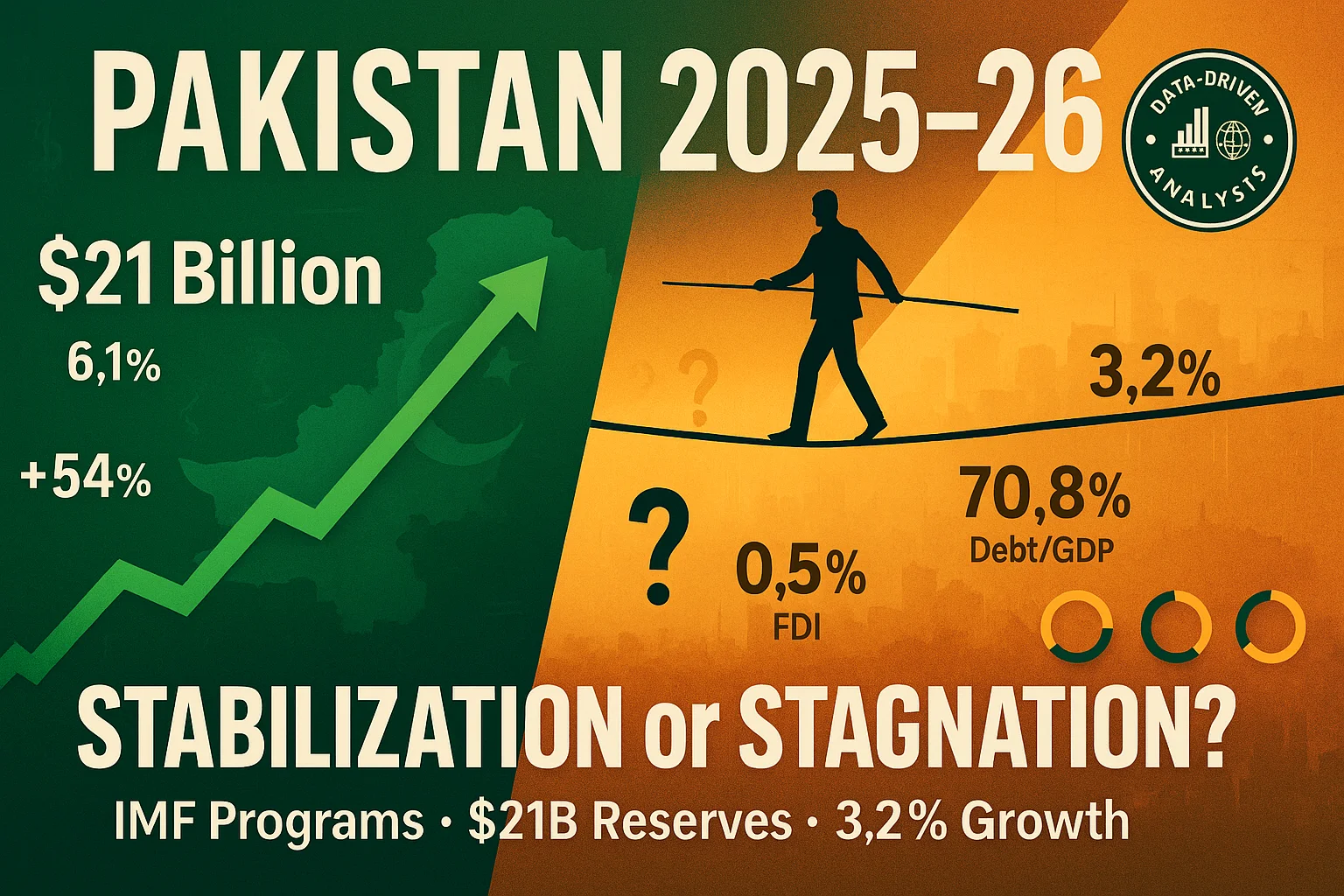
Pakistan’s Economic Outlook 2025: Between Stabilization and the Shadow of Stagnation
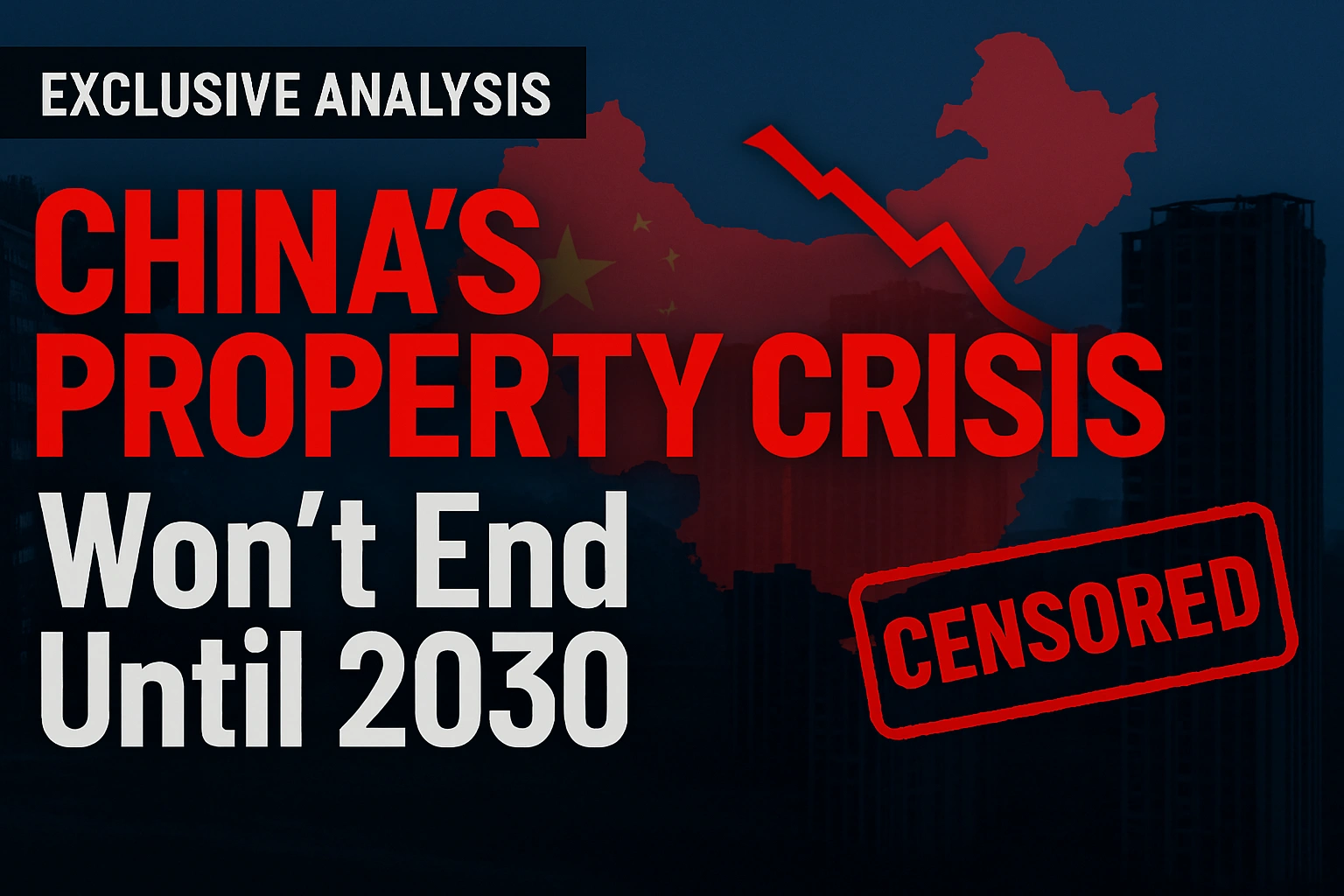
China’s Property Woes Could Last Until 2030—Despite Beijing’s Best Censorship Efforts

The Institutional Era: A Comprehensive Cryptocurrency Investment Analysis for 2026
Real Estate Crash Predictions 2026: Data-Backed Regional Guide

Best Investments in Pakistan 2026: Top 10 Low-Price Shares and Long-Term Picks for the PSX
DBS Hits S$1 Billion AI Value Milestone — But Agentic AI Poses Talent Challenges for Singapore Banks
The Contours of 21st-Century Geopolitics Will Become Clearer in 2026: A New World Is Starting to Emerge

How to Become an Active Taxpayer on Pakistan’s FBR Active Taxpayer List (ATL) in 2026: A Step-by-Step Guide
🌍 Davos 2026: The World Economic Forum Annual Meeting Sets the Stage for Global Transformation
Agentic AI in Finance: How Artificial Intelligence Is Replacing Routine Tasks on Wall Street

The New Executive Gold Standard: Top 10 Companies Lavishing Unprecedented Perks on CEOs and CFOs in 2025–2026
-
Markets & Finance10 months ago
Top 15 Stocks for Investment in 2026 in PSX: Your Complete Guide to Pakistan’s Best Investment Opportunities
-
Analysis9 months ago
Debunking IMF Program Myths: Reconfiguring Engagement for True National Ownership in a Volatile World
-
Analysis4 months ago
China Economy 2026: Property Crisis, AI Investment & Export Surplus Explained
-
Investment10 months ago
Top 10 Mutual Fund Managers in Pakistan for Investment in 2026: A Comprehensive Guide for Optimal Returns
-
Asia10 months ago
China’s 50% Domestic Equipment Rule: The Semiconductor Mandate Reshaping Global Tech
-
Global Economy10 months ago
What the U.S. Attack on Venezuela Could Mean for Oil and Canadian Crude Exports: The Economic Impact
-
AI10 months ago
15 Most Lucrative Sectors for Investment in Pakistan: A 2025 Data-Driven Analysis
-
Exports10 months ago
Pakistan’s Export Goldmine: 10 Game-Changing Markets Where Pakistani Businesses Are Winning Big in 2025