
Asia
The Contours of 21st-Century Geopolitics Will Become Clearer in 2026: A New World Is Starting to Emerge

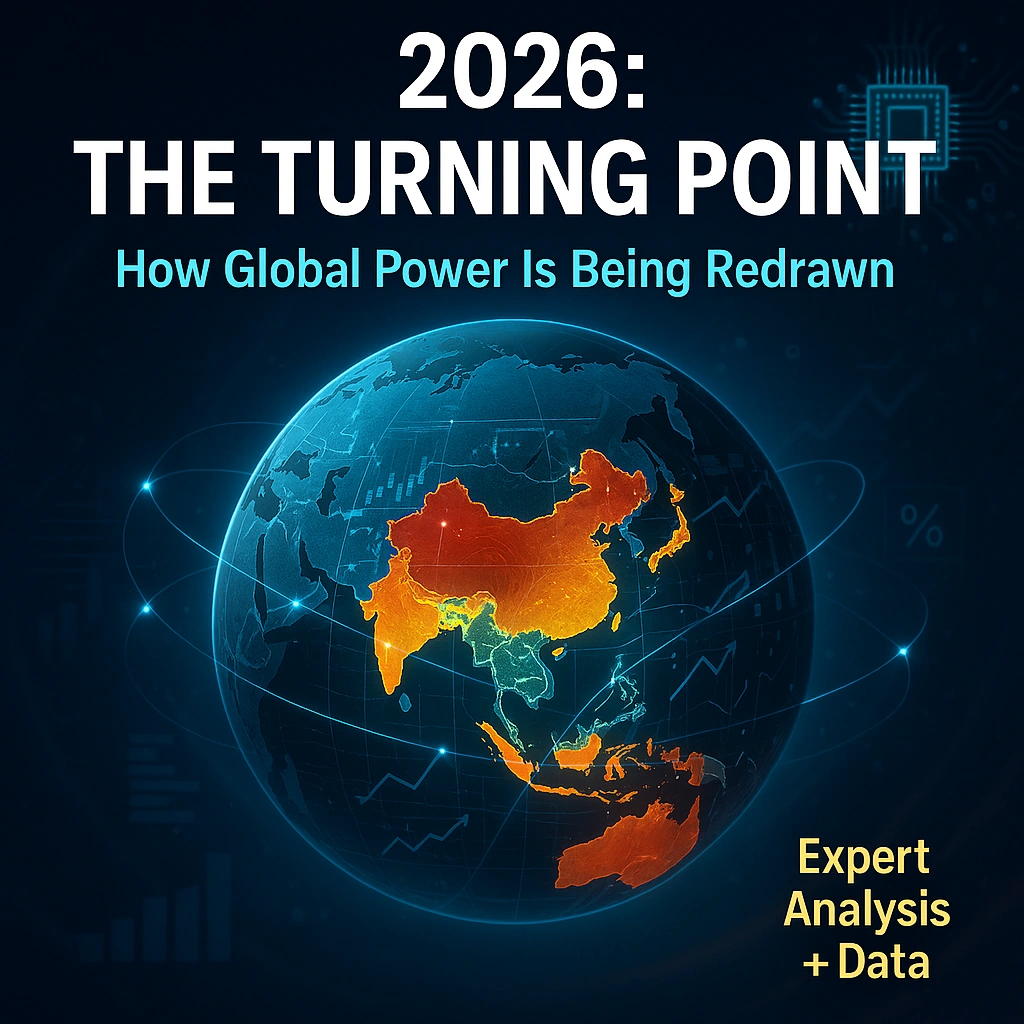
The world stands at an inflection point. As 2026 unfolds, the post-Cold War order that shaped global affairs for three decades is giving way to something fundamentally different. This isn’t just another year of geopolitical tensions—it’s the moment when the emerging world order crystallizes into recognizable contours, reshaping how businesses operate, how nations interact, and how power itself is distributed across the planet.
The evidence is everywhere. Nearly 75% of CEOs have either localized or are localizing some part of their production within the country of sale, while just over half are reorganizing supply chains to serve particular regional blocs. The multipolar world has solidified, and 2026 will be the year we see its architecture clearly defined.
The Architecture of a New World Order
Three fundamental shifts are converging to create this new geopolitical landscape. First, economic sovereignty has replaced free-market globalization as the dominant paradigm. Second, technological competition—particularly in artificial intelligence and semiconductors—has become inseparable from national security. Third, resource geopolitics centered on critical minerals and energy is redefining which nations hold strategic leverage.
These aren’t isolated trends. They’re interconnected forces creating what analysts call a “geopolitics of scarcity” where access to technology, minerals, and capital will determine winners and losers in the 21st century. For business leaders, policymakers, and investors, understanding these dynamics isn’t optional—it’s existential.
Economic Realignment: The End of Rules-Based Trade
The architecture of global commerce is undergoing its most dramatic transformation since the establishment of the Bretton Woods system in 1944. The world economy isn’t collapsing, but it is fundamentally reorganizing around new principles where national security trumps economic efficiency.
Key Takeaways:
- Economic sovereignty has replaced free-market efficiency as the organizing principle of global trade
- BRICS expansion to 11 members accounting for 40% of global GDP signals genuine power redistribution
- China controls 70% average market share in refining 19 of 20 critical minerals, creating strategic vulnerabilities
- AI and technological competition have become inseparable from national security concerns
- 75% of CEOs are localizing production, reflecting permanent supply chain restructuring
- Multipolarity is creating overlapping regional blocs rather than a return to Cold War bipolarity
- Investment must now incorporate geopolitical risk analysis as central to decision-making
The Dawn of Economic Blocs
The BRICS bloc now accounts for 40% of the global economy measured by purchasing power parity, with projections rising to 41% in 2025. The group’s expansion to eleven full members—including Egypt, Ethiopia, Indonesia, Iran, and the United Arab Emirates—represents more than geopolitical posturing. It signals a wholesale reconfiguration of trade flows, investment patterns, and financial architecture.
But BRICS expansion is just one dimension of this fragmentation. With the 2025 expansion, the BRICS group is forecast to account for 58% of GDP growth from 2024 to 2029, while the G7’s share of GDP growth is expected to decline to around 25%. This isn’t merely about emerging markets growing faster—it’s about structural power shifting from the traditional centers of global capitalism.
The North American operating environment exemplifies these tensions. The US-Mexico-Canada Agreement (USMCA) review is reshaping regional supply chains, forcing companies to recalculate decades of cross-border investment. Meanwhile, Europe faces its own reckoning as internal divisions deepen over defense spending, energy policy, and fiscal coordination.
De-Dollarization: Threat or Mirage?
Perhaps no trend captures more attention—or generates more confusion—than efforts to challenge the US dollar’s dominance. BRICS has launched initiatives like BRICS Pay and the BRICS Bridge to facilitate trade in local currencies and bypass SWIFT, with a new BRICS currency backed by commodities like gold and oil under discussion.
The reality is more nuanced than the headlines suggest. The dollar still accounts for nearly half of global payments and maintains unmatched liquidity and legal certainty. However, the direction of travel is unmistakable. Russia and India settling oil transactions in rupees, China expanding yuan-denominated trade, and multiple nations building payment systems outside the dollar infrastructure—these moves represent incremental but irreversible shifts.
For businesses, this creates immediate complexity. Companies must now navigate multiple currency zones, maintain relationships with banks in different jurisdictions, and hedge against currency risks that were previously negligible. The era of frictionless dollar-based global commerce is ending.
Trade Policy as Weapon
Governments are enacting new trade policies—including tariffs, export controls and local content requirements—to mandate or incentivize companies to modify existing supply chains and trade patterns. What began as targeted measures has evolved into comprehensive industrial strategies where every major economy is using trade tools to reshape domestic manufacturing.
The International Monetary Fund projects global growth at 3.2% in 2025 and 3.1% in 2026—below the pre-pandemic average of 3.7%. This slower growth reflects the friction costs of fragmenting supply chains. Companies face higher expenses, longer lead times, and reduced economies of scale. Yet these inefficiencies are deemed acceptable costs for enhanced economic security.
Technological Sovereignty: The New Strategic Frontier
If the 20th century’s geopolitical battles were fought over territory and resources, the 21st century’s defining contests will be won or lost in the realm of technology. And 2026 is when this competition intensifies to unprecedented levels.
The AI Arms Race Accelerates
Governments are increasingly treating AI assets as a national security priority and an important piece of critical infrastructure, with AI serving as a force multiplier of cyber conflicts. This transformation from commercial technology to strategic asset has profound implications.
The United States and China dominate this landscape, but their approaches diverge sharply. America relies on private-sector innovation led by tech giants, while China pursues state-directed development with tighter integration between commercial and military applications. DeepSeek’s surprise emergence in January 2025—releasing a reasoning model competitive with the most advanced US systems but at significantly lower development costs—demonstrated that assumptions about insurmountable American leads were premature.
For businesses, AI competition creates a minefield of compliance requirements. Export controls determine which companies can access cutting-edge chips. Data localization laws restrict where AI training can occur. Governments impose requirements on which AI systems can be deployed in critical infrastructure. The result is what analysts call a “two-speed AI ecosystem”: giants capable of navigating regulatory complexity across jurisdictions, and smaller firms confined to single markets or dependent on platforms controlled by others.
The Semiconductor Chokepoint
Nothing illustrates technological interdependence—and vulnerability—more starkly than semiconductors. Taiwan produces the majority of the world’s most advanced chips. The Netherlands’ ASML holds a near-monopoly on extreme ultraviolet lithography machines essential for cutting-edge production. The United States dominates chip design and specialized manufacturing equipment.
This concentration creates acute geopolitical risk. Any disruption to Taiwan’s production would cascade through global supply chains, affecting everything from smartphones to fighter jets. Nations are responding with massive investment in domestic semiconductor manufacturing, but building fabs requires years and faces immense technical barriers.
Water scarcity adds another dimension. Data centers and semiconductor manufacturing consume vast quantities of water. As freshwater scarcity grows worldwide and demand for water increases for semiconductor manufacturing and cooling data centers, more water rights conflicts will arise. Geography and geology—not just technology and capital—will determine which nations can sustain advanced manufacturing.
Digital Sovereignty and Data Balkanization
The free flow of data that underpinned the digital economy is fragmenting into national and regional silos. The European Union’s data protection regime, China’s cybersecurity laws, and emerging frameworks across dozens of countries create incompatible requirements for how data is collected, processed, and stored.
This “splinternet” imposes real costs. Companies must maintain separate infrastructure for different markets. Cloud providers face restrictions on where they can locate data centers and which customers they can serve. The seamless global digital infrastructure of the 2010s is being replaced by a patchwork of national digital territories.
Critical Minerals: The New Oil
Energy dominated geopolitics for a century. In 2026, critical minerals are assuming that role—with even higher stakes because alternatives are scarcer and concentration is more extreme.
China’s Commanding Heights
For 19 out of 20 important strategic minerals, China is the leading refiner with an average market share of 70%. This dominance extends beyond refining to manufacturing. China’s share of sintered permanent magnet production—magnets used in electric vehicles, wind turbines, industrial motors, data centers and defense systems—has risen from around 50% two decades ago to 94% today.
Beijing has demonstrated willingness to weaponize this control. In April 2025, China introduced export controls on seven heavy rare earth elements. By October, these controls expanded to include five additional elements and equipment for processing rare earths. Most significantly, from December 2025 onward, controls extend to internationally manufactured products containing Chinese-sourced materials or technologies.
The implications are staggering. Defense contractors, automotive manufacturers, renewable energy companies, and consumer electronics firms all depend on supply chains that flow through China. Even when minerals are mined elsewhere, they typically travel to China for refining and processing.
The Race for Diversification
Between 2020 and 2024, growth in refined material production was heavily concentrated among leading suppliers, with the average market share of the top three refining nations of key energy minerals rising from around 82% in 2020 to 86% in 2024. Concentration is increasing, not decreasing, despite years of stated diversification goals.
The obstacles are formidable. Building a rare earth processing facility requires years of permitting, billions in investment, and expertise concentrated in a handful of companies. Environmental regulations in many countries make domestic processing challenging. The economics favor continuing reliance on Chinese infrastructure even as the geopolitical risks mount.
Countries are pursuing multiple strategies. The United States signed an $8.5 billion rare earths agreement with Australia. Africa’s cobalt-copper belt in the Democratic Republic of Congo and Zambia is seeing expanded investment. Gulf states are positioning themselves as critical partners through infrastructure investments across multiple continents.
Yet even aggressive expansion may not bear fruit quickly enough. Given the long lead times for development of critical mineral mining, processing and manufacturing assets, even aggressive expansion of new, de-risked supply chain activity may not yet protect the United States from a severe supply chain disruption.
Resource Nationalism and Strategic Stockpiling
Producing nations are asserting greater control over their mineral wealth. In February 2025, the Democratic Republic of Congo announced a four-month suspension of cobalt exports to curb falling prices. More than half of energy-related minerals now face some form of export controls.
This resource nationalism creates a paradox: nations seeking to secure supply chains face restrictions from the very countries they’re trying to partner with. The result is a complex negotiation where access to minerals is traded for technology transfer, infrastructure investment, and geopolitical alignment.
Institutional Reordering: From Multilateralism to Minilateralism
The international institutions built after World War II and expanded after the Cold War are struggling to adapt to this multipolar reality. 2026 will see these pressures intensify as nations seek alternatives that better reflect current power distributions.
The BRICS Alternative
The New Development Bank is expected to play a key role in providing investment flows into BRICS countries through loans and credit arrangements that may be given at relatively modest interest rates and near condition-free financing. This represents an alternative to the International Monetary Fund and World Bank, institutions often criticized for imposing stringent conditions.
The BRICS Contingent Reserve Arrangement, with $100 billion in capital, provides emergency liquidity without requiring countries to first seek IMF assistance. These parallel institutions don’t replace Western-dominated frameworks, but they provide options that didn’t exist a decade ago.
Regional Blocs Strengthen
While global institutions fracture, regional frameworks are gaining strength. The African Continental Free Trade Area creates a market of 1.3 billion people. The Regional Comprehensive Economic Partnership links fifteen Asia-Pacific economies. The European Union, despite internal tensions, remains the world’s largest single market.
These regional architectures will be the building blocks of the emerging order. Rather than a single global system, we’re moving toward overlapping regional spheres with variable geometry—some nations participating in multiple blocs, others forced to choose between incompatible frameworks.
Middle Powers Navigate
Countries like South Korea, Indonesia, Vietnam, and the UAE face a delicate balancing act. They seek to maintain economic relationships with both China and the West while avoiding being forced into binary choices. ASEAN countries are particularly adept at this balancing approach due to their intertwined commercial and strategic interests with both Washington and Beijing.
This “strategic autonomy” represents a distinct approach from Cold War non-alignment. These nations aren’t staying neutral—they’re actively engaging with multiple power centers, extracting concessions and maintaining flexibility. The success of this strategy depends on major powers tolerating such flexibility rather than demanding exclusive alignment.
Energy Transition Meets Geopolitical Reality
The transformation of global energy systems is accelerating even as geopolitical fragmentation complicates the transition. This creates tensions between climate ambitions and national security imperatives.
The Green Energy Paradox
Renewable energy reduces dependence on oil and gas but creates new dependencies on critical minerals and manufacturing capacity. Solar panels, wind turbines, and electric vehicle batteries require materials that flow through concentrated supply chains. The energy transition, rather than reducing geopolitical competition, is redirecting it toward new chokepoints.
With Saudi Arabia, Iran, and UAE as BRICS members, the bloc now controls over 40% of global crude oil production and produces 32% of global natural gas output. Traditional energy producers aren’t being displaced—they’re repositioning themselves for the new energy landscape while maintaining leverage from hydrocarbon production.
Petrostates Pivot
Gulf nations are using oil revenues to invest heavily in renewable energy, positioning themselves as future clean energy hubs. The UAE’s massive solar installations and green hydrogen projects exemplify this strategy. These investments aren’t just about diversification—they’re about maintaining geopolitical relevance in a decarbonizing world.
Russia and Iran face different calculations. Heavily dependent on fossil fuel exports and facing sanctions, they have fewer options for managed transition. This creates potential for disruption if energy markets shift faster than these economies can adapt.
What This Means for Business
The emerging world order fundamentally changes how companies must operate. The era of optimizing purely for efficiency is over. Resilience, redundancy, and regional adaptation are now strategic imperatives.
Supply Chain Transformation
Companies cannot rely on single-source suppliers, even if they offer the lowest costs. Building resilient supply chains means accepting higher expenses and reduced margins in exchange for greater security. The 75% of CEOs localizing production represents recognition that globalization’s golden age has ended.
This doesn’t mean complete de-globalization. Rather, it’s “selective reglobalization”—maintaining international networks while building regional capabilities and reducing critical dependencies. The challenge is identifying which components require local sourcing and which can remain globally sourced.
Navigating Regulatory Complexity
Businesses face conflicting requirements across jurisdictions. Export controls, data localization, local content rules, and cybersecurity mandates often contradict each other. Companies need compliance architectures that can adapt to rapidly changing rules while maintaining operational continuity.
Small and medium enterprises face particular challenges. The cost of navigating multiple regulatory regimes may exceed their capacity, forcing difficult choices between markets or dependence on larger platforms.
Investment Priorities Shift
Capital allocation must now incorporate geopolitical risk analysis alongside traditional financial metrics. Questions that were once peripheral—political stability, resource security, regulatory trajectory—are now central to investment decisions.
The IMF projects global growth at 3.2% in 2025 and 3.1% in 2026, with advanced economies expected to grow around 1.5-1.6% while emerging markets hold above 4%. This divergence reflects the structural shift toward emerging economies even as mature markets face the costs of adjustment.
The Year Ahead: Five Critical Developments
As 2026 progresses, several key developments will clarify the emerging order’s contours:
1. US-China Coexistence Framework: Despite competition, both powers recognize the need for managed coexistence. Trade agreements and summit outcomes will signal whether they can establish predictable parameters or whether relations deteriorate further.
2. BRICS Institutional Deepening: The bloc will test whether its expanded membership can translate into effective coordination. Progress on payment systems, the New Development Bank’s lending, and joint infrastructure projects will indicate whether BRICS becomes a functional alternative or remains primarily symbolic.
3. Critical Minerals Diplomacy: Deals between major economies and resource-rich nations will reveal which partnerships can actually deliver diversified supply chains. The gap between announced agreements and operational supply is the measure that matters.
4. AI Governance Fragmentation: Attempts at harmonized AI standards will collide with national security imperatives. The AI Action Summit outcomes will show whether any degree of international coordination is possible or whether complete fragmentation is inevitable.
5. Regional Bloc Consolidation: Economic integration within regions—Africa, Southeast Asia, Latin America—will either accelerate or stall based on whether nations can overcome internal divisions and present coherent alternatives to China or Western-led frameworks.
Preparing for the Post-2026 World
The multipolar world emerging in 2026 won’t be stable or comfortable. It will be characterized by persistent tensions, periodic crises, and the constant need to adapt to shifting alignments. Yet it also creates opportunities for those who can navigate complexity.
For Business Leaders
Success requires abandoning assumptions of stable global rules and embracing radical flexibility. Scenario planning must incorporate geopolitical disruptions as baseline expectations rather than tail risks. Building optionality—alternative suppliers, regional operations, flexible logistics—becomes as important as optimizing existing operations.
Partnerships with governments will be essential. Companies that align with national priorities on supply chain resilience, technology development, or resource security will find support. Those that resist state priorities will face increasing pressure.
For Policymakers
The challenge is managing competition without triggering outright conflict. Maintaining channels for dialogue, establishing guardrails for rivalry, and finding areas for cooperation even amid strategic competition will determine whether multipolarity leads to relative stability or devastating confrontation.
Middle powers have particular opportunities and responsibilities. By maintaining connections across blocs and refusing to accept false binaries, they can preserve some degree of system-wide integration even as major powers pursue strategic separation.
For Investors
Understanding geopolitical trajectories becomes as crucial as analyzing balance sheets. Sectors like defense, cybersecurity, semiconductor manufacturing, and critical minerals processing will see sustained investment regardless of short-term market conditions. Companies with regional footprints matching emerging bloc structures will outperform those tied to fading global models.
Conclusion: A World Being Remade
The contours of 21st-century geopolitics are indeed becoming clearer in 2026, but clarity doesn’t mean simplicity. We’re witnessing the most significant restructuring of the international system since the Cold War ended—arguably since the post-World War II order was established.
This isn’t returning to Cold War bipolarity. The multipolar world taking shape is more fluid, with multiple centers of power, overlapping institutions, and nations maintaining diverse relationships across blocs. Technology rather than ideology drives competition, though values still matter. Economic interdependence hasn’t disappeared but is being restructured around security concerns.
As Morgan Stanley describes 2026: “The Year of Risk Reboot,” a period where market focus shifts from macro anxieties to micro fundamentals. Yet underneath that shift, the fundamental architecture of global commerce, technology, and power continues its dramatic transformation.
For decades, globalization seemed inevitable—an unstoppable force of markets and technology integration. Now we understand it was a particular configuration of geopolitical conditions that has ended. What replaces it will be shaped by the choices leaders make in 2026 and the years immediately following.
The new world emerging isn’t inherently worse than what came before, but it will be different in fundamental ways. Success in this environment requires understanding that change, accepting its permanence, and adapting strategies accordingly. Those who cling to the old world’s assumptions will find themselves increasingly unable to operate effectively. Those who recognize the new contours and position themselves accordingly will find opportunities others miss.
2026 is the year the fog lifts and we see the new landscape clearly. What we do with that clarity will determine whether this transition leads to a more balanced international system or to deeper instability. The choice isn’t whether to accept this new world—it’s already here. The question is how we navigate it.






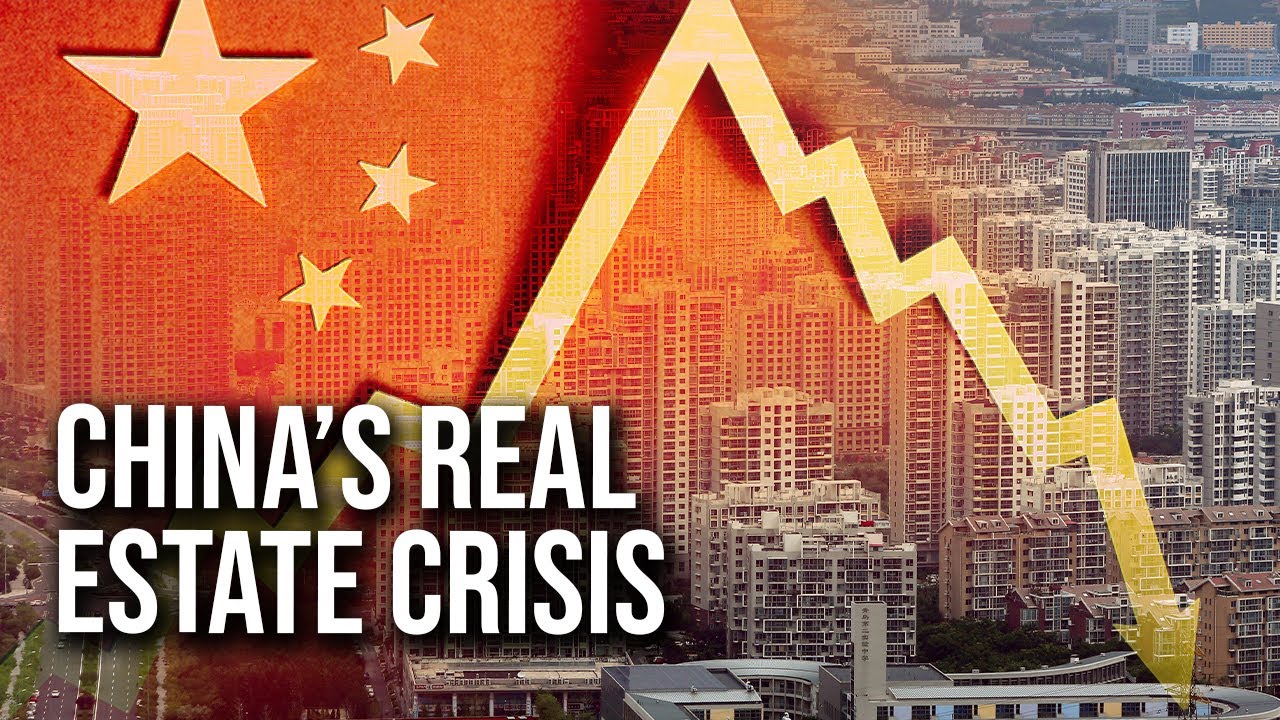
China’s economy in 2026 is a study in contradiction. In its largest cities — Shanghai, Beijing, Guangzhou, Shenzhen — new-home prices have risen for three consecutive months, driven by targeted policy support that is beginning to show traction. Across the remaining hundreds of cities, prices are still falling at a pace that is accelerating, not slowing.
National property investment fell 16.2% year-over-year in the first five months of 2026 — a staggering contraction in a sector that once accounted for roughly a quarter of Chinese GDP. At the same time, China’s technology sector is attracting record capital flows, its export machine is running at full throttle despite global trade tensions, and the People’s Bank of China (PBOC) is quietly implementing some of the most significant monetary architecture reforms in a generation.
China is, in effect, running two economies simultaneously. Understanding which one dominates the other will determine the trajectory of global markets for the next several years.
The Property Sector: A Structural Wound, Not a Cyclical Dip
China’s real estate crisis is entering its fifth year. What began with the 2021 Evergrande collapse has evolved into a sustained structural contraction that is fundamentally reshaping the economic role of property in China’s growth model.
National home prices declined at a faster pace in May 2026 than in April, a sign that market conditions are deteriorating rather than stabilising at the aggregate level. The OECD inventory of unsold homes across China’s lower-tier cities remains enormous — a structural supply overhang that cannot be resolved by demand-side stimulus alone.
The policy response has been asymmetric by design. The central government’s support measures are concentrated in Tier 1 and select Tier 2 cities, where local governments have more fiscal capacity to implement purchase subsidies, down-payment reductions, and mortgage rate cuts. In these markets, the policy appears to be working: new-home prices in China’s first-tier cities rose for the third consecutive month in May.
But first-tier cities account for a small fraction of China’s total housing stock. The vast majority of property — and the vast majority of household wealth — is concentrated in smaller cities where policy support is less effective and price declines are continuing.
The macro consequence is a negative wealth effect that is suppressing consumer confidence and retail spending precisely at the moment China needs domestic demand to compensate for a structurally lower export environment.
The PBOC’s Quiet Revolution
While the property sector weighs on growth, the People’s Bank of China has been implementing a series of significant monetary policy reforms. PBOC Governor Pan Gongsheng announced measures in June 2026 that include:
- Increased use of overnight reverse repo operations, a technical adjustment that improves the PBOC’s ability to manage short-term liquidity conditions with precision
- Narrowing the short-term interest rate corridor, reducing volatility in interbank lending rates and improving monetary policy transmission
- Steps to support the offshore use of the renminbi, accelerating the internationalisation of the Chinese currency as part of China’s longer-term strategy to reduce dependency on the US dollar in global trade and finance
These announcements are significant, but should not be misread as a broad-based monetary stimulus package. The PBOC is reforming its operational framework and improving financial market infrastructure — not firing an economic bazooka. The distinction matters for investors who might expect a China stimulus surge analogous to 2009 or 2015.
For investors, the PBOC’s focus on financial market development and liquidity management signals that policymakers are prioritising long-term stability over short-term growth stimulus. This implies a more gradual recovery trajectory than markets have sometimes assumed.
China’s Export Machine: A Source of Strength and Tension
Against the backdrop of the property slump, China’s export sector is performing exceptionally well. China’s trade surplus has expanded significantly in 2026, driven by:
- Industrial overcapacity in sectors including steel, solar panels, electric vehicles, chemicals, and lithium-ion batteries
- A weaker renminbi that has improved price competitiveness for Chinese exporters in global markets
- Continued strong demand for Chinese manufactured goods from Southeast Asia, Latin America, and Africa — markets that have deepened trade ties with China as US-China trade friction has redirected some Western procurement
China’s strong export growth has sparked significant international pushback. Policymakers across the European Union, the United States, and major emerging markets have expressed concerns about industrial overcapacity and the impact of low-cost Chinese exports on domestic manufacturing industries. The EU has implemented additional tariffs on Chinese electric vehicles, and US tariffs on a broad range of Chinese goods remain elevated following the Trump administration’s tariff regime.
The structural tension: China needs export growth to compensate for weak domestic demand, but its export success is generating the geopolitical friction that could ultimately constrain market access.
China’s AI Pivot: From Property Developer to Tech Powerhouse
The most significant transformation in China’s economic structure in 2026 is not occurring in housing — it is occurring in technology. China’s leadership has made a deliberate and well-resourced pivot toward artificial intelligence, semiconductors, and advanced manufacturing as the new engines of economic growth.
Chinese technology companies including Huawei, Baidu, Alibaba, and ByteDance are investing at scale in AI model development, AI chip design, and AI-integrated enterprise applications. The Chinese government’s industrial policy support for these sectors — through subsidies, preferential financing, and regulatory facilitation — is mobilising capital at a pace that rivals the hyperscaler buildout in the United States.
The strategic motivation is clear: reduce dependency on US semiconductor technology (particularly following US export controls on advanced chips), build sovereign AI capability across defence, governance, and commercial applications, and position Chinese technology companies as global AI leaders in markets outside the Western sphere.
This pivot is creating investment opportunities in Chinese technology equities — though geopolitical risk, regulatory uncertainty, and the US export control regime create complex risk factors that must be weighed carefully by international investors.
The Global Market Implications
China’s two-speed economy creates distinct implications for different asset classes and geographic markets:
Commodities: The property sector contraction is the dominant factor for commodity demand. Steel, copper, cement, and glass — all deeply tied to construction activity — face sustained headwinds from Chinese property weakness. Iron ore prices reflect this dynamic. In contrast, Chinese demand for technology-related commodities (lithium, cobalt, rare earths) remains robust as the EV and battery supply chain continues to scale.
Asian equities: The MSCI Emerging Markets index has significant China weighting, and China’s two-speed dynamics are creating divergence between technology-oriented Chinese equities (performing well) and property/financial sector stocks (underperforming). Country selection and sector allocation matter enormously in the current Chinese equity environment.
Currency markets: The PBOC’s renminbi internationalisation measures represent a long-duration effort to reduce dollar dependence. In the near term, currency management remains a key PBOC tool — managed depreciation to support exporters, with intervention to prevent disorderly moves that could trigger capital outflows.
European and US corporates: Companies with significant China exposure face a bifurcated operating environment — strong demand in technology-related end markets, weak demand in consumer and construction-related segments. Luxury goods, industrials, and materials companies are disproportionately affected by the property sector contraction.
The Policy Outlook: What Comes Next
The Chinese government faces a genuinely difficult policy dilemma. Aggressive fiscal or monetary stimulus risks reigniting the debt dynamics that made the property crisis inevitable in the first place. Insufficient support risks a deeper consumer confidence collapse that could turn a structural slowdown into a sharper cyclical downturn.
The current policy approach — targeted support for Tier 1 property markets, incremental PBOC reforms, and aggressive industrial policy investment in technology sectors — represents a careful balancing act. It is not the big bang stimulus that some investors have anticipated, but it is also not the hands-off approach that would allow a disorderly collapse.
The most likely trajectory: China grows at 4.0%–4.5% in 2026, below its historical average but ahead of the IMF’s revised global growth forecast of 3.1%. The property sector continues to weigh on domestic demand, while exports and technology investment provide partial offsets. The renminbi remains managed, and the PBOC avoids large-scale interest rate cuts that would widen the US-China rate differential and accelerate capital outflows.
The Bottom Line
China’s economy in 2026 is not in crisis, but it is in transition — and the transition is proving slower and more painful than the optimists predicted. The property sector wound is structural, not cyclical. The technology pivot is real but will take years to fully offset the economic weight that property once carried.
For global investors, China remains the world’s second-largest economy and a critical driver of commodity, trade, and technology markets. Ignoring it is not an option. But the analytical frameworks from the 2010s — property-led, infrastructure-driven, credit-fuelled growth — are no longer the right lens through which to assess Chinese economic dynamics in 2026.
The new China story is being written in data centres, EV factories, and AI labs — not in unfinished apartment towers.
FAQs
Q: What is happening with China’s economy in 2026?
A: China is running a two-speed economy. The property sector is contracting sharply — investment fell 16.2% year-over-year in early 2026 — while technology investment, AI spending, and exports are growing. The PBOC is implementing monetary reforms without large-scale stimulus.
Q: Is China’s property market recovering in 2026?
A: Partially and unevenly. New home prices in Tier 1 cities rose for three consecutive months through May 2026, suggesting policy support is gaining traction in the largest markets. Nationally, however, prices declined at a faster pace in May than April, and the recovery remains uneven across regions.
Q: What is China’s GDP growth forecast for 2026?
A: Most forecasters project China’s GDP growth at approximately 4.0%–4.5% in 2026 — below historical averages but above the IMF’s global average of 3.1%. The property sector contraction is the primary drag, partially offset by technology investment and export growth.
Q: How is China’s AI investment affecting global markets?
A: China’s AI and technology pivot is creating strong demand for technology-related commodities (lithium, rare earths), boosting Chinese technology equities, and intensifying competition with US and European AI companies — particularly in markets outside the Western sphere.
Analysis
Nidec Accounting Fraud: The Pressure Culture That Built Japan’s Biggest Corporate Scandal in a Decade

There’s a comic book on Nidec’s website — or there was, until recently — called “The Man Hotter Than the Sun.“ It chronicles the rise of Shigenobu Nagamori, who founded the world’s largest precision motor company in a shack in Kyoto in 1973 and built it into a global industrial giant supplying Apple, the automotive sector, and half the data centres on earth. Hard work. Relentless ambition. Numbers that never disappointed. It was a very Japanese success story, and it was also, investigators have now concluded, partly a fiction — one sustained for years by managers who inflated profits rather than face the man whose sun, apparently, could not be allowed to set.
What Is the Nidec Accounting Fraud — and How Big Is It?
The Nidec accounting fraud is Japan’s largest corporate accounting scandal in at least a decade. A third-party committee report released in March 2026 found that Nidec Corporation had committed accounting fraud totalling 166.2 billion yen — roughly $1.1 billion — as of 2023. That figure, staggering on its own, is likely the floor. The company has warned it may be forced to book an additional ¥250 billion, or $1.6 billion, in impairment charges as the full cost of the scandal is tallied, with third-party investigators saying they uncovered at least 1,000 separate instances of improper accounting across the group. Seoul Economic DailyBloomberg
The scandal first showed its face not in Kyoto, where Nidec is headquartered, but in Casalmaggiore, a small town in northern Italy’s Po Valley. It was the company’s Italian subsidiary, Nidec FIR International S.R.L., where possible lapses first surfaced in June 2025, forcing Nidec to delay filing its annual financial results. Within months, a Chinese subsidiary was implicated too, and then the scope widened further: investigators found misconduct at operations in Switzerland and across Nidec’s automotive inverter business. financialcontent
On October 28, 2025, the Tokyo Stock Exchange designated Nidec’s stock as a “security on special alert,” citing substantial need for improving the company’s internal management systems. The move sent shares tumbling by their daily 500 yen limit — a drop of roughly 19% in a single session. By the time the formal third-party report landed on February 27, 2026, Chairman Hiroshi Kobe and three other senior executives had resigned. Moody’s downgraded Nidec’s debt rating three levels into junk territory, and the stock was removed from the Nikkei 225 index. CEO Mitsuya Kishida bowed publicly at a press conference and said he would forfeit his salary until October. NIDEC CORPORATIONMy-cpe
The mechanics of the fraud were, in retrospect, classically mundane. Misconduct confirmed at Nidec Group bases included: avoidance of recognising valuation losses on obsolete raw materials and finished goods; improper avoidance of impairment losses based on sales plans with low probability of achievement; inflated inventory values; misreported customs declarations; government grants booked as revenue. Each individual manipulation was modest. Aggregated across dozens of subsidiaries over multiple years, they added up to a billion-dollar lie. NIDEC CORPORATION
How Did Corporate Culture Drive the Fraud?
This is where the story moves from accounting irregularity to structural pathology. The central finding of the independent investigation is not that Nagamori ordered the fraud — investigators found no evidence he personally directed specific manipulations. What they found was more insidious.
The committee blamed founder Shigenobu Nagamori for “excessive pressure to meet performance targets,” particularly profit targets, and found that many business units attempted to meet their goals using creative accounting. In plain terms: managers across Italy, China, and Switzerland were not cooking the books because they were corrupt. They were doing it because the alternative — telling Nagamori, a man who has written books about his rags-to-riches philosophy and whose image once adorned the company’s public website — that the numbers wouldn’t hit, was something the culture simply didn’t allow. MarketScreener
What caused the Nidec accounting fraud? The third-party investigation concluded that Nagamori’s excessive pressure on staff to meet profit targets created a corporate culture in which managers across multiple countries resorted to improper accounting rather than miss their numbers. Investigators documented more than 1,000 separate instances of misconduct spread across the group’s global subsidiaries.
This mechanism — what organisational theorists sometimes call “performance pressure fraud” — is not unique to Japan. But it finds particularly fertile ground in founder-dominated companies, where the founder’s authority has rarely been formally checked and where decades of success have calcified the idea that the numbers are always achievable if you push hard enough. Nagamori had, famously, sent regular messages to senior managers demanding better performance. As far back as September 2021, after handing over the CEO role, he was telling managers that the company faced its biggest-ever business crisis and that they needed to do more to boost performance and the share price. The message, delivered repeatedly across years, wasn’t lost on the people below him. Bloomberg
Oasis Management, the activist fund that holds approximately 6.7% of Nidec, described the problem bluntly in March 2026: “The problem at Nidec lies in a corporate culture that pressured employees into engaging in improper accounting practices for the sake of performance or share price; a lack of ethical judgment among management that effectively tolerated such improper accounting; the failure to establish appropriate checks and balances.” businesswire
What Are the Implications for Nidec and Japan Inc.?
The immediate picture for Nidec itself is grim. CEO Kishida has announced a plan to spend ¥130 billion over five years on measures to prevent recurrence and rebuild the governance system, including the suspension of the company’s once-aggressive acquisition strategy. Business acquisitions had been Nidec’s primary growth engine for three decades — an irony not lost on investors, since it was precisely that acquisition-driven expansion into Italy, China, and Switzerland that created the dispersed, difficult-to-audit subsidiaries where the fraud took root. The Japan Times
Nidec has also cancelled its year-end dividend for the fiscal year ending March 2026, with the company saying it “has no choice” given the investigation’s material impact on its financial closing for past fiscal years. The Securities and Exchange Surveillance Commission has reportedly begun its own probe, adding a regulatory dimension to what is already a reputational and financial catastrophe. NIDEC CORPORATION
The broader signal for Japanese markets is harder to read, but not easily dismissed. Japan’s corporate governance reform drive — accelerated by the Tokyo Stock Exchange’s 2023 push to force companies trading below book value to justify their capital allocation — was already testing the limits of how far founder-controlled companies would actually change. Nidec was, until recently, considered a model of what Japanese manufacturing could become: globally scaled, technically sophisticated, financially driven. The revelation that its financial sophistication was partly illusory lands badly at precisely the moment foreign investors have been warming to Japan’s equity story.
Academic research published in the Asia Pacific Journal of Management in 2025 found that the combination of foreign investor pressure for short-term gains and inadequately independent boards — particularly at companies with concentrated founder ownership — significantly elevates the risk of corporate misconduct in Japanese firms. Nidec fits the profile precisely. Springer
The Counterargument: Was Nagamori Singled Out Unfairly?
Not everyone is persuaded that Nagamori is the villain this narrative requires. Some analysts argue that to pin a systemic governance failure on one individual’s personality is to let the board, the auditors, and the company’s own internal compliance function off the hook entirely.
PwC, Nidec’s auditor, issued a disclaimer of opinion on the company’s fiscal year 2025 consolidated financial statements — an extraordinary step that signals the auditor could not obtain sufficient evidence to form a view. PwC pointed specifically to accounting practices that could have a “significant impact on consolidated financial statements” due to arbitrary adjustments in the timing of asset write-downs. That’s a significant failure of external oversight, and it raises questions about why red flags were not raised earlier in an audit relationship that spans years. mexc
There’s also a legitimate argument that the third-party committee report, while technically independent, was commissioned by Nidec itself — a structural limitation that critics of Japan’s third-party committee system have long flagged. The Japan Federation of Bar Associations guidelines that govern these panels were designed for transparency, but the panels’ independence is fundamentally constrained by the fact that the company in question controls the scope and, ultimately, bears the costs of the investigation. Whether the 1,000-plus instances of misconduct represent the full picture, or merely the portion the investigation was equipped to find, remains an open question.
Still, that caveat doesn’t fundamentally alter the central finding. A culture doesn’t become fraudulent by accident. Someone has to set the temperature.
A Reckoning That Was Always Coming
Nidec’s Culture Transformation Lab — the body launched on February 1, 2026, to “convey the voices of front-line employees directly to management” — has a name that reads less like a corporate initiative and more like an admission. If front-line voices needed a formal laboratory to be heard, the silence before it was built tells you everything about what the organisation had become.
The Nidec accounting fraud is, at one level, a story about a single company and a single founder’s shadow falling too far across the boardroom. At another level, it’s a test case for whether Japan’s governance reforms have teeth. The TSE’s special alert mechanism worked; Moody’s downgrade worked; the independent investigation worked. What didn’t work, for years, was the ordinary internal machinery that is supposed to catch this kind of thing before it reaches $1.1 billion.
That machinery failed because the people operating it were too afraid to make it fail in the other direction.
The comic book about the man hotter than the sun has been quietly removed from Nidec’s website. What’s left is a company trying to figure out how to build something that doesn’t burn everything around it.
Mining stocks across Europe came under renewed pressure in the latest trading session, extending a soft patch that has quietly gathered momentum over recent weeks. The tone was not disorderly, but it was decisively negative, with cyclical exposure once again proving sensitive to shifting commodity expectations.
In Dublin, Kenmare Resources stood out on the downside, weighing on the Iseq index after fresh concerns around titanium mineral pricing and operational strain linked to its Mozambique operations. The move reinforced a broader pattern: when sentiment turns against industrial metals, smaller producers tend to absorb the sharpest adjustment.
By mid-session, traders described the market as “directionless but heavy,” with few buyers willing to step in ahead of clearer signals on demand and pricing stability.
The latest weakness in mining equities is unfolding against a backdrop of uneven global growth signals and persistent uncertainty in industrial demand. Markets have been oscillating between brief optimism on infrastructure-led demand and deeper concerns about China’s property sector, which continues to shape global metals consumption.
Currency dynamics are adding another layer of pressure. A firmer US dollar typically weighs on commodities priced in dollars, tightening financial conditions for non-US buyers and feeding through into equity valuations of mining firms.
Research desks across major banks have repeatedly flagged the sensitivity of mining stocks to macro shocks, particularly interest rate expectations and industrial production cycles. Even modest revisions to growth forecasts tend to produce outsized moves in the sector, reflecting its position at the more volatile end of the equity spectrum.
Recent broker commentary has also pointed to renewed caution in European materials equities, citing slower-than-expected demand recovery and elevated input cost structures that continue to compress margins.
1 — European mining stocks under pressure
European mining stocks extend losses on demand concerns
European mining stocks slipped broadly as investors reassessed near-term earnings potential across the sector. The weakness was not confined to a single commodity group, but rather reflected a coordinated pullback in sentiment toward industrial metals and related equities.
Data from European equity markets shows that mining remains among the most cyclical segments of the index universe, often leading both rallies and corrections depending on global demand expectations. Recent trading sessions have reinforced that pattern, with miners underperforming broader industrials as risk appetite faded.
A key driver has been softening expectations around base metals demand, particularly copper and iron ore, where forward pricing has become more sensitive to revisions in Chinese industrial activity forecasts. Even incremental downgrades to growth assumptions have been enough to trigger equity repricing.
Kenmare Resources added a sharper, stock-specific dimension to the broader move. The company, which operates the Moma titanium minerals mine in Mozambique, has faced sustained pressure from weaker ilmenite and zircon pricing, alongside operational and cost-side constraints.
Recent financial disclosures highlighted the strain clearly, with the company reporting a significant deterioration in profitability and moving to conserve cash amid weaker market conditions. Dividend payments were suspended following impairment charges and lower earnings visibility, underscoring the sensitivity of mid-cap miners to commodity cycles.
The reaction in Dublin was swift. As one of the more index-sensitive constituents, Kenmare’s decline had an outsized impact on the Iseq, amplifying the broader negative tone in Irish equities.
The episode also highlights a structural feature of mining indices: concentration risk. When a handful of commodity-linked names dominate index weighting, company-specific stress can quickly translate into index-level moves.
2 — Why mining equities are underperforming
Secondary keyword: Kenmare Resources shares and valuation reset
The pressure on Kenmare Resources shares reflects a wider repricing underway across mid-cap mining equities, where earnings visibility is tightly linked to spot commodity markets and cost discipline.
At the core of the current weakness is a simple mechanism: falling commodity price expectations reduce forward earnings, while higher discount rates compress valuation multiples at the same time. That dual squeeze tends to hit mining equities harder than most other sectors.
A frequently asked question among investors is:
Why are European mining stocks falling?
European mining stocks are falling due to weaker industrial metal price expectations, persistent uncertainty around global demand growth, and a stronger US dollar that reduces commodity pricing support. At the same time, company-specific issues such as rising costs and operational disruptions are intensifying pressure on individual miners, particularly mid-cap producers with concentrated asset exposure.
The timing effect is also important. Commodity markets often stabilise before equities do, because investors wait for confirmation of sustained demand recovery rather than reacting to short-term price moves. This creates a lag where mining equities continue to decline even as some underlying commodities begin to level out.
There is also an ongoing valuation reset. Following the post-pandemic commodity surge, mining equities traded at elevated earnings multiples relative to historical norms. As those expectations normalise, the adjustment process tends to overshoot before stabilising.
In that sense, current price action reflects repricing discipline rather than disorderly selling.
3 — Broader implications for markets and industry
The implications of weaker mining equities extend beyond short-term portfolio performance. In capital-intensive industries like mining, equity valuations play a direct role in shaping investment decisions, project timelines, and dividend policy.
For producers of titanium minerals such as Kenmare, pricing weakness in ilmenite and zircon feeds directly into revenue streams that are already exposed to cyclical industrial demand. When construction and manufacturing activity slows globally, downstream demand for pigments, coatings, and ceramics tends to soften with a lag.
Recent company commentary has pointed to efforts to manage costs and preserve liquidity, reflecting a more defensive operational stance in response to uncertain pricing conditions. That shift is typical of mid-cycle corrections, where producers prioritise balance sheet strength over expansion.
At a macro level, mining equities often serve as an early indicator of industrial demand trends. Prolonged weakness in the sector can signal broader slowdowns in manufacturing activity, particularly in export-oriented European economies.
Currency dynamics add another feedback loop. If commodity prices remain under pressure, they can reinforce US dollar strength, which in turn weighs further on commodity-linked equities. This interaction has historically amplified downturns in the mining cycle.
The key risk from here is duration. Short corrections tend to be absorbed quickly, but extended periods of weak pricing often trigger deeper adjustments in capital allocation across the sector, including delayed investment and tighter shareholder distributions.
4 — Alternative views and counterbalance
Not all market participants interpret the current weakness as the start of a sustained downturn.
Some equity strategists argue that valuations across European mining stocks already reflect a significant portion of near-term downside risk. They point to earlier corrections in materials equities and suggest that balance sheets among major diversified miners remain relatively resilient.
There is also a longer-term structural argument anchored in energy transition demand. Copper, nickel, titanium minerals, and related inputs are expected to play a central role in electrification, infrastructure renewal, and aerospace applications. From this perspective, short-term demand softness may obscure a more durable upward trajectory in structural demand.
Kenmare itself has highlighted signs of stabilisation in certain product lines, particularly zircon, where pricing has shown less volatility than broader industrial metals. That divergence suggests that not all segments of the mining complex are moving in sync.
Still, the counterargument depends heavily on timing. Even structurally positive demand narratives do not prevent near-term equity repricing when earnings weaken. Markets tend to discount recovery, but only once tangible data confirms it.
CLOSING
The latest decline in European mining stocks is less a break in trend than a continuation of a familiar cycle. Commodity expectations soften, earnings forecasts adjust, and equities respond ahead of the macro data that eventually confirms or challenges those expectations.
Kenmare’s performance simply sharpened that adjustment, exposing how quickly sentiment can shift in concentrated, commodity-linked indices like the Iseq.
What matters now is not the direction of a single session, but whether industrial demand stabilises long enough to anchor earnings expectations once again.
Until that happens, mining equities are likely to remain tethered to sentiment as much as fundamentals.

US Impeachment Talk and White House Press Secretary Changes: What the Record Shows

2026 Economic Outlook: Investment Tips for Pakistani Investors

Anduril’s $6.6 Billion Submarine Shipyard Plan Explained

Life Insurance Comparison: Term vs. Whole Life and What Each Actually Costs

Stock Market Today: Nasdaq Hits Record High as Dow and S&P 500 Stumble on Middle East Diplomatic Shifts

Energy Market Spikes vs. Consumer App Data: What GasBuddy and Crude Prices Signal for Inflation

China’s FTAAP Push for APEC 2026 in Shenzhen: US Tariffs and Unite Asia-Pacific

AI Stocks Slide After Industry Leaders Call for a Development Slowdown

Singapore Stocks vs. Japan Stocks: Safe Havens in the Asian Economic Slowdown

Agentic AI in Finance: How Artificial Intelligence Is Replacing Routine Tasks on Wall Street

Fiscal Deficit and Public Debt

T-Mobile’s Enterprise Push and the Evolution of Modern Corporate Mobility Solutions

Enterprise Generative AI ROI 2026: The Adoption-to-Impact Gap Explained

Climate Finance and the Economic Reality of Passing 1.5°C

Business Insurance for Digital Exports: Protecting Your Company in the AI Era

Real Estate Crash Predictions 2026: Data-Backed Regional Guide

Unrecoverable Delays: How the St. Louis Strike Crippled Boeing’s F-15EX Eagle II

What is a “Lead-Left” Bank? Unpacking Morgan Stanley’s Role in Anthropic’s Mega-IPO

How to Invest in the Anthropic IPO: Step-by-Step Guide for Retail Investors

Mario Kart 8 Deluxe 4.0.0 Patch Notes: 8-Player Split Screen & CameraPlay

Top 15 Stocks for Investment in 2026 in PSX: Your Complete Guide to Pakistan’s Best Investment Opportunities

Debunking IMF Program Myths: Reconfiguring Engagement for True National Ownership in a Volatile World
China Economy 2026: Property Crisis, AI Investment & Export Surplus Explained

Top 10 Mutual Fund Managers in Pakistan for Investment in 2026: A Comprehensive Guide for Optimal Returns
China’s 50% Domestic Equipment Rule: The Semiconductor Mandate Reshaping Global Tech

What the U.S. Attack on Venezuela Could Mean for Oil and Canadian Crude Exports: The Economic Impact

15 Most Lucrative Sectors for Investment in Pakistan: A 2025 Data-Driven Analysis

Pakistan’s Export Goldmine: 10 Game-Changing Markets Where Pakistani Businesses Are Winning Big in 2025

Pakistan’s Stock Market Renaissance: How 2025’s Hottest Investment Opportunity Is Democratizing Wealth—A Complete Beginner’s Guide
Pakistan’s Economic Outlook 2025: Between Stabilization and the Shadow of Stagnation

The Institutional Era: A Comprehensive Cryptocurrency Investment Analysis for 2026
China’s Property Woes Could Last Until 2030—Despite Beijing’s Best Censorship Efforts
Real Estate Crash Predictions 2026: Data-Backed Regional Guide

Best Investments in Pakistan 2026: Top 10 Low-Price Shares and Long-Term Picks for the PSX

How to Become an Active Taxpayer on Pakistan’s FBR Active Taxpayer List (ATL) in 2026: A Step-by-Step Guide

DBS Hits S$1 Billion AI Value Milestone — But Agentic AI Poses Talent Challenges for Singapore Banks
The Contours of 21st-Century Geopolitics Will Become Clearer in 2026: A New World Is Starting to Emerge

🌍 Davos 2026: The World Economic Forum Annual Meeting Sets the Stage for Global Transformation
Agentic AI in Finance: How Artificial Intelligence Is Replacing Routine Tasks on Wall Street

AI Impact on Wages 2026: Productivity Soars, Paychecks Stagnate
-
Markets & Finance10 months ago
Top 15 Stocks for Investment in 2026 in PSX: Your Complete Guide to Pakistan’s Best Investment Opportunities
-
Analysis9 months ago
Debunking IMF Program Myths: Reconfiguring Engagement for True National Ownership in a Volatile World
-
Analysis4 months ago
China Economy 2026: Property Crisis, AI Investment & Export Surplus Explained
-
Investment10 months ago
Top 10 Mutual Fund Managers in Pakistan for Investment in 2026: A Comprehensive Guide for Optimal Returns
-
Asia10 months ago
China’s 50% Domestic Equipment Rule: The Semiconductor Mandate Reshaping Global Tech
-
Global Economy10 months ago
What the U.S. Attack on Venezuela Could Mean for Oil and Canadian Crude Exports: The Economic Impact
-
AI10 months ago
15 Most Lucrative Sectors for Investment in Pakistan: A 2025 Data-Driven Analysis
-
Exports10 months ago
Pakistan’s Export Goldmine: 10 Game-Changing Markets Where Pakistani Businesses Are Winning Big in 2025