
Corruption
Pakistan’s Corruption Perception 2025: A Wake-Up Call for Reform and Accountability

Introduction: A Nation’s Mirror Moment
In a country where public trust in institutions is often fragile, the release of the National Corruption Perception Survey (NCPS) 2025 by Transparency International Pakistan offers more than just statistics—it’s a mirror held up to the nation’s governance, ethics, and accountability. Conducted across 20 districts with nearly 4,000 respondents, the survey captures the pulse of Pakistan’s citizens on corruption, economic hardship, and institutional integrity.
This year’s findings are both sobering and instructive. From the police being perceived as the most corrupt sector to widespread dissatisfaction with anti-corruption efforts, the NCPS 2025 paints a picture of systemic challenges that demand urgent policy attention. But it also reveals areas of hope—citizens advocating for stronger whistleblower protections, digital reforms, and transparency in charitable institutions.
Let’s unpack the key takeaways and explore what they mean for Pakistan’s future.
1. Police and Procurement: The Persistent Pillars of Public Distrust
The headline finding is stark: 24% of respondents nationally perceive the police as the most corrupt sector, continuing a trend that has persisted since 2002. This perception is highest in Punjab (34%), followed by Balochistan (22%), Sindh (21%), and Khyber Pakhtunkhwa (20%).
Closely trailing is Tender and Procurement, with 16% nationally citing it as a major corruption hotspot. Balochistan again leads in concern (23%), highlighting regional disparities in governance and oversight.
The Judiciary, often seen as the last bastion of justice, ranks third in perceived corruption (14%), with KP (18%) and Punjab (17%) showing the highest levels of concern.

🟡 Takeaway: These findings underscore the need for police reform, transparent procurement systems, and judicial accountability. Without restoring trust in these foundational institutions, broader governance reforms will struggle to gain traction.
2. Bribery Encounters: A Mixed Bag of Progress and Persistence
Encouragingly, 66% of Pakistanis reported not facing a situation where they felt compelled to offer a bribe. However, the provincial breakdown reveals troubling disparities:
- Sindh: 46% reported paying bribes
- Punjab: 39%
- Balochistan: 31%
- Khyber Pakhtunkhwa: 20%
🟡 Takeaway: While the national average suggests progress, the high bribery rates in Sindh and Punjab point to localized governance failures. Targeted anti-bribery campaigns and digital service delivery could help reduce these encounters.
3. Economic Strain: Purchasing Power in Decline
A majority of respondents (57%) reported a decline in their purchasing power over the past year. This economic stress is most acute in KP (72%) and Punjab (60%), while Balochistan (43%) showed the least decline.
🟡 Takeaway: Economic hardship often correlates with increased vulnerability to corruption. Strengthening social safety nets and price control mechanisms is essential to protect citizens from exploitative practices.
4. IMF and FATF: A Qualified Vote of Confidence
When asked about the government’s success in stabilizing the economy through the IMF agreement and FATF grey list exit, responses were cautiously optimistic:
- 40% partially agree
- 18% fully agree
- 42% do not agree
🟡 Takeaway: While international benchmarks have been met, domestic perception remains skeptical. The government must translate macroeconomic wins into tangible benefits for citizens to build trust.
5. Root Causes of Corruption: Accountability, Transparency, and Delay
The top three perceived drivers of corruption are:
- Lack of accountability (15%)
- Lack of transparency and access to information (15%)
- Delays in corruption case decisions (14%)
🟡 Takeaway: These are solvable problems. Strengthening Right to Information (RTI) laws, fast-tracking corruption cases, and independent oversight can address these root causes effectively.
6. Provincial Governments: The Most Corrupt Tier?
A significant 59% of respondents believe provincial governments are more corrupt than local governments. This perception is strongest in Punjab (70%), followed by Balochistan (58%), KP (55%), and Sindh (54%).
🟡 Takeaway: Decentralization without accountability breeds corruption. Provincial governments must adopt performance audits, citizen feedback loops, and transparency dashboards to rebuild credibility.
7. Anti-Corruption Bodies: Accountability Starts at the Top
A resounding 78% of respondents believe that anti-corruption bodies like NAB and FIA should be held accountable. The top reasons include:
- Lack of transparency in investigations (35%)
- Absence of independent oversight (33%)
- Misuse of powers for political victimization (32%)
🟡 Takeaway: Reforming anti-corruption bodies is non-negotiable. Establishing parliamentary oversight, publishing investigation outcomes, and protecting whistleblowers are key steps forward.
8. Healthcare Sector: A Deeply Corrupted Lifeline
The NCPS 2025 reveals alarming insights into healthcare corruption:
- 67% believe corruption in healthcare has a very high impact on lives
- 38% identify hospitals as the most corrupt site
- 23% cite doctors, and 21% cite pharmaceuticals
Provincial breakdown:
- Hospitals: Sindh (49%), KP (46%), Balochistan (32%), Punjab (26%)
- Doctors: Balochistan (35%), Punjab (21%)
- Pharmaceuticals: Punjab (30%), KP (21%)
🟡 Takeaway: Healthcare corruption is not just unethical—it’s deadly. Citizens demand:
- Stricter pharma policies (23%)
- Ban on private practice by public doctors (20%)
- Strengthened regulatory bodies (16%)
9. Political Finance and Advertising: Citizens Want Clean Campaigns
- 83% of respondents support either banning or regulating business funding to political parties
- 55% support a complete ban on political names and images in government ads
🟡 Takeaway: The public is calling for cleaner politics. Enforcing campaign finance laws and neutral government advertising can reduce undue influence and promote fair governance.
10. Whistleblower Protection: The Missing Shield
Only 42% of respondents feel safe reporting corruption, even if strong whistleblower laws were in place. This reflects a deep trust deficit.
🟡 Takeaway: Pakistan must urgently pass and implement robust whistleblower protection laws, including anonymity guarantees, legal immunity, and reward mechanisms.
11. Awareness Gap: Reporting Channels Remain Invisible
A staggering 70% of respondents are unaware of any official channels to report corruption. Among the 30% who are aware, only 43% have ever reported an incident.
🟡 Takeaway: This is a communications failure. Governments must launch awareness campaigns, simplify reporting mechanisms, and integrate digital platforms for citizen engagement.
12. Charitable Institutions: Integrity Under Scrutiny
- 51% believe tax-exempt charitable bodies should not charge fees
- 53% want public disclosure of donor names and donation amounts
🟡 Takeaway: Transparency must extend to the nonprofit sector. The Federal Board of Revenue (FBR) should mandate financial disclosures and fee audits for all tax-exempt entities.
Conclusion: A Blueprint for Reform
The NCPS 2025 is more than a diagnostic—it’s a blueprint for reform. It reveals a citizenry that is aware, engaged, and demanding change. From police reform and healthcare integrity to political finance and whistleblower protection, the survey outlines actionable priorities.
But the real question is: Will policymakers listen?
Pakistan stands at a crossroads. The public has spoken. Now it’s time for institutions to respond—not with rhetoric, but with results.






Analysis
Nidec Accounting Fraud: The Pressure Culture That Built Japan’s Biggest Corporate Scandal in a Decade
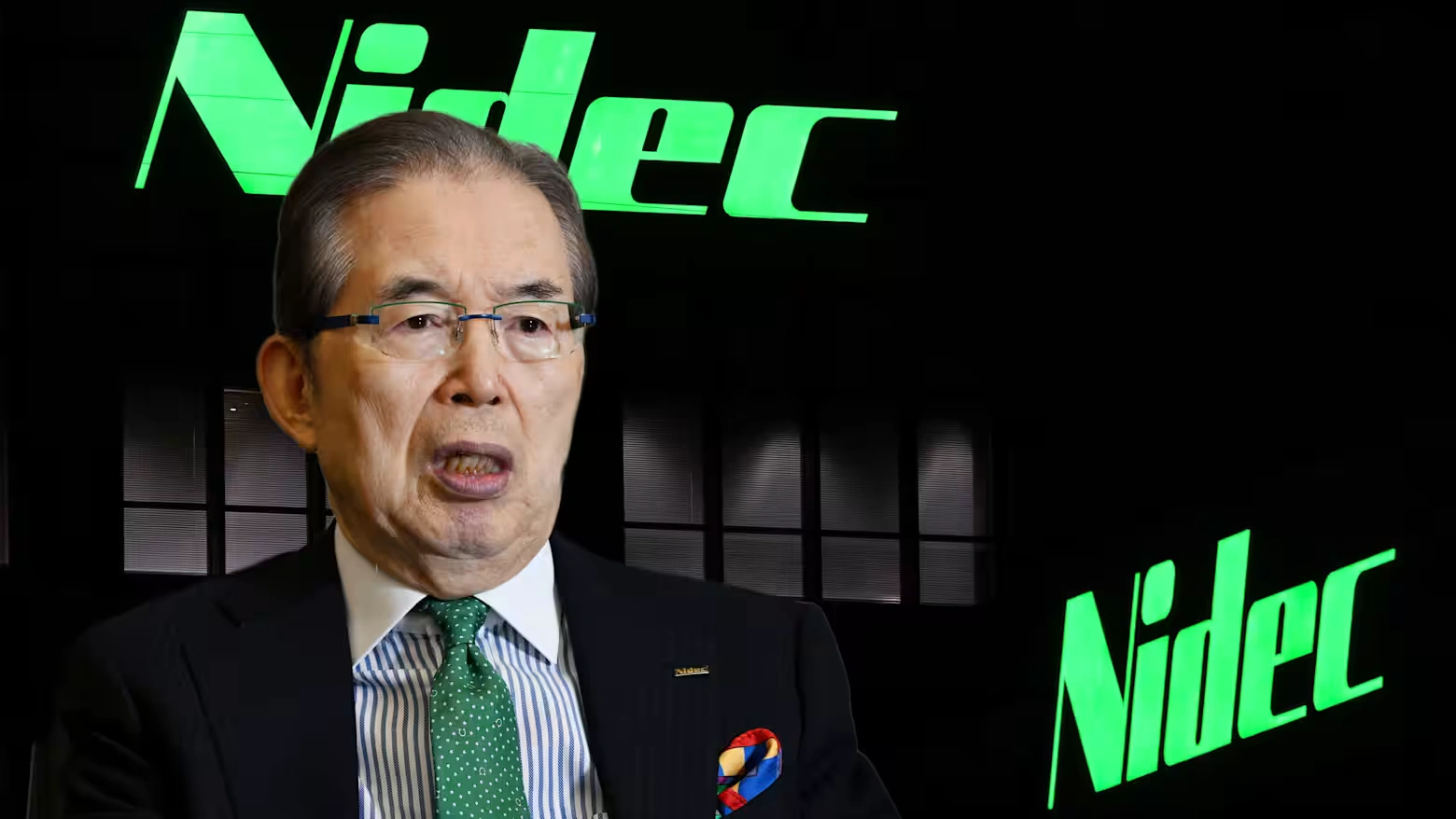
There’s a comic book on Nidec’s website — or there was, until recently — called “The Man Hotter Than the Sun.“ It chronicles the rise of Shigenobu Nagamori, who founded the world’s largest precision motor company in a shack in Kyoto in 1973 and built it into a global industrial giant supplying Apple, the automotive sector, and half the data centres on earth. Hard work. Relentless ambition. Numbers that never disappointed. It was a very Japanese success story, and it was also, investigators have now concluded, partly a fiction — one sustained for years by managers who inflated profits rather than face the man whose sun, apparently, could not be allowed to set.
What Is the Nidec Accounting Fraud — and How Big Is It?
The Nidec accounting fraud is Japan’s largest corporate accounting scandal in at least a decade. A third-party committee report released in March 2026 found that Nidec Corporation had committed accounting fraud totalling 166.2 billion yen — roughly $1.1 billion — as of 2023. That figure, staggering on its own, is likely the floor. The company has warned it may be forced to book an additional ¥250 billion, or $1.6 billion, in impairment charges as the full cost of the scandal is tallied, with third-party investigators saying they uncovered at least 1,000 separate instances of improper accounting across the group. Seoul Economic DailyBloomberg
The scandal first showed its face not in Kyoto, where Nidec is headquartered, but in Casalmaggiore, a small town in northern Italy’s Po Valley. It was the company’s Italian subsidiary, Nidec FIR International S.R.L., where possible lapses first surfaced in June 2025, forcing Nidec to delay filing its annual financial results. Within months, a Chinese subsidiary was implicated too, and then the scope widened further: investigators found misconduct at operations in Switzerland and across Nidec’s automotive inverter business. financialcontent
On October 28, 2025, the Tokyo Stock Exchange designated Nidec’s stock as a “security on special alert,” citing substantial need for improving the company’s internal management systems. The move sent shares tumbling by their daily 500 yen limit — a drop of roughly 19% in a single session. By the time the formal third-party report landed on February 27, 2026, Chairman Hiroshi Kobe and three other senior executives had resigned. Moody’s downgraded Nidec’s debt rating three levels into junk territory, and the stock was removed from the Nikkei 225 index. CEO Mitsuya Kishida bowed publicly at a press conference and said he would forfeit his salary until October. NIDEC CORPORATIONMy-cpe
The mechanics of the fraud were, in retrospect, classically mundane. Misconduct confirmed at Nidec Group bases included: avoidance of recognising valuation losses on obsolete raw materials and finished goods; improper avoidance of impairment losses based on sales plans with low probability of achievement; inflated inventory values; misreported customs declarations; government grants booked as revenue. Each individual manipulation was modest. Aggregated across dozens of subsidiaries over multiple years, they added up to a billion-dollar lie. NIDEC CORPORATION
How Did Corporate Culture Drive the Fraud?
This is where the story moves from accounting irregularity to structural pathology. The central finding of the independent investigation is not that Nagamori ordered the fraud — investigators found no evidence he personally directed specific manipulations. What they found was more insidious.
The committee blamed founder Shigenobu Nagamori for “excessive pressure to meet performance targets,” particularly profit targets, and found that many business units attempted to meet their goals using creative accounting. In plain terms: managers across Italy, China, and Switzerland were not cooking the books because they were corrupt. They were doing it because the alternative — telling Nagamori, a man who has written books about his rags-to-riches philosophy and whose image once adorned the company’s public website — that the numbers wouldn’t hit, was something the culture simply didn’t allow. MarketScreener
What caused the Nidec accounting fraud? The third-party investigation concluded that Nagamori’s excessive pressure on staff to meet profit targets created a corporate culture in which managers across multiple countries resorted to improper accounting rather than miss their numbers. Investigators documented more than 1,000 separate instances of misconduct spread across the group’s global subsidiaries.
This mechanism — what organisational theorists sometimes call “performance pressure fraud” — is not unique to Japan. But it finds particularly fertile ground in founder-dominated companies, where the founder’s authority has rarely been formally checked and where decades of success have calcified the idea that the numbers are always achievable if you push hard enough. Nagamori had, famously, sent regular messages to senior managers demanding better performance. As far back as September 2021, after handing over the CEO role, he was telling managers that the company faced its biggest-ever business crisis and that they needed to do more to boost performance and the share price. The message, delivered repeatedly across years, wasn’t lost on the people below him. Bloomberg
Oasis Management, the activist fund that holds approximately 6.7% of Nidec, described the problem bluntly in March 2026: “The problem at Nidec lies in a corporate culture that pressured employees into engaging in improper accounting practices for the sake of performance or share price; a lack of ethical judgment among management that effectively tolerated such improper accounting; the failure to establish appropriate checks and balances.” businesswire
What Are the Implications for Nidec and Japan Inc.?
The immediate picture for Nidec itself is grim. CEO Kishida has announced a plan to spend ¥130 billion over five years on measures to prevent recurrence and rebuild the governance system, including the suspension of the company’s once-aggressive acquisition strategy. Business acquisitions had been Nidec’s primary growth engine for three decades — an irony not lost on investors, since it was precisely that acquisition-driven expansion into Italy, China, and Switzerland that created the dispersed, difficult-to-audit subsidiaries where the fraud took root. The Japan Times
Nidec has also cancelled its year-end dividend for the fiscal year ending March 2026, with the company saying it “has no choice” given the investigation’s material impact on its financial closing for past fiscal years. The Securities and Exchange Surveillance Commission has reportedly begun its own probe, adding a regulatory dimension to what is already a reputational and financial catastrophe. NIDEC CORPORATION
The broader signal for Japanese markets is harder to read, but not easily dismissed. Japan’s corporate governance reform drive — accelerated by the Tokyo Stock Exchange’s 2023 push to force companies trading below book value to justify their capital allocation — was already testing the limits of how far founder-controlled companies would actually change. Nidec was, until recently, considered a model of what Japanese manufacturing could become: globally scaled, technically sophisticated, financially driven. The revelation that its financial sophistication was partly illusory lands badly at precisely the moment foreign investors have been warming to Japan’s equity story.
Academic research published in the Asia Pacific Journal of Management in 2025 found that the combination of foreign investor pressure for short-term gains and inadequately independent boards — particularly at companies with concentrated founder ownership — significantly elevates the risk of corporate misconduct in Japanese firms. Nidec fits the profile precisely. Springer
The Counterargument: Was Nagamori Singled Out Unfairly?
Not everyone is persuaded that Nagamori is the villain this narrative requires. Some analysts argue that to pin a systemic governance failure on one individual’s personality is to let the board, the auditors, and the company’s own internal compliance function off the hook entirely.
PwC, Nidec’s auditor, issued a disclaimer of opinion on the company’s fiscal year 2025 consolidated financial statements — an extraordinary step that signals the auditor could not obtain sufficient evidence to form a view. PwC pointed specifically to accounting practices that could have a “significant impact on consolidated financial statements” due to arbitrary adjustments in the timing of asset write-downs. That’s a significant failure of external oversight, and it raises questions about why red flags were not raised earlier in an audit relationship that spans years. mexc
There’s also a legitimate argument that the third-party committee report, while technically independent, was commissioned by Nidec itself — a structural limitation that critics of Japan’s third-party committee system have long flagged. The Japan Federation of Bar Associations guidelines that govern these panels were designed for transparency, but the panels’ independence is fundamentally constrained by the fact that the company in question controls the scope and, ultimately, bears the costs of the investigation. Whether the 1,000-plus instances of misconduct represent the full picture, or merely the portion the investigation was equipped to find, remains an open question.
Still, that caveat doesn’t fundamentally alter the central finding. A culture doesn’t become fraudulent by accident. Someone has to set the temperature.
A Reckoning That Was Always Coming
Nidec’s Culture Transformation Lab — the body launched on February 1, 2026, to “convey the voices of front-line employees directly to management” — has a name that reads less like a corporate initiative and more like an admission. If front-line voices needed a formal laboratory to be heard, the silence before it was built tells you everything about what the organisation had become.
The Nidec accounting fraud is, at one level, a story about a single company and a single founder’s shadow falling too far across the boardroom. At another level, it’s a test case for whether Japan’s governance reforms have teeth. The TSE’s special alert mechanism worked; Moody’s downgrade worked; the independent investigation worked. What didn’t work, for years, was the ordinary internal machinery that is supposed to catch this kind of thing before it reaches $1.1 billion.
That machinery failed because the people operating it were too afraid to make it fail in the other direction.
The comic book about the man hotter than the sun has been quietly removed from Nidec’s website. What’s left is a company trying to figure out how to build something that doesn’t burn everything around it.

US Impeachment Talk and White House Press Secretary Changes: What the Record Shows

2026 Economic Outlook: Investment Tips for Pakistani Investors

Anduril’s $6.6 Billion Submarine Shipyard Plan Explained

Life Insurance Comparison: Term vs. Whole Life and What Each Actually Costs

Stock Market Today: Nasdaq Hits Record High as Dow and S&P 500 Stumble on Middle East Diplomatic Shifts

Energy Market Spikes vs. Consumer App Data: What GasBuddy and Crude Prices Signal for Inflation

China’s FTAAP Push for APEC 2026 in Shenzhen: US Tariffs and Unite Asia-Pacific

AI Stocks Slide After Industry Leaders Call for a Development Slowdown

Singapore Stocks vs. Japan Stocks: Safe Havens in the Asian Economic Slowdown

Agentic AI in Finance: How Artificial Intelligence Is Replacing Routine Tasks on Wall Street

Fiscal Deficit and Public Debt

T-Mobile’s Enterprise Push and the Evolution of Modern Corporate Mobility Solutions

Enterprise Generative AI ROI 2026: The Adoption-to-Impact Gap Explained

Climate Finance and the Economic Reality of Passing 1.5°C

Business Insurance for Digital Exports: Protecting Your Company in the AI Era

Real Estate Crash Predictions 2026: Data-Backed Regional Guide

Unrecoverable Delays: How the St. Louis Strike Crippled Boeing’s F-15EX Eagle II

What is a “Lead-Left” Bank? Unpacking Morgan Stanley’s Role in Anthropic’s Mega-IPO

How to Invest in the Anthropic IPO: Step-by-Step Guide for Retail Investors

Mario Kart 8 Deluxe 4.0.0 Patch Notes: 8-Player Split Screen & CameraPlay

Top 15 Stocks for Investment in 2026 in PSX: Your Complete Guide to Pakistan’s Best Investment Opportunities
China Economy 2026: Property Crisis, AI Investment & Export Surplus Explained

Debunking IMF Program Myths: Reconfiguring Engagement for True National Ownership in a Volatile World
Top 10 Mutual Fund Managers in Pakistan for Investment in 2026: A Comprehensive Guide for Optimal Returns
China’s 50% Domestic Equipment Rule: The Semiconductor Mandate Reshaping Global Tech

What the U.S. Attack on Venezuela Could Mean for Oil and Canadian Crude Exports: The Economic Impact
15 Most Lucrative Sectors for Investment in Pakistan: A 2025 Data-Driven Analysis

Pakistan’s Export Goldmine: 10 Game-Changing Markets Where Pakistani Businesses Are Winning Big in 2025

Pakistan’s Stock Market Renaissance: How 2025’s Hottest Investment Opportunity Is Democratizing Wealth—A Complete Beginner’s Guide
Pakistan’s Economic Outlook 2025: Between Stabilization and the Shadow of Stagnation

The Institutional Era: A Comprehensive Cryptocurrency Investment Analysis for 2026
China’s Property Woes Could Last Until 2030—Despite Beijing’s Best Censorship Efforts
Real Estate Crash Predictions 2026: Data-Backed Regional Guide

Best Investments in Pakistan 2026: Top 10 Low-Price Shares and Long-Term Picks for the PSX

How to Become an Active Taxpayer on Pakistan’s FBR Active Taxpayer List (ATL) in 2026: A Step-by-Step Guide
The Contours of 21st-Century Geopolitics Will Become Clearer in 2026: A New World Is Starting to Emerge
DBS Hits S$1 Billion AI Value Milestone — But Agentic AI Poses Talent Challenges for Singapore Banks
How to Invest in the Anthropic IPO: Step-by-Step Guide for Retail Investors
🌍 Davos 2026: The World Economic Forum Annual Meeting Sets the Stage for Global Transformation

AI Impact on Wages 2026: Productivity Soars, Paychecks Stagnate
-
Markets & Finance10 months ago
Top 15 Stocks for Investment in 2026 in PSX: Your Complete Guide to Pakistan’s Best Investment Opportunities
-
Analysis4 months ago
China Economy 2026: Property Crisis, AI Investment & Export Surplus Explained
-
Analysis9 months ago
Debunking IMF Program Myths: Reconfiguring Engagement for True National Ownership in a Volatile World
-
Investment10 months ago
Top 10 Mutual Fund Managers in Pakistan for Investment in 2026: A Comprehensive Guide for Optimal Returns
-
Asia10 months ago
China’s 50% Domestic Equipment Rule: The Semiconductor Mandate Reshaping Global Tech
-
Global Economy10 months ago
What the U.S. Attack on Venezuela Could Mean for Oil and Canadian Crude Exports: The Economic Impact
-
AI10 months ago
15 Most Lucrative Sectors for Investment in Pakistan: A 2025 Data-Driven Analysis
-
Exports10 months ago
Pakistan’s Export Goldmine: 10 Game-Changing Markets Where Pakistani Businesses Are Winning Big in 2025