
Business
Senate Averts Shutdown Amid ICE Firestorm as Trump Seeks to Restore Trust in Economic Data

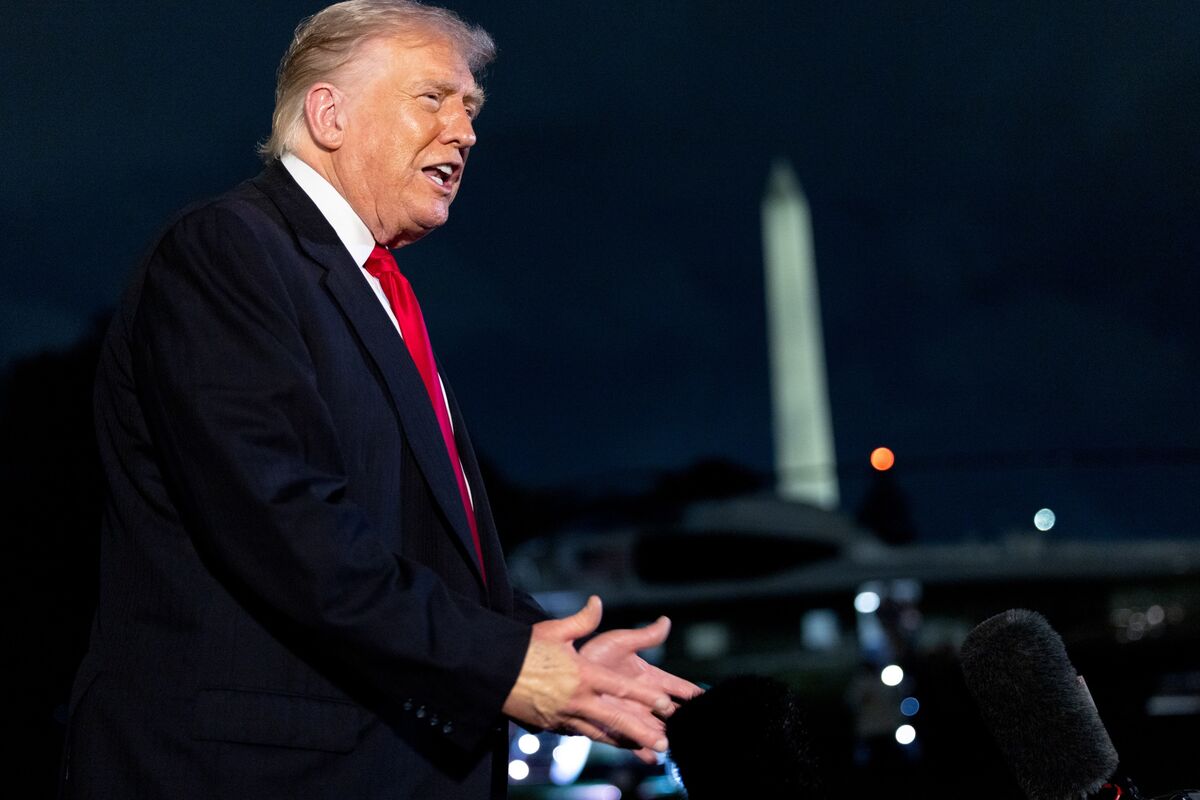
Senate passes funding bill splitting DHS amid ICE controversy while Trump nominates Brett Matsumoto to lead BLS. Analysis of political tensions shaping fiscal and data policy.
The final hours of January 2026 delivered a portrait of American governance under strain: a Senate scrambling to fund the government while managing public fury over immigration enforcement tactics, and a president simultaneously defending those same enforcement operations while attempting to rebuild trust in the nation’s economic statistics. The collision of these two developments—one immediate and visceral, the other technical yet deeply consequential—reveals the fraught political landscape confronting policymakers as fiscal debates intersect with questions of institutional credibility.
Late Friday, the Senate voted 71-29 to pass a funding package that narrowly averted a prolonged partial shutdown, though a brief weekend lapse remained inevitable given the House’s recess until Monday. The compromise, struck between Senate Democrats and the White House, stripped Department of Homeland Security appropriations from a broader five-bill minibus, providing DHS with only a two-week continuing resolution while funding Defense, State, Education, Labor, and other agencies through September 30. Hours earlier, President Trump had announced his nomination of Brett Matsumoto, a career Bureau of Labor Statistics economist, to lead the agency responsible for producing the nation’s employment and inflation data—a position vacant since Trump fired the previous commissioner in August over what he baselessly claimed were “rigged” jobs numbers.
These parallel developments are not coincidental. Both reflect the Trump administration’s determination to reshape federal institutions while Democrats leverage their Senate influence to impose accountability measures. More significantly, they illuminate a broader tension: how can a government produce credible fiscal and economic policy when basic trust in its data-generating apparatus remains contested, and when enforcement agencies operate under such polarized scrutiny that even routine appropriations become ideological battlegrounds?
The Senate’s Delicate Compromise on Funding
The path to Friday’s vote was tortuous. Initially, Senate leaders had expected to pass a six-bill package including full-year DHS funding without significant opposition. But the fatal shooting of Alex Pretti, a 37-year-old ICU nurse, by a Border Patrol agent in Minneapolis on January 24—the second protester killed by federal immigration authorities in a month—transformed what should have been procedural votes into a referendum on Immigration and Customs Enforcement tactics.
Senate Minority Leader Chuck Schumer articulated Democratic demands with unusual specificity: end “roving patrols” by ICE officers, tighten warrant requirements for immigration arrests, establish uniform use-of-force standards aligned with state and local law enforcement, require body cameras, and prohibit agents from wearing masks during operations. “Under President Trump, Secretary Noem and Stephen Miller, ICE has been unleashed without guardrails,” Schumer declared Wednesday. “They violate constitutional rights all the time and deliberately refuse to coordinate with state and local law enforcement.”
Thursday’s initial procedural vote failed 45-55, with every Democrat and eight Republicans opposing advancement of the six-bill package. The defections illustrated both Democratic unity and conservative unease. Senator Rand Paul of Kentucky, chair of the Senate Homeland Security Committee, explicitly questioned administrative warrants: “I am not a big fan of administrative warrants. I think warrants to enter someone’s house should be Fourth Amendment warrants.” Even Senator Susan Collins of Maine, typically aligned with law enforcement, called for an end to ICE’s “Operation Catch of the Day” in her state, which netted over 100 arrests.
The compromise that emerged—separating DHS from the other appropriations and providing only a two-week extension—represented a tactical retreat by Republicans but hardly a strategic victory for Democrats. As Senator Rick Scott of Florida fumed, “I believe this is a horrible bill. I can’t believe we’re not funding ICE. I don’t believe in two weeks it’s going to get funded.” Five conservative Republicans ultimately voted against the package: Scott, Ted Cruz of Texas, Ron Johnson of Wisconsin, Mike Lee of Utah, and Rand Paul.
Yet the deal also exposed Republican fractures. Senator Lindsey Graham of South Carolina held the bill hostage for nearly 24 hours, demanding both a future vote on his sanctuary cities legislation and an amendment addressing the Arctic Frost investigation into January 6, which had obtained senators’ phone records. Only after Majority Leader John Thune pledged a separate sanctuary cities vote did Graham relent.
ICE Under Fire: The Policy and Political Stakes
The funding battle obscures a more fundamental question: has ICE’s enforcement under the Trump administration crossed constitutional boundaries, or are critics weaponizing isolated incidents to constrain legitimate immigration enforcement?
ICE received an extraordinary $75 billion in multi-year funding through the “One Big Beautiful Bill” passed last spring, with $45 billion earmarked for new detention centers and $30 billion for hiring 10,000 additional officers. This dwarfs the agency’s traditional annual appropriation of roughly $10 billion and has enabled the scale of operations now drawing scrutiny. The administrative warrants that Paul and others question—signed by immigration agents rather than judges—have become central to ICE’s capacity to conduct large-scale sweeps without seeking judicial approval for each entry into private residences.
Former BLS Commissioner Erika McEntarfer, whom Trump fired for releasing unfavorable jobs data, offered a prescient warning when defending the statistical agency’s independence: “Messing with economic data is like messing with the traffic lights and turning the sensors off. Cars don’t know where to go, traffic backs up at intersections.” The same logic applies to law enforcement operating without traditional judicial oversight: remove established procedural safeguards, and you risk both constitutional violations and the erosion of public trust that makes effective governance possible.
The two-week continuing resolution creates space for negotiation but guarantees neither reform nor resolution. Democrats have vowed to block any long-term DHS funding absent “meaningful and transformative” changes, in Representative Hakeem Jeffries’s formulation. Republicans counter that Democratic demands would handcuff agents attempting to enforce federal immigration law. Senator Bernie Sanders has gone further, securing a vote on an amendment to eliminate the $75 billion ICE increase and redirect those funds to Medicaid.
Trump’s BLS Nomination: Restoring Credibility or Consolidating Control?
Against this backdrop of institutional distrust, Trump’s selection of Brett Matsumoto to lead the Bureau of Labor Statistics carries particular significance. The nomination represents a stark departure from the president’s initial choice—E.J. Antoni, a Heritage Foundation economist and Project 2025 contributor whom the White House withdrew after facing Senate opposition and revelations about his presence at the Capitol during the January 6 insurrection.
Matsumoto, by contrast, is a technocrat’s technocrat. He has worked as a BLS economist since 2015, focusing on price index measurement, with a Ph.D. in economics from the University of North Carolina at Chapel Hill. Before his recent assignment to the White House Council of Economic Advisers—a position he also held during Trump’s first term—he had no political experience. Industry analysts responded with cautious optimism. Omair Sharif of Inflation Insights called Matsumoto “an extremely solid choice” with over a decade of BLS experience who “understands the details of the data & importance of unbiased data.”
Yet Trump’s announcement framing is revealing. “For many years, the Bureau of Labor Statistics, under WEAK and STUPID people, has been FAILING American Businesses, Policymakers, and Families by releasing VERY inaccurate numbers,” the president wrote on Truth Social. The statement contains no acknowledgment that statistical revisions—like the August downward adjustment showing 258,000 fewer jobs created in May and June than initially reported—reflect methodological rigor rather than political manipulation. Trump fired McEntarfer hours after that revision, baselessly accusing her of faking the numbers for political purposes.
The institutional stakes extend beyond personnel. The BLS produces not only employment reports but also the Consumer Price Index, productivity measures, and wage data that inform Federal Reserve decisions, congressional appropriations, and private-sector planning. If markets and policymakers perceive these figures as politically compromised—or if they’re adjusted to paint a rosier picture than fundamentals warrant—the cascading effects could undermine monetary policy effectiveness and distort resource allocation across the economy.
Matsumoto’s nomination, if confirmed, will test whether technical competence can insulate an agency from political pressure when that pressure emanates from the presidency itself. His career trajectory suggests someone who understands BLS methodologies intimately, but his White House service raises the question of whether proximity to political decision-makers has shaped his perspectives on what constitutes acceptable statistical practice when results prove politically inconvenient.
The Broader Implications: When Data Meets Enforcement
The convergence of the ICE funding battle and the BLS nomination illuminates a deeper challenge for American governance: the erosion of institutional neutrality in an era of hyperpartisanship. Both ICE and the BLS are, in theory, apolitical agencies—one enforcing immigration law as written, the other measuring economic conditions objectively. Yet both have become flashpoints precisely because their core functions generate politically charged outcomes.
Consider the interplay. Reliable economic data should inform immigration policy debates: Do unauthorized immigrants depress wages for native workers, as restrictionists claim, or fill labor shortages that keep inflation in check? Does mass deportation strengthen the economy by opening jobs for citizens, or does it contract GDP by removing productive workers and disrupting supply chains? These are empirical questions requiring trustworthy statistics, yet the very agency tasked with producing those statistics has been explicitly criticized by the president for releasing data that contradicted his preferred narrative.
Similarly, ICE enforcement should reflect legal immigration policy as enacted by Congress, yet the agency’s tactics—particularly the use of administrative rather than judicial warrants—raise questions about whether enforcement has evolved beyond congressional intent. When Democrats demand body cameras and warrant reforms, they’re effectively arguing that ICE has operated with insufficient oversight. When Republicans defend current practices, they’re asserting that existing legal frameworks provide adequate guidance.
The two-week DHS continuing resolution and the pending Matsumoto confirmation thus represent parallel experiments in institutional accountability. Can negotiators craft ICE reforms that satisfy Democratic concerns about constitutional overreach while preserving Republican-desired enforcement capacity? Can a career BLS economist maintain statistical integrity when his appointing authority has demonstrated willingness to fire predecessors over unfavorable data?
Historical Context and Forward Implications
American fiscal and statistical institutions have weathered political storms before. The Congressional Budget Office maintained credibility through decades of partisan appropriations battles by adhering to transparent methodologies and resisting pressure to game projections. The Federal Reserve preserved its independence despite presidential complaints about interest rate decisions. The Census Bureau continued its decennial counts even when results disadvantaged the party controlling the executive branch.
Yet the current moment feels qualitatively different. Trump’s explicit claims that jobs data was “rigged” and his firing of a Senate-confirmed BLS commissioner over routine statistical revisions represent an unprecedented assault on the norm that agencies produce data to inform policy, not to validate predetermined political conclusions. Similarly, the scale and tactics of current ICE operations—enabled by the $75 billion supplemental appropriation—have expanded enforcement in ways that challenge previous understandings of administrative versus judicial authority.
The two-week DHS funding window creates urgent deadlines but little reason for optimism. Senate Republicans face pressure from their base to fund ICE robustly and without constraints; Democrats confront constituencies demanding meaningful accountability following civilian deaths. Absent a credible enforcement oversight mechanism that satisfies both camps, the most likely outcome is sequential continuing resolutions that preserve the status quo while political tensions escalate.
For the BLS, Matsumoto’s confirmation hearing will prove crucial. If senators from both parties secure commitments that statistical methodologies will remain insulated from political interference—and if Matsumoto demonstrates willingness to defend those methodologies even when results prove unflattering—the agency may rebuild credibility. If the confirmation process becomes another partisan brawl, or if Matsumoto proves unable to resist White House pressure, markets and policymakers will learn to discount BLS figures, seeking alternative data sources and eroding the shared factual foundation that effective policymaking requires.
Conclusion: The Trust Deficit
At its core, the convergence of the ICE funding crisis and the BLS nomination reveals American governance’s most pressing challenge: the progressive collapse of institutional trust. Democrats don’t trust ICE to enforce immigration law with appropriate constitutional constraints; Republicans don’t trust Democratic criticisms as good-faith concerns rather than partisan attempts to obstruct lawful enforcement. Trump doesn’t trust BLS career staff to produce unbiased statistics; economists and market participants now question whether BLS figures under a Trump-appointed commissioner will maintain methodological integrity.
This trust deficit compounds policy paralysis. Sound immigration policy requires both effective enforcement and constitutional guardrails—but achieving that balance demands negotiators who believe their counterparts seek the same goal rather than tactical advantage. Reliable economic policymaking requires accurate statistics everyone accepts as legitimate—but that legitimacy erodes when appointments appear designed to control outcomes rather than illuminate realities.
The coming two weeks will test whether American political institutions retain sufficient resilience to bridge these divides. Can Senate negotiators craft ICE reforms that enhance accountability without crippling enforcement? Can Matsumoto navigate the treacherous waters between presidential expectations and statistical integrity? Or will we witness another iteration of the pattern increasingly defining Washington: partisan standoffs resolved through temporary patches that defer rather than resolve fundamental conflicts?
The answers will shape not only budget politics and labor market data but the deeper question of whether shared facts and institutional credibility can survive in an age when every agency output becomes another front in the perpetual political war. As McEntarfer warned when defending statistical independence, turning off the sensors doesn’t make the traffic disappear—it just ensures the inevitable collisions will be more severe.







The New Risk Frontier of Digital Exports
As software, AI models, digital media, and cross-border SaaS platforms dominate global trade, traditional commercial property and casualty insurance is no longer sufficient. Digital exporters face complex liabilities ranging from cross-border data privacy breaches and algorithmic bias claims to intellectual property infringement in foreign jurisdictions. In 2026, protecting a borderless digital enterprise requires specialized insurance coverage tailored to intangible asset risks.
Failing to secure robust digital export insurance can expose founders and shareholders to catastrophic lawsuits originating from overseas regulatory bodies.
Essential Coverages for Digital Export Enterprises
Cyber Liability and Algorithmic Error Coverage
If an AI model or software product exported overseas malfunctions or suffers a data breach, foreign regulators can levy severe fines under regional privacy laws. Modern cyber policies cover both regulatory defense costs and third-party damages.
Intellectual Property and Copyright Defense
Digital creators and SaaS firms operating globally are frequent targets of frivolous IP litigation in unfamiliar legal systems. Specialized IP insurance covers the exorbitant legal fees required to defend international patents and copyrights.
| Insurance Policy Type | Primary Protection Area | Target Enterprise | Average Annual Premium |
| Global Cyber Liability | Data breaches, ransomware, AI output errors | SaaS & AI Platforms | $5,000 – $18,000 |
| E&O Professional Liability | Service failures, missed deliverables | Digital Consultancies & Agencies | $3,000 – $10,000 |
| International IP Defense | Foreign copyright & patent lawsuits | Software Developers & Creators | $7,000 – $25,000 |
Securing Comprehensive Coverage: Best Practices
Navigating the insurance market for digital exports requires partnering with specialized brokers who understand intangible asset exposures.
Audit Geographic Exposures: Clearly map where your digital users reside to ensure your policy covers those specific regulatory jurisdictions.
Verify AI Exclusion Clauses: Carefully review policy wording to ensure your generative AI or automated tools are not explicitly excluded from coverage.
Maintain Incident Response Protocols: Insurers offer lower premiums to firms that demonstrate rigorous cybersecurity and data governance standards.
“Risk Management Expert Note: Your software may be intangible, but your liability in foreign markets is entirely real. Comprehensive digital export insurance is the ultimate shield for borderless growth.”
Equipping your digital export enterprise with specialized insurance safeguards your balance sheet and ensures uninterrupted global expansion.

Pakistan’s KSE-100 is up nearly 19% year-on-year and within striking distance of its all-time high — even as the country’s structural trade deficit remains unresolved. Here’s the full picture.
Pakistan’s stock market is delivering one of the more remarkable emerging-market growth stories of 2026, even as the country’s underlying trade imbalance remains a live structural concern. Per Trading Economics, the KSE-100 fell to 178,213 points on August 18, 2026, losing 1.27% from the previous session — but the index remains up 18.99% compared to the same time last year and has climbed 1.30% over the past month, with the index having touched an all-time high of 189,556 points.
Key Takeaways
- The KSE-100 stood at 178,213 points on August 18, 2026, up 18.99% year-on-year, and within range of its all-time high of 189,556.
- The index has gained 10.89% over the past four weeks and 64.89% over the past twelve months by an alternate measure of the same rally.
- The rally is being driven by macro stabilisation, S&P’s credit upgrade (see Article 4), and renewed foreign portfolio inflows.
- Pakistan’s structural trade gap — imports consistently exceeding exports — remains unresolved even as equities rally.
- Historical precedent (2024’s record run) shows KSE-100 rallies have previously been fuelled by the largest foreign equity buying in a decade.
The scale of the multi-year rally is worth putting in context, because Pakistan’s equity market has been one of the standout performers globally over an extended stretch, not just a recent spike. The Trading Economics data shows the index gained 10.89% over a recent four-week window and 64.89% over the trailing twelve months, reaching successive all-time highs through late 2025 and into 2026 — from 170,249 in mid-December 2025 to 170,719 by year-end to 189,556 at its most recent peak.
This isn’t the first time Pakistan’s market has rallied on this scale, and the historical pattern is instructive. A Bloomberg report from a prior cycle describes the KSE-100 closing near a then-record high after gaining more than 30% in a single year, aided by foreign investors’ net purchases of $87 million in local shares — at the time, the highest level of foreign buying since 2014. The current rally, still building on that earlier momentum, reflects a continuation of the same foreign-inflow-driven dynamic, now reinforced by the macro stabilisation narrative detailed in Article 4: S&P’s July 22 upgrade of Pakistan’s sovereign credit rating to ‘B’ from ‘B-‘, alongside a 22-year-low fiscal deficit of 2.6% of GDP.
What the rally does not resolve, however, is Pakistan’s persistent external trade imbalance — a structural feature the equity euphoria sits somewhat uneasily alongside. Pakistan’s own national statistics, summarized on Wikipedia’s Economy of Pakistan page using official data, show exports of $40.79 billion against imports of $78.02 billion in 2025 — a nearly $37 billion gap, with petroleum imports alone totaling $15.1 billion, textiles remaining the dominant export category at $16.3 billion, and China, the UAE and the US as the country’s largest trading partners on both sides of the ledger.
Business press coverage from Business Recorder captures the tension in real time: alongside reporting on the fiscal deficit improvement and credit upgrade, the same outlet has separately reported on Pakistan’s textile mills being “caught in a contradiction they did not design” regarding their European buyers, and on the Finance Division sounding “the alarm over the persistent inflation” even as headline stabilisation indicators improve — evidence that the equity rally and the export-competitiveness challenge are running on genuinely separate tracks, both real, both simultaneously true.
Why It Matters
A market this close to record highs, riding genuine macro-improvement momentum, sends a strong signal to portfolio investors evaluating frontier and emerging markets broadly — but the persistent trade gap is the metric that ultimately determines how much of that momentum translates into durable currency stability and reduced dependence on IMF and bilateral bridge financing.
Data and Evidence
- KSE-100, August 18, 2026: 178,213 points, -1.27% daily, +18.99% YoY, +1.30% over the past month
- KSE-100 all-time high: 189,556 points
- 2025 exports: $40.79bn; 2025 imports: $78.02bn (petroleum: $15.1bn of the total)
- S&P sovereign rating: upgraded to ‘B’ from ‘B-‘ (July 22, 2026)
- FY2025-26 fiscal deficit: 2.6% of GDP, a 22-year low
Global Impact
Pakistan’s equity rally, set against a still-wide trade deficit, is a data point international frontier-market investors weigh alongside similar stabilisation-but-imbalanced stories in other IMF-program economies — a useful comparative lens for any reader tracking emerging-market risk more broadly across this batch’s coverage of Indonesia (Article 11) and other developing economies.
What Happens Next
Watch whether the KSE-100 tests its 189,556 all-time high in the coming weeks, and whether Pakistan’s upcoming trade data shows any narrowing of the export-import gap as the fiscal stabilisation narrative continues to build.
Frequently Asked Questions
Is the KSE-100 at a record high right now?
Not quite — as of August 18, 2026 it stood at 178,213, below its all-time high of 189,556, though up nearly 19% year-on-year.
What’s driving the rally?
Macro stabilisation, the S&P credit rating upgrade, a record-low fiscal deficit, and renewed foreign portfolio inflows.
Does the stock rally mean Pakistan’s economy has fully recovered?
Not entirely — the country’s structural trade deficit, with imports far exceeding exports, remains unresolved.
How big is Pakistan’s trade gap?
Roughly $37 billion in 2025, with imports of $78.02 billion against exports of $40.79 billion.
Has Pakistan’s market rallied like this before?
Yes — a similar rally in 2024 was driven by the largest foreign equity buying in a decade at that time.

American consumers delivered a double dose of weak data last week, and markets are still recalibrating what it means for the Federal Reserve’s next move. Retail sales fell unexpectedly in July while consumer sentiment posted its first monthly decline in three months — a combination that has pushed the odds of Fed action lower even as inflation concerns keep the central bank’s path anything but settled.
The Numbers That Moved Markets
Headline retail sales fell 0.6% in July to $763.6 billion, an unexpected decline, while core retail sales — excluding volatile categories — fell 0.3%, missing expectations on both counts. Consumer sentiment told an even starker story: the University of Michigan’s index dropped to 51.0 in August, well below the 54.5 economists had forecast — a reading low enough to raise questions about the durability of consumer spending heading into the back half of the year.
The market reaction was immediate. The dollar index fell 0.27% as the weak data reduced the probability of a September Fed rate move to roughly 32%, down from 35% the day before, according to rate-futures pricing. That move was reinforced by a broader shift in risk sentiment after President Trump appeared to step back from plans for further major military action against Iran, favouring economic pressure instead — reducing safe-haven demand for the dollar on top of the weak domestic data.
A Softer Consumer, But Not a Collapsing One
The picture is nuanced rather than uniformly gloomy. One report noted that retailers using tariff refunds to cut prices may be helping bring down inflation, adding to the broader market view that price pressures could ease even as spending cools — a combination that, if it holds, would give the Fed more room to prioritise growth support over inflation vigilance.
Corporate earnings released the same week offered a partial counterweight to the soft consumer data. Applied Materials reported third-quarter results showing that higher demand tied to artificial intelligence continued to support its business, reinforcing the now-familiar pattern in 2026 US markets: AI-linked capital spending remains robust even as traditional consumer-facing indicators soften.
Equity markets took the mixed signals in stride rather than panicking. At midday on the day of the release, the Nasdaq Composite fell 0.44%, the Dow Jones Industrial Average lost 0.21%, and the S&P 500 slipped 0.19% — modest declines that suggest investors read the data as consistent with a “soft landing” narrative rather than a recession warning.
The Fed’s Balancing Act
The weak retail and sentiment data arrived on top of an already-building case for caution at the Fed. A separate Seeking Alpha report described Fed rate-hike odds for September sliding further after the unexpected drop in retail sales and the first decline in consumer sentiment in three months, part of what the outlet called a broader raft of soft economic data across the week.
That said, the picture the Fed faces is genuinely mixed rather than one-directional. The same week’s economic briefings noted that the 10-year Treasury note yield rose 5 basis points despite the weak reports, driven by lingering inflation concerns tied in part to the elevated oil prices flowing from the Middle East conflict — the same dynamic complicating central bank calculus in the UK and across much of the developed world this year.
What It Means Heading Into September
The net effect is a Federal Reserve now navigating a genuinely two-sided risk environment: a softening domestic consumer that would normally argue for lower rates, against an energy-driven inflation risk that argues for caution. With September Fed odds now hovering in the low-to-mid 30% range for further tightening — effectively pricing a Fed on hold rather than hiking — markets appear to be betting that policymakers will prioritise the growth signal over the inflation signal, at least for now.
The coming weeks of data, particularly the next round of CPI and PCE inflation readings, are likely to be decisive in confirming or overturning that bet.
Key Takeaways
- US retail sales fell 0.6% in July, missing expectations, while core retail sales dropped 0.3%.
- Consumer sentiment fell to 51.0 in August, its first decline in three months and well below the 54.5 forecast.
- September Fed rate-hike odds fell to roughly 32% from 35% following the data.
- AI-linked corporate demand, evidenced by Applied Materials’ results, remains a bright spot even as broader consumer indicators soften.
- Treasury yields rose despite the weak data, reflecting lingering inflation concerns tied to elevated oil prices.
Frequently Asked Questions
How much did US retail sales fall in July 2026? US retail sales fell 0.6% in July to $763.6 billion, an unexpected decline, with core retail sales down 0.3%.
What happened to US consumer sentiment in August 2026? The University of Michigan consumer sentiment index dropped to 51.0 in August, its first monthly decline in three months and well below the 54.5 economists had forecast.
What are the odds of a Fed rate move in September 2026? Following the weak retail sales and sentiment data, the probability of Fed action in September fell to roughly 32%, down from 35% the previous day.

2026 Economic Outlook: Investment Tips for Pakistani Investors

Anduril’s $6.6 Billion Submarine Shipyard Plan Explained

Life Insurance Comparison: Term vs. Whole Life and What Each Actually Costs

Stock Market Today: Nasdaq Hits Record High as Dow and S&P 500 Stumble on Middle East Diplomatic Shifts

Energy Market Spikes vs. Consumer App Data: What GasBuddy and Crude Prices Signal for Inflation

China’s FTAAP Push for APEC 2026 in Shenzhen: US Tariffs and Unite Asia-Pacific

AI Stocks Slide After Industry Leaders Call for a Development Slowdown

Singapore Stocks vs. Japan Stocks: Safe Havens in the Asian Economic Slowdown

Agentic AI in Finance: How Artificial Intelligence Is Replacing Routine Tasks on Wall Street

Fiscal Deficit and Public Debt

T-Mobile’s Enterprise Push and the Evolution of Modern Corporate Mobility Solutions

Enterprise Generative AI ROI 2026: The Adoption-to-Impact Gap Explained

Climate Finance and the Economic Reality of Passing 1.5°C
Business Insurance for Digital Exports: Protecting Your Company in the AI Era

Real Estate Crash Predictions 2026: Data-Backed Regional Guide

Unrecoverable Delays: How the St. Louis Strike Crippled Boeing’s F-15EX Eagle II

What is a “Lead-Left” Bank? Unpacking Morgan Stanley’s Role in Anthropic’s Mega-IPO

How to Invest in the Anthropic IPO: Step-by-Step Guide for Retail Investors

Mario Kart 8 Deluxe 4.0.0 Patch Notes: 8-Player Split Screen & CameraPlay
Is SPY Overvalued in September 2026? Fed Rate Hike Odds & Intrinsic Value

Top 15 Stocks for Investment in 2026 in PSX: Your Complete Guide to Pakistan’s Best Investment Opportunities

Debunking IMF Program Myths: Reconfiguring Engagement for True National Ownership in a Volatile World

China Economy 2026: Property Crisis, AI Investment & Export Surplus Explained

Top 10 Mutual Fund Managers in Pakistan for Investment in 2026: A Comprehensive Guide for Optimal Returns

China’s 50% Domestic Equipment Rule: The Semiconductor Mandate Reshaping Global Tech

What the U.S. Attack on Venezuela Could Mean for Oil and Canadian Crude Exports: The Economic Impact

15 Most Lucrative Sectors for Investment in Pakistan: A 2025 Data-Driven Analysis

Pakistan’s Export Goldmine: 10 Game-Changing Markets Where Pakistani Businesses Are Winning Big in 2025

Pakistan’s Stock Market Renaissance: How 2025’s Hottest Investment Opportunity Is Democratizing Wealth—A Complete Beginner’s Guide
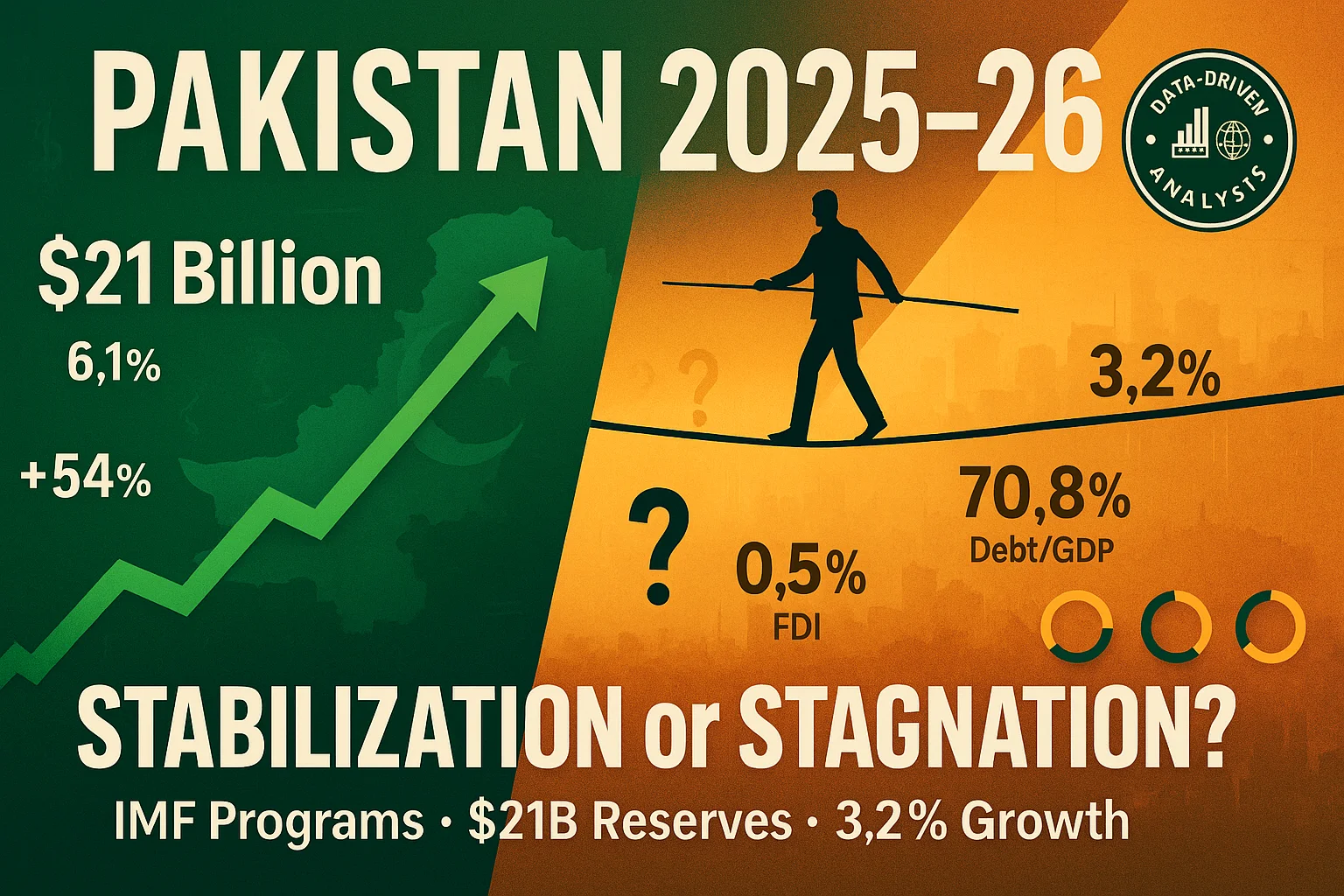
Pakistan’s Economic Outlook 2025: Between Stabilization and the Shadow of Stagnation
China’s Property Woes Could Last Until 2030—Despite Beijing’s Best Censorship Efforts

The Institutional Era: A Comprehensive Cryptocurrency Investment Analysis for 2026
Real Estate Crash Predictions 2026: Data-Backed Regional Guide

Best Investments in Pakistan 2026: Top 10 Low-Price Shares and Long-Term Picks for the PSX

DBS Hits S$1 Billion AI Value Milestone — But Agentic AI Poses Talent Challenges for Singapore Banks
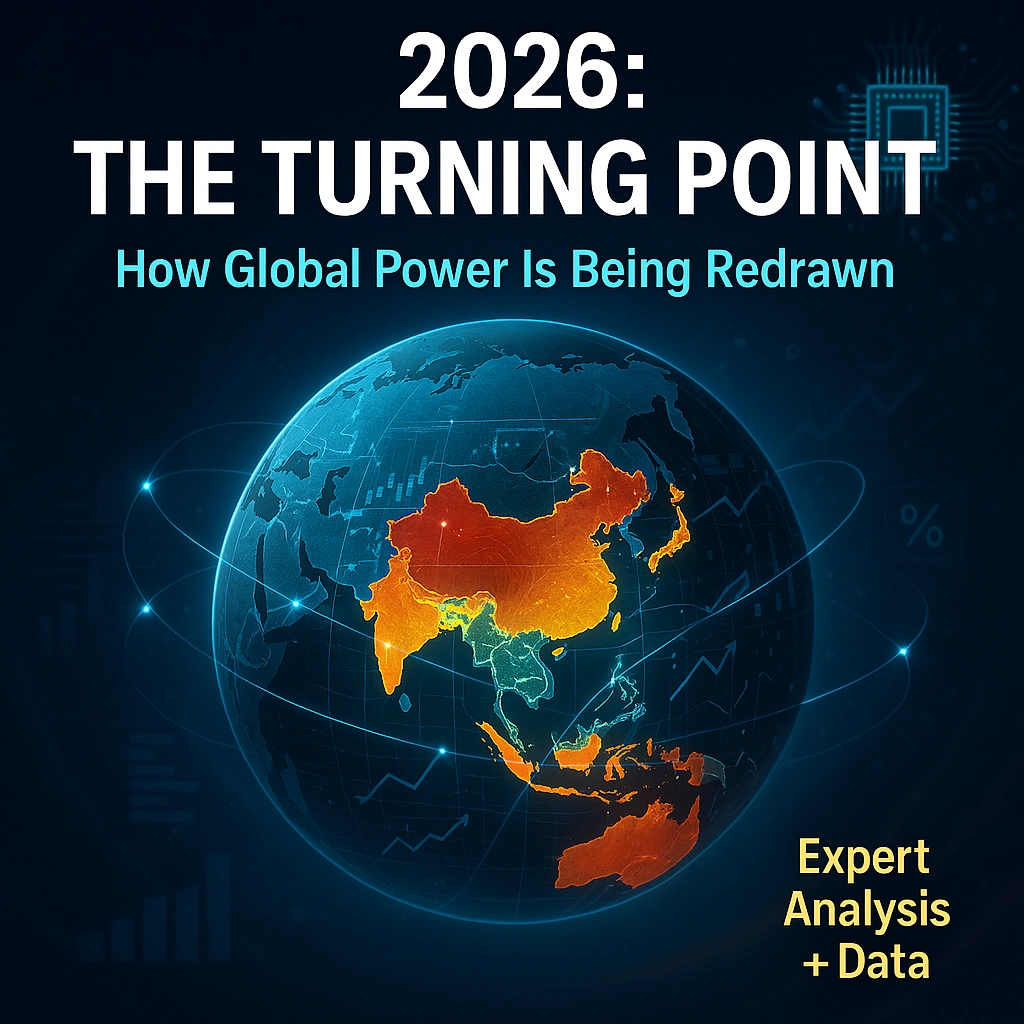
The Contours of 21st-Century Geopolitics Will Become Clearer in 2026: A New World Is Starting to Emerge

How to Become an Active Taxpayer on Pakistan’s FBR Active Taxpayer List (ATL) in 2026: A Step-by-Step Guide

🌍 Davos 2026: The World Economic Forum Annual Meeting Sets the Stage for Global Transformation
Agentic AI in Finance: How Artificial Intelligence Is Replacing Routine Tasks on Wall Street

The New Executive Gold Standard: Top 10 Companies Lavishing Unprecedented Perks on CEOs and CFOs in 2025–2026
-
Markets & Finance10 months ago
Top 15 Stocks for Investment in 2026 in PSX: Your Complete Guide to Pakistan’s Best Investment Opportunities
-
Analysis9 months ago
Debunking IMF Program Myths: Reconfiguring Engagement for True National Ownership in a Volatile World
-
Analysis4 months ago
China Economy 2026: Property Crisis, AI Investment & Export Surplus Explained
-
Investment10 months ago
Top 10 Mutual Fund Managers in Pakistan for Investment in 2026: A Comprehensive Guide for Optimal Returns
-
Asia10 months ago
China’s 50% Domestic Equipment Rule: The Semiconductor Mandate Reshaping Global Tech
-
Global Economy10 months ago
What the U.S. Attack on Venezuela Could Mean for Oil and Canadian Crude Exports: The Economic Impact
-
AI10 months ago
15 Most Lucrative Sectors for Investment in Pakistan: A 2025 Data-Driven Analysis
-
Exports10 months ago
Pakistan’s Export Goldmine: 10 Game-Changing Markets Where Pakistani Businesses Are Winning Big in 2025