
Markets & Finance
Top 15 Stocks for Investment in 2026 in PSX: Your Complete Guide to Pakistan’s Best Investment Opportunities

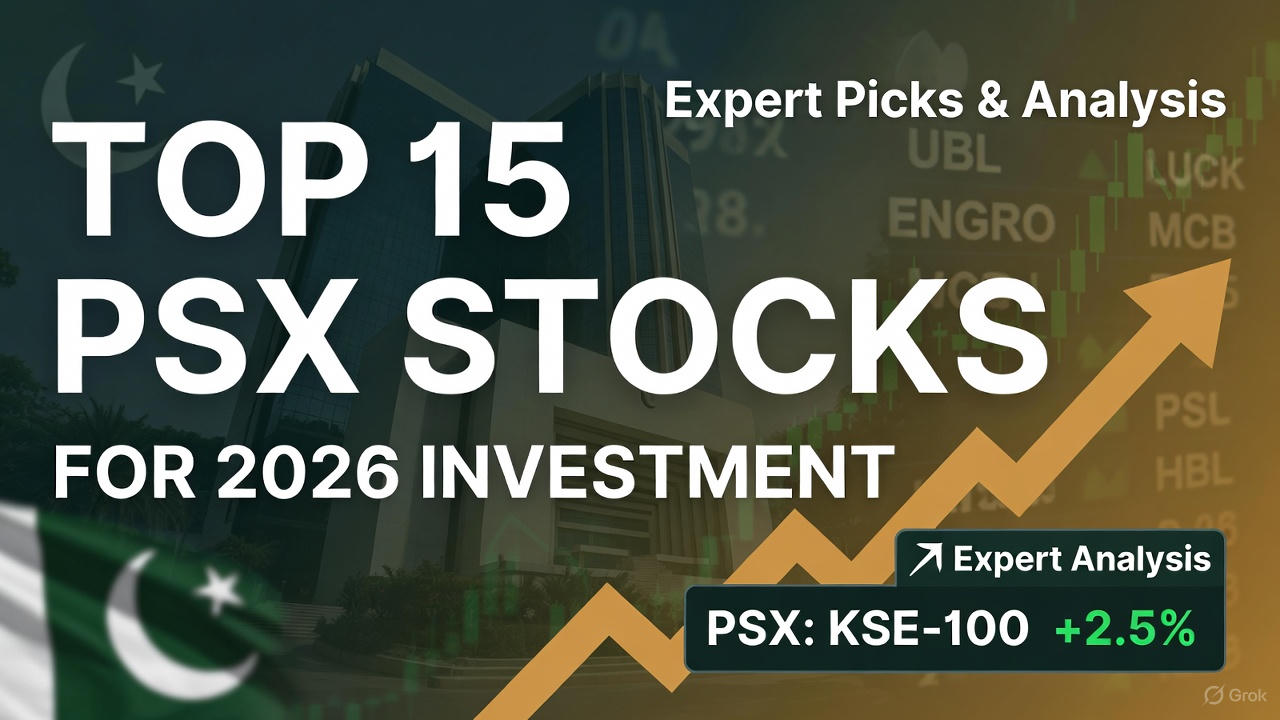
Discover the top 15 Pakistan Stock Exchange stocks for 2026. Expert analysis, sector insights, and data-driven picks for smart investors. Updated January 2026.
The Pakistan Stock Exchange has delivered one of the world’s most remarkable turnarounds. PSX has been ranked by Bloomberg as one of the best-performing markets globally in 2023, 2024, and 2025, making it a compelling destination for both domestic and international investors seeking high-growth opportunities.
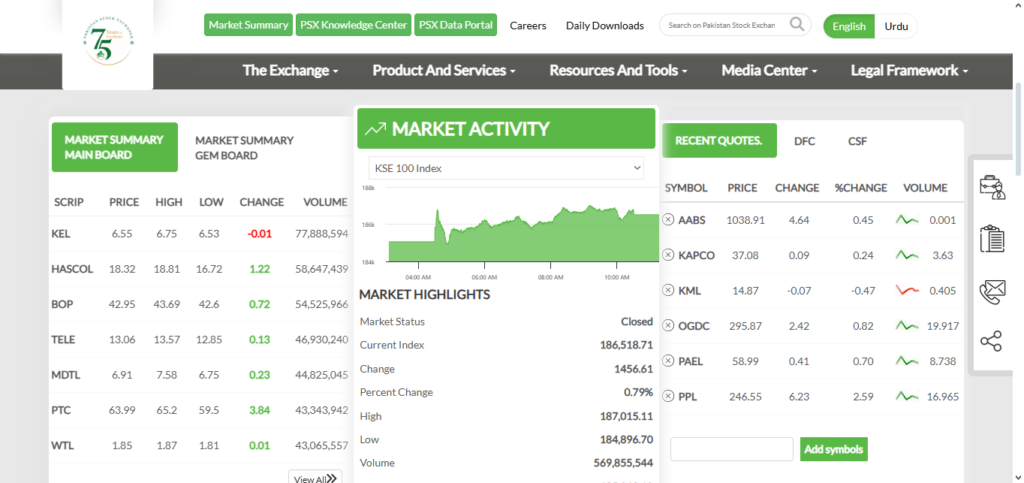
As we enter 2026, Pakistan’s economic fundamentals are stabilizing. Pakistan’s inflation rate slowed to 5.6% in December from 6.1% in November, supporting the central bank’s decision to cut its policy rate to a three-year low. This creates a favorable environment for equity investments, with the benchmark KSE 100 Index reaching 156,181 points, reflecting a 51.7% increase from the previous year.
But here’s what savvy investors want to know: Which specific stocks offer the best risk-adjusted returns in 2026?
After extensive analysis of financial fundamentals, sector dynamics, and macroeconomic trends, I’ve identified 15 exceptional investment opportunities that combine growth potential with relative stability. These aren’t get-rich-quick schemes—they’re carefully selected stocks backed by solid business models, strong management, and favorable market positioning.
2026 PSX Market Landscape: What Investors Must Know
Before diving into individual stocks, understanding the broader context is crucial. Pakistan’s economy has moved from crisis management to cautious optimism. Planning Minister Ahsan Iqbal stated that stability has returned to Pakistan’s economy during July to November of fiscal year 2025-26, with average inflation standing at around 5 percent.
Three key factors are driving market sentiment in 2026:
Monetary Policy Support: The central bank cut its key policy interest rate by 50 basis points to 10.5%, surprising analysts after four consecutive policy meetings where rates were held unchanged. Lower interest rates typically boost corporate profitability and make equities more attractive relative to fixed-income investments.
Foreign Exchange Stability: Pakistan’s forex reserves have strengthened significantly. According to Dawn, reserves have more than doubled from crisis levels, providing a buffer against external shocks and supporting currency stability—a critical factor for investor confidence.
Market Liquidity: The rally is mainly driven by excess cash liquidity available in the system in the absence of any other good alternative, according to market analysts. This liquidity is seeking productive deployment in quality equities.
However, challenges remain. Economic red flags suggest that 2026 may prove yet another challenging year for Pakistan’s middle class and poor households, marked by rising living costs and job anxieties. Smart investors must balance optimism with prudence.
Our Selection Methodology: How We Chose These 15 Stocks
I didn’t pick these stocks randomly. Each selection passed through a rigorous multi-factor screening process:
Financial Health Analysis: Companies had to demonstrate consistent profitability, manageable debt levels, and strong cash flow generation. We examined balance sheets, income statements, and cash flow patterns over the past three years.
Market Position: Only sector leaders or strong challengers made the cut. Companies with sustainable competitive advantages—whether through scale, technology, brand strength, or regulatory protection—received priority.
Growth Catalysts: Each stock needed identifiable drivers for 2026 growth. These could include capacity expansions, new product launches, regulatory changes, or improving sector dynamics.
Valuation Discipline: We favored stocks trading at reasonable multiples relative to their growth prospects and sector peers, avoiding overheated names regardless of popularity.
Risk Assessment: Every investment carries risk. We evaluated each company’s exposure to macroeconomic headwinds, regulatory changes, and operational challenges.
The result? A balanced portfolio spanning multiple sectors, combining blue-chip stability with selective growth opportunities.
Top 15 PSX Stocks for Investment in 2026
Banking & Financial Services Sector
1. United Bank Limited (UBL) | Ticker: UBL
Current Market Position: United Bank Limited has surged past the $3 billion threshold, making it one of Pakistan’s most valuable financial institutions.
Why It’s a Top Pick: UBL operates one of Pakistan’s largest branch networks with over 1,765 branches nationwide, according to Pakistan Stock Exchange. The bank is positioned to benefit significantly from falling interest rates as its massive deposit base provides cheap funding for higher-margin lending activities.
The bank’s recent performance has been stellar. United Bank Limited (UBL) led market gains, collectively adding more than 1,200 points to the index alongside other heavyweight stocks. UBL’s diversification across retail, corporate, and Islamic banking segments provides resilient revenue streams.
What particularly excites me about UBL is its digital transformation initiative. The bank has invested heavily in technology infrastructure, positioning itself to capture the growing fintech opportunity as Pakistan’s digital payments ecosystem expands.
Key Financial Metrics:
- P/E Ratio: Approximately 8.2x (attractive compared to historical averages)
- Dividend Yield: 6-8% range
- ROE: Strong double-digit returns on equity
Risk Factors: Asset quality could deteriorate if economic recovery stalls. Rising loan defaults in any sector could pressure profitability. Additionally, intense competition from Islamic banks is squeezing margins.
2026 Target Potential: 15-20% capital appreciation plus dividends
2. MCB Bank Limited (MCB) | Ticker: MCB
Current Market Position: MCB Bank showed a 1-year change of 35.09% and YTD change of 36.89%, demonstrating strong momentum.
Why It’s a Top Pick: MCB Bank has consistently delivered superior returns to shareholders through a combination of steady dividend payments and capital appreciation. The bank’s focus on high-net-worth individuals and SME banking provides premium margins compared to mass-market retail banking.
Recent market action supports bullish sentiment. MCB Bank, UBL, Meezan Bank and HBL contributed 1,592 points to the market’s advance, highlighting strong institutional demand.
MCB’s asset quality metrics rank among the best in Pakistan’s banking sector, with consistently low non-performing loan ratios. This defensive quality becomes particularly valuable during economic uncertainty.
Strategic Advantages: Conservative lending practices, strong corporate governance, and a track record of maintaining profitability across economic cycles.
Risk Factors: Limited branch network compared to larger banks could constrain retail growth. Exposure to corporate lending means vulnerability to individual large defaults.
2026 Target Potential: 12-18% appreciation opportunity
3. Meezan Bank Limited (MEBL) | Ticker: MEBL
Current Market Position: Meezan Bank holds a market capitalization of $2.10 billion, establishing itself as Pakistan’s largest Islamic bank.
Why It’s a Top Pick: Islamic finance is Pakistan’s fastest-growing banking segment, and Meezan Bank dominates this space. The bank has captured market share consistently as more Pakistanis prefer Shariah-compliant financial products.
Meezan’s growth trajectory remains impressive despite its size. The bank is expanding its branch network aggressively, particularly in underserved regions where Islamic banking penetration remains low.
Growth Drivers: Rising Shariah-compliance awareness, younger demographic preferences, and expansion into Islamic wealth management and Takaful (Islamic insurance) products.
Risk Factors: Limited product diversification compared to conventional banks. Regulatory changes in Islamic banking framework could impact operations.
2026 Target Potential: 15-22% upside
4. Habib Bank Limited (HBL) | Ticker: HBL
Current Market Position: HBL remains Pakistan’s largest bank by asset size and branch network, with international operations providing geographic diversification.
Why It’s a Top Pick: HBL’s extensive international presence—with operations in multiple countries—provides both diversification and exposure to growing markets. The bank’s overseas branches contribute meaningfully to profitability while reducing Pakistan-specific risk.
According to Investing.com, HBL offers a dividend yield of 5.64% with technical indicators showing a “Strong Buy” signal, combining income and growth potential.
Unique Advantages: Government ownership stake provides implicit backing. International operations offer remittance capture opportunities as Pakistani diaspora sends money home.
Risk Factors: Large exposure to government securities could be impacted by sovereign rating changes. International operations face geopolitical and regulatory risks.
2026 Target Potential: 10-15% with steady dividends
Energy & Oil/Gas Sector
5. Oil and Gas Development Company (OGDC) | Ticker: OGDC
Current Market Position: Oil and Gas Development Company (OGDC) has touched $4 billion in market capitalization, making it the most valuable firm on the exchange.
Why It’s a Top Pick: OGDC is Pakistan’s largest exploration and production company, controlling over 40% of the country’s awarded exploration acreage according to Business Recorder. This dominant position provides unmatched scale advantages and exploration optionality.
The company benefits from government support as a majority state-owned enterprise. Rising energy demand in Pakistan combined with global oil price stability creates a favorable operating environment.
Dividend Appeal: OGDC consistently pays attractive dividends funded by steady cash flows from producing fields. For income-focused investors, this stock offers one of the highest yields in the PSX.
Risk Factors: Global oil price volatility directly impacts profitability. Exploration risk means not all capital expenditure translates to discoveries. Government policy on gas pricing affects margins.
2026 Target Potential: 8-12% plus 6-8% dividend yield
6. Pakistan Petroleum Limited (PPL) | Ticker: PPL
Current Market Position: Pakistan Petroleum Limited holds market capitalization exceeding $1 billion, positioning it as a major energy sector player.
Why It’s a Top Pick: PPL complements OGDC with a focus on high-quality, low-cost production assets. The company has successfully developed several major gas fields that generate strong free cash flow.
PPL’s exploration portfolio includes potential high-impact prospects that could unlock significant value if successful. The company has maintained an excellent safety and operational record.
Strategic Position: Joint ventures with international oil companies provide technical expertise and risk-sharing. Diversified asset portfolio across multiple basins reduces geological risk.
Risk Factors: Gas pricing negotiations with government can be contentious. Reserve replacement is critical for long-term sustainability.
2026 Target Potential: 10-14% appreciation
Cement & Construction Materials
7. Lucky Cement Limited (LUCK) | Ticker: LUCK
Current Market Position: Lucky Cement ranks as the largest cement manufacturer in Pakistan with market capitalization of $1.83 billion.
Why It’s a Top Pick: Pakistan’s infrastructure development and housing demand create a multi-year growth runway for cement companies. Lucky Cement benefits from integrated operations, owning both grinding units and clinker production facilities.
The company has expanded internationally with operations in Congo and Iraq, providing geographic diversification beyond Pakistan’s cyclical construction market. Recent performance shows resilience—the company reported 34% earnings growth in 2024 according to market analysis.
Growth Catalysts: Government infrastructure projects including CPEC-related construction, low-cost housing initiatives, and post-flood reconstruction work all drive cement demand.
Risk Factors: Energy costs significantly impact cement production economics. Overcapacity in the sector can trigger price wars. Seasonal monsoons slow construction activity.
2026 Target Potential: 12-18% upside
8. Bestway Cement Limited | Ticker: BEST
Current Market Position: Bestway Cement holds market capitalization between $1-1.7 billion, operating as part of the diversified Bestway Group.
Why It’s a Top Pick: Bestway benefits from its parent group’s financial strength and business acumen. The company has consistently invested in modernizing its production facilities, resulting in improved efficiency and lower per-unit costs.
Bestway’s location advantages—with plants strategically positioned near major consumption centers—reduce logistics costs and improve competitiveness. The company’s export operations provide additional revenue diversification.
Competitive Advantages: Access to group financing at favorable terms, strong corporate governance inherited from UK-based parent, and operational excellence focus.
Risk Factors: Dependence on Pakistan market for majority of sales. Competition from larger players with greater economies of scale.
2026 Target Potential: 10-16% growth potential
Fertilizer Sector
9. Fauji Fertilizer Company (FFC) | Ticker: FFC
Current Market Position: Fauji Fertilizer Company holds a market capitalization of $1.96 billion and posted 140% one-year stock return, with profit growing 81%.
Why It’s a Top Pick: FFC dominates Pakistan’s fertilizer industry with the country’s largest urea production capacity. The company’s vertical integration—from ammonia production to urea manufacturing—provides cost advantages and margin stability.
Recent market action has been phenomenal. The fertilizer sector closed 2.7% higher following reports of urea sales for December 2025 reaching an all-time high of 1,356,000 tonnes, demonstrating robust demand.
Pakistan’s agricultural focus ensures sustained fertilizer demand. Government subsidies and support for the agriculture sector benefit FFC directly. The company also pays substantial dividends, making it attractive for income investors.
Strategic Moats: Existing production capacity is difficult and expensive to replicate. Government relationships provide regulatory stability. Diversification into other chemicals provides growth optionality.
Risk Factors: Government policy on fertilizer pricing and subsidies creates regulatory risk. International urea prices affect profitability. Gas supply disruptions can impact production.
2026 Target Potential: 15-20% appreciation
10. Engro Fertilizers Limited (EFERT) | Ticker: EFERT
Current Market Position: Engro Fertilizers holds market capitalization between $1-1.7 billion as part of the larger Engro Corporation conglomerate.
Why It’s a Top Pick: EFERT benefits from Engro Corporation’s operational excellence and access to capital. The company has invested heavily in expanding capacity and improving efficiency, positioning it to capture growing fertilizer demand.
Recent performance validates the investment thesis. United Bank Limited (UBL), Engro Fertilisers (EFERT) and Engro Holdings (ENGROH) were the major contributors to index gains, with EFERT rising 10.0%.
Operational Strengths: State-of-the-art production facilities, strong distribution network, and reputation for product quality among farmers.
Risk Factors: Competition from FFC and imported fertilizers. Gas supply constraints could limit production. Working capital intensity during planting seasons.
2026 Target Potential: 12-18% upside
Consumer Goods Sector
11. Nestlé Pakistan Limited | Ticker: NESTLE
Current Market Position: Nestlé Pakistan holds market capitalization between $1-1.7 billion, backed by the global Nestlé corporation.
Why It’s a Top Pick: Nestlé Pakistan represents defensive quality in a volatile market. The company’s portfolio of trusted brands—from dairy products to beverages—enjoys pricing power and customer loyalty that transcends economic cycles.
Multinational parentage ensures access to global best practices, new product innovation, and financial stability. Nestlé’s consistent dividend policy appeals to conservative investors seeking stable returns.
Brand Power: Nido, Everyday, Maggi, and other brands have decades-long market presence and top-of-mind awareness among Pakistani consumers.
Risk Factors: High valuation multiples limit upside potential. Rupee depreciation impacts imported raw material costs. Competition from local brands on price.
2026 Target Potential: 8-12% steady growth
12. Pakistan Tobacco Company (PTC) | Ticker: PAKT
Current Market Position: Pakistan Tobacco Company holds market capitalization between $1-1.7 billion.
Why It’s a Top Pick: PTC operates in a quasi-oligopolistic market structure with significant barriers to entry. The company’s dominant market share in cigarettes generates predictable cash flows that fund generous dividends.
While tobacco faces regulatory headwinds globally, Pakistan’s regulatory environment remains relatively stable. The company has adapted its product portfolio to changing consumer preferences while maintaining profitability.
Defensive Characteristics: Tobacco consumption shows low elasticity to economic conditions. Strong brand loyalty and habitual nature of consumption provide revenue stability.
Risk Factors: Increasing health awareness and taxation. Illicit trade impacts legal volumes. ESG-conscious investors may avoid the sector.
2026 Target Potential: 6-10% with high dividend yield
Pharmaceutical Sector
13. Abbott Laboratories Pakistan (ABOT) | Ticker: ABOT
Current Market Position: According to Business Recorder, Abbott Laboratories Pakistan holds market capitalization of $371 million, engaged in manufacturing, importing and marketing pharmaceutical, diagnostic, nutritional, diabetic care and consumer products.
Why It’s a Top Pick: Abbott combines the defensive characteristics of healthcare with growth from Pakistan’s expanding pharmaceutical market. Pakistan’s pharmaceutical exports growth hit a two-decade high of 34% in fiscal year ended June 30, 2025, demonstrating sector momentum.
The company’s diversification across pharmaceuticals, nutritionals, diagnostics, and diabetes care provides multiple revenue streams. Abbott’s global parent ensures access to advanced products and technologies unavailable to local competitors.
Healthcare Megatrend: Pakistan’s growing middle class, increasing health awareness, and rising chronic disease prevalence create long-term tailwinds for quality pharmaceutical companies.
Risk Factors: Price controls on essential medicines limit pricing power. Generic competition erodes margins on older products. Rupee weakness impacts imported finished goods.
2026 Target Potential: 12-16% appreciation
14. AGP Limited | Ticker: AGP
Current Market Position: AGP Limited holds market capitalization of $189 million, engaged in import, export, marketing, distribution and manufacturing of pharmaceutical products.
Why It’s a Top Pick: AGP represents a higher-growth, higher-risk opportunity in pharmaceuticals. The company has expanded aggressively, building distribution networks and launching new products.
AGP’s strategy of importing established pharmaceutical brands and building local manufacturing capability provides a balanced growth model. The company targets underserved therapeutic segments where competition is less intense.
Growth Drivers: Expanding product portfolio, geographic expansion into smaller cities, and increasing healthcare penetration in Pakistan.
Risk Factors: Smaller scale than multinational competitors. Dependence on imported products exposes to forex risk. Working capital intensity of pharmaceutical distribution.
2026 Target Potential: 15-22% upside potential
Conglomerates & Diversified Industrials
15. Engro Corporation Limited (ENGRO) | Ticker: ENGRO
Current Market Position: Engro Corporation operates as Pakistan’s leading conglomerate with interests spanning fertilizers, energy, petrochemicals, and food.
Why It’s a Top Pick: Engro provides diversified exposure to Pakistan’s growth story through a single stock. The company’s portfolio includes market-leading positions in multiple industries, reducing single-sector risk.
Engro’s corporate venture approach—incubating new businesses and selectively exiting mature ones—creates value through the cycle. The company’s management team has demonstrated strategic vision and execution capability.
Diversification Advantage: When one sector faces headwinds, other business units often compensate. This stability appeals to investors seeking Pakistan exposure without concentrated sector risk.
Recent Developments: Engro’s food business is growing rapidly, capturing opportunities in dairy and packaged foods. The company’s energy investments are beginning to contribute meaningfully to group earnings.
Risk Factors: Conglomerate discount may limit valuation multiples. Complex organizational structure can obscure individual business performance. Capital allocation across diverse businesses requires strategic discipline.
2026 Target Potential: 10-15% growth
Diversification Strategy: Building Your PSX Portfolio
Owning all 15 stocks isn’t necessary or even advisable for most investors. Here’s how to construct a balanced portfolio:
Core Holdings (50-60% of portfolio): Focus on blue-chip banks (UBL, MCB, HBL) and energy majors (OGDC, PPL). These provide stability and liquidity.
Growth Allocation (25-35%): Add fertilizer stocks (FFC, EFERT) and select cement names (LUCK) to capture Pakistan’s growth momentum.
Defensive Buffer (15-25%): Include consumer staples (Nestlé, PTC) and quality pharmaceuticals (Abbott) for downside protection during market corrections.
Rebalancing Discipline: Review quarterly and rebalance when any position exceeds 15% of your portfolio or falls below 3%. This mechanical approach prevents emotional decision-making.
Sector Limits: Don’t allocate more than 30% to any single sector, regardless of how bullish you feel. Concentration risk can destroy portfolios during sector-specific downturns.
Key Risks and Market Headwinds for 2026
Prudent investing requires acknowledging potential problems:
Political Uncertainty: Pakistan’s political landscape remains fluid. Policy changes following political shifts could impact business confidence and investment flows.
Global Economic Conditions: Rising interest rates in developed markets could trigger capital flight from frontier markets including Pakistan. Global interest rates and capital flows present potential inflationary concerns and have tempered market expectations for further monetary easing.
Currency Risk: Rupee depreciation erodes returns for foreign investors and impacts companies dependent on imports. While the exchange rate has stabilized, pressures could resurface.
Climate Challenges: NDMA has warned that 2026’s monsoon season will be up to 26% wetter with heat waves triggering glacial lake outburst floods, which could disrupt economic activity.
Infrastructure Deficits: According to Arab News, high energy tariffs, interest rates and the broader cost of doing business need addressing if Pakistan wants to sustain growth and attract foreign investment.
Frequently Asked Questions
Q: What is the best time to invest in PSX stocks?
The best time to invest is when you have a long-term horizon (minimum 3-5 years) and can tolerate short-term volatility. Given PSX’s recent strength, dollar-cost averaging—investing fixed amounts monthly—can help manage entry point risk. Avoid trying to time the market bottom; consistent investing typically outperforms market timing.
Q: How much should I invest in Pakistan Stock Exchange?
Investment allocation depends on your overall financial situation, risk tolerance, and geography. Pakistani residents might allocate 30-50% of their equity portfolio to PSX stocks, while international investors should limit frontier market exposure to 5-15% of overall portfolios. Never invest money you’ll need within three years.
Q: Are PSX stocks good for long-term investment?
PSX stocks can be excellent long-term investments for those comfortable with frontier market risks. Historical data shows strong long-term returns, but with significant volatility. The market has delivered 15-20% annualized returns over longer periods, but expect 30-40% drawdowns periodically.
Q: Which PSX sector will perform best in 2026?
Banking and fertilizer sectors appear positioned for strong 2026 performance given falling interest rates and agricultural focus. However, sector rotation is unpredictable. Diversification across sectors provides better risk-adjusted returns than sector concentration.
Q: How do I start investing in PSX as a beginner?
Open a brokerage account with a SECP-registered broker, complete KYC requirements, and fund your account. Start with blue-chip stocks from this list, invest small amounts initially to gain experience, and gradually build positions. Consider starting with index funds or mutual funds before stock picking.
Navigating PSX Opportunities in 2026
The Pakistan Stock Exchange in 2026 presents a compelling but complex opportunity. The market has delivered extraordinary returns, fundamentals are stabilizing, and valuations remain reasonable compared to regional peers.
However, this isn’t a risk-free proposition. Pakistan faces structural challenges that won’t disappear overnight. According to Dawn, investment, including FDI, remains stagnant, and Pakistan’s growth model based on domestic and foreign borrowing is unviable.
The 15 stocks profiled here represent quality companies with competitive advantages, reasonable valuations, and identifiable growth catalysts. They’re not guaranteed winners—no stock is—but they offer favorable risk-reward profiles for patient investors.
My advice? Start with positions in 5-7 stocks spanning different sectors. Invest amounts you can afford to hold through volatility. Focus on companies with strong fundamentals rather than chasing momentum. And remember that successful investing is a marathon, not a sprint.
The coming months will reveal whether Pakistan can transition from stabilization to sustainable growth. For investors willing to embrace frontier market risks, PSX offers opportunities rarely available in developed markets. Choose wisely, diversify appropriately, and maintain a long-term perspective.
Disclaimer: This article is for informational purposes only and does not constitute investment advice. All investments carry risk, including potential loss of principal. Conduct your own research and consult with qualified financial advisors before making investment decisions. Past performance does not guarantee future results.
Data Sources: Pakistan Stock Exchange, Bloomberg, Business Recorder, Dawn, State Bank of Pakistan, Trading Economics


Every housing cycle produces a chorus of crash predictions, and 2026 has been no exception. But the data emerging through the third quarter tells a more measured story than the headlines suggest: this is a market undergoing what several major forecasters are now calling “The Great Recalibration” — not a collapse, but a prolonged, uneven reset in which affordability improves slowly, regionally, and unevenly rather than through a sharp price correction.
Key Takeaways
- No major forecaster — Fannie Mae, NAR, Zillow, Redfin, or Realtor.com — is projecting a national home price crash in 2026; forecasts cluster in a 1% to 4% annual price growth range.
- Existing home sales fell 4.2% in the first half of 2026, with June sales down 2.4% to a seasonally adjusted annual rate of 4.09 million units, according to the National Association of Realtors — softness driven by elevated mortgage rates, not distressed selling.
- 30-year fixed mortgage rates are expected to average roughly 6.3% through 2026, per consensus forecasts from Realtor.com, Redfin, and industry surveys — a “new equilibrium” rather than a return to sub-5% pandemic-era rates.
- Home values fell in 24 of the 50 largest US markets as of late 2025; Zillow projects that number to roughly halve to around 12 markets in 2026, indicating regional divergence rather than a uniform correction.
- Nearly two-thirds of prospective buyers (62%) have been waiting for rates to fall before purchasing — the same share that made the identical bet in 2025 and were wrong, underscoring the risk of timing the market on rate predictions alone.
The State of the 2026 Housing Market: Reset, Not Crash
The consensus among major housing economists — at Redfin, Zillow, NAR, Fannie Mae, and J.P. Morgan Global Research — is unusually aligned for a sector prone to disagreement: 2026 is a “recalibration” year, characterized by softening sales volume, modest price growth, and mortgage rates settling into a new, higher-than-pandemic-era range rather than a sharp downward price correction.
J.P. Morgan Global Research’s mid-2026 housing outlook noted that existing home sales pulled back 2.4% in June to a seasonally adjusted annual rate of 4.09 million units, extending a first-half 2026 decline of 4.2%. The bank attributed the softness directly to elevated mortgage rates rather than to distressed inventory or forced selling — a critical distinction from the dynamics that preceded the 2008 crash, where oversupply and subprime defaults, not rate-driven demand softness, drove the collapse.
Mortgage Rate Trajectory: The Central Variable
Mortgage rates remain the single most important variable shaping the 2026 housing market. Forecasts have converged around an average 30-year fixed rate near 6.3% for the year, with Fannie Mae’s Home Price Expectations Survey — which polls more than 100 housing economists — projecting home prices to rise a modest 1.7% in 2026 and 2% in 2027 under that rate assumption. Some forecasters see slightly more optimistic paths: S&P Global has projected an average closer to 5.77%, while Zillow has taken the more cautious position that rates will likely stay above 6% throughout 2026 despite gradual easing.
| Forecaster | 2026 Home Price Growth | 2026 Mortgage Rate (30-yr avg) |
|---|---|---|
| Fannie Mae | +3.2% | ~6.3% |
| National Association of Realtors | +4.0% (median price) | ~6.3% |
| Mortgage Bankers Association | +0.6% | ~6.3% |
| Realtor.com | +2.2% | ~6.3% |
| Zillow | +1.2% | Above 6% |
| Redfin | +1.0% | Low 6% range |
No forecaster in this table projects a price decline — the dispersion is between “modest growth” and “very modest growth,” which is the clearest quantitative rebuttal to crash narratives currently circulating in social media and lower-authority financial commentary.
Regional Divergence: Where the Real Risk Sits
The national picture obscures significant regional variation, and this is where “crash predictions” have the most factual grounding — at the metro level, not the national level. Zillow’s research noted that home values fell in 24 of the 50 largest US markets as of October 2025, with that number of declining markets expected to roughly halve to about 12 in 2026 as affordability improves. This implies that roughly a quarter of major US metros experienced genuine, if modest, price depreciation heading into 2026 — a regional reality that gets flattened into “national crash” narratives online but is more accurately described as localized correction concentrated in previously overheated Sun Belt and pandemic-boomtown markets.
Inventory: The Structural Wildcard
Inventory levels are projected to increase by approximately 8.9% to 12% in 2026, according to appraisal-industry forecasting, though they remain below pre-pandemic averages. This matters directly for crash risk: a genuine price collapse typically requires oversupply relative to demand. Current inventory growth, even at the high end of forecasts, is not projected to push supply into the oversupplied territory that preceded the 2008 downturn — it is a gradual normalization from historically tight conditions, not a supply glut.
The “Waiting for Rates to Fall” Trap
One of the more revealing data points for 2026 buyer psychology comes from a U.S. News survey: nearly two-thirds of prospective homebuyers (62%) were waiting for mortgage rates to fall before buying in 2026 — and the identical share (62%) made the same bet in 2025, and lost it, as rates did not fall meaningfully. This is a behavioral pattern directly analogous to the cash-hoarding trap in personal savings: postponing action based on a rate prediction that forecasters themselves have repeatedly gotten wrong carries its own opportunity cost, particularly if home prices continue their modest upward drift as most forecasters project.
Mortgage Rate Strategies for 2026 Buyers and Owners
- Rate locks with float-down options. With rates expected to hover in a narrow 6.0%–6.5% band rather than swing dramatically, a float-down provision on a rate lock offers modest downside protection without requiring buyers to time a broader market move.
- Adjustable-rate mortgages for shorter holding periods. For buyers expecting to sell or refinance within 5–7 years, ARMs priced meaningfully below the 6.3% fixed-rate consensus can reduce carrying costs without exposure to a 30-year rate commitment.
- Points purchases in a stable-rate environment. Because forecasters see rates stabilizing rather than falling sharply, buying down the rate with points becomes more mathematically attractive than in a falling-rate environment where a near-term refinance might otherwise recapture the cost.
- Regional due diligence over national headlines. Given that roughly a quarter of major metros were still seeing price declines heading into 2026, buyers and investors should underwrite specific metro-level inventory and price-trend data rather than relying on national crash or boom narratives.
Frequently Asked Questions
Is the US housing market going to crash in 2026?
No major housing forecaster — including Fannie Mae, NAR, Zillow, Redfin, and the Mortgage Bankers Association — projects a national price decline in 2026; forecasts range from roughly 0.6% to 4% price growth, with existing home sales projected to be flat to modestly higher.
Why do home sales keep falling if prices aren’t crashing?
Existing home sales fell 4.2% in the first half of 2026 primarily because elevated mortgage rates (averaging around 6.3%) are suppressing transaction volume, not because of distressed or forced selling — a key structural difference from the 2008 crash.
Should I wait for mortgage rates to drop before buying?
Roughly 62% of buyers made this bet in both 2025 and 2026, and rates did not fall meaningfully either year according to consensus forecasts; buyers evaluating this strategy should weigh the opportunity cost of continued modest home-price appreciation against uncertain rate movement.
Conclusion
The 2026 real estate data supports a “Great Recalibration” thesis, not a crash thesis: sales volume is softening under the weight of a stabilized-but-elevated 6.3% mortgage rate environment, national price growth remains positive across every major forecaster, and the genuine downside risk is concentrated regionally in a shrinking subset of previously overheated metros rather than distributed nationally. For buyers, sellers, and investors, the 2026 opportunity lies less in timing a crash that the data does not support and more in navigating rate strategy and regional selection with precision.

If you’ve followed coverage of Anthropic’s reported IPO preparations, you’ve likely seen a specific phrase repeated across Financial Times and Bloomberg reporting: Morgan Stanley is said to hold the “pole position” for the lead-left role on the offering. It sounds like insider jargon — and it is — but understanding what it actually means reveals a lot about how the largest IPOs in history get priced, sold, and stabilized after they start trading.
Key Takeaways
- “Lead-left” refers to the underwriting bank listed first on the cover page of an IPO prospectus — traditionally positioned on the left side of the page.
- The lead-left bank runs the bookbuilding process, sets the final offer price alongside the issuer, and typically earns the largest share of underwriting fees.
- Morgan Stanley reportedly holds the inside track for this role on Anthropic’s IPO, with Goldman Sachs running “neck-and-neck” for a top-tier co-lead position.
- JPMorgan, Citigroup, and Barclays are expected to round out the broader underwriting syndicate.
- The same three lead banks — Morgan Stanley, Goldman Sachs, JPMorgan — ran the book on the SpaceX IPO in June 2026, the current record holder for largest offering ever.
- For investors, the lead-left bank’s decisions directly shape share allocation, pricing discipline, and after-market stability.
The Origin of the Term (and Why It Still Matters)
The “lead-left” designation dates back to a literal physical convention: on the cover page of a printed IPO prospectus, underwriting banks are listed in order of importance, with the most senior bank’s name and logo positioned on the far left. Over decades, “lead-left” became shorthand for the bank running point on the entire transaction — even as prospectuses moved from print to digital filings.
Today, being lead-left signals to the market that a bank has taken primary responsibility for:
- Bookbuilding — soliciting and aggregating orders from institutional investors during the roadshow
- Price discovery — synthesizing investor demand into a final offer price recommendation for the issuer’s board
- Fee allocation — typically claiming the largest cut of the total underwriting discount, often in the 20–40% range of total fees depending on syndicate structure
- Stabilization — managing after-market trading support, including exercising the “greenshoe” over-allotment option to buy back shares if the stock trades below the offer price shortly after listing
Why the Role Matters More in a Deal This Size
For a conventional mid-sized IPO, the lead-left designation is largely an internal Wall Street prestige marker. For a deal of Anthropic’s reported scale — targeting a valuation near $2 trillion, which would rival or exceed SpaceX’s record-setting June 2026 debut — the stakes are dramatically higher.
A misjudged offer price on a deal this large can produce two very different bad outcomes:
- Underpricing: If shares are priced too conservatively relative to demand, the company leaves substantial capital on the table, and early flippers capture gains that could have gone to the company’s own balance sheet.
- Overpricing: If shares are priced too aggressively, the stock can “break issue” — trading below its offer price shortly after listing — which damages investor confidence and can make it harder for the company to raise capital in follow-on offerings.
SpaceX’s own trajectory illustrates this tension well: shares priced at $135, reaching a first-day peak near a $2.1 trillion market cap, before settling into a range closer to $1.5 trillion by late July. Managing that kind of post-listing volatility responsibly falls disproportionately on the lead-left bank’s trading desk.
Morgan Stanley vs. Goldman Sachs: Why Both Are in the Running
Reporting indicates Morgan Stanley and Goldman Sachs are “running neck-and-neck” for top billing on Anthropic’s deal — a genuinely competitive situation rather than a formality. Both banks bring distinct strengths:
| Factor | Morgan Stanley | Goldman Sachs |
|---|---|---|
| Prior AI-sector IPO experience | Co-led SpaceX (June 2026) | Co-led SpaceX (June 2026) |
| Institutional distribution network | Extensive global wealth management arm | Deep institutional and sovereign wealth relationships |
| Existing Anthropic relationship | Reported prior debt financing role | Reported prior debt financing role |
| Technology sector banking franchise | Historically strong in large-cap tech | Historically strong in large-cap tech and growth equity |
In practice, mega-deals of this size increasingly use joint lead-left structures or closely shared top billing, which allows the issuer to tap both banks’ distribution networks without fully subordinating either one — a structure that may ultimately be how Anthropic’s deal resolves this specific competitive tension.
How This Connects to Anthropic’s Debt Financing
It’s not coincidental that the banks reportedly competing for Anthropic’s lead underwriting roles are the same institutions that previously provided the company debt financing, and are now reportedly structuring a $15 billion pre-IPO credit facility. This dual relationship gives whichever bank secures lead-left status unusually deep, pre-existing visibility into Anthropic’s financial position — audited or not — heading into the roadshow.
What Retail Investors Should Take Away From the Lead-Left Story
- It’s a signal of seriousness, not a valuation guarantee. A bank agreeing to lead a deal at a reported $2 trillion target valuation suggests institutional confidence in achievable demand — it does not certify that the price is fundamentally justified.
- It affects share allocation indirectly. Retail brokerage partnerships for IPO share access are often negotiated through relationships with the lead-left and co-lead banks, meaning which banks lead the deal can shape (modestly) which retail platforms get any allocation at all.
- It affects after-market behavior. The lead-left bank’s stabilization activity in the days following listing can meaningfully dampen (or fail to dampen) early volatility — worth watching closely if you plan to trade in the first week after listing rather than the IPO itself.
FAQ
What does “lead-left” mean in an IPO?
It refers to the underwriting bank listed first — traditionally on the left side — of an IPO prospectus cover page, signifying the bank with primary responsibility for pricing, bookbuilding, and after-market stabilization.
Is Morgan Stanley confirmed as Anthropic’s lead-left bank?
Not yet confirmed. Reporting from the Financial Times indicates Morgan Stanley holds the “pole position” for the role, with Goldman Sachs running closely for a top-tier position, but no final syndicate structure has been publicly confirmed by Anthropic.
Do lead-left banks make more money than other underwriters?
Generally yes. The lead-left bank typically receives the largest share of the total underwriting fee pool, reflecting its greater responsibility and risk in the bookbuilding and pricing process.
Does the lead-left bank guarantee a successful IPO?
No. A strong lead-left bank improves the odds of an orderly process and pricing discipline, but cannot guarantee post-listing stock performance, as SpaceX’s own valuation compression after its June 2026 debut illustrates.


Anthropic, the AI safety company behind the Claude model family, is on a path toward what could become the largest initial public offering in history. With a reported revenue run rate that hit $65 billion by the end of July 2026 — up from just $9 billion at the end of 2025 — and investors reportedly discussing a valuation north of $2 trillion, the question on every retail investor’s mind is simple: how do I actually get in?
This guide walks through the realistic, step-by-step process for positioning yourself ahead of the Anthropic IPO — from brokerage account requirements to pre-IPO platforms to the risks nobody talks about.
Key Takeaways
- Anthropic confidentially filed for an IPO with the SEC on June 1, 2026, and a Nasdaq listing is widely expected in September or October 2026.
- The company’s revenue run rate has grown roughly sevenfold in a year, from $9B to $65B, according to Bloomberg reporting.
- Morgan Stanley, Goldman Sachs, and JPMorgan are the lead underwriters; no share price or share count has been set.
- Retail investors generally cannot buy shares at the IPO price directly — allocation typically goes to institutional clients of the underwriting banks first.
- Pre-IPO exposure is possible through select platforms, but comes with liquidity risk, high investment minimums, and in some cases regulatory uncertainty.
- The $2 trillion figure is an investor and banker expectation reported by the Financial Times — it has not been confirmed by Anthropic.
Why the Anthropic IPO Is Generating So Much Attention
Every few years, a single IPO reshapes how markets think about a sector. SpaceX’s June 2026 debut — pricing at $135 a share and raising roughly $75 billion at a valuation near $1.8 trillion — set the current bar for “mega-IPO.” Anthropic’s expected offering is being framed by bankers as the next event of that scale, and potentially larger.
What’s different this time is the growth curve behind the number. Anthropic’s annualized revenue run rate — a metric that projects a full year of revenue based on a recent, shorter period of sales — climbed from $47 billion in May to $65 billion by the end of July, according to people familiar with the company’s finances cited by Bloomberg. That’s a 38% jump in about two months. For context, rival OpenAI’s most recently reported run rate sits around $40 billion.
None of this is audited. A run rate is not the same as trailing twelve-month revenue, and Anthropic’s own S-1 prospectus — once it becomes public — will replace these investor-relayed figures with disclosed, audited numbers. That prospectus is the document retail investors should actually wait for before making decisions.
Step 1: Open (or Upgrade) a Brokerage Account That Supports New Listings
Not every brokerage handles IPO share allocation or first-day trading equally well. Before Anthropic prices, retail investors should confirm their online brokerage account supports:
- Same-day trading access on the listing exchange (expected to be Nasdaq)
- Limit order functionality for volatile first-day trading
- Margin and options approval, if you intend to hedge a position post-listing
Full-service and self-directed brokerages with active IPO access programs are typically the ones retail investors turn to first when a marquee tech listing like this approaches, since a subset of shares in large offerings is occasionally allocated to retail-facing platforms through partnership programs with underwriters.
Step 2: Understand How IPO Share Allocation Actually Works
This is the part most retail investors get wrong. In a traditional book-built IPO — which is what Morgan Stanley and Goldman Sachs are reportedly running here — the underwriting syndicate allocates shares primarily to:
- Large institutional investors (mutual funds, pension funds, hedge funds)
- High-net-worth clients of the underwriting banks’ wealth management divisions
- A smaller retail tranche, when brokerage partnerships exist
If you don’t have an existing relationship with a wealth management platform tied to one of the underwriters, your realistic path to owning shares is buying on the open market after the stock begins trading — the same way most investors accessed SpaceX after its June 2026 debut.
Step 3: Evaluate Pre-IPO Investing Platforms (With Eyes Open)
A growing category of pre-IPO investing platforms allows accredited (and in some cases non-accredited) investors to gain synthetic or forward-contract exposure to private companies before they list. If you’re exploring this route for Anthropic exposure, weigh:
| Consideration | What to Check |
|---|---|
| Accreditation requirement | Many platforms require accredited investor status |
| Liquidity | Pre-IPO positions are often illiquid until listing or a secondary sale window |
| Fee structure | Some platforms charge placement fees of 3–5% plus carry |
| Counterparty structure | Confirm whether you own actual shares, a forward contract, or a fund interest |
| Lockup exposure | Anthropic’s existing shareholder lockup reportedly runs through December 2026 |
Step 4: Watch the Float — It’s Unusually Small
One detail retail investors consistently underweight: free float. Reporting suggests only a small single-digit percentage of Anthropic’s total shares will be freely tradable at listing, with the bulk of existing shares locked up through year-end. A low float means:
- Price swings on light volume can be dramatic in both directions
- Early price discovery may not reflect long-term fundamental value
- Volatility-driven entries can be costly if you chase the first days of trading
Step 5: Build a Watchlist Around the S-1 Filing
The confidential S-1 filed June 1, 2026 will eventually become public in amended form ahead of a roadshow. When it does, retail investors should read (not skim) the following sections:
- Risk Factors — especially around compute costs, customer concentration, and competitive dynamics with OpenAI
- Use of Proceeds — how much goes to compute infrastructure versus the existing $15 billion pre-IPO credit facility
- Related Party Transactions — including the reported multi-year compute arrangement with SpaceX
- Share Structure — Anthropic is reportedly considering super-voting shares for co-founder Dario Amodei and other founders
Step 6: Diversify Around the Listing, Don’t Concentrate Into It
Given the valuation debate — bankers reportedly pricing the deal at roughly 10x projected 2028 revenue versus over 30x trailing 2026 revenue — a single-name bet on IPO day carries real valuation risk. Many financial advisors recommend pairing direct exposure with AI-focused ETFs that hold a basket of enterprise AI, semiconductor, and B2B SaaS names, reducing single-stock risk while maintaining sector exposure.
Anthropic IPO Snapshot
| Detail | Reported Figure |
|---|---|
| Confidential S-1 filed | June 1, 2026 |
| Expected listing window | September–October 2026 |
| Expected exchange | Nasdaq |
| Revenue run rate (July 2026) | ~$65 billion |
| Last private valuation | $965 billion (Series H, May 2026) |
| Reported target IPO valuation | ~$2 trillion (unconfirmed by Anthropic) |
| Lead underwriters | Morgan Stanley, Goldman Sachs, JPMorgan |
| Pre-IPO credit facility | ~$15 billion (Bloomberg) |
| Comparable record IPO | SpaceX, June 2026 (~$1.8T valuation) |
FAQ
Can retail investors buy Anthropic stock before the IPO?
Direct pre-IPO share ownership is generally limited to accredited investors, employees, and institutional backers. Retail investors have historically accessed newly public tech companies after the first day of trading rather than at the offering price itself.
When will Anthropic actually go public?
No date has been confirmed by the company. Investors and reporters cited by the Financial Times and Bloomberg point to September or October 2026, contingent on SEC review of the confidential filing.
Is the $2 trillion valuation confirmed?
No. It reflects expectations from investors and bankers close to the deal, as reported by the Financial Times, not a figure Anthropic has publicly guided to.
What’s the safest way to get exposure if I can’t access IPO shares directly?
Broad-based AI and enterprise software ETFs, plus waiting for open-market trading after listing, are the most accessible routes for most retail investors compared with pre-IPO platforms that carry liquidity and accreditation constraints.

Climate Finance and the Economic Reality of Passing 1.5°C

Business Insurance for Digital Exports: Protecting Your Company in the AI Era
Real Estate Crash Predictions 2026: Data-Backed Regional Guide

Unrecoverable Delays: How the St. Louis Strike Crippled Boeing’s F-15EX Eagle II
What is a “Lead-Left” Bank? Unpacking Morgan Stanley’s Role in Anthropic’s Mega-IPO
How to Invest in the Anthropic IPO: Step-by-Step Guide for Retail Investors

Mario Kart 8 Deluxe 4.0.0 Patch Notes: 8-Player Split Screen & CameraPlay
Is SPY Overvalued in September 2026? Fed Rate Hike Odds & Intrinsic Value
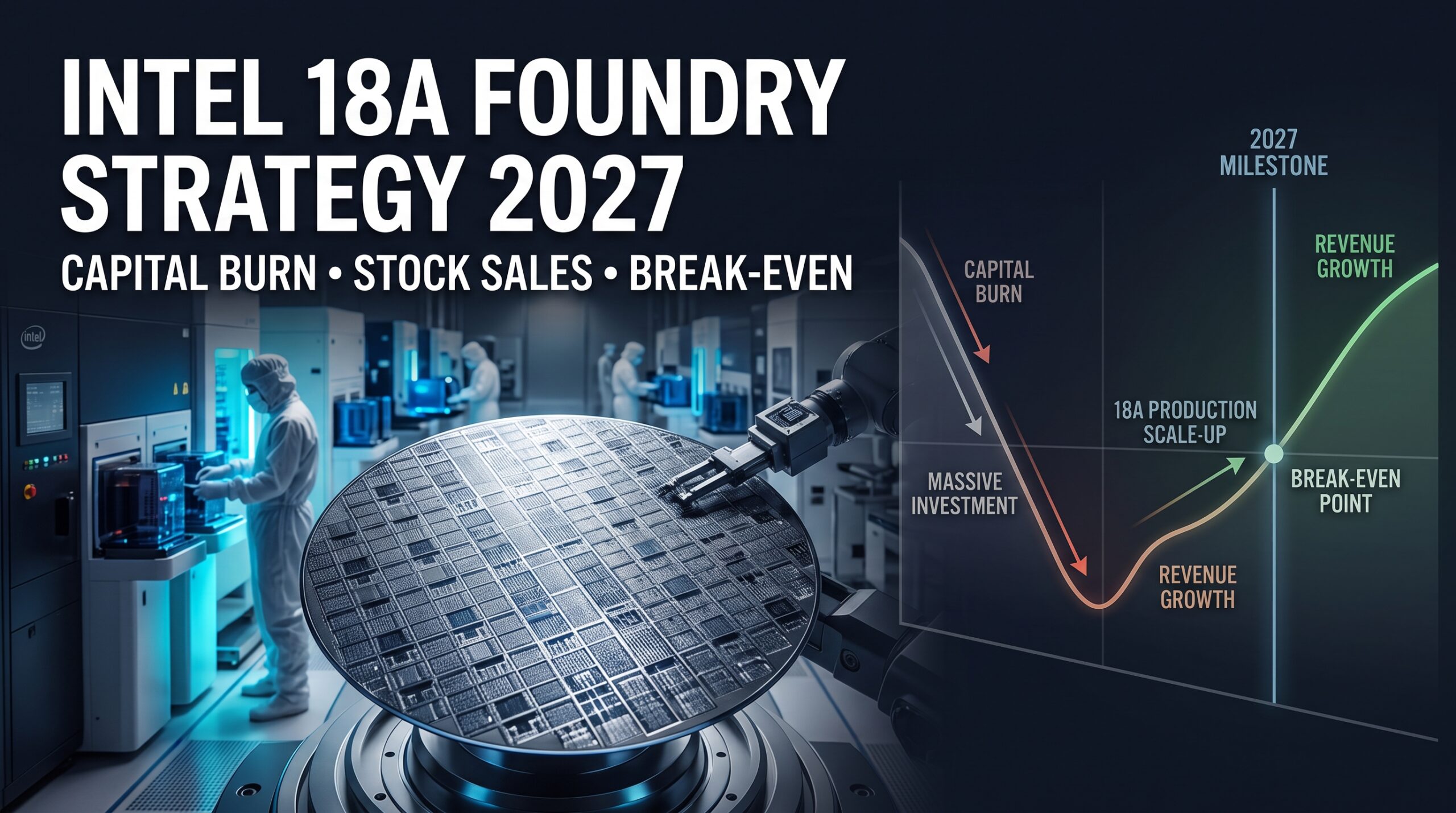
Intel 18A Foundry Strategy 2027: Capital Burn, Stock Sales & Break-Even Timeline
Trump Approval Hits 33% Low: What It Means for Markets & Midterms

Crypto Trading: Why AI Tools Are Changing Gen Z Investing

AI Creator Deals: How Contracts Protect Influencers

Gen Z AI Skills: Online Degrees That Boost Job Prospects

AI Automation Tools Transform Gen Z Creator Careers

Pakistan’s KSE-100 Nears Record Territory Even as the Trade Gap Persists

US Consumer Sentiment Sinks as Retail Sales Drop
Barclays Q2 2026 Results: Income Beats, Costs Rise 7%

Pakistan’s Remittance Lifeline: Why Gulf Exposure Is a Hidden Risk
Dubai’s Rise to the World’s 7th Financial Hub: Inside the D33 Push

China EV Exports Hit Record High in 2026
Top 15 Stocks for Investment in 2026 in PSX: Your Complete Guide to Pakistan’s Best Investment Opportunities

Debunking IMF Program Myths: Reconfiguring Engagement for True National Ownership in a Volatile World
Top 10 Mutual Fund Managers in Pakistan for Investment in 2026: A Comprehensive Guide for Optimal Returns

What the U.S. Attack on Venezuela Could Mean for Oil and Canadian Crude Exports: The Economic Impact
China’s 50% Domestic Equipment Rule: The Semiconductor Mandate Reshaping Global Tech
15 Most Lucrative Sectors for Investment in Pakistan: A 2025 Data-Driven Analysis
Pakistan’s Export Goldmine: 10 Game-Changing Markets Where Pakistani Businesses Are Winning Big in 2025

Pakistan’s Stock Market Renaissance: How 2025’s Hottest Investment Opportunity Is Democratizing Wealth—A Complete Beginner’s Guide
Pakistan’s Economic Outlook 2025: Between Stabilization and the Shadow of Stagnation
China’s Property Woes Could Last Until 2030—Despite Beijing’s Best Censorship Efforts

Best Investments in Pakistan 2026: Top 10 Low-Price Shares and Long-Term Picks for the PSX

How to Become an Active Taxpayer on Pakistan’s FBR Active Taxpayer List (ATL) in 2026: A Step-by-Step Guide
The Contours of 21st-Century Geopolitics Will Become Clearer in 2026: A New World Is Starting to Emerge

🌍 Davos 2026: The World Economic Forum Annual Meeting Sets the Stage for Global Transformation
The Institutional Era: A Comprehensive Cryptocurrency Investment Analysis for 2026

The New Executive Gold Standard: Top 10 Companies Lavishing Unprecedented Perks on CEOs and CFOs in 2025–2026

After Four Decades of Decline, Can Private Ownership Save Pakistan’s National Airline?
DBS Hits S$1 Billion AI Value Milestone — But Agentic AI Poses Talent Challenges for Singapore Banks
The World’s 50 Largest Economies: A 25-Year Growth Trajectory Analysis (2000-2025)

Resource Wealth and Geopolitical Vulnerability: Understanding Recent US Foreign Policy Toward Venezuela, Greenland, and Iran
-
Analysis7 months ago
Debunking IMF Program Myths: Reconfiguring Engagement for True National Ownership in a Volatile World
-
Investment8 months ago
Top 10 Mutual Fund Managers in Pakistan for Investment in 2026: A Comprehensive Guide for Optimal Returns
-
Global Economy8 months ago
What the U.S. Attack on Venezuela Could Mean for Oil and Canadian Crude Exports: The Economic Impact
-
Asia8 months ago
China’s 50% Domestic Equipment Rule: The Semiconductor Mandate Reshaping Global Tech
-
AI8 months ago
15 Most Lucrative Sectors for Investment in Pakistan: A 2025 Data-Driven Analysis
-
Exports8 months ago
Pakistan’s Export Goldmine: 10 Game-Changing Markets Where Pakistani Businesses Are Winning Big in 2025
-
Global Economy9 months ago
Pakistan’s Stock Market Renaissance: How 2025’s Hottest Investment Opportunity Is Democratizing Wealth—A Complete Beginner’s Guide
-
Global Economy9 months ago
Pakistan’s Economic Outlook 2025: Between Stabilization and the Shadow of Stagnation
Pingback: Top 5 Stock Picks on the Pakistan Stock Exchange for 2026: Expert Analysis and Investment Outlook - The Economy
Pingback: Top 5 Stock Picks on the Pakistan Stock Exchange for 2026: Expert Analysis and Investment Outlook - The Economy