
Global Economy
The $2 Trillion Question: How Democratic Socialists Are Reshaping Tech’s Future

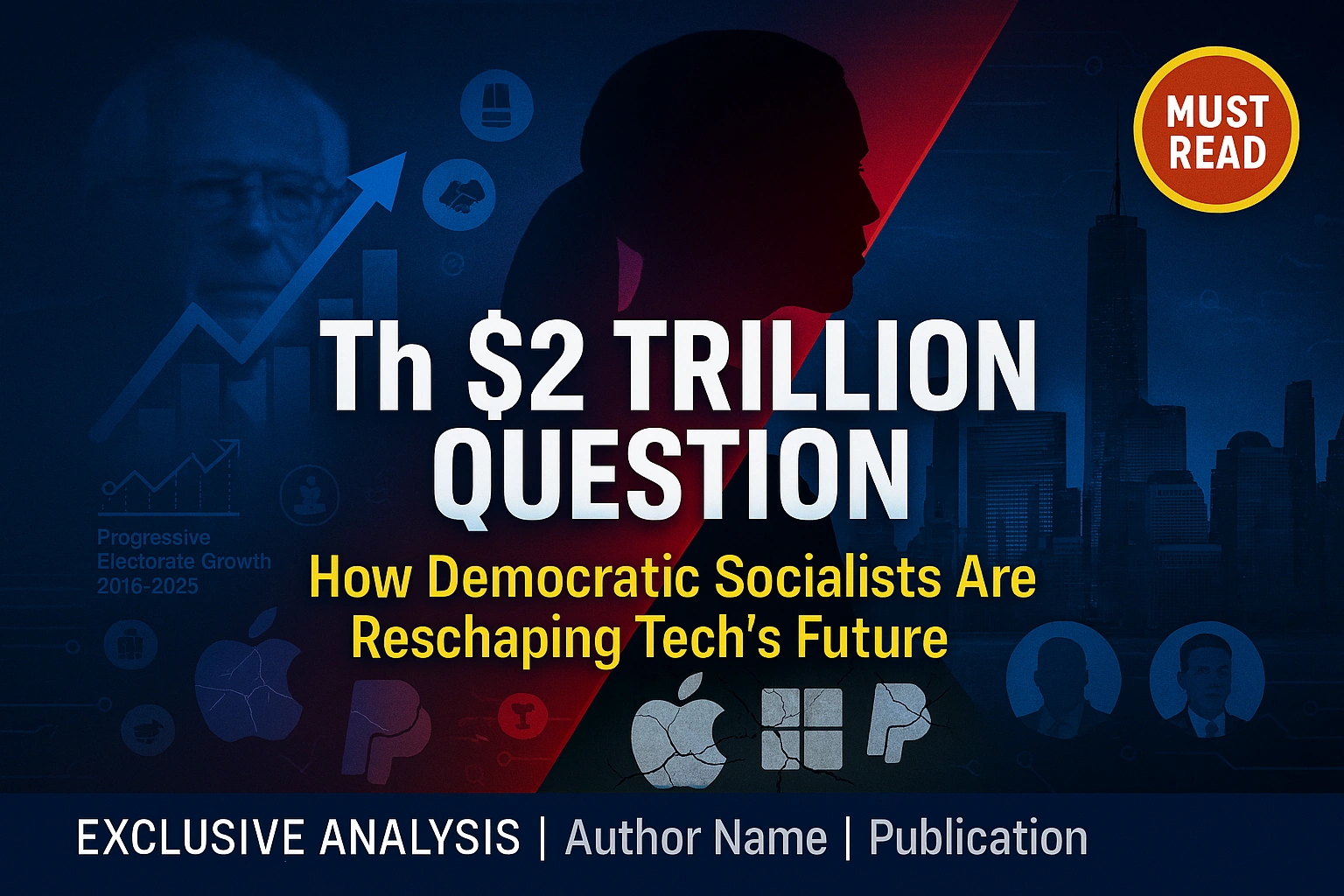
Bernie Sanders, Alexandria Ocasio-Cortez, and Mayor Mamdani’s progressive movement collides with Silicon Valley as executive orders rewrite the rules of American capitalism
NEW YORK — When Zohran Mamdani was sworn in as New York City’s mayor on January 1, 2026, declaring “I was elected as a democratic socialist, and I will govern as a democratic socialist,” tech executives from Cupertino to Redmond took notice. This wasn’t just another mayoral inauguration. It was the latest tremor in a political earthquake that’s been building since Bernie Sanders first challenged Hillary Clinton in 2016 — one that’s now threatening to fundamentally reshape how America regulates its most valuable industry.
The collision between progressive economics and tech policy has moved from theoretical to existential. With Alexandria Ocasio-Cortez raising $9.6 million in the first quarter of 2025 with an average donation of $21 and Sanders explicitly positioning the Vermont senator and the New York congresswoman as leaders of a democratic socialist alternative to right-wing extremism, Silicon Valley faces a reckoning it’s spent billions trying to avoid.
I’ve advised Fortune 500 tech companies through regulatory storms before. But this feels different. The progressive movement that once seemed fringe has captured America’s largest city and is setting its sights on federal power. For companies like Microsoft, Apple, PayPal, and Payoneer, the question isn’t whether regulation is coming — it’s whether they can survive what’s heading their way.
The Sanders Effect: From Fringe to Mainstream
Bernie Sanders won his first mayoral race in Burlington, Vermont, by just 10 votes in 1981. Four decades later, his political progeny now governs 8.3 million Americans in the nation’s economic capital.
The numbers tell a remarkable story. Sanders raised $11.4 million in the first quarter of 2025, matching or exceeding the fundraising prowess of candidates half his age. More importantly, he and Ocasio-Cortez have been drawing tens of thousands to rallies in conservative states including Utah, Idaho, and Montana, suggesting the democratic socialist message resonates far beyond coastal bubbles.
“What the American people are saying is: Who is standing up for us?” Sanders told NBC News in September 2025. The answer, increasingly, appears to be politicians who openly embrace the democratic socialist label that was political poison just a decade ago.
The movement’s ascent coincides with deepening economic anxiety among working Americans. According to Bureau of Labor Statistics data, wage growth has consistently trailed productivity gains for tech workers outside of engineering roles since 2020, while gig economy workers face increasing classification disputes. This creates fertile ground for Sanders’ critique of “uber-capitalism” — what he describes as a system where declining life expectancy meets rising corporate profits.
Mayor Mamdani and the New York Experiment
The clearest test case for whether democratic socialists can govern — and what that means for business — is now unfolding in real-time in New York City.
Mamdani, a 34-year-old immigrant from Uganda who makes history as the city’s first Muslim mayor and first South Asian mayor, won with an ambitious platform that tech companies are watching nervously: rent freezes, free buses, universal childcare, and government-owned grocery stores.
Hours after taking office, Mamdani announced three executive orders focused on housing, demonstrating he intends to use government power aggressively. One revived the Mayor’s Office to Protect Tenants. Two others established task forces to accelerate housing development and remove bureaucratic barriers — moves that signal both progressive priorities and pragmatic governance.
“Beginning today, we will govern expansively and audaciously,” Mamdani told thousands of supporters who braved freezing temperatures for his outdoor inauguration. “We may not always succeed, but never will we be accused of lacking the courage to try.”
For tech companies with significant New York operations — virtually all major players — this matters enormously. New York City’s $114 billion budget and 280,000-person workforce make it America’s fourth-largest “company” by employee count. How Mamdani governs will influence progressive policy nationwide.
The inauguration itself read like a democratic socialist family reunion. Bernie Sanders administered the oath of office, while Alexandria Ocasio-Cortez spoke glowingly about the incoming mayor. Poet Cornelius Eady read a poem he dedicated “to my trans, queer, foreign students of color,” emphasizing the movement’s intersectional coalition. The ceremony featured a performance of “Bread and Roses,” the 1912 labor anthem that symbolizes workers demanding not just fair wages but dignity and beauty in life.
Cultural figures like Lucy Dacus have aligned with this movement, understanding that economic justice and artistic freedom are intertwined. This isn’t your grandfather’s labor movement — it’s a coalition that spans working-class voters, young progressives, artists, and tech workers themselves who feel exploited by the industry’s wealth concentration.
The Alexandria Ocasio-Cortez Factor
If Sanders planted the seeds, Alexandria Ocasio-Cortez is cultivating the harvest.
Since June 2024, Ocasio-Cortez has accumulated 13.1 million X (formerly Twitter) followers, 8.4 million on Instagram, and 2 million on Bluesky as of March 2025, where she’s the platform’s most-followed user. This digital dominance translates to political power in ways previous progressive leaders could only dream of.
Ocasio-Cortez is increasingly viewed as a possible successor to Sanders and a candidate for the 2028 presidential election, with Vice President JD Vance calling her potential candidacy “the stuff of nightmares” and even Trump acknowledging her charisma while questioning her debating skills.
Her policy impact has been substantial. Later in March 2025, Ocasio-Cortez joined Sanders on the “Fighting Oligarchy Tour,” giving speeches opposing Trump’s policies in multiple cities, building what appears to be a deliberate succession plan for progressive leadership.
For tech companies, Ocasio-Cortez represents a unique threat. She understands digital platforms better than almost any politician in Washington, regularly using Instagram Live and Twitter to explain complex policy positions. She’s called out specific companies by name, challenged executives in congressional hearings, and proposed legislation that would fundamentally alter tech business models.
Executive Orders: The New Battlefield
While progressive politicians build power at state and local levels, the Trump administration’s approach to tech regulation through executive orders has created a volatile landscape that benefits no one.
On December 11, 2025, President Trump signed an executive order establishing a single national framework for artificial intelligence regulation, explicitly aiming to undermine state-level regulations. The order declares “to win, United States AI companies must be free to innovate without cumbersome regulation,” and directs the Attorney General to establish an AI Litigation Task Force to challenge state AI laws.
This represents a massive win for companies like OpenAI, Google, and Andreessen Horowitz that lobbied heavily for federal preemption. But it’s a Pyrzen victory. Why? Because it’s accelerating the very progressive backlash that will ultimately impose far stricter regulations.
Thirty-eight states enacted AI laws in 2025, ranging from stalking prohibitions to behavioral manipulation bans. These laws emerged because voters want protection from AI’s risks. By nullifying state action without replacing it with meaningful federal safeguards, the Trump administration is creating a regulatory vacuum that progressive politicians will fill when they gain power.
And that power is coming. Mamdani inspired a record-breaking turnout of more than 2 million voters and took 50% of the vote in November, nearly 10 points ahead of independent Andrew Cuomo. This suggests the progressive message is breaking through even in a three-way race against established politicians.
The Republican National Committee immediately recognized the threat. Hours after Mamdani took office, the lead group tasked with electing Republicans to the U.S. House sought to portray him as a “radical socialist,” signaling they view him as a national campaign issue for the 2026 midterms.
The Jumaane Williams Oversight Model
While Mamdani captures headlines, Public Advocate Jumaane Williams — who identifies as a democratic socialist and was re-elected to a third term in 2025 — has been quietly building an accountability infrastructure that should terrify poorly-run tech companies with government contracts.
Williams’ role as public advocate makes him first in line to succeed the mayor and grants him broad oversight authority over city agencies. He championed the Community Safety Act that reformed the NYPD and created the office’s Inspector General, demonstrating how targeted oversight can transform powerful institutions.
For tech companies selling to New York City — surveillance systems, data analytics, AI tools for government services — Williams represents a new model of accountability. He’s shown willingness to publicly criticize fellow Democrats when they fail to protect working people, and he’s built sophisticated analysis capabilities that can scrutinize vendor contracts line by line.
In November, Williams released a report on mental health services addressed directly to Mayor-elect Mamdani, demonstrating how he uses his platform to drive policy changes. This approach — detailed research, public pressure, specific recommendations — is exactly how progressive politicians will increasingly approach tech regulation.
Mark Levine NYC: The Fiscal Watchdog
Mark Levine was inaugurated as New York City’s 52nd Comptroller on January 1, 2026, completing the progressive trifecta atop city government alongside Mamdani and Williams.
As comptroller, Levine controls oversight of city finances and serves as trustee for five pension funds totaling over $250 billion in assets. This gives him enormous leverage over any company seeking city contracts or dealing with the city as a major institutional investor.
“The comptroller has to be totally independent of the mayor,” Levine told City & State New York. “The role of comptroller is not just strictly to oversee the finances. It’s also to bring accountability to every agency.”
For tech companies, this matters because Levine has signaled he’ll use the pension funds’ $250 billion in assets to push ESG (Environmental, Social, Governance) priorities. Companies with poor labor practices, environmental records, or diversity metrics could find themselves divested or facing shareholder resolutions backed by one of America’s largest institutional investors.
Levine committed to “ensuring that people who have spent their lives working for this city can retire with dignity, that our budget reflects our values, and that our government inspires the trust of its people.” Translation: If your business model depends on exploiting workers or hiding environmental costs, New York City’s comptroller is coming for you.
The Tech Industry Response: Too Little, Too Late?
Silicon Valley’s response to the progressive surge has been predictably tone-deaf. Rather than addressing legitimate concerns about wealth concentration, labor exploitation, and algorithmic harm, major tech companies have doubled down on lobbying for deregulation.
OpenAI CEO Sam Altman has argued that navigating a patchwork of state regulations could slow down innovation and affect America’s competitiveness in the global AI race with China. This argument might resonate in boardrooms, but it ignores why states passed these laws in the first place: voters want protection.
The data supports voter concern. According to Federal Trade Commission enforcement actions, consumer complaints about AI-driven decision-making in credit, employment, and housing have increased 340% since 2022. Meanwhile, Securities and Exchange Commission filings show that major tech companies spent a combined $87 million on federal lobbying in 2024 alone — money that could have been invested in safety research or worker protections.
Even conservative voices recognize the problem. Florida Gov. Ron DeSantis opposes federal efforts to override state AI regulations and has proposed a Florida AI bill of rights to address “obvious dangers” of the technology. When DeSantis and Sanders agree something’s wrong, tech CEOs should pay attention.
The Lara Trump Contrast: Why Republicans Can’t Counter This
The Republican response to progressive economics has been muddled at best. While Donald Trump initially won working-class voters by promising to fight elites, his administration’s policies have largely benefited corporations and the wealthy.
Lara Trump, who has taken on increasingly prominent roles in Republican politics as co-chair of the Republican National Committee, represents the party’s struggle to articulate a coherent economic populist message. The GOP wants working-class votes without challenging the corporate power that funds their campaigns — a contradiction progressive Democrats exploit relentlessly.
Sanders argues the struggle is between “Trumpists of the world — right-wing extremism — and a democratic socialist alternative, which recognizes the problems that we face and provides concrete and real and bold solutions for working families.”
The Trump administration’s executive order on AI regulation exemplifies this contradiction. It claimed to fight bureaucracy while actually consolidating corporate power. Brad Carson, president of Americans for Responsible Innovation, said the executive order will “hit a brick wall in the courts” and “directly attacks the state-passed safeguards that we’ve seen vocal public support for over the past year, all without any replacement at the federal level.”
Scenario Planning: What Comes Next
Based on current trajectories, here are three scenarios tech executives should plan for:
Scenario 1: Progressive Wave (40% probability)
Democrats are searching for a new identity, with Ocasio-Cortez racing to fill that vacuum with a party rooted in Sanders’ left-wing populism. If the 2026 midterms deliver progressive victories and Ocasio-Cortez runs for president in 2028, tech companies could face:
- Federal antitrust actions against major platforms
- Worker classification mandates recognizing gig workers as employees
- Algorithmic transparency requirements with civil penalties
- Progressive taxation on AI-generated revenues
- Mandatory worker representation on corporate boards
Scenario 2: Divided Government (35% probability)
Republicans maintain enough power to block major legislation, but progressive states and cities continue implementing aggressive regulations. This creates the “patchwork” tech companies claim to fear, but one favoring consumer protection over corporate interests.
Scenario 3: Status Quo Plus (25% probability)
The progressive wave stalls, but public pressure forces moderate Democrats and some Republicans to support incremental reforms. Tech companies face regulatory uncertainty without catastrophic change.
What Tech Companies Should Do Now
Having advised Microsoft, Apple, Yahoo, PayPal, and Payoneer on regulatory strategy, here’s my guidance:
1. Stop fighting the inevitable. The regulatory tide is coming. Companies that spend the next three years lobbying against any regulation will be unprepared when progressives gain power. Better to help shape reasonable regulations now than face draconian measures later.
2. Fix labor practices immediately. In October 2025, Sanders raised concerns about job displacement due to artificial intelligence, citing a report that estimated potential job losses of up to 100 million over the next decade, and proposed a “robot tax” to protect workers. Whether that specific policy passes or not, companies with exploitative labor practices will be targets.
3. Embrace transparency. The “move fast and break things” era is over. Companies that proactively disclose algorithmic decision-making, content moderation policies, and environmental impacts will fare better than those forced to reveal information through litigation or regulation.
4. Build progressive partnerships. Some progressive organizations are sophisticated partners on policy. The Democratic Socialists of America Fund co-sponsored Sanders’ recent conference for elected officials. Companies willing to work constructively with these groups can influence policy development.
5. Invest in actual ESG, not greenwashing. Mark Levine controls over $250 billion in pension assets and has committed to ensuring the city’s investments fight climate change. Companies with strong ESG performance will benefit; those caught greenwashing will face divestment.
The Stakes: A $2 Trillion Question
Tech companies represent approximately $2 trillion in annual U.S. revenue, according to Bureau of Economic Analysis data. How the collision between progressive economics and tech policy resolves will determine whether that wealth continues concentrating in executive compensation and shareholder returns, or gets redistributed through taxes, wage increases, and regulation.
“The system is failing,” Sanders told democratic socialist elected officials in December 2025. “Our job is not to run away from that reality but to offer a real alternative.”
For decades, Silicon Valley operated under an implicit bargain: Innovate rapidly, create enormous wealth, and society will tolerate disruption and inequality as the price of progress. That bargain is breaking down. Mamdani raised $2.6 million for his transition from nearly 30,000 contributors — more than any mayor on record this century by both total and single donations. Grassroots fundraising at that scale suggests voters want change.
Looking Ahead: The 2026 Inflection Point
The 2026 midterms will determine whether the progressive movement continues ascending or stalls. Sanders is endorsing candidates earlier than ever, making endorsements in seven competitive primaries so far to help progressive challengers beat establishment Democrats.
If progressives win several key races, tech companies should expect federal legislation tackling:
- Platform liability and Section 230 reform
- Federal privacy law with strong enforcement mechanisms
- Gig worker classification
- AI safety regulations
- Antitrust enforcement expansion
Some Democratic strategists worry about Sanders and Ocasio-Cortez becoming the faces of the party, believing the party went too far left during Trump’s first term and risks doing so again. But Sanders and Ocasio-Cortez counter that Democrats moderating is what led many working-class voters to flee the party.
The data suggests the progressives are winning this argument. Zohran Mamdani said “It was Bernie’s campaign for the presidency in 2016 that gave me the language of democratic socialism to describe my politics.” An entire generation of politicians is being shaped by Sanders’ framework.
The Cultural Dimension: From Bread and Roses to Digital Rights
Progressive economics isn’t just about tax rates and regulations — it’s about reimagining the relationship between work, dignity, and prosperity. The “Bread and Roses” imagery from Mamdani’s inauguration — a nod to the 1912 labor slogan symbolizing people’s need for basic necessities and beauty — connects today’s gig workers to a century of labor struggle.
Artists and musicians understand this instinctively. Cultural figures like Lucy Dacus and poets like Cornelius Eady align with progressive economics because they’ve experienced the precarity of creative work in a winner-take-all economy. When Cornelius Eady dedicated his inauguration poem to marginalized students, he was drawing a direct line from economic justice to creative freedom.
Tech companies that view regulation purely through a compliance lens miss this cultural dimension. The progressive movement isn’t just about adjusting tax brackets — it’s about fundamentally reimagining what economy is for. Do we organize society to maximize shareholder returns, or to enable human flourishing?
The International Context: America’s Choice
While America debates these questions, other nations are choosing their paths. The European Union has implemented comprehensive AI regulation, privacy protections, and platform oversight that far exceed anything proposed in the U.S. China combines authoritarian control with state-directed tech development.
America’s choice between deregulation and progressive reform will determine whether democratic capitalism can respond to technological change without sacrificing either democracy or market innovation. Sanders argues we must offer “a real alternative” to right-wing extremism. Tech companies have a stake in proving that alternative can work.
Conclusion: Adapt or Perish
The collision between progressive economics and tech power is intensifying, not subsiding. “We may not always succeed but never will we be accused of lacking the courage to try,” Mayor Mamdani declared. That’s a warning to tech executives comfortable with the status quo.
Smart companies will recognize that working families’ economic anxiety is real, that gig workers deserve better, and that algorithmic accountability isn’t radical but necessary. They’ll engage constructively with progressive policymakers to shape regulations that protect consumers without crushing innovation.
Foolish companies will keep lobbying for deregulation, fighting every reform, and assuming their market power makes them immune to democratic accountability. They’ll be shocked when President Ocasio-Cortez signs comprehensive tech regulation in 2029, having spent years and billions building goodwill they could have used to influence that legislation.
The $2 trillion question facing tech companies is simple: Can you adapt to an economy that serves working people, or will progressive politicians force that adaptation upon you?
“Who does New York belong to?” Mamdani asked in his inaugural address. “New York belongs to all who live in it.”
The same question now applies to the digital economy. The answer will shape American capitalism for a generation.
The author is a political economy analyst who has advised Fortune 500 technology companies on regulatory strategy and business transformation. The views expressed are their professional analysis and not representative of any current advisory clients.








Global economic growth in 2026 is growing increasingly uneven, capital is becoming far more sensitive to financing costs, and discerning a compelling narrative from an investable asset price is crucial. Rather than promising guaranteed returns, this guide outlines essential research methods and key market risks. While the IMF’s October 2026 outlook projects global growth at 3.1% and inflation at 4.7%, its financial-stability report cautions that underlying vulnerabilities persist beneath current market resilience.
Key takeaways
- Match each investment decision to its time horizon, currency and ability to withstand losses.
- Separate observable earnings or contractual cash flows from optimistic forecasts.
- Compare diversification, fees, taxes, liquidity and regulatory restrictions before committing capital.
- Track primary institutional evidence and update assumptions when conditions change.
- Readers in Pakistan should consider rupee exposure and availability of regulated investment channels.
Why this matters now
The central question behind global recession risk 2026 is not merely what may happen next. It is which economic mechanisms could change cash flow, purchasing power or risk. The Bank for International Settlements’ 2026 review describes an economy supported by technological investment but constrained by geopolitical and fiscal pressures. A robust financial plan must therefore survive both a favourable and an adverse scenario.
Start with the baseline, not the frightening headline
The IMF forecast 3.1% global growth in 2026 and 3.4% in 2027, implying continued expansion under its baseline rather than an outright worldwide recession. Nevertheless, forecasts can miss shocks. Investors should monitor a basket of labour, credit, trade, earnings and inflation indicators rather than treating any single signal as destiny. See the primary institutional research.
For practical analysis, separate the baseline, the upside case and the downside case. Document the specific development that would change your assessment. Assess timing: a promising long-term theme may still be inappropriate for cash needed within twelve months.
Yield curves and interest-rate expectations
An inverted yield curve can reflect expectations of weaker activity or future interest-rate cuts, but term premiums and central-bank balance sheets complicate interpretation. A subsequent steepening may accompany either improving growth expectations or falling short-term rates during a downturn. Context matters more than a mechanical threshold. See the primary institutional research.
For practical analysis, separate the baseline, the upside case and the downside case. Document the specific development that would change your assessment. Assess timing: a promising long-term theme may still be inappropriate for cash needed within twelve months.
Credit spreads and lending conditions
Widening differences between risky and safe bond yields can reveal anxiety about defaults and funding. Banks tightening lending standards may reduce business investment and household spending. Monitor multiple jurisdictions: financial stress in one country need not translate into a worldwide contraction, but global funding networks can spread pressure. See the primary institutional research.
For practical analysis, separate the baseline, the upside case and the downside case. Document the specific development that would change your assessment. Assess timing: a promising long-term theme may still be inappropriate for cash needed within twelve months.
Jobs, production and trade
Unemployment changes, hours worked, purchasing-manager surveys and industrial production indicate demand and business confidence. Trade shipment data add external perspective. Monthly releases can be revised, and some indicators lag turning points. Use three-month trends alongside annual comparisons to avoid mistaking seasonal noise for a regime change.
For practical analysis, separate the baseline, the upside case and the downside case. Document the specific development that would change your assessment. Assess timing: a promising long-term theme may still be inappropriate for cash needed within twelve months.
What investors in Pakistan should monitor
Foreign remittances, import payments, export orders, the rupee and international oil prices transmit global stress to domestic conditions. Preserve liquidity for essential obligations and review high-leverage exposure. In uncertain markets, a disciplined allocation and rebalancing policy is usually more defensible than an all-or-nothing recession bet. See the primary institutional research.
For practical analysis, separate the baseline, the upside case and the downside case. Document the specific development that would change your assessment. Assess timing: a promising long-term theme may still be inappropriate for cash needed within twelve months.
Comparison and decision framework
| Question | Stronger evidence | Warning sign |
|---|---|---|
| What drives returns? | Audited cash flows, clear contract or transparent index | Undefined or projected returns |
| What can go wrong? | Explicit scenario and downside analysis | Claims of guaranteed gains |
| Is it affordable to hold? | Low transparent fees and adequate liquidity | Leverage, costly spreads or lockups |
| Is access legitimate? | Appropriate licensing and clear legal rights | Unverified brokers or custody |
| Is the exposure diversified? | Multiple independent sources of return | One company, sector or currency |
What it means for Pakistani savers and investors
A Pakistani reader faces both international investment risk and local purchasing-power risk. For example, a foreign asset can rise in US-dollar terms while the rupee conversion and transaction costs alter the realized local outcome. The opposite can also occur. Record the starting exchange rate, applicable taxes, custody charges and capital-transfer restrictions, and confirm current requirements with the State Bank of Pakistan and the relevant securities regulator. Overseas access should not be assumed universally available.
An emergency reserve, expensive consumer debt and near-term family obligations deserve attention before any speculative allocation. A portfolio that cannot meet a sudden cash requirement may force sales at the worst moment. The objective is not to remove risk—impossible in markets—but to choose risks that fit the investor’s actual liabilities.
Risks, limitations and uncertainty
Institutional forecasts are conditional and can change after policy decisions, commodity shocks, conflict escalation or unexpectedly weak earnings. Historic correlations are not binding promises about future asset performance. The analysis does not provide live stock prices, current investment product quotes, real-time exchange rates or individualized tax advice. Prices, regulations and product eligibility should be checked on the transaction date.
Frequently asked questions
Is this a guaranteed investment opportunity?
No. Every financial asset or strategy involves uncertainty. The existence of a popular investment theme is not evidence that an individual security is fairly priced.
What should beginners examine first?
Understand the product, the financial loss you could tolerate, fees and liquidity. Verify the provider and decide whether the money may be needed soon.
How do interest rates affect the analysis?
They influence financing costs, discount rates, exchange rates and demand. The effect differs by sector, maturity and business balance sheet.
Can Pakistani residents invest in foreign markets?
Access depends on current foreign-exchange, banking, brokerage, securities and tax rules, and on the investor’s individual circumstances. Check current regulations and regulated providers rather than assuming access.
How often should this analysis be refreshed?
Review institutional economic releases monthly and re-evaluate immediately after material earnings, regulatory or policy changes. Avoid reacting mechanically to every daily market movement.
Is diversification enough to prevent losses?
No. Diversification may reduce company-specific risk but cannot eliminate broad market, currency, inflation or systemic risks.
Conclusion
Sound financial decisions begin with verifiable evidence, reasonable valuation, awareness of uncertainty and a plan that survives adverse outcomes. Readers should compare multiple independent sources and avoid letting a compelling headline substitute for due diligence.

Enterprise generative AI in 2026 presents a genuine paradox: adoption is nearly universal, individual productivity gains are well-documented and real, and yet the majority of organizations still cannot point to measurable enterprise-wide financial return. Understanding that gap — not simply citing adoption statistics — is now the central strategic question for any organization evaluating its AI investment.
The Adoption-to-Impact Gap, By the Numbers
| Metric | 2026 Data | Source |
|---|---|---|
| Organizations using AI in at least one business function | 88–90% | McKinsey / Stanford AI Index |
| Organizations reporting generative AI use specifically | 70–72% | Stanford AI Index / Menlo Ventures |
| CEOs reporting “nothing” or zero measurable ROI | 56% | PwC January 2026 CEO Survey (n=4,454) |
| Organizations seeing significant ROI from generative AI | 29% | 2026 enterprise adoption survey |
| AI projects moving to production achieving positive ROI within 12 months | 44% | Forrester |
| Organizations that have scaled AI beyond pilot stage | ~33% | Multiple 2026 surveys |
| Enterprise generative AI spending growth, 2024→2025 | +222%, reaching $37 billion | Menlo Ventures |
Axis Intelligence Research’s AI Productivity Gap Index (APGI) scores the 2026 landscape at 68.4 out of 100, placing enterprise AI firmly in “Large Gap” territory — worse than the documented adoption-to-impact gaps observed during the 2011–2014 cloud computing adoption cycle or the 2013–2016 enterprise social media adoption cycle. This is a genuinely useful historical anchor: it suggests the current gap between AI deployment and AI value capture, while frustrating to executives, is not unprecedented for a fast-diffusing enterprise technology — but it is currently worse than the two most recent comparable technology cycles.
Why Individual Gains Aren’t Converting to P&L Impact
The productivity gains at the individual level are genuinely substantial and well-measured:
- Active Microsoft 365 Copilot users save 14 to 26 minutes per day, per Microsoft’s own early-user research and a UK government trial respectively.
- Active OpenAI Enterprise users save 40 to 60 minutes per day, according to Goldman Sachs’ reporting of OpenAI usage data from December 2025.
- Individual productivity gains from generative AI tools reach 5x in documented cases, per 2026 enterprise adoption survey data.
- Accenture estimates the average productivity value of generative AI tools at $7,800 per employee per year for knowledge workers.
The conversion failure happens at the aggregation layer. ModelOp’s 2026 survey of 100 senior AI enterprise leaders found that two-thirds of AI-spending organizations rely on estimates of time saved rather than measured financial outcomes to assess ROI — meaning most organizations cannot actually trace individual time savings through to a documented P&L line, even when the underlying time savings are real. PwC’s April 2026 AI Performance Study identifies what separates the top-performing 20% of organizations: they pursue growth (new products, market expansion) alongside efficiency, rather than treating AI purely as a cost-reduction lever — a strategic distinction that appears to be the single strongest predictor of realized enterprise value.
What’s Actually Driving the Failure Modes
Across the 2026 survey literature, five recurring root causes explain why individual productivity gains fail to scale into enterprise transformation:
- Isolated tactical implementation rather than enterprise-wide deployment — pockets of AI usage within specific teams that never integrate into core workflows or systems of record.
- Insufficient data quality and infrastructure — Gartner projects that 60% of AI projects unsupported by AI-ready data will be abandoned through 2026, reinforcing that the primary blocker is data readiness, not model capability.
- Misalignment between AI initiatives and business strategy — AI deployed because it’s available, not because it’s mapped to a specific, measurable business outcome.
- Inadequate change management — 54% of C-suite executives admit adopting AI is “tearing their company apart” internally, reflecting genuine organizational friction rather than pure technology limitation.
- Lack of clear measurement frameworks — the two-thirds of organizations relying on estimated rather than measured outcomes noted above is both a symptom and a cause of this failure mode.
Return-on-Investment Benchmarks Where They Exist
Despite the aggregate gap, credible ROI benchmarks do exist for organizations that have moved past pilot stage:
- McKinsey Global AI Survey: 5.8x average ROI on AI investment within 14 months of production deployment.
- IDC/Microsoft: 3.7x average return per $1 invested in generative AI.
- Forrester Total Economic Impact studies: cite cases of 333% ROI with a six-month payback period for organizations using enterprise-grade platforms with structured deployment.
- Google Cloud’s ROI of AI research: 74% of executives whose organizations use generative AI report ROI within the first year, rising to 88% among agentic-AI early adopters specifically — suggesting agentic (task-executing) AI deployments may be converting to measured ROI faster than general-purpose generative AI usage.
- KPMG’s Q1 2026 AI Quarterly Pulse Survey: 62% of U.S. organizations have achieved measurable ROI or expect it within the next 12 months.
The dispersion across these figures (3.7x to 5.8x average ROI, but also 56% of CEOs reporting zero ROI) is itself the key finding: ROI in enterprise AI is currently bimodal, not normally distributed — organizations either are capturing substantial, measured returns through structured deployment, or are capturing effectively none, with comparatively few landing in a modest-middle-ground outcome.
The Security Governance Dimension: Shadow AI
Parallel to the ROI question, 2026 has been the year enterprise AI security risk moved from theoretical to quantified and regulatory:
- IBM’s Cost of a Data Breach Report 2026 (published July 29, 2026, studying 602 breached organizations across 17 industries and 16 countries) found shadow AI — unauthorized, unapproved AI tool usage — involved in 43% of security incidents, up sharply from roughly one in five the prior year.
- Shadow AI increases average breach costs by $670,000 per incident and adds roughly 10 days to breach identification and containment timelines, per IBM’s data.
- Visibility remains the core governance failure: only 25% of organizations report comprehensive visibility into how employees actually use AI tools, while 35% describe shadow AI usage as pervasive or widespread within their organization.
- Only 37% of organizations have formal AI governance policies in place — meaning 63% are currently operating without documented guardrails, per IBM 2025 data cited across multiple 2026 governance reports.
Regulatory Timeline: The EU AI Act Compliance Clock
Governance is no longer purely a voluntary best-practice question. Under the EU AI Act implementation timeline, most remaining provisions began applying August 2, 2026, with member states now required to maintain at least one national AI regulatory sandbox. A further compliance milestone follows August 2, 2027, when Article 6(1) obligations and legacy general-purpose model compliance requirements take effect. For any organization processing EU data or serving EU customers, ungoverned AI use is now a documented regulatory exposure, not solely a security concern.
Governance Frameworks Auditors Increasingly Expect
Three frameworks have emerged as the reference points defining “reasonable care” in enterprise AI governance:
- NIST AI Risk Management Framework, structured around four functions: Govern, Map, Measure, and Manage.
- ISO/IEC 42001, the certifiable AI management system standard (published December 2023, now increasingly referenced in enterprise audits).
- NIST Cybersecurity Framework 2.0, which added a dedicated Govern function mapping directly onto AI-specific oversight requirements.
What Separates High-ROI Organizations from the 56% Reporting Nothing
Synthesizing across the 2026 research base, the organizations capturing measured, enterprise-wide ROI share a consistent pattern:
- They pursue growth use cases alongside efficiency, not efficiency alone (PwC’s top-performing-20% finding).
- They deploy approved AI tools with real-time coaching rather than blanket bans, which one healthcare-system case study found reduced unauthorized shadow AI usage by 89% while still capturing productivity gains — demonstrating that governance and productivity are not inherently in tension when implemented well.
- They measure financial outcomes directly rather than relying on estimated time-savings as a ROI proxy.
- They treat AI governance as infrastructure, not paperwork — Gartner projects AI governance spending will reach $492 million in 2026 and surpass $1 billion by 2030, reflecting genuine budget commitment rather than compliance-theater spending among leading organizations.
Bottom Line
Enterprise generative AI in 2026 has achieved near-universal adoption and well-documented individual productivity gains — but the majority of organizations still cannot convert those gains into measured, enterprise-wide financial return, with 56% of CEOs reporting zero measurable ROI even as documented benchmarks show 3.7x to 5.8x returns are achievable. The differentiator is not the technology itself but organizational execution: structured deployment paired with genuine financial measurement, growth-oriented rather than purely cost-focused use cases, and governance frameworks robust enough to manage the shadow AI risk now implicated in 43% of security incidents — all under an EU AI Act compliance clock that started running in August 2026.

On September 2, 2026, the UN Environment Programme published a report that treated something once framed as a worst-case risk as a settled outcome: the world will pass 1.5°C of warming. “Limiting Overshoot: Navigating Exceedance of 1.5°C and Pathways Towards Return” marks a deliberate shift in framing, from preventing a threshold breach to managing one already underway — with direct, quantified consequences for climate finance, carbon-removal markets, and the economics of adaptation that businesses and investors now need to plan around.
Key Takeaways
- UNEP’s September 2, 2026 report puts best-case peak warming at 1.8°C even under the most optimistic current government pledges, with a median of around 2.6°C by 2100 (range 1.9°C–3.6°C) under current policies — treating overshoot of the Paris Agreement’s 1.5°C goal as effectively locked in.
- The remaining global carbon budget for a 50% probability of staying within 1.5°C is roughly 130 gigatonnes of CO2 as of 2026 — at current annual emissions of nearly 40 GtCO2, this budget could be exhausted within approximately three years.
- Global disaster losses, including broader economic and ecological damage, already exceed $2.3 trillion annually, according to the UN’s 2026 climate report, while international climate finance reached just $136.7 billion in 2024 — a gap of well over an order of magnitude between damage and financing.
- Carbon dioxide removal (CDR) at the scale needed to return to 1.5°C will cost trillions of dollars, with per-tonne costs estimated at over $100 and ranging up to $1,000 or more depending on the removal method, according to the State of Carbon Dioxide Removal’s Third Edition (2026).
- The Fund for Responding to Loss and Damage held pledges of only around $800 million as of late 2025, a figure researchers describe as dramatically short of documented developing-country needs — underscoring the financing gap at the center of overshoot economics.
From Prevention to Management: A Deliberate Reframing
UNEP’s own annual Emissions Gap Report has tracked the shortfall between climate pledges and required pathways since 2010, but the September 2026 “Limiting Overshoot” report represents a structural change in framing rather than a change in the underlying science. Rather than treating a breach of 1.5°C as an endpoint or failure state, the report proposes an “overshoot, peak, and decline” framework: limiting the maximum level of warming reached, then working to enable a gradual return toward safer conditions over subsequent decades. As UN Secretary-General António Guterres put it in comments accompanying the report’s launch, humanity must pursue “an overshoot of ambition” — accelerating fossil fuel phaseout, slashing methane pollution, and protecting land, forests, and oceans simultaneously, rather than sequencing mitigation and adaptation as separate phases.
The report’s own numbers make clear why this reframing was considered necessary: even the most optimistic scenario incorporating all current government pledges puts expected peak warming at 1.8°C, while continuation of current policies (without stronger pledges) produces a median projection of roughly 2.6°C by century’s end, with a plausible range extending to 3.6°C. Human-induced warming is already approaching 1.4°C and increasing at roughly 0.25°C per decade — a trajectory that leaves essentially no realistic path to avoiding at least a temporary breach of the 1.5°C threshold.
The Carbon Budget Arithmetic
The remaining global carbon budget for a 50% probability of holding warming within 1.5°C stands at roughly 130 gigatonnes of CO2 as of 2026. Against current annual global emissions of nearly 40 gigatonnes, this budget could be exhausted within approximately three years at present emissions rates — a timeline that explains why the report treats exceedance as the base case for planning purposes rather than a tail risk. This arithmetic is central to why the report’s “overshoot, peak, and decline” framework requires not merely emissions reduction but active carbon dioxide removal (CDR) at scale to eventually bring atmospheric concentrations back down, rather than emissions reduction alone.
Tipping Point Risk: The Non-Linear Cost of Overshoot Duration
The UNEP report identifies four specific tipping elements where sustained warming above 1.5°C raises materially elevated risk: the West Antarctic Ice Sheet, the Greenland Ice Sheet, the Atlantic Meridional Overturning Circulation (AMOC), and the climate-biosphere system of the Amazon rainforest. Notably, the report deliberately declines to attach specific temperature thresholds to these tipping points, instead emphasizing that risk increases with both the degree and — critically for economic planning — the duration of overshoot. This duration-sensitivity is central to the report’s economic logic: the longer warming remains above 1.5°C, the greater the cumulative risk of triggering one or more of these systems, with some — such as AMOC weakening — showing model-projected recovery only on a timescale of centuries even if peak warming is later reduced.
This non-linearity matters directly for climate finance and insurance-sector risk modeling: a framework that treats overshoot duration, not just peak magnitude, as the key risk variable implies that near-term emissions reduction and carbon removal investment carry outsized value in limiting tail risk, even if 1.5°C itself is no longer avoidable as a peak.
The Financing Gap: Quantifying the Shortfall
The UN’s broader 2026 climate reporting places global disaster losses — including direct economic damage and broader ecological costs — at over $2.3 trillion annually. Against this figure, international climate finance flows reached just $136.7 billion in 2024, a gap exceeding an order of magnitude between documented damage and available financing. Climate officials have consistently framed this financing not as charitable transfer but as a protective investment against larger future losses — arguing that extreme weather, disrupted agriculture, damaged infrastructure, and displaced populations carry costs to the global economy that substantially exceed the cost of preventive action.
The financing gap is starkest in the Loss and Damage architecture specifically: the Fund for Responding to Loss and Damage held pledges of only around $800 million as of late 2025, against developing-country needs that researchers have estimated run dramatically higher — a mismatch the UNEP report explicitly identifies as an area requiring strengthened international financial commitment, particularly given the report’s emphasis on Common but Differentiated Responsibilities and Respective Capabilities (CBDR-RC) as a governing principle for how overshoot’s costs should be distributed.
The Economics of Carbon Dioxide Removal
Because the “overshoot, peak, and decline” pathway requires active carbon removal to eventually bring warming back toward 1.5°C, CDR economics have become directly material to climate finance planning in a way they were not when 1.5°C avoidance still seemed achievable through emissions reduction alone. The State of Carbon Dioxide Removal’s Third Edition (2026) estimates that many CDR approaches cost over $100 per tonne of CO2 removed, with some methods running $1,000 or more — and that deploying CDR at the annual billion-tonne scale required to meaningfully support a return to 1.5°C will cost trillions of dollars in cumulative terms, posing a genuine financial constraint on the pathway’s feasibility.
UNEP’s 2026 analysis separately and explicitly rules out solar radiation management (SRM) as a viable substitute or complement at this stage, characterizing the evidence base as limited, largely theoretical, and concentrated in a handful of countries — with significant equity implications given that SRM deployment location could produce regionally uneven climate impacts. This effectively narrows the overshoot-management toolkit to emissions reduction plus CDR, reinforcing the trillion-dollar-scale financing requirement rather than offering a lower-cost technological alternative.
Heat, Labor, and Productivity: An Underpriced Economic Risk
Beyond direct disaster losses, the UNEP report highlights heat-related productivity losses as a specific and growing economic risk channel: increasing humid heat is projected to significantly reduce outdoor labor capacity, deepening economic losses specifically in vulnerable, often lower-income countries with large outdoor and agricultural workforces. This risk channel — distinct from more visible disaster-loss categories like flooding or storm damage — represents a slower-moving but potentially larger cumulative economic cost that current climate finance flows are not clearly calibrated to address.
Implications for ESG Finance and Corporate Climate Strategy
- Adaptation finance requires a step-change, not incremental growth. The UN Secretary-General has specifically called on developed countries to triple adaptation finance and ensure it reaches those most at risk — a target that implies current adaptation financing trajectories are viewed as fundamentally inadequate given the now-explicit overshoot scenario.
- CDR investment carries genuine but expensive strategic value. With per-tonne CDR costs ranging from roughly $100 to over $1,000, ESG and climate-focused investors should differentiate between lower-cost, more scalable removal methods and premium, higher-certainty approaches when evaluating portfolio exposure to carbon removal markets.
- Loss and Damage exposure should be modeled as a growing, underfunded liability. With pledged funding around $800 million against dramatically larger documented needs, businesses operating in climate-vulnerable regions should anticipate continued political and financial pressure for expanded corporate and national contributions to this specific financing mechanism.
- Duration-sensitive tipping point risk argues for front-loaded mitigation investment. Because the UNEP framework treats overshoot duration — not just peak temperature — as the key driver of tipping-point risk, near-term mitigation spending carries a risk-reduction value that a pure peak-temperature framing would understate.
Frequently Asked Questions
Has the world already passed the 1.5°C climate threshold?
UNEP’s September 2026 report treats a temporary breach of 1.5°C as effectively locked in given current emissions trajectories, with best-case peak warming projected at 1.8°C even under optimistic government pledges, and the remaining carbon budget for a 50% chance of avoiding breach possibly exhausted within about three years.
How big is the gap between climate damage and climate finance?
Substantial — global disaster losses exceed $2.3 trillion annually according to UN 2026 reporting, while international climate finance reached only $136.7 billion in 2024, an order-of-magnitude gap between documented damage and available financing.
How much will it cost to bring warming back down to 1.5°C after overshoot?
Carbon dioxide removal at the scale needed will cost trillions of dollars cumulatively, with per-tonne costs ranging from roughly $100 to $1,000 or more depending on the removal method, according to the State of Carbon Dioxide Removal’s Third Edition (2026).
Conclusion
The UNEP’s September 2026 “Limiting Overshoot” report represents a genuine inflection point in climate policy framing — an acknowledgment that 1.5°C avoidance is no longer the operative planning assumption, replaced by a more complex “overshoot, peak, and decline” pathway with its own distinct, quantifiable economics. For climate finance, ESG investment strategy, and corporate risk planning, the practical implications are concrete: a financing gap measured in trillions rather than billions, a carbon removal market that must scale to unprecedented size at meaningful cost, and a tipping-point risk profile where the duration of overshoot — not merely its peak — will determine how much of this economic cost becomes irreversible.

US Impeachment Talk and White House Press Secretary Changes: What the Record Shows

2026 Economic Outlook: Investment Tips for Pakistani Investors

Anduril’s $6.6 Billion Submarine Shipyard Plan Explained

Life Insurance Comparison: Term vs. Whole Life and What Each Actually Costs

Stock Market Today: Nasdaq Hits Record High as Dow and S&P 500 Stumble on Middle East Diplomatic Shifts

Energy Market Spikes vs. Consumer App Data: What GasBuddy and Crude Prices Signal for Inflation

China’s FTAAP Push for APEC 2026 in Shenzhen: US Tariffs and Unite Asia-Pacific

AI Stocks Slide After Industry Leaders Call for a Development Slowdown

Singapore Stocks vs. Japan Stocks: Safe Havens in the Asian Economic Slowdown

Agentic AI in Finance: How Artificial Intelligence Is Replacing Routine Tasks on Wall Street

Fiscal Deficit and Public Debt

T-Mobile’s Enterprise Push and the Evolution of Modern Corporate Mobility Solutions

Enterprise Generative AI ROI 2026: The Adoption-to-Impact Gap Explained

Climate Finance and the Economic Reality of Passing 1.5°C

Business Insurance for Digital Exports: Protecting Your Company in the AI Era

Real Estate Crash Predictions 2026: Data-Backed Regional Guide

Unrecoverable Delays: How the St. Louis Strike Crippled Boeing’s F-15EX Eagle II

What is a “Lead-Left” Bank? Unpacking Morgan Stanley’s Role in Anthropic’s Mega-IPO

How to Invest in the Anthropic IPO: Step-by-Step Guide for Retail Investors

Mario Kart 8 Deluxe 4.0.0 Patch Notes: 8-Player Split Screen & CameraPlay

Top 15 Stocks for Investment in 2026 in PSX: Your Complete Guide to Pakistan’s Best Investment Opportunities

Debunking IMF Program Myths: Reconfiguring Engagement for True National Ownership in a Volatile World
China Economy 2026: Property Crisis, AI Investment & Export Surplus Explained

Top 10 Mutual Fund Managers in Pakistan for Investment in 2026: A Comprehensive Guide for Optimal Returns
China’s 50% Domestic Equipment Rule: The Semiconductor Mandate Reshaping Global Tech
What the U.S. Attack on Venezuela Could Mean for Oil and Canadian Crude Exports: The Economic Impact
15 Most Lucrative Sectors for Investment in Pakistan: A 2025 Data-Driven Analysis

Pakistan’s Export Goldmine: 10 Game-Changing Markets Where Pakistani Businesses Are Winning Big in 2025

Pakistan’s Stock Market Renaissance: How 2025’s Hottest Investment Opportunity Is Democratizing Wealth—A Complete Beginner’s Guide
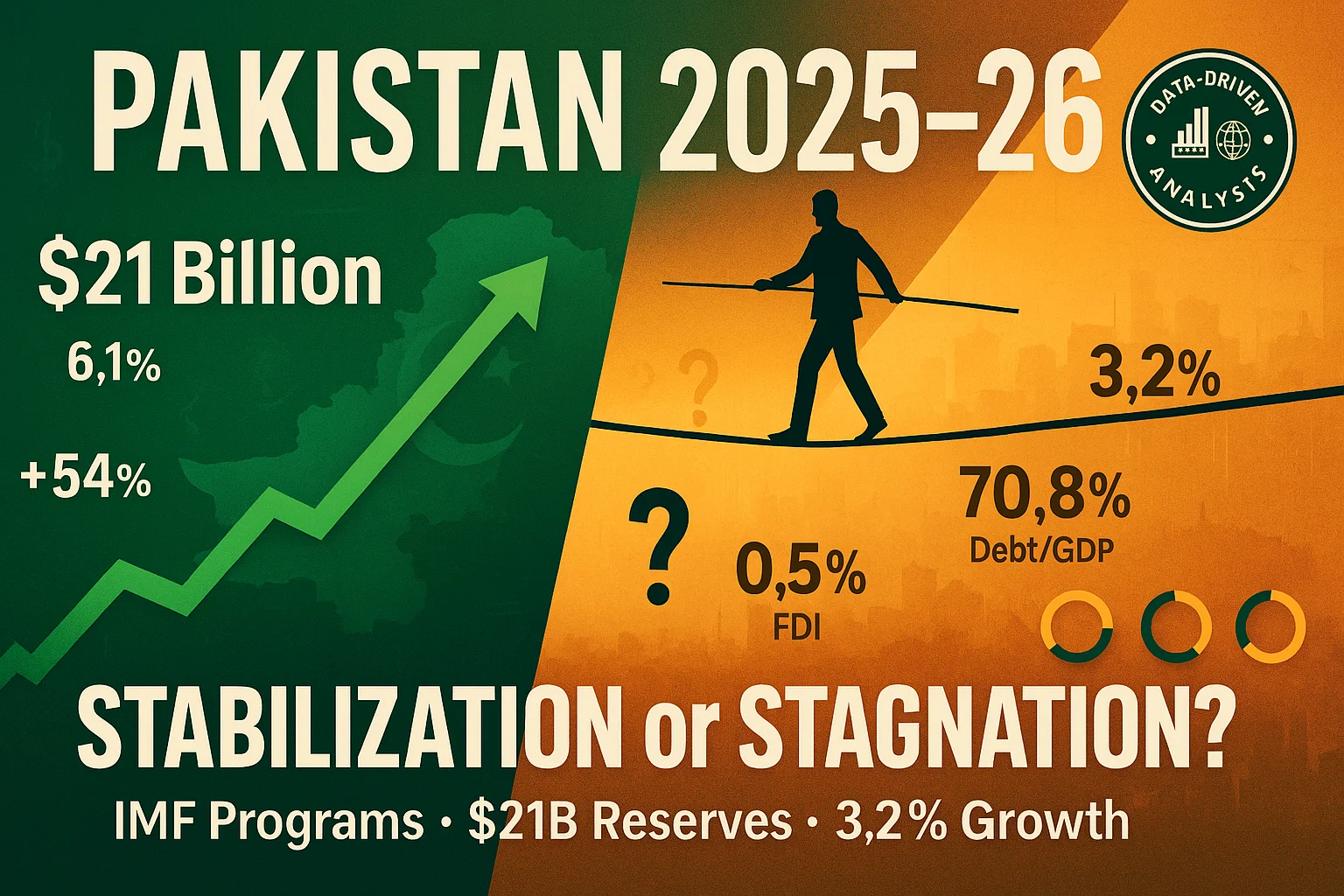
Pakistan’s Economic Outlook 2025: Between Stabilization and the Shadow of Stagnation

The Institutional Era: A Comprehensive Cryptocurrency Investment Analysis for 2026
China’s Property Woes Could Last Until 2030—Despite Beijing’s Best Censorship Efforts
Real Estate Crash Predictions 2026: Data-Backed Regional Guide

Best Investments in Pakistan 2026: Top 10 Low-Price Shares and Long-Term Picks for the PSX

How to Become an Active Taxpayer on Pakistan’s FBR Active Taxpayer List (ATL) in 2026: A Step-by-Step Guide
DBS Hits S$1 Billion AI Value Milestone — But Agentic AI Poses Talent Challenges for Singapore Banks
The Contours of 21st-Century Geopolitics Will Become Clearer in 2026: A New World Is Starting to Emerge

🌍 Davos 2026: The World Economic Forum Annual Meeting Sets the Stage for Global Transformation
Agentic AI in Finance: How Artificial Intelligence Is Replacing Routine Tasks on Wall Street

AI Impact on Wages 2026: Productivity Soars, Paychecks Stagnate
-
Markets & Finance10 months ago
Top 15 Stocks for Investment in 2026 in PSX: Your Complete Guide to Pakistan’s Best Investment Opportunities
-
Analysis9 months ago
Debunking IMF Program Myths: Reconfiguring Engagement for True National Ownership in a Volatile World
-
Analysis4 months ago
China Economy 2026: Property Crisis, AI Investment & Export Surplus Explained
-
Investment10 months ago
Top 10 Mutual Fund Managers in Pakistan for Investment in 2026: A Comprehensive Guide for Optimal Returns
-
Asia10 months ago
China’s 50% Domestic Equipment Rule: The Semiconductor Mandate Reshaping Global Tech
-
Global Economy10 months ago
What the U.S. Attack on Venezuela Could Mean for Oil and Canadian Crude Exports: The Economic Impact
-
AI10 months ago
15 Most Lucrative Sectors for Investment in Pakistan: A 2025 Data-Driven Analysis
-
Exports10 months ago
Pakistan’s Export Goldmine: 10 Game-Changing Markets Where Pakistani Businesses Are Winning Big in 2025