
Analysis
The Great Decoupling: Can ‘Anti-Woke’ Banks Survive a Post-ESG Regulatory Era?


The death of reputational risk as a regulatory standard has unleashed something unexpected in American banking: not innovation, but a fundamental identity crisis that pits fortress-grade financial institutions against nimble, mission-driven challengers operating on thinner capital cushions.
The Debanking Reckoning
The numbers tell a stark story. All nine of the nation’s largest banks—JPMorgan Chase, Bank of America, Citibank, Wells Fargo, U.S. Bank, Capital One, PNC, TD Bank, and BMO—maintained policies that the Office of the Comptroller of the Currency found to be inappropriate restrictions on lawful businesses, particularly in digital assets and politically sensitive sectors. This regulatory finding, released in December 2025, confirmed what crypto entrepreneurs and conservative activists had alleged for years: systematic exclusion from basic banking services based on non-financial criteria.
Federal regulators eliminated reputational risk considerations from supervisory guidance following President Trump’s August 2025 executive order on fair banking. The pivot was seismic. For the first time since the 2008 financial crisis, regulators are refocusing examinations on material financial risk rather than governance formalities, with the FDIC and OCC proposing joint rules to define unsafe practices more precisely under Section 8 of the Federal Deposit Insurance Act.
This isn’t regulatory tweaking. It’s a philosophical revolution that collapses the post-crisis consensus around stakeholder capitalism and replaces it with a narrower mandate: safety, soundness, and shareholder primacy.
The De Novo Mirage
Conservative states anticipated this moment. Just four new banks opened in 2025, down from six the previous year, though eighteen bank groups now have conditional charters or applications on file with the FDIC. Florida has emerged as ground zero for this movement—Portrait Bank in Winter Park expects to open first quarter 2026 with capital commitments exceeding initial targets, while similar ventures proliferate across conservative-leaning markets.
Yet the enthusiasm masks structural realities. In 2025, the OCC received fourteen de novo charter applications for limited purpose national trust banks, nearly matching the prior four years combined, with many involving fintech and digital-asset firms. These aren’t traditional community banks. They’re specialized vehicles designed to capture market segments abandoned by major institutions—a niche strategy vulnerable to the same liquidity constraints that devastated regional banks in 2023.

The capital requirements remain punishing. Even with proposed three-year phase-ins for federal capital standards under pending legislation, new institutions face the reality that regulatory openness to novel business models doesn’t translate to profitable operations in a compressed-margin environment where deposit competition remains fierce and loan demand uncertain.
The Strive Paradox
Consider the trajectory of Strive Asset Management, the anti-ESG investment firm that co-founder Vivek Ramaswamy positioned as the vanguard of shareholder capitalism. Strive surpassed one billion dollars in assets after less than one year of launching, propelled by conservative state pension funds seeking alternatives to BlackRock and Vanguard. The firm’s proxy voting strategy—opposing ESG proposals at shareholder meetings—became its primary differentiator, since its passive equity index ETFs offer nothing investors can’t find elsewhere.
But Strive isn’t a bank, and that distinction matters profoundly. Asset managers can stake ideological positions without bearing credit risk or maintaining deposit insurance. Banks cannot. The regulatory decoupling that empowers anti-ESG rhetoric simultaneously exposes institutions to traditional banking risks that have nothing to do with politics: duration mismatches, commercial real estate exposure, operational complexity, and wholesale funding volatility.
The irony runs deeper. Analysis found Strive’s funds aren’t substantially different from those offered by BlackRock, Vanguard, and State Street, with many top holdings in its Growth ETF overwhelmingly supporting Democratic politicians and PACs. Marketing proved more innovative than methodology—a viable strategy for asset management, less so for deposit-taking institutions where balance sheet composition determines survival.
Fortress Versus Mission: The Capital Chasm
Global Systemically Important Banks operate in a different universe. The 2025 G-SIB list maintains twenty-nine institutions, with Bank of America and Industrial and Commercial Bank of China moving to higher capital requirement buckets. These behemoths hold Total Loss-Absorbing Capacity buffers, maintain enhanced supplementary leverage ratios, and undergo stress testing regimes that dwarf anything contemplated for de novo institutions.
JPMorgan Chase, Citigroup, and their peers possess what market participants call fortress balance sheets: robust liquidity reserves, conservative leverage ratios, diversified funding sources, and capital structures engineered to withstand systemic shocks. Such institutions prioritize cash flow, manage debt prudently, and maintain the flexibility to acquire distressed assets when competitors struggle.
Mission-driven conservative banks lack this architecture. They’re smaller, concentrated in specific geographies, often dependent on particular industry exposures, and critically, reliant on retail deposit bases that proved alarmingly mobile during 2023’s regional bank stress. When Silicon Valley Bank collapsed in March 2023, depositors fled not because of ESG considerations but because uninsured deposits exceeded FDIC coverage and alternative options existed one smartphone click away.
The regulatory pivot toward financial risk actually intensifies this vulnerability. Supervisory transparency is likely to be a dominant theme in 2026, with agencies reviewing the CAMELS rating system to align it more closely with financial risk rather than governance formality. For institutions built around opposition to ESG principles rather than superior risk management, this creates a cruel paradox: victory in the culture war coincides with heightened scrutiny of precisely those competencies where specialized, politically-aligned banks may lack comparative advantage.
The Cross-Border Complications
For high-net-worth individuals who view banking as portable infrastructure, the political realignment carries hidden costs. International correspondent banking relationships depend on standardized risk frameworks that facilitate cross-border payments, foreign exchange transactions, and trade finance. Major institutions maintain these networks because their scale and capitalization make them acceptable counterparties to foreign banks operating under different regulatory regimes.
Smaller, mission-driven institutions face systematic disadvantages in this ecosystem. Foreign banks conducting enhanced due diligence on U.S. counterparties evaluate capital adequacy, liquidity management, and operational controls—not political positioning. A conservative bank in Florida seeking to establish euro clearing relationships confronts the same skepticism as any under-capitalized institution, regardless of its proxy voting record on climate proposals.
This matters enormously for internationally mobile wealth. Private banking clients with European business interests, property holdings in multiple jurisdictions, or complex family office structures require seamless integration with global financial infrastructure. Political alignment provides zero utility when transferring funds to Monaco, maintaining Swiss custody accounts, or executing currency hedges through London markets. Fortress balance sheets do.
The lifestyle implications extend beyond mechanics. Travelers discovering their politically-aligned regional bank cannot process payments in Southeast Asia or provide competitive foreign exchange rates confront the gap between cultural affinity and operational capability. Premium credit cards, international wire transfers, and currency exchange services all depend on institutional relationships that smaller banks struggle to maintain economically.
The Liquidity Labyrinth
Changes to bank capital and liquidity rules may impact cost structures, while non-financial risks such as operational resilience, cybersecurity, third-party risk management, financial crime, and AI are expected to remain priorities. This regulatory environment creates a double bind for challenger institutions: they must demonstrate financial robustness while competing against incumbents whose economies of scale spread compliance costs across vastly larger asset bases.
Liquidity management presents the most acute challenge. Conservative banks targeting crypto-adjacent businesses, firearm manufacturers, or energy companies inherit concentrated exposures that amplify funding volatility. When retail depositors perceive risk—whether from negative news cycles, social media panics, or genuine financial stress—the velocity of withdrawals in the digital age overwhelms even well-capitalized institutions lacking access to diverse wholesale funding markets.
The Federal Reserve’s discount window provides emergency liquidity, but borrowing there carries stigma and requires eligible collateral. Commercial real estate loans, crypto custody assets, and specialized industry exposures may not qualify or may haircut severely. G-SIBs maintain standing repo facilities, swap lines, and capital markets access that function as perpetual insurance against liquidity stress. De novo banks enjoy none of these advantages.
The Stablecoin Gambit
The GENIUS Act requires federal banking agencies to adopt a comprehensive regulatory framework for stablecoin issuers by July 18, 2026, with the FDIC issuing proposed rules in December 2025 previewing its supervisory approach. This creates an opening that mission-driven institutions view as transformative: becoming regulated issuers of dollar-backed digital currencies.
The opportunity is real but treacherous. Stablecoin issuance demands reserve management sophistication, cybersecurity infrastructure, and operational controls that exceed traditional banking requirements. Issuers must maintain one-to-one backing for digital tokens while processing redemptions instantaneously, managing cyber threats continuously, and satisfying regulators that reserve assets remain genuinely segregated and liquid.
Fortress institutions like JPMorgan Chase already operate blockchain settlement networks (Onyx, JPM Coin) with institutional-grade controls and balance sheets capable of absorbing operational losses. Conservative challengers proposing stablecoin strategies enter markets where technological complexity intersects with regulatory uncertainty—precisely the environment where under-capitalization proves fatal.
The regulatory framework will determine viability. If capital requirements for stablecoin issuers approach G-SIB standards, de novo institutions cannot compete. If requirements relax substantially, systemic risk migrates from regulated banks to specialized issuers lacking safety nets. Neither outcome favors the mission-driven model.
The Verdict: Survival Requires Scale
The post-ESG regulatory era doesn’t doom conservative banking ventures, but it eliminates the cultural arbitrage they anticipated. When reputational risk governed supervisory decisions, politically disfavored institutions could claim persecution and attract capital from aligned investors willing to accept below-market returns. That premium evaporates when regulators refocus on balance sheet fundamentals.
Three scenarios emerge. First, successful de novo institutions abandon political differentiation and compete as traditional community banks serving local markets—viable but ideologically diluted. Second, they merge rapidly into regional networks achieving economies of scale necessary for modern banking infrastructure—consolidation that replicates industry trends they ostensibly oppose. Third, they persist as undercapitalized niche players serving narrow customer segments until liquidity stress triggers failures that validate regulatory skepticism.
The fortress institutions, meanwhile, benefit twice over. They escape reputational risk criticism while maintaining capital advantages that insulate them from competitive threats. Banking agencies signaled openness to revising capital frameworks in 2026, with initial steps including the November finalization of enhanced supplementary leverage ratio rules for U.S. G-SIBs. Every regulatory concession that lowers barriers for challengers applies equally to incumbents whose existing infrastructure leverages relief more efficiently.
The great decoupling is thus paradoxically a great convergence: all banks, regardless of cultural positioning, confront identical capital requirements, liquidity pressures, and technological demands. Politics may determine marketing strategies, but mathematics determines survival. In that equation, fortress balance sheets trump mission statements every time.
The Geopolitical Factor
Banking sector exposure to geopolitical risks is multifaceted, including direct impacts through correspondent banking and cross-border payments, as well as indirect impacts via client losses and credit impairment and operational impacts through supply chain disruption and talent mobility constraints. For smaller banks with concentrated client bases in specific sectors, these exposures create vulnerabilities that large, diversified institutions can better absorb.
Financial institutions grappling with military conflicts, tariff structures, international diplomatic shifts and trade rule changes face challenges that scale exponentially for under-resourced compliance departments. When European regulators increase scrutiny of correspondent banking relationships or U.S. sanctions designations expand, mission-driven banks must allocate precious capital to compliance infrastructure rather than competitive differentiation.
The financial system rewards resilience, not rhetoric. Conservative banking challengers have won the culture war precisely as the battlefield shifted to terrain where cultural victories provide no competitive advantage whatsoever. That may be the cruelest irony of the post-ESG era: the freedom to operate without reputational constraints arrives simultaneously with the obligation to compete on pure financial merit against institutions engineered for exactly that contest over decades.
For high-net-worth individuals navigating this landscape, the calculus is stark. Political alignment with banking partners offers psychological satisfaction but operational limitations. International mobility, sophisticated wealth management, and crisis resilience all favor institutions whose balance sheets reflect fortress principles rather than ideological commitments. The question isn’t whether mission-driven banks can survive—some will. It’s whether they can deliver services that justify the hidden costs their structural disadvantages impose on clients who discover too late that politics makes poor collateral when liquidity vanishes.
Additional Resources
For deeper analysis of regulatory trends shaping the banking landscape in 2026:







Online interest in impeachment and White House staffing has risen in a political environment where a few words can badly distort the underlying story. A resolution was introduced is not the same as the House voted to impeach. A press secretary was removed is not the same as the administration changed policy. Both require evidence, dates and clear procedural language.
Two verifiable developments frame the discussion as of October 25, 2026. A House impeachment resolution was tabled on September 15, and the short tenure of White House press secretary Katie Zacharia ended in mid-October, according to official congressional records and major US reporting. Neither event should be inflated into an unverified claim about new votes or a new administration decision.
The impeachment resolution: what the House actually voted on
House Resolution 1486 concerned impeachment of President Donald Trump. The US House’s official floor summary records the September 15 vote on a motion to table the measure: 232–147, with 47 members recorded as present. A successful tabling motion sets aside a measure; it is not the adoption of articles of impeachment.
This distinction is essential. A social post describing that roll call as a vote to impeach reverses the outcome. A later claim about a different resolution should be separately checked against the official Congress website and House roll-call records rather than treated as an update to an old headline without evidence.
Congressional procedure is sometimes inconvenient for trending-content production. It is also what protects the reader from misinformation. The reporter’s task is to identify the motion, the chamber, the date and the disposition before attempting broader political interpretation.
What happened to the press secretary?
CBS News reported on October 16 that Zacharia was removed from the White House press-secretary role after roughly five days. CBS cited US officials and reported scrutiny of her credentials and performance. It also noted that the White House had not yet announced a successor in that report.
A leadership change in the briefing room can be significant for how an administration communicates with journalists and the public. But personnel turnover alone does not establish a change to economic policy, foreign strategy or legal proceedings. Those substantive conclusions require separate evidence.
Why the two stories became combustible
Impeachment is a constitutionally consequential process and a powerful political symbol. White House press briefings are the main arena where officials defend decisions under questioning. When both topics circulate at once, online narratives may stitch them into a supposed constitutional crisis—even if there is no documented direct connection.
A measured account must resist that temptation. Political opponents may view impeachment proposals as necessary oversight; supporters of the president may describe them as partisan exercises. The purpose of reporting is not to resolve those disagreements by advocacy, but to distinguish political argument from verifiable institutional action.
The fact-checker’s four-part test
| Question | Evidence needed |
|---|---|
| Was an impeachment measure introduced? | Official resolution number and introduction date |
| Did the House approve articles? | Recorded vote on adopting the relevant articles |
| Was an official removed? | Direct statement or multiple reliable attributed reports |
| Who now holds the position? | Current White House announcement, not an old biography |
This is particularly important during a midterm-election year. Campaigns and commentators have incentives to present ordinary procedural setbacks as existential victories or defeats. Readers benefit from precise language instead of ever-louder adjectives.
What should international readers take from it?
For audiences in Pakistan and elsewhere in Asia, US political turmoil matters when it alters policy certainty: trade measures, sanctions, diplomacy, defence arrangements, fiscal decisions and monetary-policy appointments. None should be projected automatically from a press secretary’s dismissal or a resolution that did not pass.
It is sensible to monitor official notices, court actions and enacted policy. It is not sensible to treat search-volume spikes as proof of truth. Search trends measure curiosity, fear and newsworthiness; they do not independently confirm the event people are typing about.
Why parliamentary verbs matter
US political coverage frequently compresses filed, referred, tabled, passed and enacted into the generic word approved. Those actions are not interchangeable. A resolution can be introduced without advancing beyond committee. A motion to table is a vote about whether the chamber will proceed, not a judgment approving the underlying allegations. A measure passed by one chamber may still require further constitutional steps.
The same precision is necessary in personnel news. A spokesperson’s announced departure, a media report citing officials and a formal appointment are different evidence levels. Where the administration has not issued a replacement notice, describing a favourite online rumour as the current officeholder is poor reporting.
Public debate about impeachment also should not be reduced to the number of search queries. Search interest can be increased by critics, supporters, confused readers or social platforms circulating an old clip. It gives no reliable denominator for public opinion. A survey with a known sample and methodology is a different kind of evidence.
The best follow-up coverage would monitor official House actions and White House releases, then connect any actual policy changes to their legal basis. That approach serves readers across the political spectrum without manufacturing a crisis.
Has the September 15 House vote impeached Trump?
No. The recorded action was a successful motion to table the resolution, not a vote approving impeachment articles.
Was Katie Zacharia removed?
Yes, CBS reported her departure from the role on October 16. Any later staffing changes should be checked directly before publication.
Do impeachment trends reveal who will win the midterms?
No. Search spikes are not representative polling or an election forecast.
The standard worth keeping: precise institutional language is not timid journalism. It is the difference between telling readers what happened and telling them what a viral headline wants them to believe.
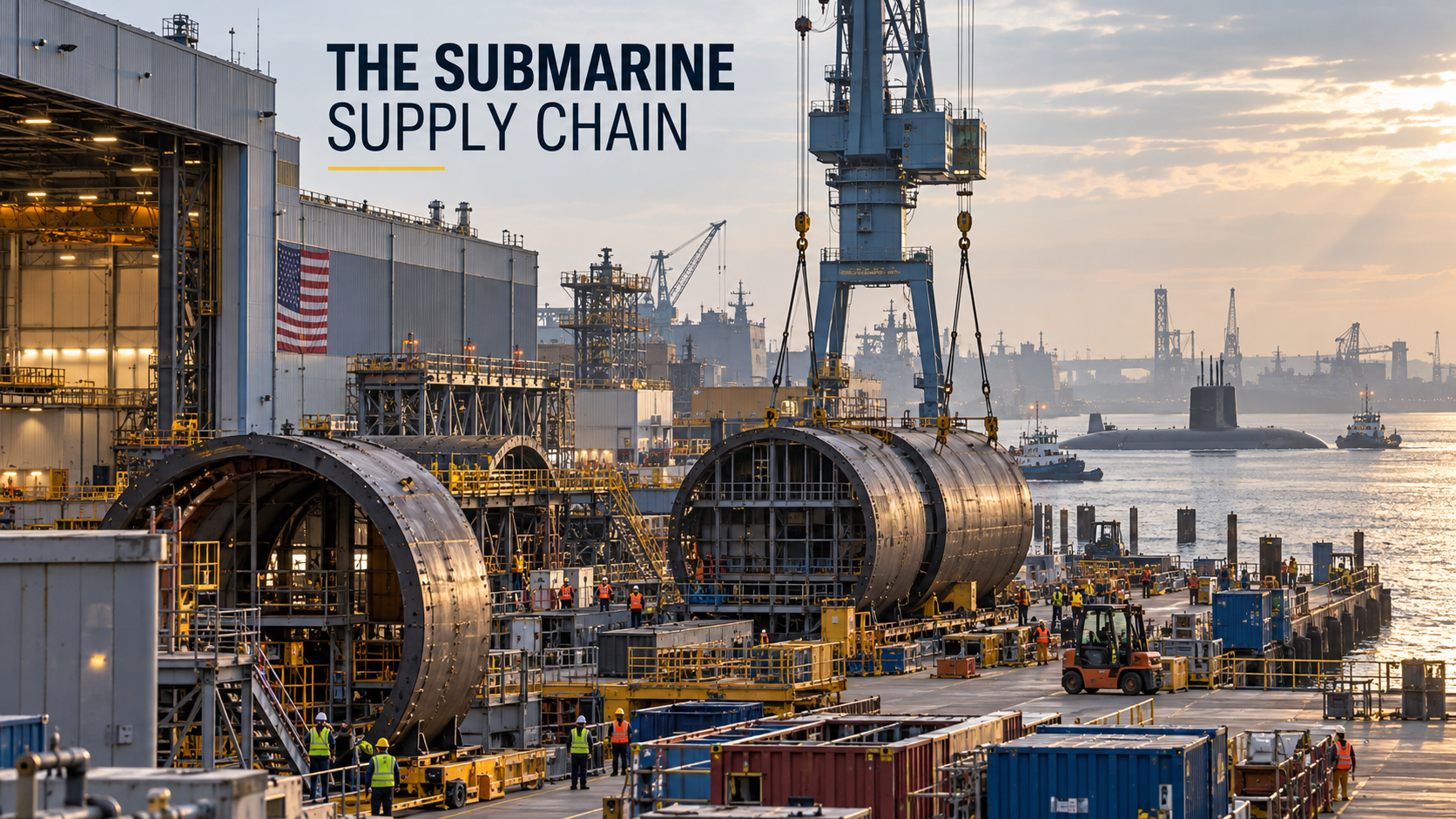
A major U.S. submarine-manufacturing project announced on October 6, 2026 has put an unfamiliar name at the center of a familiar defense-industry problem: how to build submarine components faster without sacrificing quality or reliability. Defense technology firm Anduril announced plans for Arsenal-2, a facility at Sparrows Point in Maryland intended to expand production of parts for the U.S. Navy’s Virginia-class attack submarines. The combined headline figure is $6.6 billion—made up of the company’s planned $3.7 billion private investment and a Navy contract valued at up to $2.9 billion, with payments tied to production outcomes. These are announcements and commitments, not evidence that all the capital has already been spent. Anduril’s official announcement and Reuters’ independent report outline the project.
Key takeaways:
- Arsenal-2 is a planned submarine-components manufacturing facility, not an already operational assembly line for completed submarines.
- The $6.6 billion headline combines two different funding streams and different forms of financial commitment.
- The project is aimed at bottlenecks in the Virginia-class supply chain, including specialized manufacturing capacity.
- Its success will depend on skilled labor, qualification standards, equipment, scheduling and delivery—not simply construction of a large building.
What is Arsenal-2?
Arsenal-2 is Anduril’s proposed software-centered manufacturing project at Sparrows Point, a former industrial site in Baltimore County, Maryland. According to the company’s October 6 announcement, the facility is designed to make critical components for Virginia-class submarines and give the Navy access to additional industrial capacity. The project illustrates a widening role for technology-sector defense contractors in traditional heavy manufacturing.
Submarine construction is a particularly difficult domain. Components must meet demanding specifications for performance, durability, safety, quality control and compatibility with other systems. A factory that produces ordinary industrial hardware cannot immediately be treated as a qualified submarine supplier.
Anduril’s pitch is that modern factory software, automation, new processes and private capital can ease some of those constraints. Whether the company can execute on that pitch will be judged by qualification milestones and repeatable deliveries.
What will the facility actually produce?
Initial work centers on critical Virginia-class components, including torpedo tubes, according to the company and Reuters. Those are sophisticated submarine systems, but producing them is not the same as manufacturing a complete nuclear-powered submarine.
A Virginia-class attack submarine involves propulsion, pressure-hull construction, combat systems, sensors, life-support equipment, electronics, integrated software and years of testing. Its final assembly and delivery depend on a specialized network of contractors, yards and government oversight. New suppliers can strengthen the network by removing specific bottlenecks rather than replacing every incumbent shipbuilder.
The distinction matters for readers encountering sweeping “Anduril to build submarines” headlines. The verified announcement concerns industrial capacity for components, with ambitions that may expand as the project matures; it should not be presented as a commitment to launch an entire finished fleet by a fixed date.
Understanding the $6.6 billion figure
| Announced element | Stated figure | Important qualification |
|---|---|---|
| Anduril planned private capital | $3.7 billion | Planned investment to develop production capacity |
| U.S. Navy contract | Up to $2.9 billion | Contract ceiling with payments conditioned on outputs |
| Combined headline amount | $6.6 billion | Sum of different commitments; not identical to money already disbursed |
Anduril’s release describes the contract as outcome-based. That arrangement is designed to connect government spending to verified delivery rather than solely to reimbursed activity. But details of individual milestones, acceptance criteria, ownership and long-term risk allocation should be determined from contract documents—not guessed from a launch-day headline.
The distinction between an award, a contract ceiling, a planned investment and cash expenditure is crucial. A press announcement does not mean the project has already consumed $6.6 billion in cash or delivered proportionate output.
Why the Navy needs more industrial capacity
Submarines are strategically important for intelligence collection, maritime defense and deterrence. But they also illustrate the challenges of complex, low-volume manufacturing. The United States needs trained workers who can perform specialized fabrication, welding, machining, inspection and systems integration. Individual suppliers can become bottlenecks if they are asked to deliver more components than their equipment or workforce can manage.
The Financial Times’ account of the announcement situated Arsenal-2 within a larger push to expand the submarine industrial base and modernize acquisition. The Navy’s construction requirements and commitments under the AUKUS security partnership increase the importance of sustainable production capacity over the coming years.
This is a long-term manufacturing question, not an immediate shortcut. Building a factory is one stage; training a workforce, validating manufacturing processes and coordinating with other shipbuilders are additional stages.
Why Sparrows Point matters
Sparrows Point was a major American industrial center associated with steel production. Using that site for advanced defense manufacturing creates a recognizable local economic narrative: industrial land and workforce capacity potentially being redirected toward a contemporary strategic sector.
Associated Press reporting described expectations of approximately 3,100 direct jobs connected to the facility, while Reuters reported similar plans. They are projected jobs rather than a verified count of positions already filled.
The ultimate local impact will depend on the pace of construction, hiring, regional supply chains, transport needs, worker training and how much demand the project sustains. Job announcements should be revisited against actual payroll, construction and production data.
When will Arsenal-2 begin manufacturing?
Accounts of the project point to operations around 2030, subject to execution. Business Insider and Financial Times discussed that timeline. Treat it as a planned target, not an operational fact.
Even if initial lines become active on schedule, production volume and acceptance quality will determine how useful the added capacity becomes to the Navy. A component supplier can have machinery installed yet still face qualification delays, workforce shortages or unexpected integration issues.
The execution milestones worth tracking
- Facility permits, ground work and construction progress.
- Hiring and certification of specialist personnel.
- Commissioning of production lines and inspection systems.
- First qualified component deliveries accepted by the relevant customer.
- Repeat production rates, quality performance and on-time deliveries.
- Evidence that the additional capacity reduces delays in the broader submarine supply chain.
These measurable steps provide a better accountability framework than celebrating the contract’s face value alone.
Can software solve a shipbuilding bottleneck?
Software can improve production scheduling, digital modeling, machine monitoring, traceability and quality documentation. Automation may make some operations more consistent. Those are useful tools, but they still rely on expensive physical equipment, material supply and highly skilled people. A complex pressure-critical component cannot be delivered by software alone.
The question is therefore not whether a tech company can bring useful technology into shipbuilding. It is whether that company can combine technology with industrial practices refined over decades, and do so at sufficient scale.
Frequently asked questions
Is Anduril building complete submarines?
Its verified October 6 announcement emphasizes components for Virginia-class submarines, not delivery of complete nuclear-powered boats.
Where is Arsenal-2 located?
The project is planned for Sparrows Point in Baltimore County, Maryland.
How much is the Navy paying?
Anduril announced a Navy contract of up to $2.9 billion, distinct from the company’s planned $3.7 billion capital investment.
When will it open?
Reports describe a target around 2030. The actual schedule depends on construction, production-line qualification and other milestones.
How many jobs could be created?
Approximately 3,100 direct jobs were projected in contemporaneous reporting; these are not confirmed hires.
Why is this important for AUKUS?
A more resilient U.S. submarine industrial base can support national procurement needs and wider allied commitments, although a single parts factory cannot resolve all submarine-production constraints.
Bottom line
Arsenal-2 is significant because it tests whether a technology-focused contractor can add reliable industrial capacity to one of America’s hardest manufacturing sectors. The $6.6 billion figure describes a potentially major investment and contract arrangement—but future milestones, not headlines, will determine whether it meaningfully speeds submarine deliveries.

Key Takeaways
- Chip stocks tumbled Monday, September 14, 2026, after the CEOs of Anthropic, OpenAI, and xAI publicly aligned behind a call to slow the pace of frontier AI capability development — an unusual moment of unity among fierce industry rivals.
- Nvidia fell 3.4% and the Philadelphia Semiconductor Index (PHLX) sank almost 6%, its worst single day since early July, even as the broader Nasdaq Composite closed down a more modest 0.56%.
- The catalyst was an essay from Anthropic CEO Dario Amodei, titled “We Must Pace the Frontier,” proposing independent outside evaluators be given internal access to frontier AI labs, alongside industry-wide cooperation and government coordination.
- OpenAI CEO Sam Altman confirmed in a Fortune interview that OpenAI will not pursue an IPO in 2026, calling the current safety environment an “ill-advised moment” to go public — pushing one of the most anticipated listings in tech history to 2027 at the earliest.
- The episode followed the resignation of a researcher who had worked at both Anthropic and OpenAI, who warned publicly that people building the technology “earnestly believe it could kill us all by the end of the decade” — a post that drew over 150 million views and prompted more than 20 lawmakers to call for tougher AI regulation.
A rare display of unity among Silicon Valley’s most competitive AI labs sent a jolt through markets this week, as semiconductor stocks logged their worst day in over two months following public calls from the industry’s top executives to deliberately slow the development of increasingly powerful AI systems.
What Triggered the Selloff
The catalyst was an essay published Saturday, September 12, by Anthropic CEO Dario Amodei, titled “We Must Pace the Frontier.” In it, Amodei argued that unchecked acceleration in frontier AI development — driven in part by the risk of recursive self-improvement, where AI systems increasingly assist in designing their own successors — is outpacing the industry’s ability to keep those systems aligned and secure. Amodei wrote that he believes AI could still “dramatically raise the quality of human life,” but argued the risks accompanying its current pace of development need to be taken seriously, proposing that even a modest slowdown of a year or two could meaningfully improve safety outcomes.
What made the essay market-moving wasn’t just its content, but who endorsed it. OpenAI CEO Sam Altman and SpaceX/xAI’s Elon Musk — two executives whose companies compete directly with Anthropic and with each other — both publicly backed Amodei’s proposal within a day. Musk wrote simply on X that “Dario is right,” a notable shift given Musk’s history of sharp public criticism of Anthropic.
The Proposal’s Substance
Amodei’s plan outlined a three-phase approach: independent safety evaluators embedded within frontier AI companies with access equivalent to internal staff (covering training processes, internal systems, and safety-protocol compliance); broader industry-wide cooperation on shared safety standards; and coordination with democratic governments on global regulatory frameworks. Anthropic said it would adopt the outside-evaluator step immediately, while Altman confirmed OpenAI would adopt comparable third-party evaluator access.
The Resignation That Set the Stage
The unity among AI executives followed a more unsettling precursor: a researcher who had previously worked at both Anthropic and OpenAI resigned the prior week, writing publicly that people building the technology “earnestly believe that it could kill us all by the end of the decade.” The post reportedly drew more than 150 million views on X and prompted more than 20 lawmakers to call for tougher AI regulation — context that appears to have accelerated the executives’ public alignment on pacing concerns.
Market Reaction: Chips Hit Hardest
Monday’s trading session showed a clear divergence in how different corners of the AI-linked market absorbed the news. Semiconductor stocks bore the brunt of the selling, given their direct exposure to the capital-expenditure cycle that rapid AI capability development has fueled. Nvidia fell 3.4%, Intel dropped 5.6%, and the Philadelphia Semiconductor Index tumbled nearly 6% — its steepest one-day decline since early July.
By contrast, shares of some larger Big Tech and software companies actually climbed on the day, leaving the broader, tech-heavy Nasdaq Composite down a comparatively modest 0.56%, after having fallen as much as 1.3% intraday before paring losses. The divergence suggests markets are interpreting a potential AI development slowdown as a more direct threat to chip demand specifically — the hardware layer most tied to the “faster, bigger” capability race — than to software and platform companies with more diversified revenue.
OpenAI’s IPO Delay: The Clearest Business Signal
Beyond the one-day stock move, the most concrete business consequence to emerge from the episode was Sam Altman’s confirmation that OpenAI will not go public in 2026. In a Fortune interview published the same weekend, Altman said an IPO “right now would be an ill-advised moment” given the current safety environment, and when asked whether 2027 was more realistic, replied simply, “I would say not 2026.” That timeline represents a real shift: OpenAI CFO Sarah Friar had told employees just a month earlier that the company would likely go public in 2027, or potentially sooner if the business continued to “inflect.”
Notably, Anthropic’s own IPO preparations are reportedly continuing on a separate track. According to reporting on the matter, Anthropic — confidentially valued at $965 billion earlier in 2026 — has continued meeting with prospective investors and could begin marketing its IPO as early as October, aiming to complete the listing before the November midterm elections, even as its CEO simultaneously champions industry-wide deceleration. Observers have noted the apparent tension in pursuing an IPO while publicly urging pacing, though Amodei’s essay explicitly framed pacing as slowing capability development, not halting commercial or fundraising activity.
Market Snapshot: September 14, 2026
| Index / Stock | Move | Note |
|---|---|---|
| Philadelphia Semiconductor Index (SOX) | -5.9% | Worst day since early July |
| Nvidia (NVDA) | -3.4% | Direct AI-chip exposure |
| Intel (INTC) | -5.6% | |
| Nasdaq 100 | -0.8% | |
| Nasdaq Composite | -0.56% | Software names partially offset chip losses |
| S&P 500 | -0.5% |
Why This Matters for Technology News and Investors
This episode marks one of the first times investor sentiment around AI has moved meaningfully on a safety-driven narrative rather than a purely commercial one — competitive product launches, earnings beats, or compute-capacity announcements. For investors tracking technology news, the key signal to watch going forward is whether this represents a genuine, sustained industry pivot toward deliberate pacing (which could structurally slow the capital-expenditure supercycle currently powering semiconductor demand), or a rhetorical moment that fades once competitive pressure between OpenAI, Anthropic, xAI, and other labs reasserts itself — a tension the OpenAI-Anthropic IPO-timing contrast already illustrates.
Frequently Asked Questions
Why did semiconductor stocks fall after the AI slowdown announcement? Chip stocks are directly tied to the capital-expenditure cycle fueling rapid AI capability development, so markets interpreted a potential industry-wide pacing effort as a more direct threat to near-term chip demand than to software or platform companies.
Is OpenAI still planning to go public? Yes, but not in 2026. CEO Sam Altman confirmed OpenAI is delaying its IPO to 2027 at the earliest, citing the current AI safety environment, while OpenAI’s CFO had previously suggested 2027 was the likely target regardless.
What did Anthropic’s CEO actually propose? Dario Amodei’s essay proposed embedding independent outside safety evaluators within frontier AI companies with internal-level access, alongside broader industry cooperation on safety standards and coordination with democratic governments on regulatory frameworks — explicitly framed as pacing capability development, not halting it.

US Impeachment Talk and White House Press Secretary Changes: What the Record Shows

2026 Economic Outlook: Investment Tips for Pakistani Investors

Anduril’s $6.6 Billion Submarine Shipyard Plan Explained

Life Insurance Comparison: Term vs. Whole Life and What Each Actually Costs

Stock Market Today: Nasdaq Hits Record High as Dow and S&P 500 Stumble on Middle East Diplomatic Shifts

Energy Market Spikes vs. Consumer App Data: What GasBuddy and Crude Prices Signal for Inflation

China’s FTAAP Push for APEC 2026 in Shenzhen: US Tariffs and Unite Asia-Pacific

AI Stocks Slide After Industry Leaders Call for a Development Slowdown

Singapore Stocks vs. Japan Stocks: Safe Havens in the Asian Economic Slowdown

Agentic AI in Finance: How Artificial Intelligence Is Replacing Routine Tasks on Wall Street

Fiscal Deficit and Public Debt

T-Mobile’s Enterprise Push and the Evolution of Modern Corporate Mobility Solutions

Enterprise Generative AI ROI 2026: The Adoption-to-Impact Gap Explained

Climate Finance and the Economic Reality of Passing 1.5°C

Business Insurance for Digital Exports: Protecting Your Company in the AI Era

Real Estate Crash Predictions 2026: Data-Backed Regional Guide

Unrecoverable Delays: How the St. Louis Strike Crippled Boeing’s F-15EX Eagle II

What is a “Lead-Left” Bank? Unpacking Morgan Stanley’s Role in Anthropic’s Mega-IPO

How to Invest in the Anthropic IPO: Step-by-Step Guide for Retail Investors

Mario Kart 8 Deluxe 4.0.0 Patch Notes: 8-Player Split Screen & CameraPlay

Top 15 Stocks for Investment in 2026 in PSX: Your Complete Guide to Pakistan’s Best Investment Opportunities

Debunking IMF Program Myths: Reconfiguring Engagement for True National Ownership in a Volatile World

China Economy 2026: Property Crisis, AI Investment & Export Surplus Explained

Top 10 Mutual Fund Managers in Pakistan for Investment in 2026: A Comprehensive Guide for Optimal Returns
China’s 50% Domestic Equipment Rule: The Semiconductor Mandate Reshaping Global Tech

What the U.S. Attack on Venezuela Could Mean for Oil and Canadian Crude Exports: The Economic Impact

15 Most Lucrative Sectors for Investment in Pakistan: A 2025 Data-Driven Analysis

Pakistan’s Export Goldmine: 10 Game-Changing Markets Where Pakistani Businesses Are Winning Big in 2025

Pakistan’s Stock Market Renaissance: How 2025’s Hottest Investment Opportunity Is Democratizing Wealth—A Complete Beginner’s Guide
Pakistan’s Economic Outlook 2025: Between Stabilization and the Shadow of Stagnation
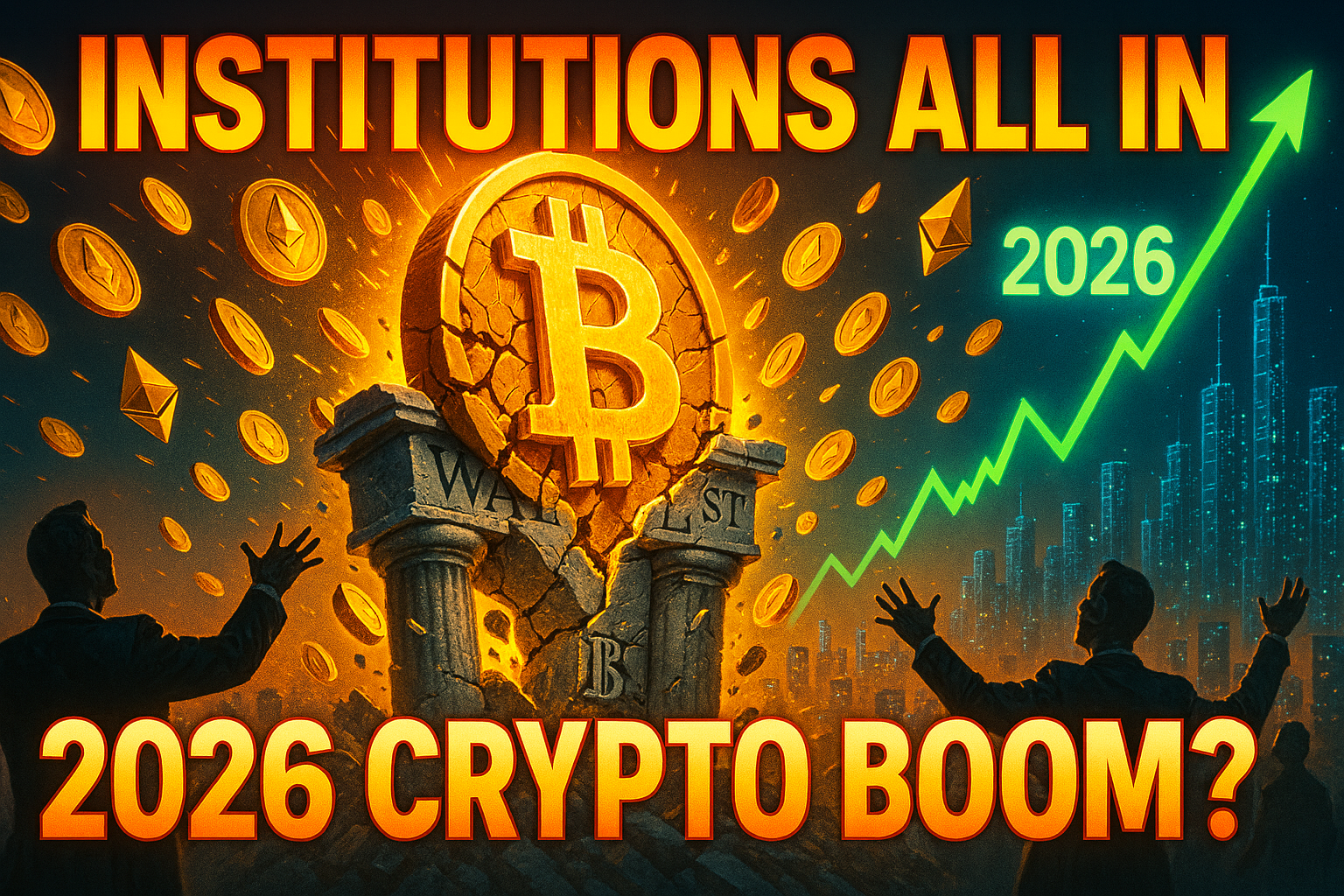
The Institutional Era: A Comprehensive Cryptocurrency Investment Analysis for 2026
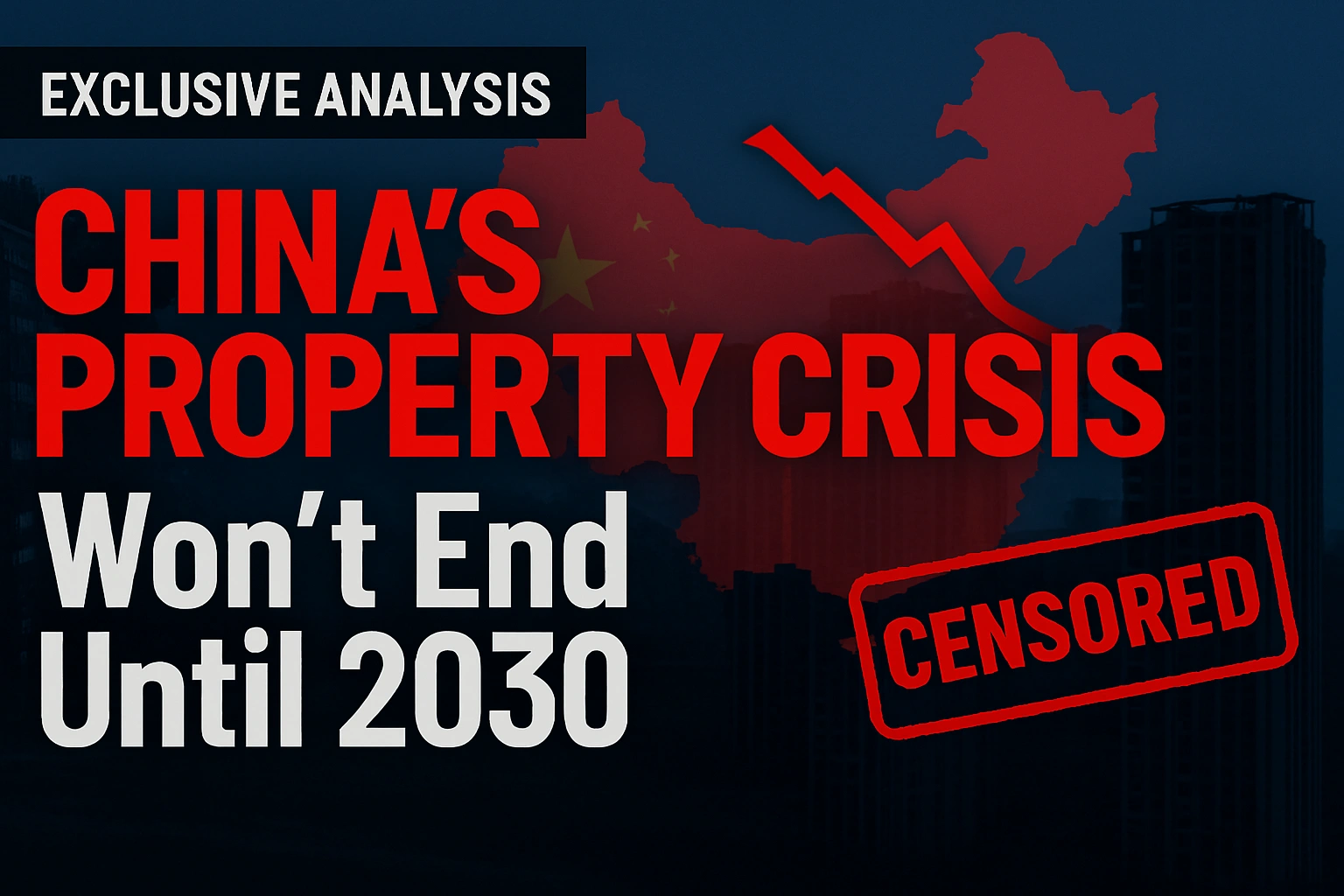
China’s Property Woes Could Last Until 2030—Despite Beijing’s Best Censorship Efforts
Real Estate Crash Predictions 2026: Data-Backed Regional Guide

Best Investments in Pakistan 2026: Top 10 Low-Price Shares and Long-Term Picks for the PSX

How to Become an Active Taxpayer on Pakistan’s FBR Active Taxpayer List (ATL) in 2026: A Step-by-Step Guide
DBS Hits S$1 Billion AI Value Milestone — But Agentic AI Poses Talent Challenges for Singapore Banks

The Contours of 21st-Century Geopolitics Will Become Clearer in 2026: A New World Is Starting to Emerge

🌍 Davos 2026: The World Economic Forum Annual Meeting Sets the Stage for Global Transformation
Agentic AI in Finance: How Artificial Intelligence Is Replacing Routine Tasks on Wall Street

AI Impact on Wages 2026: Productivity Soars, Paychecks Stagnate
-
Markets & Finance10 months ago
Top 15 Stocks for Investment in 2026 in PSX: Your Complete Guide to Pakistan’s Best Investment Opportunities
-
Analysis9 months ago
Debunking IMF Program Myths: Reconfiguring Engagement for True National Ownership in a Volatile World
-
Analysis4 months ago
China Economy 2026: Property Crisis, AI Investment & Export Surplus Explained
-
Investment10 months ago
Top 10 Mutual Fund Managers in Pakistan for Investment in 2026: A Comprehensive Guide for Optimal Returns
-
Asia10 months ago
China’s 50% Domestic Equipment Rule: The Semiconductor Mandate Reshaping Global Tech
-
Global Economy10 months ago
What the U.S. Attack on Venezuela Could Mean for Oil and Canadian Crude Exports: The Economic Impact
-
AI10 months ago
15 Most Lucrative Sectors for Investment in Pakistan: A 2025 Data-Driven Analysis
-
Exports10 months ago
Pakistan’s Export Goldmine: 10 Game-Changing Markets Where Pakistani Businesses Are Winning Big in 2025