
Opinion
The rot beneath the bailout

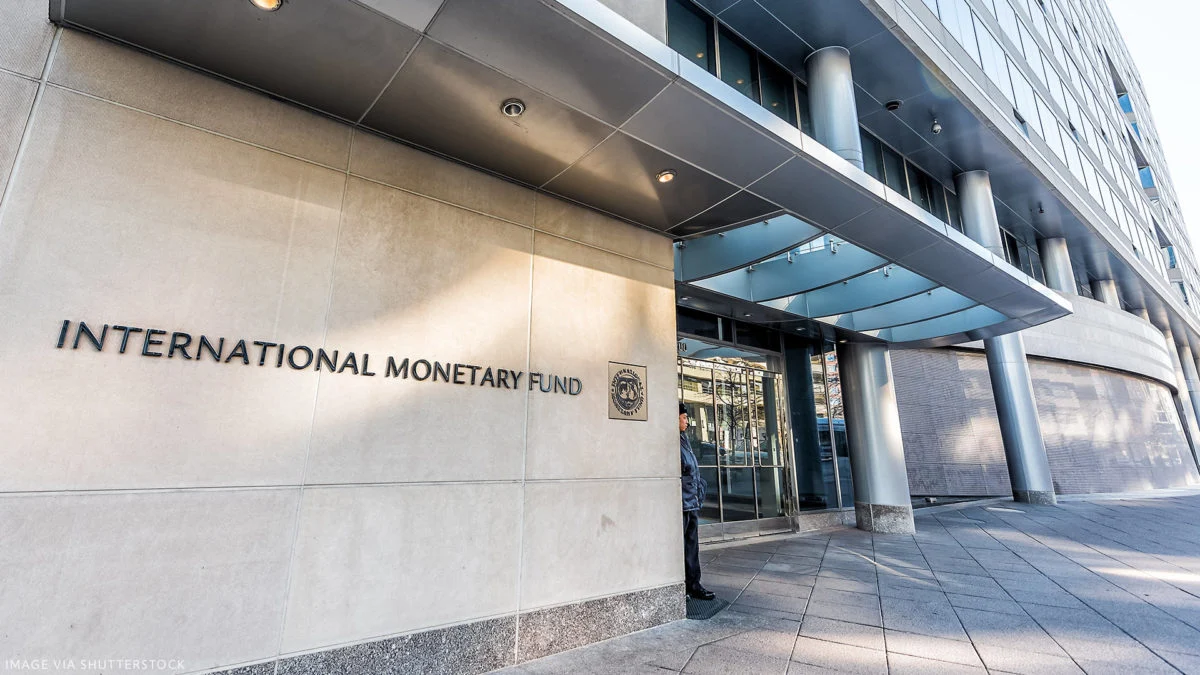
It is no surprise that Pakistan has secured a $7 billion Extended Fund Facility from the IMF — a lifeline for a government staggering under debt repayments, dwindling reserves, and a suffocating fiscal deficit. On paper, this appears to be salvation. In reality, the IMF’s Governance and Corruption Diagnostic Report (November 2025) makes clear that the country’s economic malaise is not simply about liquidity. It is about capture.
Analytically, the report is blunt: corruption in Pakistan is described as “persistent and widespread”. This is notably candid, departing from the usual language of polite diplomacy. It describes a system where governance has been hollowed out, institutions serve the connected instead of the citizen, and resources — whether borrowed or earned — disappear into inefficiency and rent-seeking.
The IMF has publicly stated what Pakistanis have long known: the core problem is not the absence of funds and resources, but the presence of a rigged state. This, economic and governance experts argue, is a formal indictment.
The report contains bitter facts. The report’s section related to “state dominance’ is derogatory. Pakistan’s economy is not merely inefficient; it is engineered to privilege insiders, especially those who are considered sacred goats. For decades, the State-Owned Enterprises (SOEs), many of them loss-making, continue to drain public resources while shielding themselves from accountability. The regulatory frameworks are opaque, designed less to facilitate competition than to entrench monopolies for “privileged actors.”
As per the report, this is not accidental but systemic since the system has consistently resisted checks and balances from the regulatory framework. Usually, when SOEs operate without transparency, when licenses and tariffs are manipulated to favour the few influentials, the result is not just inefficiency — it is exclusion or, more literally, Exemption from legal actions. The ordinary citizens pay higher prices for electricity, gas, and transport, while politically connected firms thrive under protectionist umbrellas, bypassing all the legal formalities.
One will be shocked to know that the language used by the IMF on ‘state capture’ is critical here, as revealed by the report. Pakistan’s governance problem is not about weak institutions alone; it is about institutions weaponised to serve narrow interests that hold the power. In such a system, reform is actively sabotaged as practice is decades old .
As regards the taxation system, the report’s shocking findings on taxation expose the heart of Pakistan’s fiscal crisis due to systemic failure. The Federal Board of Revenue (FBR) operative procedure is “considerable authority and limited oversight”, presiding over a tax system that is very “complex and opaque. According to the IMF, Pakistan faces serious corruption and governance challenges, with weaknesses in fiscal governance and market regulation contributing to problems such as smuggling and under-invoicing in customs administration.
This is all because of the tax-to-GDP ratio that shockingly remains the lowest in the region. The budget cannot be fixed when the revenue authority itself is compromised or plagued by rampant corruption. The government cannot build fiscal space when the system is designed to leak or has loopholes caused by incompetence and graft.
For Pakistanis, this means a paradox where the state demands more in indirect taxes: increased costs for fuel, electricity, and everyday consumption items, while failing to effectively tax the wealthy and politically connected. It is often public sector employees who contribute the maximum chunk of tax revenue. The burden shifts downward, eroding trust in the very idea of fair taxation.
Pakistan’s governance crisis is not new. What is new is the IMF’s willingness to diagnose it openly. By naming corruption as “persistent and widespread”, by identifying state capture as systemic, the report strips away the illusion that money alone can fix the problem
Imagine a typical household in Karachi: the head of the family works as a schoolteacher, the main breadwinner, struggling to make ends meet. Each month, the family allocates a sizeable portion of their income to taxes embedded in utility bills and prices of daily commodities. When electricity tariffs rise due to the inefficiencies of SOEs, the family’s budget is strained, forcing cuts on essentials like education and healthcare — decisions that have long-term impacts on their children’s futures.
For investors, the situation is clear that there is no ease of doing business in Pakistan. The message is equally corrosive. Business firms, especially multinational concerns, perceive Pakistan’s fiscal system not as a framework for growth, but as a mechanism for extraction. This environment is really alarming, prompting multinational firms to reconsider their investments or leave the country.
The IMF report is also an eye-opener for the judiciary, as it is perceived as corrupt, fragmented and clogged with backlogs when people wait years, even generations, for the final verdict. The contract enforcement is relatively weak, property rights are also insecure, and the judicial decisions are often influenced by political or financial pressure. After the 26th and 27th amendments, the judiciary has been enfeebled by the political elite.
Foreign direct investment cannot flow into a country where contracts are unenforceable and property can be seized without remedy. Domestic entrepreneurship cannot thrive when disputes drag on for years in courts seen as compromised.
Rule of law seems to be an abstract principle, though it is the foundation of markets for safety and security or peace of mind. Without it, Pakistan’s economy is not simply inefficient — it is uninvestable.
Conceivably, the most sobering section of the report is its analysis of anti-corruption institutions. NAB and the FIA are described as politically influenced, uncoordinated, and lacking credibility.
The report also raises the hardest question: can these institutions that are accused of benefiting from the status quo be trusted to dismantle it? When anti-graft agencies are weaponised against political opponents rather than systemic corruption, reform becomes a theatre or a distant dream.
The IMF calls for “comprehensive and sequenced reform”, which seems to be a distant dream given the existing hybrid setup. But reform requires agents of change. If the NAB and FIA are compromised, if the judiciary is distrusted, if the FBR is opaque, then who will implement reform? The danger is crystal clear: Pakistan risks entering yet another cycle in which funds are disbursed, conditions are promised and structural change is deferred by a powerful political elite.
For the average Pakistani, the implications are stark. The $7 billion EFF may stabilise reserves temporarily, but it will not lower electricity bills distorted by SOE inefficiency, as the power tariffs will go up or even experience elastic inflation. It will not fix a tax system that punishes consumption while rewarding evasion. It will not unclog courts where justice is delayed and denied.
For global investors, the message is equally sobering. Pakistan is not merely a high-risk market; it is a captured state. Without visible progress on governance, the EFF is not a bridge to reform — it is a bandage on a wound that continues to fester.
The IMF report ends with a call for “concrete and visible progress” to restore public trust. That phrase should be read not as technocratic jargon but as a warning. Pakistan’s crisis is not only economic; it is existential.
A state that cannot tax fairly, adjudicate disputes credibly or regulate transparently cannot sustain itself. A society where corruption is “persistent and widespread” cannot build legitimacy. An economy where capture is systemic cannot grow inclusively.
The $7 billion lifeline buys time. But time without reform is wasted. The choice before Pakistan is stark: dismantle the governance trap or remain trapped in cycles of bailout and breakdown.
Pakistan’s governance crisis is not new. What is new is the IMF’s willingness to diagnose it openly. By naming corruption as “persistent and widespread”, by identifying state capture as systemic, the report strips away the illusion that money alone can fix the problem.
While essential, the EFF is insufficient. The facility will be viewed as another lost opportunity rather than a turning point if full and sequential change is not implemented, along with credible progress on taxation, the rule of law, and anti-corruption.
The rot beneath the economy is governance. Unless Pakistan confronts it, the bandage will peel away, and the wound will deepen.





Global economic growth in 2026 is growing increasingly uneven, capital is becoming far more sensitive to financing costs, and discerning a compelling narrative from an investable asset price is crucial. Rather than promising guaranteed returns, this guide outlines essential research methods and key market risks. While the IMF’s October 2026 outlook projects global growth at 3.1% and inflation at 4.7%, its financial-stability report cautions that underlying vulnerabilities persist beneath current market resilience.
Key takeaways
- Match each investment decision to its time horizon, currency and ability to withstand losses.
- Separate observable earnings or contractual cash flows from optimistic forecasts.
- Compare diversification, fees, taxes, liquidity and regulatory restrictions before committing capital.
- Track primary institutional evidence and update assumptions when conditions change.
- Readers in Pakistan should consider rupee exposure and availability of regulated investment channels.
Why this matters now
The central question behind global recession risk 2026 is not merely what may happen next. It is which economic mechanisms could change cash flow, purchasing power or risk. The Bank for International Settlements’ 2026 review describes an economy supported by technological investment but constrained by geopolitical and fiscal pressures. A robust financial plan must therefore survive both a favourable and an adverse scenario.
Start with the baseline, not the frightening headline
The IMF forecast 3.1% global growth in 2026 and 3.4% in 2027, implying continued expansion under its baseline rather than an outright worldwide recession. Nevertheless, forecasts can miss shocks. Investors should monitor a basket of labour, credit, trade, earnings and inflation indicators rather than treating any single signal as destiny. See the primary institutional research.
For practical analysis, separate the baseline, the upside case and the downside case. Document the specific development that would change your assessment. Assess timing: a promising long-term theme may still be inappropriate for cash needed within twelve months.
Yield curves and interest-rate expectations
An inverted yield curve can reflect expectations of weaker activity or future interest-rate cuts, but term premiums and central-bank balance sheets complicate interpretation. A subsequent steepening may accompany either improving growth expectations or falling short-term rates during a downturn. Context matters more than a mechanical threshold. See the primary institutional research.
For practical analysis, separate the baseline, the upside case and the downside case. Document the specific development that would change your assessment. Assess timing: a promising long-term theme may still be inappropriate for cash needed within twelve months.
Credit spreads and lending conditions
Widening differences between risky and safe bond yields can reveal anxiety about defaults and funding. Banks tightening lending standards may reduce business investment and household spending. Monitor multiple jurisdictions: financial stress in one country need not translate into a worldwide contraction, but global funding networks can spread pressure. See the primary institutional research.
For practical analysis, separate the baseline, the upside case and the downside case. Document the specific development that would change your assessment. Assess timing: a promising long-term theme may still be inappropriate for cash needed within twelve months.
Jobs, production and trade
Unemployment changes, hours worked, purchasing-manager surveys and industrial production indicate demand and business confidence. Trade shipment data add external perspective. Monthly releases can be revised, and some indicators lag turning points. Use three-month trends alongside annual comparisons to avoid mistaking seasonal noise for a regime change.
For practical analysis, separate the baseline, the upside case and the downside case. Document the specific development that would change your assessment. Assess timing: a promising long-term theme may still be inappropriate for cash needed within twelve months.
What investors in Pakistan should monitor
Foreign remittances, import payments, export orders, the rupee and international oil prices transmit global stress to domestic conditions. Preserve liquidity for essential obligations and review high-leverage exposure. In uncertain markets, a disciplined allocation and rebalancing policy is usually more defensible than an all-or-nothing recession bet. See the primary institutional research.
For practical analysis, separate the baseline, the upside case and the downside case. Document the specific development that would change your assessment. Assess timing: a promising long-term theme may still be inappropriate for cash needed within twelve months.
Comparison and decision framework
| Question | Stronger evidence | Warning sign |
|---|---|---|
| What drives returns? | Audited cash flows, clear contract or transparent index | Undefined or projected returns |
| What can go wrong? | Explicit scenario and downside analysis | Claims of guaranteed gains |
| Is it affordable to hold? | Low transparent fees and adequate liquidity | Leverage, costly spreads or lockups |
| Is access legitimate? | Appropriate licensing and clear legal rights | Unverified brokers or custody |
| Is the exposure diversified? | Multiple independent sources of return | One company, sector or currency |
What it means for Pakistani savers and investors
A Pakistani reader faces both international investment risk and local purchasing-power risk. For example, a foreign asset can rise in US-dollar terms while the rupee conversion and transaction costs alter the realized local outcome. The opposite can also occur. Record the starting exchange rate, applicable taxes, custody charges and capital-transfer restrictions, and confirm current requirements with the State Bank of Pakistan and the relevant securities regulator. Overseas access should not be assumed universally available.
An emergency reserve, expensive consumer debt and near-term family obligations deserve attention before any speculative allocation. A portfolio that cannot meet a sudden cash requirement may force sales at the worst moment. The objective is not to remove risk—impossible in markets—but to choose risks that fit the investor’s actual liabilities.
Risks, limitations and uncertainty
Institutional forecasts are conditional and can change after policy decisions, commodity shocks, conflict escalation or unexpectedly weak earnings. Historic correlations are not binding promises about future asset performance. The analysis does not provide live stock prices, current investment product quotes, real-time exchange rates or individualized tax advice. Prices, regulations and product eligibility should be checked on the transaction date.
Frequently asked questions
Is this a guaranteed investment opportunity?
No. Every financial asset or strategy involves uncertainty. The existence of a popular investment theme is not evidence that an individual security is fairly priced.
What should beginners examine first?
Understand the product, the financial loss you could tolerate, fees and liquidity. Verify the provider and decide whether the money may be needed soon.
How do interest rates affect the analysis?
They influence financing costs, discount rates, exchange rates and demand. The effect differs by sector, maturity and business balance sheet.
Can Pakistani residents invest in foreign markets?
Access depends on current foreign-exchange, banking, brokerage, securities and tax rules, and on the investor’s individual circumstances. Check current regulations and regulated providers rather than assuming access.
How often should this analysis be refreshed?
Review institutional economic releases monthly and re-evaluate immediately after material earnings, regulatory or policy changes. Avoid reacting mechanically to every daily market movement.
Is diversification enough to prevent losses?
No. Diversification may reduce company-specific risk but cannot eliminate broad market, currency, inflation or systemic risks.
Conclusion
Sound financial decisions begin with verifiable evidence, reasonable valuation, awareness of uncertainty and a plan that survives adverse outcomes. Readers should compare multiple independent sources and avoid letting a compelling headline substitute for due diligence.
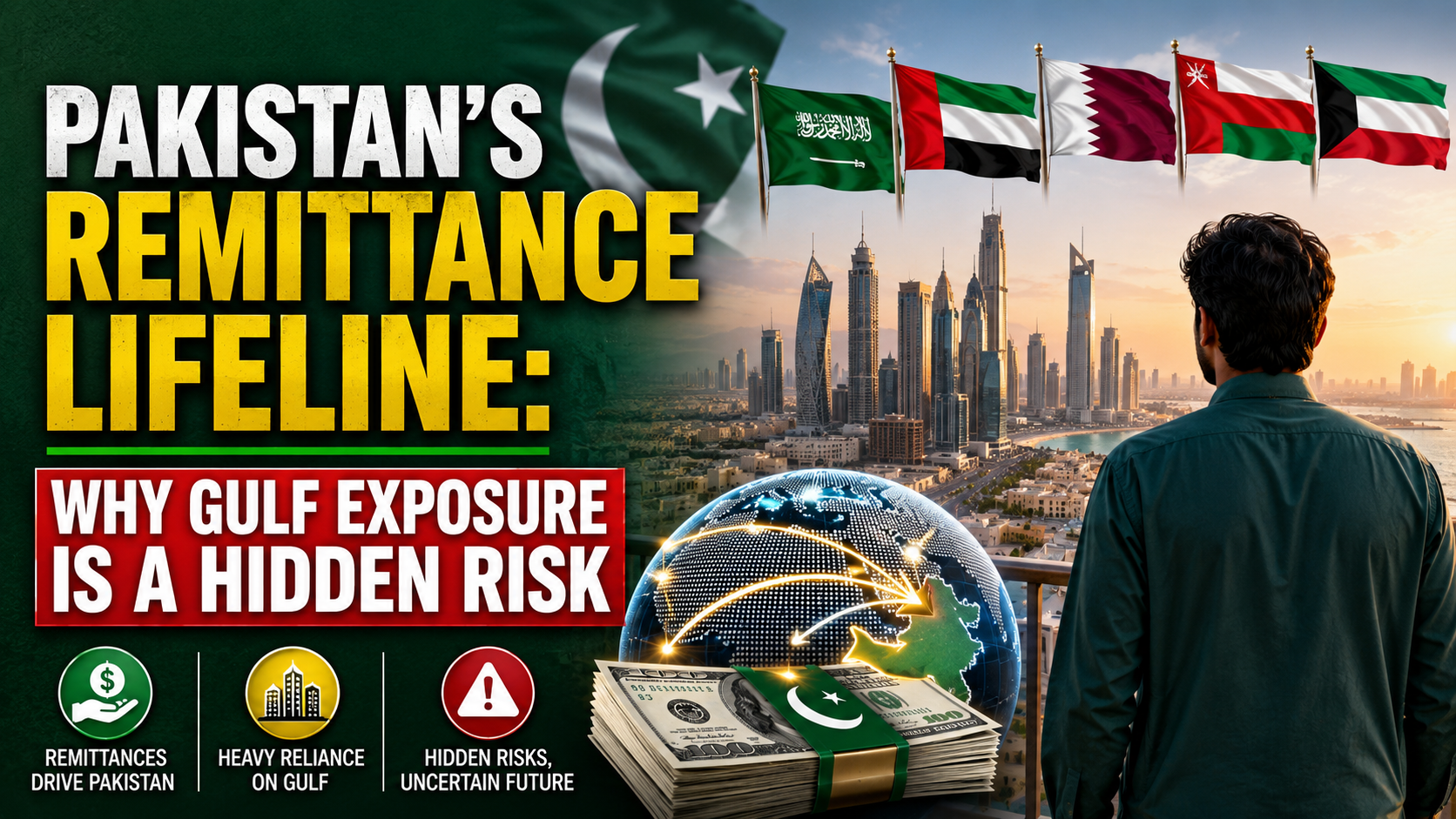
Buried inside the IMF’s latest Pakistan country report is a dependency that receives far less attention than headline GDP or inflation numbers, but arguably carries more immediate risk for millions of households: Pakistan’s economy is structurally exposed to whatever happens next in the Gulf.
The Numbers That Matter
Pakistan receives annual remittances amounting to roughly 9 percent of GDP, of which 55 percent originate from Gulf Cooperation Council countries, according to the IMF’s May 2026 country report. That single funding channel is one of the largest and most stable sources of foreign exchange available to the country — larger, in most years, than export revenue growth or foreign direct investment inflows combined.
The IMF’s own language is unambiguous about the risk this concentration creates: a significant disruption to GCC economies, or a forced return of migrant workers, could weigh heavily on these flows — a major source of financing for both household consumption and Pakistan’s broader balance of payments.
Why This Risk Is Live, Not Theoretical
This is not an abstract stress-test scenario. The Strait of Hormuz disruption, detailed extensively elsewhere in this series, has placed the entire Gulf region’s economic stability under genuine pressure for the first time in years. Should the conflict escalate further or trigger a broader regional economic slowdown, the transmission channel to Pakistan is direct and fast: fewer construction projects and reduced hiring across the GCC translates almost immediately into lower remittance flows from the millions of Pakistani workers employed there.
Capital Flows Are Already Reacting
The IMF has flagged early evidence that this dynamic is not purely hypothetical. Deteriorating global financial conditions have already resulted in capital outflows from Pakistan, which are likely to intensify further if the regional crisis extends, with the Fund specifically noting that access to short-term commercial financing — largely sourced from GCC banks — could also be affected if risk sentiment deteriorates further across the region.
This creates a double exposure that is easy to overlook in headline coverage: Pakistan depends on the Gulf both for the remittance income that supports household consumption, and for the short-term commercial bank financing that helps bridge its external funding gaps between IMF disbursements.
The State Bank’s Reserve Buffer
Pakistan’s own policy response has been to build reserves as a shock absorber. The State Bank of Pakistan has been projecting reserves to continue rising to roughly $18 billion by June 2026 on the back of planned inflows, a level implying that expected capital inflows currently exceed any current account shortfall — but only as long as Pakistan remains within an active IMF programme and maintains access to external funding on favourable terms.
The risk scenario flagged by policy researchers is specific: if monetary easing is mismanaged and confidence in Pakistan’s reform path falters, capital inflows could slow or reverse at the same time imports surge, opening an external funding gap that would draw down reserves and pressure the rupee — a scenario made materially more likely by any Gulf-region shock large enough to simultaneously dent remittances and tighten GCC bank lending.
How much of Pakistan’s remittances come from the Gulf?
Roughly 55% of Pakistan’s remittances — which fund about 9% of GDP — originate from Gulf Cooperation Council countries, making Pakistan’s balance of payments directly exposed to any economic disruption or capital-flow tightening in the Gulf region.
The Agricultural Wildcard
A related, more immediate risk sits in the agricultural supply chain. The IMF notes that disrupted DAP fertiliser supply chains linked to regional tensions could affect the Kharif planting season in June-July, with knock-on effects for food import prices — a second, more direct channel through which Gulf and broader Middle East instability could hit Pakistani households, independent of the remittance and capital-flow risks.
The Policy Takeaway
Pakistan’s economic stabilisation narrative in 2026 — a rebuilding KSE-100, falling inflation, a completed EFF review, covered in depth in our companion article — is real, but it rests on a foundation more exposed to Gulf regional stability than most headline coverage acknowledges. For policymakers in Islamabad, and for the Pakistani diaspora sending capital home each month, the Strait of Hormuz situation is not a distant geopolitical story. It is, in a very direct sense, a domestic economic risk factor.
In most economies, a strengthening currency is treated as evidence of underlying strength. In Russia’s case in 2026, the opposite is true — and this counterintuitive dynamic has received surprisingly little mainstream coverage relative to how directly it undermines Moscow’s ability to finance the war in Ukraine. The ruble touched 69.90 against the dollar in mid-June, its strongest level since February 2023, having gained roughly 45% since the start of the year on some measures. For Russia’s state finances, that appreciation is a genuine problem, not a triumph.
Why a Strong Ruble Hurts, Rather Than Helps, Russia
The mechanism runs through Russia’s fiscal architecture. Oil and gas taxes are calculated as the product of the export oil price and the ruble-dollar exchange rate — meaning that even when the dollar price of Urals crude holds steady, a stronger ruble mechanically reduces the ruble-denominated tax take from every barrel sold. With roughly 80% of Russia’s oil exports now flowing through Rosneft and Lukoil, both under direct US sanctions since late 2025, the currency-driven revenue squeeze compounds a volume-and-price problem that was already severe.
The scale of the shortfall is significant. Analysts at the Bloomsbury Intelligence and Security Institute project Russia faces an energy revenue shortfall of roughly $25–30 billion, driven by the combination of a stronger ruble and falling oil prices cutting the value of Urals crude by around a quarter. Separately, Russia’s Ministry of Finance has had to sell portions of the National Wealth Fund’s gold and yuan holdings to offset the shortfall in oil-and-gas-linked revenue — the Bank of Russia then buys those assets and sells an equivalent value of foreign currency domestically, a so-called “mirror operation” that itself reinforces the ruble’s strength, creating something close to a self-perpetuating cycle.
The Deeper Cause: Sanctions, Not Just Oil Prices
It would be a mistake to attribute the ruble’s strength purely to oil-market dynamics. Analysts at Meduza point to a more structural cause: a drop in imports combined with the Bank of Russia’s historically high interest rate has reduced domestic demand for foreign currency, pushing the ruble higher even as the broader economy stagnates. Compounding this, a large and growing share of Russia’s trade is now settled directly in rubles or yuan — 59.5% of exports and 56% of imports by October 2025 — reducing the currency-market channels through which a weaker ruble might otherwise emerge organically.
Sanctions enforcement has independently cut into export volumes and pricing power. Widened discounts on Russian crude — Urals trading roughly $25 a barrel below Brent as buyers price in the compliance risk of sanctioned suppliers — mean Russia is simultaneously selling less oil, at a bigger discount, for a currency worth mechanically less in tax terms per barrel. It is difficult to construct a more comprehensively unfavourable set of conditions for a state budget built around oil-and-gas revenue.
The Fiscal Math Is Getting Harder to Finance
Russia’s Economic Development Ministry has already revised its own forecasts downward across every major indicator, and the government has been forced into unpopular measures including a VAT increase effective January 2026 and higher domestic borrowing — targeting roughly 5.5 trillion rubles in fresh domestic bond issuance in 2026, with state-owned banks like Sberbank absorbing the bulk of that supply. Analysts note this financing method is among the most inflationary available, functionally similar to money creation, because the primary buyers are state banks rather than independent market participants pricing genuine credit risk.
Why Analysts Don’t Expect Collapse — Just Stagnation
Despite the mounting pressure, multiple assessments converge on the same conclusion: Russia’s economy is not on the verge of collapse. The World Bank’s own forecast trajectory shows growth slowing to around 0.8–1% annually through 2028 rather than contracting outright, describing the outlook as stagnation rather than crisis. As one analysis put it, the state-dependent structure of Russia’s economy — heavy reliance on state-owned enterprises and raw-material exports — is precisely the kind of economic structure that helps authoritarian systems maintain power through prolonged difficulty rather than triggering the kind of acute crisis that would force policy capitulation.
What to Watch
The critical variable for 2026 is whether the Bank of Russia’s interest-rate cuts — already reducing the key rate from 16% toward 15.5% — proceed fast enough to weaken the ruble back toward the Economic Ministry’s own projected average of roughly 92 per dollar. If the ruble instead remains persistently overvalued relative to Russia’s underlying trade fundamentals, the fiscal shortfall — and the resulting drawdown of Russia’s National Wealth Fund — will continue to compress the resources available for financing the war in Ukraine, regardless of headline oil prices.

2026 Economic Outlook: Investment Tips for Pakistani Investors

Anduril’s $6.6 Billion Submarine Shipyard Plan Explained

Life Insurance Comparison: Term vs. Whole Life and What Each Actually Costs

Stock Market Today: Nasdaq Hits Record High as Dow and S&P 500 Stumble on Middle East Diplomatic Shifts

Energy Market Spikes vs. Consumer App Data: What GasBuddy and Crude Prices Signal for Inflation

China’s FTAAP Push for APEC 2026 in Shenzhen: US Tariffs and Unite Asia-Pacific

AI Stocks Slide After Industry Leaders Call for a Development Slowdown

Singapore Stocks vs. Japan Stocks: Safe Havens in the Asian Economic Slowdown

Agentic AI in Finance: How Artificial Intelligence Is Replacing Routine Tasks on Wall Street

Fiscal Deficit and Public Debt

T-Mobile’s Enterprise Push and the Evolution of Modern Corporate Mobility Solutions

Enterprise Generative AI ROI 2026: The Adoption-to-Impact Gap Explained

Climate Finance and the Economic Reality of Passing 1.5°C

Business Insurance for Digital Exports: Protecting Your Company in the AI Era
Real Estate Crash Predictions 2026: Data-Backed Regional Guide

Unrecoverable Delays: How the St. Louis Strike Crippled Boeing’s F-15EX Eagle II

What is a “Lead-Left” Bank? Unpacking Morgan Stanley’s Role in Anthropic’s Mega-IPO

How to Invest in the Anthropic IPO: Step-by-Step Guide for Retail Investors

Mario Kart 8 Deluxe 4.0.0 Patch Notes: 8-Player Split Screen & CameraPlay

Is SPY Overvalued in September 2026? Fed Rate Hike Odds & Intrinsic Value

Top 15 Stocks for Investment in 2026 in PSX: Your Complete Guide to Pakistan’s Best Investment Opportunities
Debunking IMF Program Myths: Reconfiguring Engagement for True National Ownership in a Volatile World
China Economy 2026: Property Crisis, AI Investment & Export Surplus Explained
Top 10 Mutual Fund Managers in Pakistan for Investment in 2026: A Comprehensive Guide for Optimal Returns
China’s 50% Domestic Equipment Rule: The Semiconductor Mandate Reshaping Global Tech
What the U.S. Attack on Venezuela Could Mean for Oil and Canadian Crude Exports: The Economic Impact
15 Most Lucrative Sectors for Investment in Pakistan: A 2025 Data-Driven Analysis
Pakistan’s Export Goldmine: 10 Game-Changing Markets Where Pakistani Businesses Are Winning Big in 2025

Pakistan’s Stock Market Renaissance: How 2025’s Hottest Investment Opportunity Is Democratizing Wealth—A Complete Beginner’s Guide
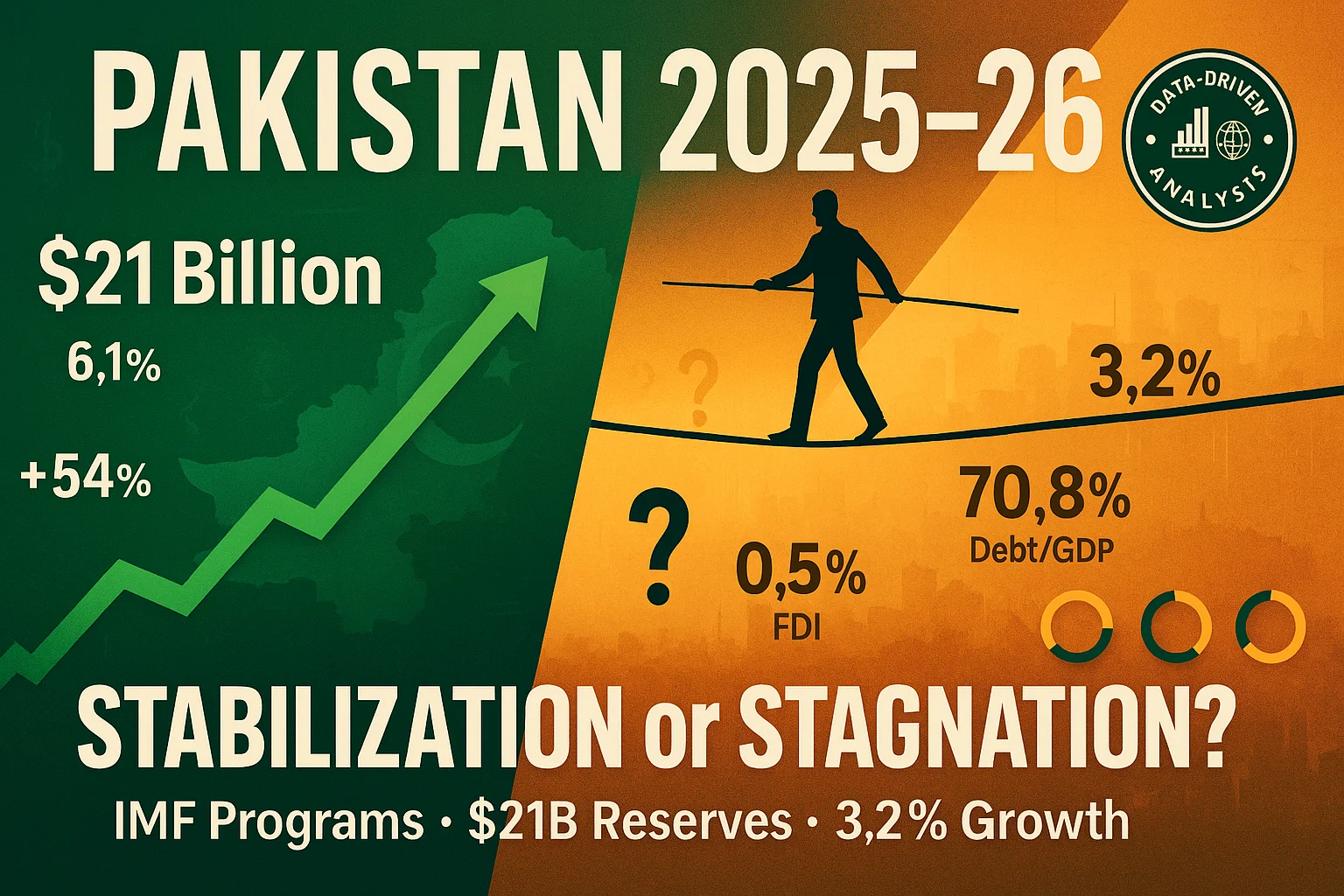
Pakistan’s Economic Outlook 2025: Between Stabilization and the Shadow of Stagnation
The Institutional Era: A Comprehensive Cryptocurrency Investment Analysis for 2026
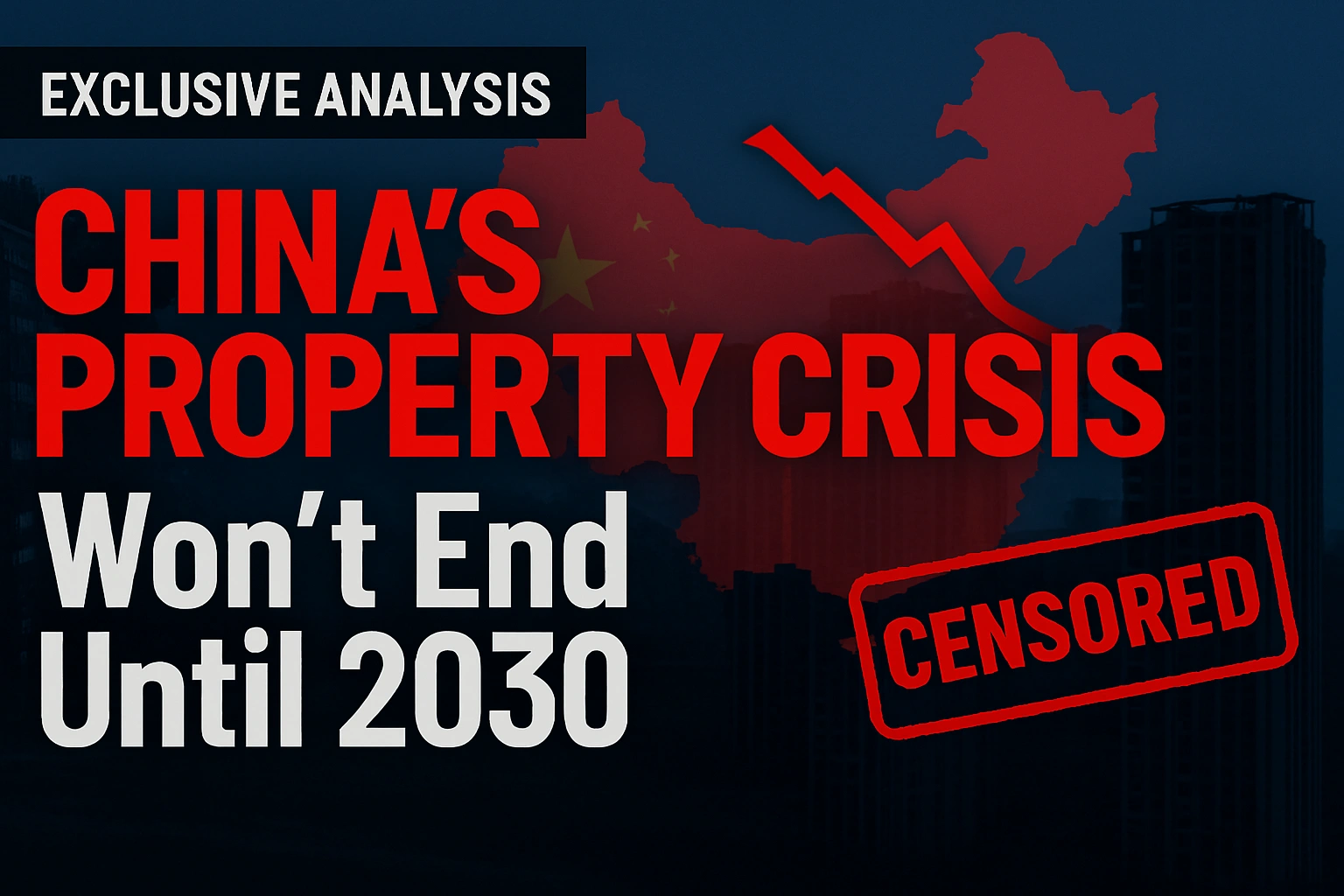
China’s Property Woes Could Last Until 2030—Despite Beijing’s Best Censorship Efforts
Real Estate Crash Predictions 2026: Data-Backed Regional Guide

Best Investments in Pakistan 2026: Top 10 Low-Price Shares and Long-Term Picks for the PSX
DBS Hits S$1 Billion AI Value Milestone — But Agentic AI Poses Talent Challenges for Singapore Banks
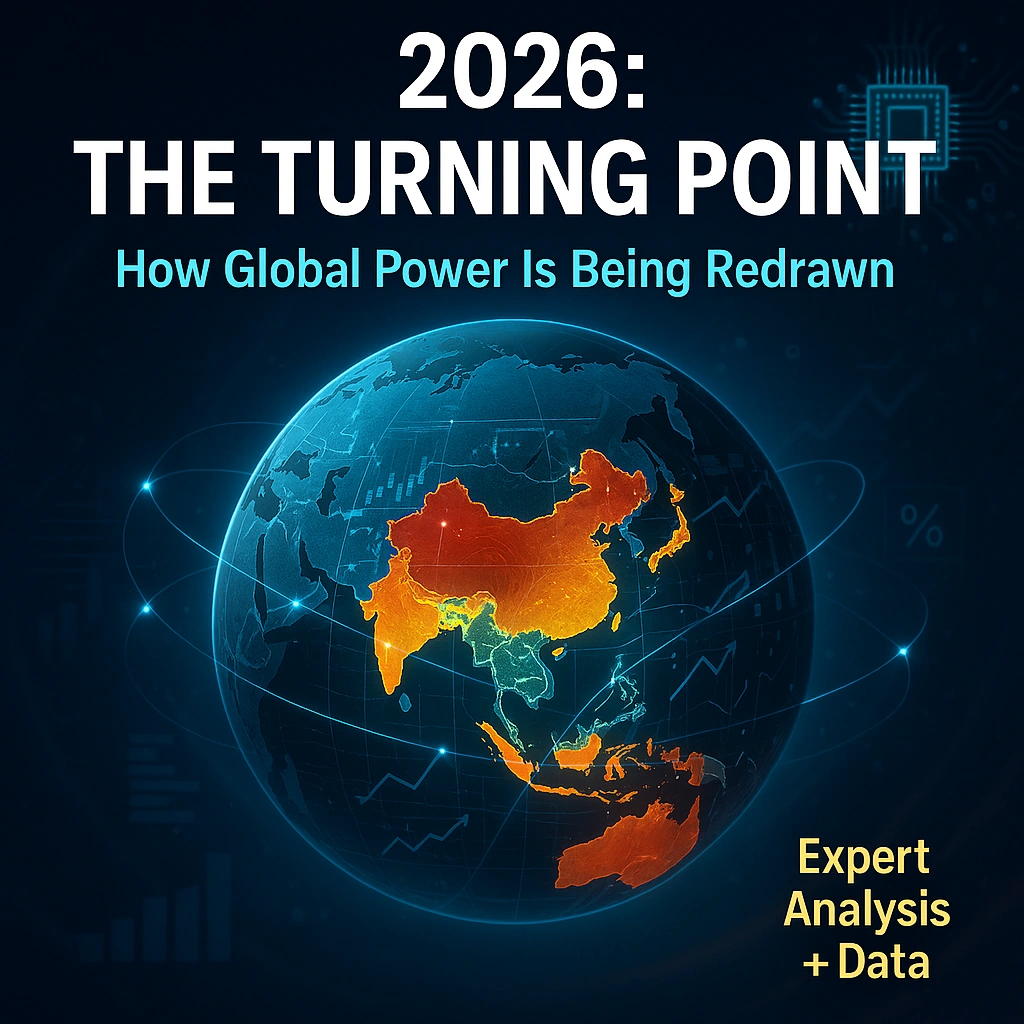
The Contours of 21st-Century Geopolitics Will Become Clearer in 2026: A New World Is Starting to Emerge

How to Become an Active Taxpayer on Pakistan’s FBR Active Taxpayer List (ATL) in 2026: A Step-by-Step Guide
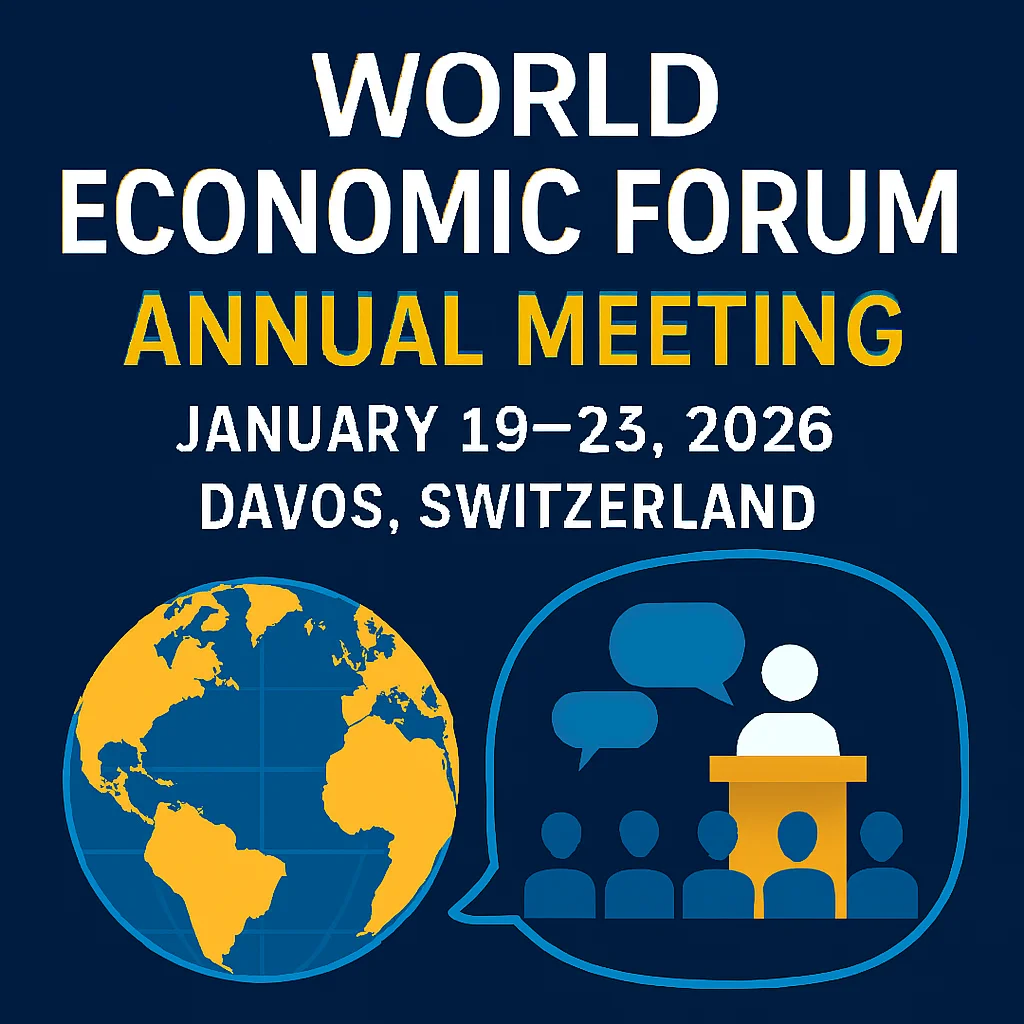
🌍 Davos 2026: The World Economic Forum Annual Meeting Sets the Stage for Global Transformation
Agentic AI in Finance: How Artificial Intelligence Is Replacing Routine Tasks on Wall Street

The New Executive Gold Standard: Top 10 Companies Lavishing Unprecedented Perks on CEOs and CFOs in 2025–2026
-
Markets & Finance10 months ago
Top 15 Stocks for Investment in 2026 in PSX: Your Complete Guide to Pakistan’s Best Investment Opportunities
-
Analysis9 months ago
Debunking IMF Program Myths: Reconfiguring Engagement for True National Ownership in a Volatile World
-
Analysis4 months ago
China Economy 2026: Property Crisis, AI Investment & Export Surplus Explained
-
Investment10 months ago
Top 10 Mutual Fund Managers in Pakistan for Investment in 2026: A Comprehensive Guide for Optimal Returns
-
Asia10 months ago
China’s 50% Domestic Equipment Rule: The Semiconductor Mandate Reshaping Global Tech
-
Global Economy10 months ago
What the U.S. Attack on Venezuela Could Mean for Oil and Canadian Crude Exports: The Economic Impact
-
AI10 months ago
15 Most Lucrative Sectors for Investment in Pakistan: A 2025 Data-Driven Analysis
-
Exports10 months ago
Pakistan’s Export Goldmine: 10 Game-Changing Markets Where Pakistani Businesses Are Winning Big in 2025