
Business
Top 5 Stock Picks on the Pakistan Stock Exchange for 2026: Expert Analysis and Investment Outlook

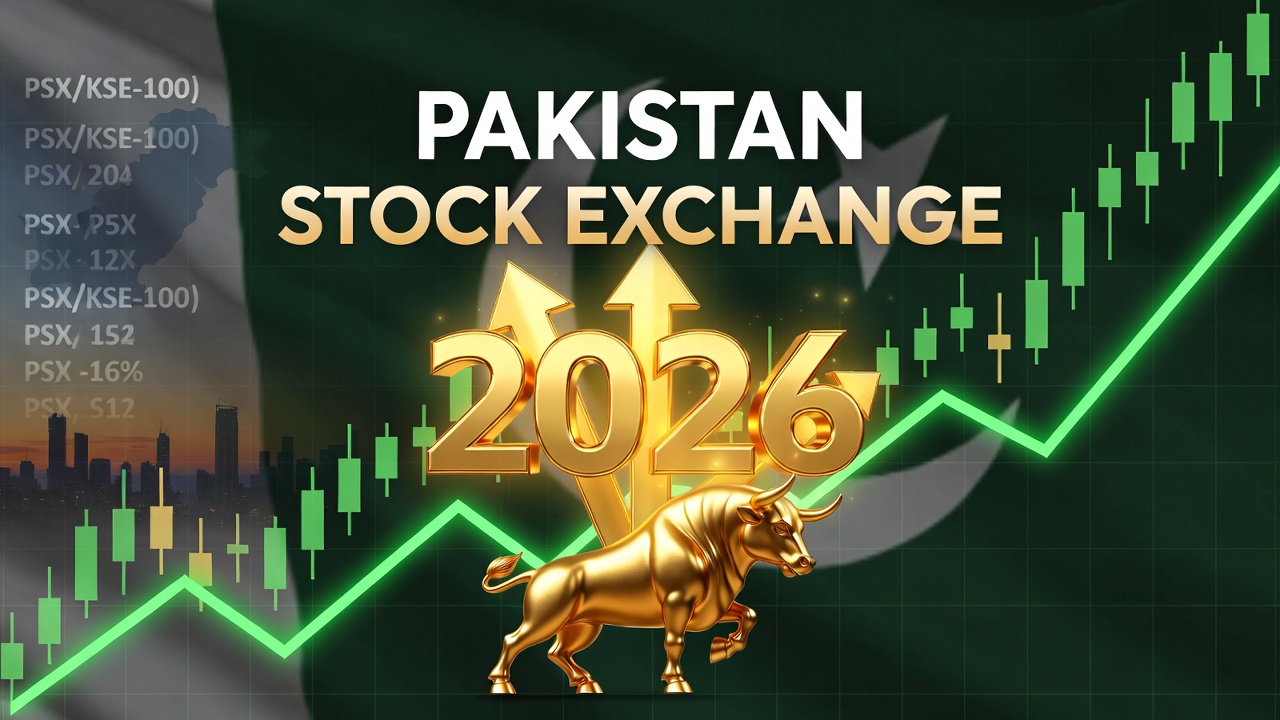
Explore the best PSX stocks 2026 with expert analysis of top Pakistan Stock Exchange investments. In-depth review of MEBL, FFC, LUCK, OGDC, and SYS with target prices and growth catalysts.
The Pakistan Stock Exchange has delivered one of the world’s most remarkable performances. As we move deeper into 2026, the KSE-100 index sits near record highs at approximately 188,000 points, reflecting a stunning 68% year-over-year gain. For investors seeking emerging market exposure with compelling risk-adjusted returns, Pakistan presents an increasingly attractive proposition—but only if you know where to look.
The question isn’t whether to invest in Pakistani equities. It’s which stocks offer the optimal combination of valuation discipline, earnings visibility, and sectoral tailwinds. After examining macroeconomic fundamentals, conducting comparative sector analysis, and consulting analyst consensus across leading brokerages, I’ve identified five stocks that warrant serious consideration for 2026 portfolios: Meezan Bank (MEBL), Fauji Fertilizer Company (FFC), Lucky Cement (LUCK), Oil & Gas Development Company (OGDC), and Systems Limited (SYS).
This isn’t about momentum chasing. These selections reflect a rigorous methodology that prioritizes sustainable competitive advantages, improving fundamentals, and reasonable entry points. But first, let’s understand why Pakistan’s equity market deserves your attention right now.
Pakistan’s 2026 Economic Renaissance: Building on Fragile Progress
Three years ago, Pakistan teetered on the brink of sovereign default. Currency reserves had dwindled to precarious levels, inflation exceeded 38%, and the rupee was in freefall. Fast forward to January 2026, and the transformation is striking. Inflation has moderated to 5.6% as of December 2025, while the State Bank of Pakistan has reduced its policy rate to 10.5%, the lowest level in three years.
The IMF projects Pakistan’s GDP growth at 3.2% for 2026, a figure that may appear modest by Asian standards but represents genuine momentum after years of near-stagnation. More importantly, the composition of growth has shifted. The manufacturing sector is rebounding from flood-induced disruptions, services remain resilient, and agricultural output is stabilizing. Foreign exchange reserves have climbed above $14.5 billion, providing a crucial buffer against external shocks.
What does this mean for equity investors? Lower interest rates typically compress bond yields, making equities more attractive on a relative basis. Stabilizing inflation allows companies to plan with greater confidence, improving capital allocation decisions. And critically, Pakistan’s improving macroeconomic stability is drawing foreign investors back after years of outflows, with potential MSCI Emerging Markets Index reclassification on the horizon.
Yet challenges persist. Political uncertainty remains elevated. Structural reforms—particularly in the bloated public sector and loss-making state enterprises—advance at a glacial pace. And external dependencies, especially on IMF support, create vulnerability to global financial conditions. Smart investors will balance optimism with prudence, recognizing that Pakistan’s story is one of recovery, not renaissance.
Methodology: How We Selected the Top 5 PSX Stocks for 2026
Investment selection is both art and science. Our approach combines quantitative screens with qualitative judgment, focusing on:
Financial Health: Consistent profitability, manageable leverage ratios, and robust cash flow generation over rolling three-year periods. Companies must demonstrate resilience through Pakistan’s recent economic turbulence.
Valuation Discipline: We prioritize stocks trading at reasonable multiples relative to historical norms and regional peers. No growth story, however compelling, justifies egregious valuations.
Sectoral Positioning: Industries benefiting from structural tailwinds—declining interest rates, agricultural focus, infrastructure development, digital transformation—receive preference.
Analyst Consensus: We reviewed recommendations from Arif Habib Limited, JS Global, Topline Securities, and international platforms like TradingView and MarketScreener, synthesizing diverse perspectives.
Market Liquidity: Stocks must maintain adequate daily trading volumes to ensure efficient entry and exit, particularly important in frontier markets.
Dividend Sustainability: In volatile markets, dividend yield provides downside cushion. We favor companies with track records of reliable payouts.
The result is a diversified basket spanning banking, fertilizers, cement, energy, and technology—sectors we believe will drive PSX performance through 2026 and beyond.
1. Meezan Bank (MEBL): Pakistan’s Islamic Banking Powerhouse
Current Price: PKR 484.56 (as of January 27, 2026)
52-Week Range: PKR 230.00 – 505.00
Market Cap: PKR 870 billion
Target Price (Consensus): PKR 560–617
Dividend Yield: ~6.5%
Why MEBL Leads Our List
Meezan Bank dominates Pakistan’s Islamic banking sector with an estimated 35% market share, making it the undisputed leader in Sharia-compliant financial services. This matters enormously in a country where Islamic banking assets have grown at double-digit rates for over a decade, supported by demographic preferences and regulatory encouragement.
The bank’s recent performance validates this positioning. In 2024, Meezan reported revenue of PKR 309.15 billion, up 27.44% year-over-year, while earnings reached PKR 102.69 billion. More impressively, return on equity (ROE) stands at 18%—exceptional for any bank, let alone in a frontier market—indicating efficient capital deployment.
The Interest Rate Tailwind
Pakistan’s monetary easing cycle represents a structural catalyst for banking profitability. As interest rates decline, banks benefit from several mechanisms simultaneously: compressed funding costs, wider net interest margins on floating-rate assets, and reduced credit costs as borrowers find repayment more manageable. For Meezan, with its substantial corporate and SME lending portfolio, this translates directly to bottom-line accretion.
Analyst consensus points to a 12-month target of PKR 560-617, implying 15-27% upside from current levels. Eight analysts covering the stock rate it a “Strong Buy,” with none recommending sells—a rare unanimity.
Risks to Consider
Like all Pakistani banks, Meezan faces asset quality concerns if economic recovery stalls. Non-performing loans, while currently manageable, could deteriorate if the IMF program encounters difficulties. Regulatory changes affecting Islamic banking structures, though unlikely, pose tail risks. And the stock’s remarkable run—up 100% year-over-year—means it’s no longer obviously cheap on traditional metrics, trading at approximately 9.6x trailing earnings.
Still, for investors seeking exposure to Pakistan’s financial sector transformation, Meezan offers the optimal combination of growth, profitability, and relative safety. The dividend yield provides income while you wait for capital appreciation.
2. Fauji Fertilizer Company (FFC): Agricultural Backbone With Energy Exposure

Current Price: PKR 598.60 (as of January 2, 2026)
52-Week Range: PKR 314.18 – 658.28
Market Cap: PKR 993 billion
Target Price (Consensus): PKR 615
Dividend Yield: ~7-8%
The Fertilizer Thesis for 2026
Pakistan’s agricultural sector, representing roughly 20% of GDP, is poised for renewed focus as the government prioritizes food security and export earnings. Fertilizer companies sit at the nexus of this imperative, and FFC—Pakistan’s second-largest urea producer—is exceptionally well-positioned.
The company’s integrated business model is its competitive moat. FFC doesn’t just manufacture fertilizer; it operates across the value chain, from gas-based production facilities to extensive distribution networks reaching thousands of agricultural retailers nationwide. This vertical integration provides margin stability even when raw material costs fluctuate.
Recent results underscore operational excellence. FFC reported EBITDA of PKR 134.75 billion with a 25.56% margin, impressive for a commodity producer. The company recently reached an all-time high of PKR 658.28 on January 23, 2026, reflecting strong market confidence.
Why Now?
Three catalysts converge for FFC in 2026:
Government Subsidy Clarity: Recent policy stability around fertilizer subsidies removes a major uncertainty that plagued the sector in previous years, allowing farmers to plan purchases with confidence.
Natural Gas Allocations: As Pakistan’s circular debt in the gas sector is gradually addressed, FFC benefits from more reliable feedstock supply. Arif Habib Limited’s Pakistan Strategy 2026 report specifically highlights FFC among beneficiaries of gas circular debt resolution.
International Urea Prices: Global fertilizer markets remain supportive, with Russia-Ukraine tensions and Chinese export restrictions keeping prices elevated on a historical basis.
Analyst consensus projects minimal upside to PKR 615, suggesting the stock is fairly valued at current levels. However, the generous dividend yield—FFC historically pays out 40-50% of earnings—makes it attractive for income-focused investors.
What Could Go Wrong?
FFC’s fortunes are tightly linked to natural gas availability and pricing—factors outside management control. Weather-related agricultural disruptions reduce fertilizer demand. And if the rupee strengthens significantly, import competition could intensify. Still, with Pakistan’s food import bill straining the trade balance, domestic agricultural productivity remains a national priority, benefiting the entire fertilizer value chain.
3. Lucky Cement (LUCK): Infrastructure Play With Regional Expansion

Current Price: PKR 482.99 (as of January 28, 2026)
52-Week Range: PKR 214.00 – 529.50
Market Cap: PKR 867 billion
Target Price (Consensus): PKR 530-580
Dividend Yield: ~1.1%
Cement: Pakistan’s Building Block
When governments prioritize infrastructure, cement companies print money. Pakistan’s infrastructure deficit is legendary—power distribution bottlenecks, inadequate road networks, insufficient housing stock—creating decades of latent demand. As fiscal space improves under the IMF program, infrastructure spending will accelerate, directly benefiting cement producers.
Lucky Cement, Pakistan’s largest cement manufacturer by capacity, operates state-of-the-art plants in both Pakistan and Iraq, with additional ventures in the Democratic Republic of Congo. This geographic diversification differentiates it from purely domestic players, providing natural currency hedges and access to faster-growing African markets.
The company reported revenue of PKR 449.63 billion in 2025, up 9.40%, with earnings growing 17.39% to PKR 76.96 billion. Net profit margins expanded despite raw material cost pressures—a testament to operational efficiency and pricing power.
Construction Boom Coming?
Pakistan’s housing shortage exceeds 10 million units by most estimates. The government’s Naya Pakistan Housing Programme, though progressing slowly, signals intent to address this crisis. Private sector construction is also awakening as mortgage availability improves and consumer confidence rebuilds.
For Lucky Cement, domestic demand revival combines with Iraqi reconstruction spending and African urbanization to create a multi-year growth runway. Analysts project upside to PKR 530-580, representing 10-20% appreciation potential.
Cyclicality Concerns
Cement is inherently cyclical, making timing crucial. Rising energy costs squeeze margins. The stock’s rally—up 123% year-over-year—has compressed valuations, with LUCK now trading at an elevated P/E ratio near 47. This suggests much good news is already priced in, leaving little margin for disappointment.
Low dividend yield (around 1%) also means capital appreciation must do the heavy lifting. But for investors with a 2-3 year horizon who believe Pakistan’s infrastructure story is just beginning, Lucky Cement offers asymmetric upside—if, and it’s a meaningful if, execution on Iraqi and African projects proceeds on schedule.
4. Oil & Gas Development Company (OGDC): Energy Independence Champion

Current Price: PKR 319.26 (as of January 29, 2026)
52-Week Range: PKR 242.00 – 331.80
Market Cap: PKR 1.42 trillion
Target Price: PKR 315-332
Dividend Yield: ~6.8%
Pakistan’s Largest E&P Company
Energy security ranks among Pakistan’s highest strategic priorities. The country imports approximately 75% of its oil and significant quantities of LNG, draining precious foreign exchange. OGDC, Pakistan’s largest exploration and production company, controls over 40% of awarded exploration acreage, making it the flagship of domestic energy development efforts.
The company’s portfolio spans mature producing fields and greenfield exploration prospects across Pakistan’s diverse geological basins. Recent discoveries, including significant finds in the TAL Block, demonstrate OGDC’s technical capabilities and reserve replacement potential.
Fiscal 2025 Challenges and 2026 Recovery
Fiscal 2025 proved challenging, with OGDC reporting subdued earnings due to lower crude oil and gas production volumes and softer realized prices. However, the company responded with a record dividend of PKR 15.05 per share—its highest ever—signaling management confidence in underlying cash generation capacity despite near-term headwinds.
Looking ahead, several catalysts should support OGDC’s rerating:
Gas Circular Debt Resolution: Arif Habib Limited’s 2026 strategy report identifies OGDC among primary beneficiaries of government efforts to tackle the PKR 3.2 trillion gas circular debt. If receivables are cleared through dividend clawbacks or petroleum levy arrangements, OGDC’s cash flows and balance sheet will strengthen dramatically.
Production Revival Projects: Planned capital expenditure targeting aging field rejuvenation and new well completions should arrest production declines that have plagued the sector.
Oil Price Sensitivity: Global crude benchmarks remain supported near $75-80/barrel, levels that ensure healthy economics for OGDC’s oil-weighted production mix.
State-Owned Enterprise Risks
Government ownership (approximately 88%) creates both stability and constraints. OGDC will never face existential solvency issues, but political interference in pricing, forced gas supply to loss-making utilities at below-market rates, and dividend decisions driven by fiscal needs rather than shareholder optimization remain ever-present concerns.
The stock’s recent run to all-time highs near PKR 331.80 in mid-January 2026 suggests investors are pricing in considerable optimism around circular debt resolution. At current levels, with minimal consensus upside, OGDC is more suited for dividend-focused investors than aggressive growth seekers. But as a defensive holding with government backing and essential sector positioning, it earns its place in a diversified PSX portfolio.
5. Systems Limited (SYS): Riding Pakistan’s Digital Transformation

Current Price: PKR 170.09 (as of January 29, 2026)
52-Week Range: PKR 145.00 – 190.00
Market Cap: PKR 243 billion
Target Price (Consensus): PKR 215
Dividend Yield: ~0.7%
The Technology Outlier
No Pakistani stock portfolio feels complete without exposure to the country’s burgeoning technology sector. Systems Limited, Pakistan’s premier IT services and business process outsourcing company, offers precisely that—a claim on digital transformation trends both domestically and globally.
Founded in 1977, Systems has evolved from a regional software vendor to a multinational corporation with operations across North America, the Middle East, Europe, Africa, and Asia-Pacific. The company provides digital consulting, data and AI services, cloud migration, cybersecurity solutions, and BPO services to telecommunications, banking, healthcare, retail, and government sectors.
In 2024, Systems reported revenue of PKR 67.47 billion, a robust 26.27% increase, demonstrating strong demand for its service offerings. The company’s recent acquisition of Confiz, a digital transformation consultancy, and strategic partnership with British American Tobacco expand addressable markets and deepen client relationships.
Growth Drivers for 2026
AI and Automation Demand: Every enterprise globally is rethinking technology infrastructure to incorporate artificial intelligence and automation. As a services integrator, Systems benefits as clients seek implementation expertise—a trend that transcends Pakistan’s economic cycles.
Nearshore/Offshore Arbitrage: Pakistan’s educated, English-speaking IT workforce offers compelling cost advantages versus Indian or Eastern European alternatives, particularly for clients in the Middle East and Africa where cultural affinity matters.
Domestic Digitalization: Pakistan’s government and private sector are digitalizing, from taxation systems to banking platforms. Systems, with established relationships across key sectors, is positioned to capture disproportionate share.
Currency Dynamics: A significant portion of Systems’ revenue is dollar-denominated exports. If the rupee depreciates, profit margins expand automatically.
Valuation and Volatility
Analyst consensus suggests a target price near PKR 215, implying roughly 26% upside—the highest among our five selections. Yet Systems trades at premium valuations befitting a growth stock, and the technology sector’s inherent volatility means drawdowns can be sharp.
The company’s low dividend yield (~0.7%) signals management preference for reinvestment over shareholder distributions. For investors comfortable with volatility and seeking pure growth exposure, Systems Limited offers the best risk-reward profile on this list. For those prioritizing income stability, it’s the weakest fit.
Comparative Analysis: Which Stock Fits Your Strategy?
| Stock | Ticker | Price (PKR) | P/E Ratio | Dividend Yield | 12M Target | Upside Potential | Risk Profile |
|---|---|---|---|---|---|---|---|
| Meezan Bank | MEBL | 484.56 | 9.6x | 6.5% | 560-617 | 15-27% | Moderate |
| Fauji Fertilizer | FFC | 598.60 | 13.2x | 7-8% | 615 | 2.5% | Low-Moderate |
| Lucky Cement | LUCK | 482.99 | 47.5x | 1.1% | 530-580 | 10-20% | Moderate-High |
| OGDC | OGDC | 319.26 | 8.2x | 6.8% | 315-332 | 0-4% | Low |
| Systems Limited | SYS | 170.09 | 25.2x | 0.7% | 215 | 26% | High |
For Income Investors: FFC and OGDC, with their 7-8% and 6.8% yields respectively, provide the most reliable dividend streams. Both companies have track records of consistent payouts even during Pakistan’s recent economic turbulence.
For Growth Investors: Systems Limited clearly leads, with double-digit revenue growth, expanding margins, and secular digitalization tailwinds. MEBL also offers compelling growth at more reasonable valuations.
For Value Investors: OGDC trades at just 8.2x earnings—remarkably cheap for a company with government backing and quasi-monopoly market position. However, the lack of near-term catalysts means value realization may take time.
For Balanced Investors: MEBL strikes the optimal balance—reasonable valuations, solid growth, meaningful dividend yield, and structural sector tailwinds. It’s the core holding I’d recommend for most portfolios.
For Risk Takers: Lucky Cement offers leverage to Pakistan’s infrastructure revival story, though current valuations leave minimal room for execution missteps.
Risks Every PSX Investor Must Understand
No investment thesis is complete without acknowledging what can go wrong. Pakistani equities, despite their remarkable recent performance, carry risks that justify their frontier market classification:
Political Instability: Pakistan’s political environment remains volatile. Policy reversals, civil unrest, or geopolitical tensions with neighboring countries can trigger sharp market corrections.
IMF Program Dependence: Pakistan’s economic stability hinges on continued IMF support. If program reviews encounter difficulties or conditions prove unpalatable domestically, renewed crisis could emerge.
Currency Volatility: While recent stability is welcome, the rupee’s history of sharp devaluations creates constant uncertainty. Foreign investors face currency risk; domestic investors may find dollar-denominated alternatives more attractive during periods of rupee weakness.
Liquidity Constraints: PSX daily trading volumes remain modest by regional standards. Large positions can be difficult to exit quickly without moving markets, particularly in small and mid-cap stocks.
Regulatory Unpredictability: Corporate governance standards, while improving, lag developed markets. Regulatory interventions—from dividend restrictions to price controls—can materialize with little warning.
Sector Concentration: Pakistan’s equity market remains heavily weighted toward financials, energy, and materials. True diversification requires looking beyond PSX.
These risks are real, material, and unlikely to dissipate entirely in the near term. They’re also precisely why expected returns are higher than in developed markets. Frontier market investing rewards those who can tolerate volatility and maintain discipline through inevitable drawdowns.
2026 Market Outlook: Tempering Enthusiasm With Realism
Arif Habib Limited projects the KSE-100 Index will reach 208,000 points by December 2026, implying 21.6% upside from late-December 2025 levels. Alternative forecasts from AKD Securities suggest even more aggressive targets near 263,800, predicting a 53% return and potentially lifting PSX market capitalization to $100 billion.
These projections rest on several key assumptions:
- Continued monetary easing as inflation remains anchored within the 5-7% target range
- Sustained reform momentum, particularly around privatization (PIA, power distribution companies) and energy sector restructuring
- Political stability through the critical 2026 midpoint
- Foreign investor return, potentially catalyzed by MSCI Emerging Markets Index reclassification
- Benign external environment, with no major shocks from oil prices, U.S. interest rates, or geopolitical conflicts
History counsels humility. Markets rarely move in straight lines. Pakistan’s KSE-100 Index has delivered 15-20% annualized returns over extended periods, but with 30-40% drawdowns occurring periodically. Even in a favorable scenario, expect volatility.
My base case suggests PSX can deliver 15-20% total returns in 2026—double-digit appreciation plus dividend income—provided the fragile macroeconomic stability holds. The bull case, if MSCI upgrade materializes and foreign flows accelerate, could see returns approaching 30-35%. The bear case, triggered by IMF program failure or political crisis, would see flat to negative returns.
Position sizing matters enormously. For international investors, PSX exposure should represent a small portion of overall equity allocation—perhaps 3-5% maximum. For domestic Pakistani investors with rupee liabilities, a larger allocation (20-30%) makes sense, but diversification across sectors remains critical.
Pakistan’s Moment—But Not Without Caveats
Pakistan stands at an inflection point. Years of crisis management are giving way to cautious optimism. Bloomberg noted that Pakistan’s stock rally and surging retail participation are drawing companies back to equity markets, with up to 16 IPOs expected in 2026—the most in years. This is the environment where disciplined investors can generate asymmetric returns.
The five stocks profiled here—Meezan Bank, Fauji Fertilizer, Lucky Cement, OGDC, and Systems Limited—offer diverse exposures to Pakistan’s recovery narrative. Collectively, they provide a balanced portfolio spanning financials, industrials, and technology. Individually, each presents distinct risk-return profiles suitable for different investor objectives.
But make no mistake: investing in Pakistani equities remains a calculated risk. Frontier markets don’t become developed markets overnight. Progress is rarely linear. Setbacks will occur. The key is separating signal from noise, maintaining conviction during inevitable periods of doubt, and remembering that extraordinary returns require accepting extraordinary uncertainty.
For those willing to embrace that uncertainty with eyes wide open, Pakistan’s equity market in 2026 offers opportunities that have become increasingly rare in an expensive, fully-priced global marketplace. The question isn’t whether risks exist—they always do. The question is whether potential rewards justify those risks. For the stocks discussed here, I believe they do.
As with any investment, conduct your own due diligence. Consult with qualified financial advisors familiar with your specific circumstances. And never invest capital you can’t afford to lose. Frontier markets reward the prepared, patient, and prudent—not the reckless.
Disclaimer:
This article is for informational purposes only and does not constitute investment advice, a recommendation, or a solicitation to buy or sell any securities. Past performance is not indicative of future results. Readers should conduct their own research and consult with licensed financial advisors before making investment decisions. The author and publisher assume no liability for any losses incurred from reliance on the information presented herein.







Online interest in impeachment and White House staffing has risen in a political environment where a few words can badly distort the underlying story. A resolution was introduced is not the same as the House voted to impeach. A press secretary was removed is not the same as the administration changed policy. Both require evidence, dates and clear procedural language.
Two verifiable developments frame the discussion as of October 25, 2026. A House impeachment resolution was tabled on September 15, and the short tenure of White House press secretary Katie Zacharia ended in mid-October, according to official congressional records and major US reporting. Neither event should be inflated into an unverified claim about new votes or a new administration decision.
The impeachment resolution: what the House actually voted on
House Resolution 1486 concerned impeachment of President Donald Trump. The US House’s official floor summary records the September 15 vote on a motion to table the measure: 232–147, with 47 members recorded as present. A successful tabling motion sets aside a measure; it is not the adoption of articles of impeachment.
This distinction is essential. A social post describing that roll call as a vote to impeach reverses the outcome. A later claim about a different resolution should be separately checked against the official Congress website and House roll-call records rather than treated as an update to an old headline without evidence.
Congressional procedure is sometimes inconvenient for trending-content production. It is also what protects the reader from misinformation. The reporter’s task is to identify the motion, the chamber, the date and the disposition before attempting broader political interpretation.
What happened to the press secretary?
CBS News reported on October 16 that Zacharia was removed from the White House press-secretary role after roughly five days. CBS cited US officials and reported scrutiny of her credentials and performance. It also noted that the White House had not yet announced a successor in that report.
A leadership change in the briefing room can be significant for how an administration communicates with journalists and the public. But personnel turnover alone does not establish a change to economic policy, foreign strategy or legal proceedings. Those substantive conclusions require separate evidence.
Why the two stories became combustible
Impeachment is a constitutionally consequential process and a powerful political symbol. White House press briefings are the main arena where officials defend decisions under questioning. When both topics circulate at once, online narratives may stitch them into a supposed constitutional crisis—even if there is no documented direct connection.
A measured account must resist that temptation. Political opponents may view impeachment proposals as necessary oversight; supporters of the president may describe them as partisan exercises. The purpose of reporting is not to resolve those disagreements by advocacy, but to distinguish political argument from verifiable institutional action.
The fact-checker’s four-part test
| Question | Evidence needed |
|---|---|
| Was an impeachment measure introduced? | Official resolution number and introduction date |
| Did the House approve articles? | Recorded vote on adopting the relevant articles |
| Was an official removed? | Direct statement or multiple reliable attributed reports |
| Who now holds the position? | Current White House announcement, not an old biography |
This is particularly important during a midterm-election year. Campaigns and commentators have incentives to present ordinary procedural setbacks as existential victories or defeats. Readers benefit from precise language instead of ever-louder adjectives.
What should international readers take from it?
For audiences in Pakistan and elsewhere in Asia, US political turmoil matters when it alters policy certainty: trade measures, sanctions, diplomacy, defence arrangements, fiscal decisions and monetary-policy appointments. None should be projected automatically from a press secretary’s dismissal or a resolution that did not pass.
It is sensible to monitor official notices, court actions and enacted policy. It is not sensible to treat search-volume spikes as proof of truth. Search trends measure curiosity, fear and newsworthiness; they do not independently confirm the event people are typing about.
Why parliamentary verbs matter
US political coverage frequently compresses filed, referred, tabled, passed and enacted into the generic word approved. Those actions are not interchangeable. A resolution can be introduced without advancing beyond committee. A motion to table is a vote about whether the chamber will proceed, not a judgment approving the underlying allegations. A measure passed by one chamber may still require further constitutional steps.
The same precision is necessary in personnel news. A spokesperson’s announced departure, a media report citing officials and a formal appointment are different evidence levels. Where the administration has not issued a replacement notice, describing a favourite online rumour as the current officeholder is poor reporting.
Public debate about impeachment also should not be reduced to the number of search queries. Search interest can be increased by critics, supporters, confused readers or social platforms circulating an old clip. It gives no reliable denominator for public opinion. A survey with a known sample and methodology is a different kind of evidence.
The best follow-up coverage would monitor official House actions and White House releases, then connect any actual policy changes to their legal basis. That approach serves readers across the political spectrum without manufacturing a crisis.
Has the September 15 House vote impeached Trump?
No. The recorded action was a successful motion to table the resolution, not a vote approving impeachment articles.
Was Katie Zacharia removed?
Yes, CBS reported her departure from the role on October 16. Any later staffing changes should be checked directly before publication.
Do impeachment trends reveal who will win the midterms?
No. Search spikes are not representative polling or an election forecast.
The standard worth keeping: precise institutional language is not timid journalism. It is the difference between telling readers what happened and telling them what a viral headline wants them to believe.

The New Risk Frontier of Digital Exports
As software, AI models, digital media, and cross-border SaaS platforms dominate global trade, traditional commercial property and casualty insurance is no longer sufficient. Digital exporters face complex liabilities ranging from cross-border data privacy breaches and algorithmic bias claims to intellectual property infringement in foreign jurisdictions. In 2026, protecting a borderless digital enterprise requires specialized insurance coverage tailored to intangible asset risks.
Failing to secure robust digital export insurance can expose founders and shareholders to catastrophic lawsuits originating from overseas regulatory bodies.
Essential Coverages for Digital Export Enterprises
Cyber Liability and Algorithmic Error Coverage
If an AI model or software product exported overseas malfunctions or suffers a data breach, foreign regulators can levy severe fines under regional privacy laws. Modern cyber policies cover both regulatory defense costs and third-party damages.
Intellectual Property and Copyright Defense
Digital creators and SaaS firms operating globally are frequent targets of frivolous IP litigation in unfamiliar legal systems. Specialized IP insurance covers the exorbitant legal fees required to defend international patents and copyrights.
| Insurance Policy Type | Primary Protection Area | Target Enterprise | Average Annual Premium |
| Global Cyber Liability | Data breaches, ransomware, AI output errors | SaaS & AI Platforms | $5,000 – $18,000 |
| E&O Professional Liability | Service failures, missed deliverables | Digital Consultancies & Agencies | $3,000 – $10,000 |
| International IP Defense | Foreign copyright & patent lawsuits | Software Developers & Creators | $7,000 – $25,000 |
Securing Comprehensive Coverage: Best Practices
Navigating the insurance market for digital exports requires partnering with specialized brokers who understand intangible asset exposures.
Audit Geographic Exposures: Clearly map where your digital users reside to ensure your policy covers those specific regulatory jurisdictions.
Verify AI Exclusion Clauses: Carefully review policy wording to ensure your generative AI or automated tools are not explicitly excluded from coverage.
Maintain Incident Response Protocols: Insurers offer lower premiums to firms that demonstrate rigorous cybersecurity and data governance standards.
“Risk Management Expert Note: Your software may be intangible, but your liability in foreign markets is entirely real. Comprehensive digital export insurance is the ultimate shield for borderless growth.”
Equipping your digital export enterprise with specialized insurance safeguards your balance sheet and ensures uninterrupted global expansion.
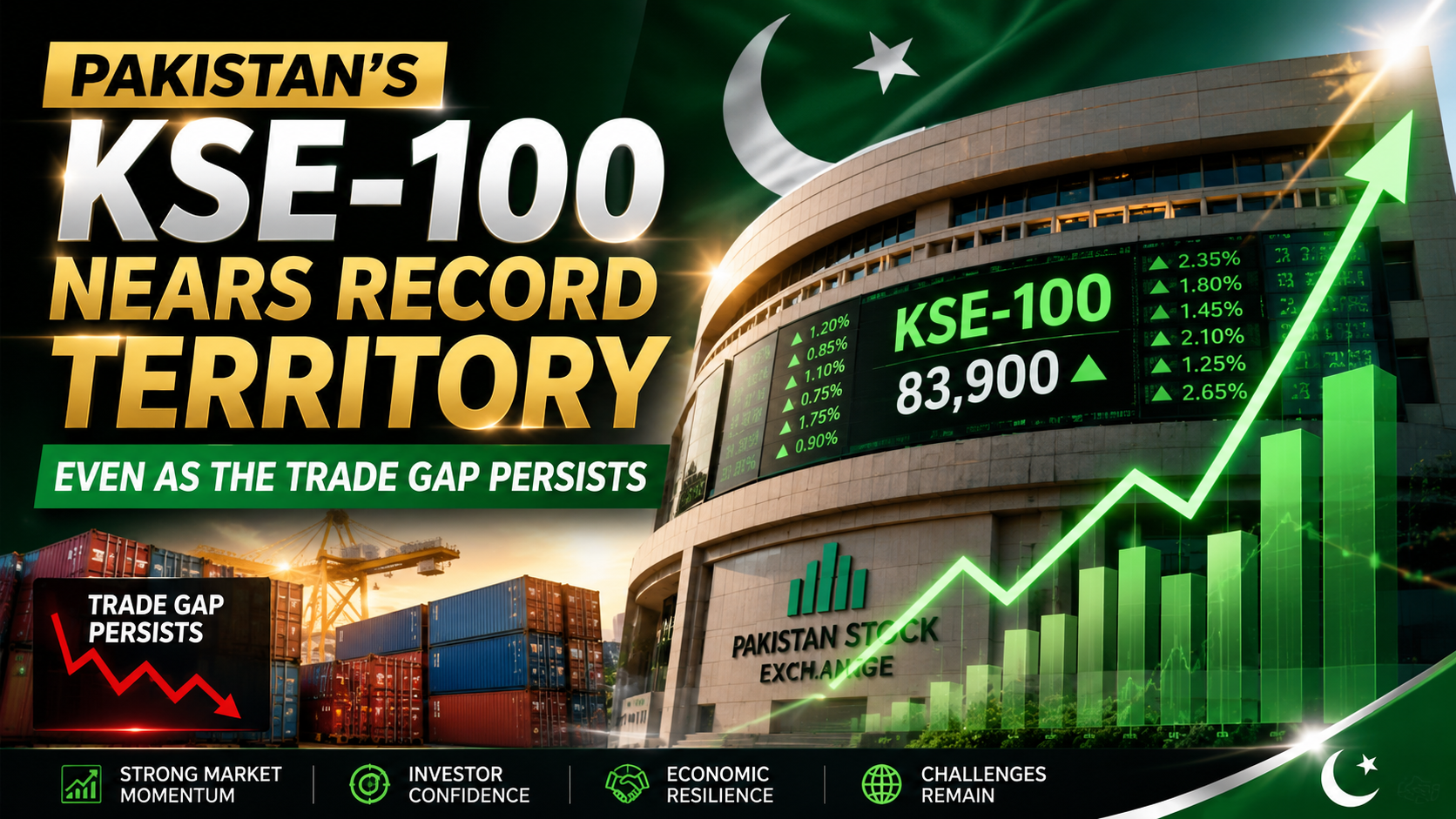
Pakistan’s KSE-100 is up nearly 19% year-on-year and within striking distance of its all-time high — even as the country’s structural trade deficit remains unresolved. Here’s the full picture.
Pakistan’s stock market is delivering one of the more remarkable emerging-market growth stories of 2026, even as the country’s underlying trade imbalance remains a live structural concern. Per Trading Economics, the KSE-100 fell to 178,213 points on August 18, 2026, losing 1.27% from the previous session — but the index remains up 18.99% compared to the same time last year and has climbed 1.30% over the past month, with the index having touched an all-time high of 189,556 points.
Key Takeaways
- The KSE-100 stood at 178,213 points on August 18, 2026, up 18.99% year-on-year, and within range of its all-time high of 189,556.
- The index has gained 10.89% over the past four weeks and 64.89% over the past twelve months by an alternate measure of the same rally.
- The rally is being driven by macro stabilisation, S&P’s credit upgrade (see Article 4), and renewed foreign portfolio inflows.
- Pakistan’s structural trade gap — imports consistently exceeding exports — remains unresolved even as equities rally.
- Historical precedent (2024’s record run) shows KSE-100 rallies have previously been fuelled by the largest foreign equity buying in a decade.
The scale of the multi-year rally is worth putting in context, because Pakistan’s equity market has been one of the standout performers globally over an extended stretch, not just a recent spike. The Trading Economics data shows the index gained 10.89% over a recent four-week window and 64.89% over the trailing twelve months, reaching successive all-time highs through late 2025 and into 2026 — from 170,249 in mid-December 2025 to 170,719 by year-end to 189,556 at its most recent peak.
This isn’t the first time Pakistan’s market has rallied on this scale, and the historical pattern is instructive. A Bloomberg report from a prior cycle describes the KSE-100 closing near a then-record high after gaining more than 30% in a single year, aided by foreign investors’ net purchases of $87 million in local shares — at the time, the highest level of foreign buying since 2014. The current rally, still building on that earlier momentum, reflects a continuation of the same foreign-inflow-driven dynamic, now reinforced by the macro stabilisation narrative detailed in Article 4: S&P’s July 22 upgrade of Pakistan’s sovereign credit rating to ‘B’ from ‘B-‘, alongside a 22-year-low fiscal deficit of 2.6% of GDP.
What the rally does not resolve, however, is Pakistan’s persistent external trade imbalance — a structural feature the equity euphoria sits somewhat uneasily alongside. Pakistan’s own national statistics, summarized on Wikipedia’s Economy of Pakistan page using official data, show exports of $40.79 billion against imports of $78.02 billion in 2025 — a nearly $37 billion gap, with petroleum imports alone totaling $15.1 billion, textiles remaining the dominant export category at $16.3 billion, and China, the UAE and the US as the country’s largest trading partners on both sides of the ledger.
Business press coverage from Business Recorder captures the tension in real time: alongside reporting on the fiscal deficit improvement and credit upgrade, the same outlet has separately reported on Pakistan’s textile mills being “caught in a contradiction they did not design” regarding their European buyers, and on the Finance Division sounding “the alarm over the persistent inflation” even as headline stabilisation indicators improve — evidence that the equity rally and the export-competitiveness challenge are running on genuinely separate tracks, both real, both simultaneously true.
Why It Matters
A market this close to record highs, riding genuine macro-improvement momentum, sends a strong signal to portfolio investors evaluating frontier and emerging markets broadly — but the persistent trade gap is the metric that ultimately determines how much of that momentum translates into durable currency stability and reduced dependence on IMF and bilateral bridge financing.
Data and Evidence
- KSE-100, August 18, 2026: 178,213 points, -1.27% daily, +18.99% YoY, +1.30% over the past month
- KSE-100 all-time high: 189,556 points
- 2025 exports: $40.79bn; 2025 imports: $78.02bn (petroleum: $15.1bn of the total)
- S&P sovereign rating: upgraded to ‘B’ from ‘B-‘ (July 22, 2026)
- FY2025-26 fiscal deficit: 2.6% of GDP, a 22-year low
Global Impact
Pakistan’s equity rally, set against a still-wide trade deficit, is a data point international frontier-market investors weigh alongside similar stabilisation-but-imbalanced stories in other IMF-program economies — a useful comparative lens for any reader tracking emerging-market risk more broadly across this batch’s coverage of Indonesia (Article 11) and other developing economies.
What Happens Next
Watch whether the KSE-100 tests its 189,556 all-time high in the coming weeks, and whether Pakistan’s upcoming trade data shows any narrowing of the export-import gap as the fiscal stabilisation narrative continues to build.
Frequently Asked Questions
Is the KSE-100 at a record high right now?
Not quite — as of August 18, 2026 it stood at 178,213, below its all-time high of 189,556, though up nearly 19% year-on-year.
What’s driving the rally?
Macro stabilisation, the S&P credit rating upgrade, a record-low fiscal deficit, and renewed foreign portfolio inflows.
Does the stock rally mean Pakistan’s economy has fully recovered?
Not entirely — the country’s structural trade deficit, with imports far exceeding exports, remains unresolved.
How big is Pakistan’s trade gap?
Roughly $37 billion in 2025, with imports of $78.02 billion against exports of $40.79 billion.
Has Pakistan’s market rallied like this before?
Yes — a similar rally in 2024 was driven by the largest foreign equity buying in a decade at that time.

US Impeachment Talk and White House Press Secretary Changes: What the Record Shows

2026 Economic Outlook: Investment Tips for Pakistani Investors

Anduril’s $6.6 Billion Submarine Shipyard Plan Explained

Life Insurance Comparison: Term vs. Whole Life and What Each Actually Costs

Stock Market Today: Nasdaq Hits Record High as Dow and S&P 500 Stumble on Middle East Diplomatic Shifts

Energy Market Spikes vs. Consumer App Data: What GasBuddy and Crude Prices Signal for Inflation

China’s FTAAP Push for APEC 2026 in Shenzhen: US Tariffs and Unite Asia-Pacific

AI Stocks Slide After Industry Leaders Call for a Development Slowdown

Singapore Stocks vs. Japan Stocks: Safe Havens in the Asian Economic Slowdown

Agentic AI in Finance: How Artificial Intelligence Is Replacing Routine Tasks on Wall Street

Fiscal Deficit and Public Debt

T-Mobile’s Enterprise Push and the Evolution of Modern Corporate Mobility Solutions

Enterprise Generative AI ROI 2026: The Adoption-to-Impact Gap Explained

Climate Finance and the Economic Reality of Passing 1.5°C
Business Insurance for Digital Exports: Protecting Your Company in the AI Era

Real Estate Crash Predictions 2026: Data-Backed Regional Guide

Unrecoverable Delays: How the St. Louis Strike Crippled Boeing’s F-15EX Eagle II

What is a “Lead-Left” Bank? Unpacking Morgan Stanley’s Role in Anthropic’s Mega-IPO

How to Invest in the Anthropic IPO: Step-by-Step Guide for Retail Investors

Mario Kart 8 Deluxe 4.0.0 Patch Notes: 8-Player Split Screen & CameraPlay

Top 15 Stocks for Investment in 2026 in PSX: Your Complete Guide to Pakistan’s Best Investment Opportunities
Debunking IMF Program Myths: Reconfiguring Engagement for True National Ownership in a Volatile World
China Economy 2026: Property Crisis, AI Investment & Export Surplus Explained
Top 10 Mutual Fund Managers in Pakistan for Investment in 2026: A Comprehensive Guide for Optimal Returns
China’s 50% Domestic Equipment Rule: The Semiconductor Mandate Reshaping Global Tech
What the U.S. Attack on Venezuela Could Mean for Oil and Canadian Crude Exports: The Economic Impact
15 Most Lucrative Sectors for Investment in Pakistan: A 2025 Data-Driven Analysis
Pakistan’s Export Goldmine: 10 Game-Changing Markets Where Pakistani Businesses Are Winning Big in 2025

Pakistan’s Stock Market Renaissance: How 2025’s Hottest Investment Opportunity Is Democratizing Wealth—A Complete Beginner’s Guide
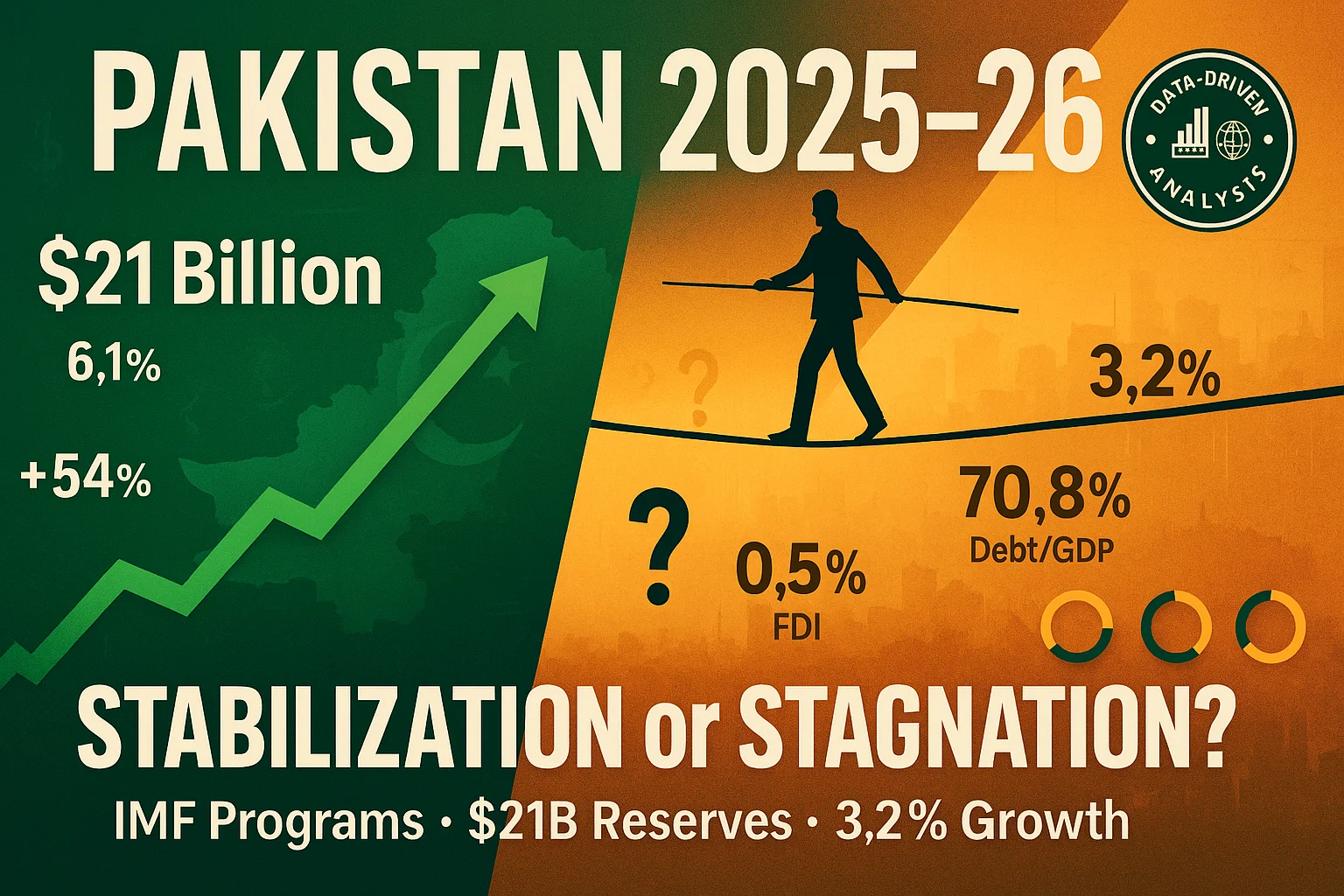
Pakistan’s Economic Outlook 2025: Between Stabilization and the Shadow of Stagnation

The Institutional Era: A Comprehensive Cryptocurrency Investment Analysis for 2026
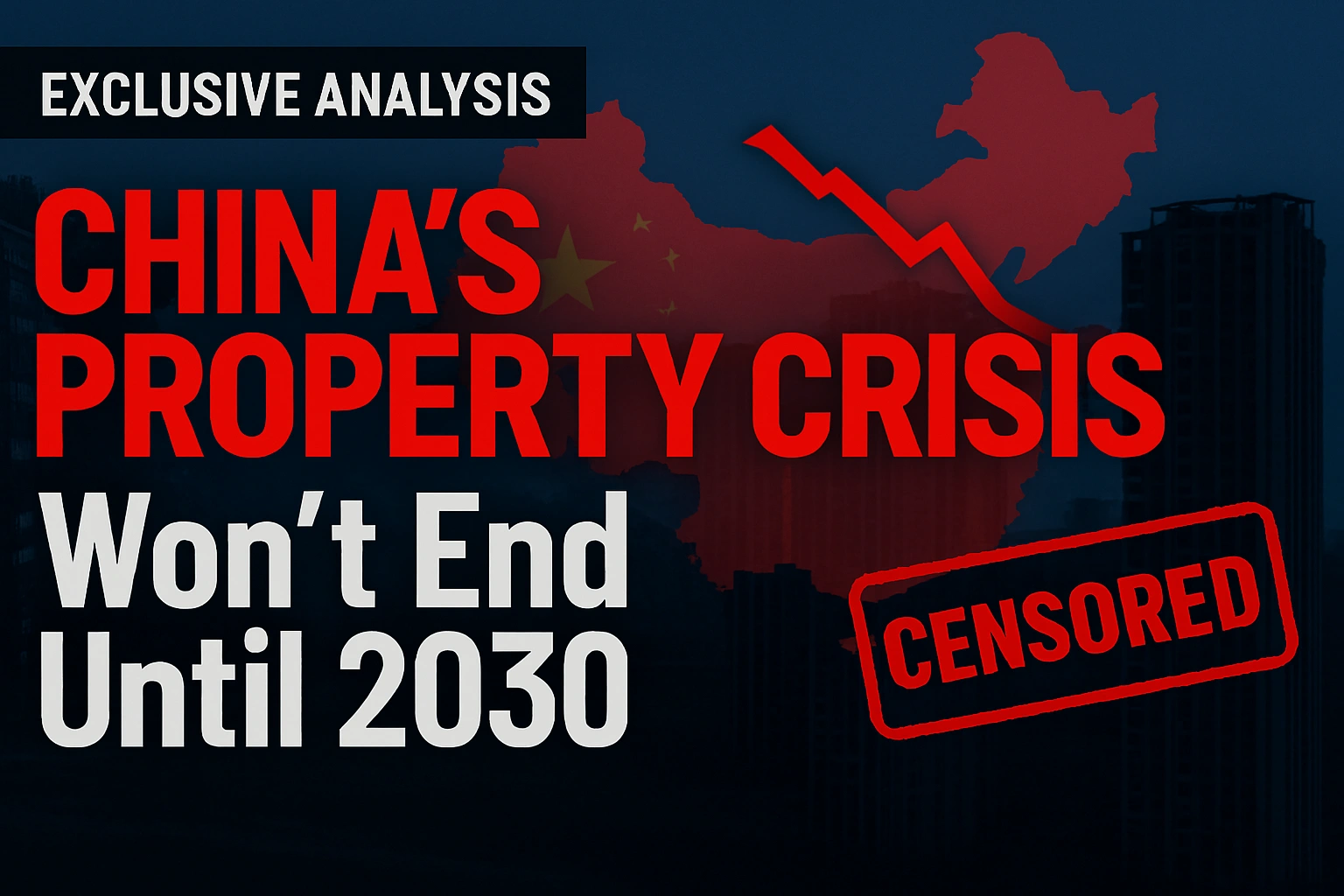
China’s Property Woes Could Last Until 2030—Despite Beijing’s Best Censorship Efforts
Real Estate Crash Predictions 2026: Data-Backed Regional Guide

Best Investments in Pakistan 2026: Top 10 Low-Price Shares and Long-Term Picks for the PSX

How to Become an Active Taxpayer on Pakistan’s FBR Active Taxpayer List (ATL) in 2026: A Step-by-Step Guide
DBS Hits S$1 Billion AI Value Milestone — But Agentic AI Poses Talent Challenges for Singapore Banks
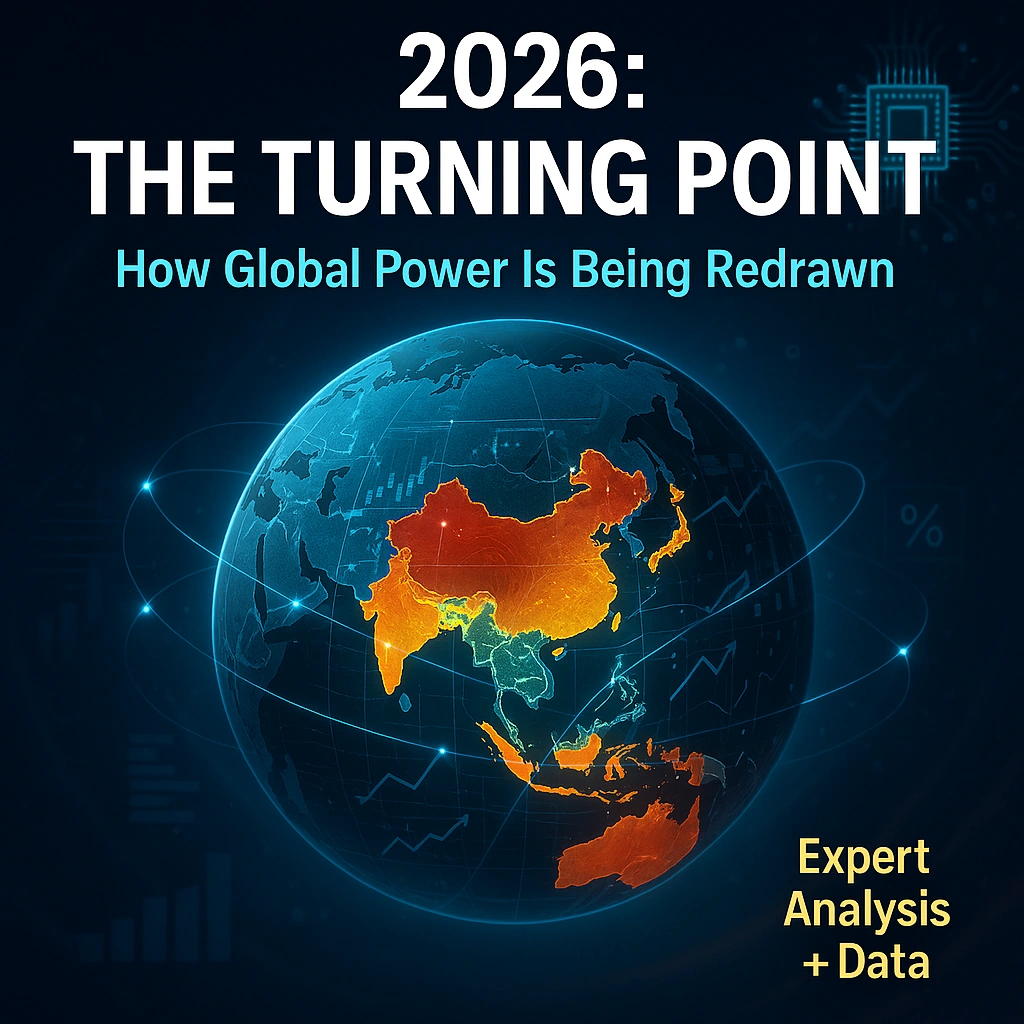
The Contours of 21st-Century Geopolitics Will Become Clearer in 2026: A New World Is Starting to Emerge

🌍 Davos 2026: The World Economic Forum Annual Meeting Sets the Stage for Global Transformation
Agentic AI in Finance: How Artificial Intelligence Is Replacing Routine Tasks on Wall Street

AI Impact on Wages 2026: Productivity Soars, Paychecks Stagnate
-
Markets & Finance10 months ago
Top 15 Stocks for Investment in 2026 in PSX: Your Complete Guide to Pakistan’s Best Investment Opportunities
-
Analysis9 months ago
Debunking IMF Program Myths: Reconfiguring Engagement for True National Ownership in a Volatile World
-
Analysis4 months ago
China Economy 2026: Property Crisis, AI Investment & Export Surplus Explained
-
Investment10 months ago
Top 10 Mutual Fund Managers in Pakistan for Investment in 2026: A Comprehensive Guide for Optimal Returns
-
Asia10 months ago
China’s 50% Domestic Equipment Rule: The Semiconductor Mandate Reshaping Global Tech
-
Global Economy10 months ago
What the U.S. Attack on Venezuela Could Mean for Oil and Canadian Crude Exports: The Economic Impact
-
AI10 months ago
15 Most Lucrative Sectors for Investment in Pakistan: A 2025 Data-Driven Analysis
-
Exports10 months ago
Pakistan’s Export Goldmine: 10 Game-Changing Markets Where Pakistani Businesses Are Winning Big in 2025