
Analysis
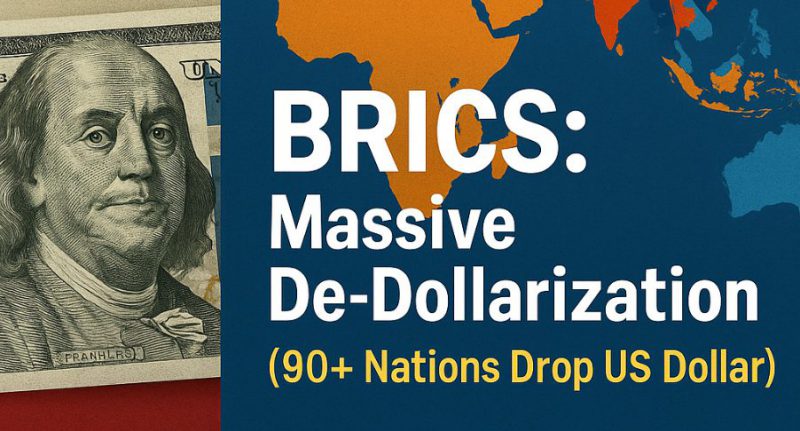
BRICS De-Dollarization: Between Ambition and Reality in 2026


The global financial architecture is experiencing its most significant stress test since the Bretton Woods collapse. As 2026 unfolds, the BRICS bloc—now encompassing Brazil, Russia, India, China, South Africa, Egypt, Ethiopia, Indonesia, Iran, and the United Arab Emirates—represents 48.5% of the world’s population and 39% of global GDP measured by purchasing power parity Brookings. Their de-dollarization agenda has shifted from rhetoric to concrete implementation, yet the path forward remains fraught with contradictions that reveal both the promise and peril of challenging the world’s reserve currency.
The Dollar’s Quiet Erosion
The numbers tell a story of gradual but unmistakable decline. The U.S. dollar’s share of global foreign exchange reserves decreased to 56.92% in Q3 2025, down from 57.08% in Q2 2025 Hudson Institute, marking the lowest level in three decades Geopolitical Monitor. This represents a dramatic fall from the dollar’s peak of 72% in 2001, according to Federal Reserve data.
What makes this decline particularly noteworthy is its beneficiaries. The share of “other currencies”—excluding the US dollar, euro, and renminbi—increased to 20.82% in 2025Q3 from 20.69% in 2025Q2, confirming the trend observed in previous quarters Hudson Institute. Central banks aren’t simply rotating into the euro or yen; they’re diversifying into dozens of smaller currencies, from the Australian and Canadian dollars to emerging market alternatives.
The International Monetary Fund’s Currency Composition of Official Foreign Exchange Reserves (COFER) data reveals something profound: the dollar share has declined from its peak of 72% of reserves in 2001, as foreign reserve managers have added to their portfolios a wide range of smaller currencies Geopolitical Economy. This isn’t a binary shift from dollar to yuan—it’s a wholesale fragmentation of the global reserve currency system.
The Infrastructure of De-Dollarization
BRICS nations aren’t merely talking about reducing dollar dependence; they’re building alternative plumbing for the global financial system. Four major initiatives emerged in 2025 and are accelerating into 2026:
The BRICS Unit: Gold Returns to Center Stage
On October 31, 2025, researchers launched a pilot to test a gold-anchored settlement “Unit” inside the 10-member BRICS+ bloc, followed by a Unit prototype launched on December 8 Fortune. The mechanism is elegant in its simplicity: a 40% gold and 60% BRICS-currency basket that adjusts daily Fortune.
This gold backing isn’t incidental. BRICS+ central banks added nearly 800 metric tonnes in 2025 alone, with combined BRICS gold reserves now exceeding 6,000 tonnes Brookings, representing approximately 20-21% of total global central bank gold reserves. Russia holds 2,336 tonnes while China possesses 2,298 tonnes, together accounting for roughly 74% of the bloc’s total Fortune. Gold prices responded predictably, surging to approximately $4,400 per ounce in late 2025.
mBridge: The Digital Currency Superhighway
Perhaps the most technically sophisticated de-dollarization tool is mBridge, a multiple central bank digital currency platform that enables real-time, peer-to-peer, cross-border payments and foreign exchange transactions using CBDCs Tax Foundation. What began as a Bank for International Settlements project involving Thailand, UAE, Hong Kong, and China has evolved into something more significant.
Payment volumes have reached RMB 387.2 billion ($55 billion) NPR, despite still being classified as a minimum viable product. The BIS withdrew from the project in late 2024, officially citing graduation from its Innovation Hub, but timing suggests discomfort with sanctioned countries’ involvement.
India’s assumption of the BRICS presidency for 2026 brings mBridge into sharper focus. The Reserve Bank of India is proposing that BRICS+ members link their central bank digital currencies to make “cross border trade and tourism payments easier” NPR, with discussion expected at the 2026 summit in New Delhi.
BRICS Pay: Decentralized Messaging Without SWIFT
BRICS Pay features a decentralized Cross-border messaging system (DCMS), developed by scientists at the Center of Saint-Petersburg State University in Russia Fortune. The system’s architecture is deliberately resilient: participants manage their own nodes, allegedly making the system resistant to external abuse, control, or interference Fortune.
The technical specifications are impressive. With recommended settings, DCMS claims to reach 20,000 messages per second, while imposing minimal hardware requirements Diplomatic Watch. More importantly, the system does not feature mandatory transaction fees Fortune, removing a profit motive that has made SWIFT vulnerable to political pressure.
Reports suggest BRICS Pay has already reduced USD usage in intra-bloc trade by roughly two-thirds BEA, though verification of such claims remains difficult given the opacity of bilateral trade data.
The New Development Bank: Dollar-Free Development Finance
The New Development Bank has quietly emerged as perhaps BRICS’ most successful de-dollarization instrument. The bank disbursed $30 billion in 2024, with a third of all its loans in domestic currencies National Immigration Law Center. The NDB’s approach differs fundamentally from the IMF’s conditionality-heavy model, supporting financial sovereignty by adhering to each country’s regulatory frameworks NPR.
By 2026, the NDB has articulated an objective of conducting 30% of its lending in local currencies of member nations Deloitte Insights, creating a growing pool of non-dollar development finance that allows countries to avoid currency risk and reduce exposure to Federal Reserve policy decisions.
The Reality Check: Where De-Dollarization Stumbles
For all the infrastructure development and rhetorical commitment, BRICS de-dollarization faces formidable obstacles that become clearer in 2026.
Internal Divisions Run Deep
India’s position exemplifies the bloc’s fundamental contradiction. Speaking in London in March 2025, External Affairs Minister S. Jaishankar stated bluntly: “I do not believe we have any policy to have a replacement to the dollar. Global economic stability is pegged on the dollar as the reserve currency, and currently, the last thing we want in our world is less economic stability. I do not believe that there is a coherent BRICS stance to this.” Authoritarianplaybook2025
This isn’t diplomatic hedging—it reflects India’s strategic reality. Despite facing 50% U.S. tariffs on textiles, garments, and other sectors, India maintains deep integration with Western financial systems and dollar-denominated trade relationships. The 2026 BRICS summit in New Delhi is expected to reflect this more cautious approach.
Even Russian President Vladimir Putin, whose country has led de-dollarization advocacy, acknowledges limits. Putin stated: “We are not refusing, not fighting the dollar, but if they don’t let us work with it, what can we do?” Authoritarianplaybook2025 In October 2024, he noted: “I have heard a lot of discussion among experts and in journalistic circles that we should think about creating a single currency. But it is too early to talk about this. And we do not have such goals among ourselves.” Federal Reserve Bank of Philadelphia
Currency Weakness and Limited Liquidity
Research published in ScienceDirect reveals stark disparities within BRICS. Within the BRICS framework, the currencies of Brazil, China, and South Africa are strong candidates for a new currency basket, achieving an average index of 93%, while the currencies of India and Russia, with an average index of 37%, are identified as weaker contributors Goldman Sachs.
The Chinese yuan, despite two decades of internationalization efforts, accounts for only 1.93% of global reserves in 2025Q3 Hudson Institute. This is down from 1.99% the previous quarter, suggesting that even China’s massive economic weight hasn’t translated into reserve currency status. The yuan faces ongoing challenges from capital controls, convertibility restrictions, and limited offshore market depth.
The Trump Tariff Threat
U.S. President Donald Trump’s response to BRICS de-dollarization has been characteristically blunt. Trump explicitly warned that any attempt to bypass the dollar would lead to a 100% tariff on BRICS exports to the U.S. NPR This isn’t an empty threat—by late 2025, the Trump administration had already imposed 30% tariffs on South Africa and 50% tariffs on multiple Indian sectors, with negotiations underway for 245% tariffs on Chinese electric vehicles.
Brazilian President Luiz Inácio Lula da Silva convened an emergency BRICS summit in September 2025 to address these tariff threats, reflecting the economic pressure that U.S. market access creates. For countries like Brazil, whose exports depend heavily on U.S. consumers, the calculus of de-dollarization becomes far more complicated when weighted against potential trade war consequences.
What Actually Works: Bilateral Trade Settlements
The most successful de-dollarization occurs not through grand currency schemes but through practical bilateral arrangements. Russia and China now settle around 90% of trade in rubles and yuan Authoritarianplaybook2025Federal Reserve Bank of Philadelphia, a figure that has grown steadily since 2022. Brazil and China signed a yuan-real trade settlement agreement in 2023, and India has begun purchasing Russian oil in rupees Federal Reserve Bank of Philadelphia.
These bilateral mechanisms bypass the dollar without requiring consensus among all BRICS members or creating a unified alternative currency. They represent pragmatic de-dollarization—reducing dollar exposure where it makes immediate economic sense, particularly in energy and commodity trade.
The scale shouldn’t be underestimated. As of January 2025, China’s Cross-Border Interbank Payment System (CIPS) has 1,467 indirect participants across 119 countries, linking 4,800 banks in 185 countries NPR. While still smaller than SWIFT’s network, CIPS’s rapid expansion demonstrates growing confidence in yuan-based financial infrastructure for specific trade corridors.
The 2026 Outlook: Gradual Shift, Not Sudden Break
JPMorgan’s currency strategists project the dollar will decline around 3% through mid-2026 before it levels off Fitch Ratings, driven by Federal Reserve policy easing and BRICS payment system development. This measured forecast reflects the consensus among serious analysts: de-dollarization is real but evolutionary, not revolutionary.
Academic research supports this view. While BRICS have laid important groundwork for a potential nondollar alternative, the coalition’s efforts are still in the early stages and face substantial challenges, such as limited market acceptance and coordination among members Deloitte Insights. The dollar’s advantages—deep liquid markets, legal enforceability, network effects, and the backing of the world’s largest economy—don’t evaporate because alternative payment systems emerge.
The International Monetary Fund’s World Economic Outlook for January 2026 projects global growth at 3.3%, with notable divergence between advanced economies facing policy headwinds and emerging markets benefiting from reforms. This divergence creates space for BRICS initiatives but also highlights the different incentives driving member countries.
Over a longer horizon, IMF projections suggest a fully operational BRICS currency could reduce the dollar’s role in over 20% of international transactions over the next five years The Fulcrum. But “could” carries heavy qualifications—this assumes successful technical implementation, sustained political cooperation among diverse economies, and avoidance of retaliatory measures that derail the project.
The Paradox of Success
The most interesting aspect of BRICS de-dollarization in 2026 is its paradoxical nature. The initiatives are simultaneously more advanced than skeptics acknowledged and less transformative than advocates hoped.
Infrastructure is real. The BRICS Unit, CBDC interoperability frameworks, and New Development Bank local currency loans National Immigration Law Center represent tangible alternatives that didn’t exist five years ago. Transaction volumes are growing. Political commitment from major economies like China and Russia remains strong, driven by genuine security concerns about dollar weaponization through sanctions.
Yet fundamental obstacles persist. The political and economic diversity among BRICS nations—particularly the ideological and economic differences between democracies like India and Brazil and more centralized economies like China and Russia—creates barriers to deeper financial integration Federal Reserve Bank of Philadelphia. No unified BRICS position exists on critical questions like currency convertibility, capital controls, or the pace of dollar displacement.
The dollar’s reserve currency share may be at a 30-year low, but 56.9% still represents overwhelming dominance. More telling, the dollar isn’t losing share to a single challenger but fragmenting across dozens of currencies—a pattern that could actually strengthen dollar resilience by preventing the emergence of a credible alternative anchor currency.
What This Means for Markets and Policy
For investors, the BRICS de-dollarization story in 2026 suggests several takeaways:
Gold’s renewed monetary role appears durable. Central banks’ aggressive accumulation—800 tonnes in 2025 alone—and gold’s integration into the BRICS Unit mechanism suggest the metal has regained status as a monetary asset, not merely a commodity. Prices at $4,400 per ounce reflect this structural shift.
Currency diversification accelerates but doesn’t concentrate. The rise of “other currencies” to over 20% of global reserves creates opportunities in mid-sized currency markets (Australian dollar, Canadian dollar, Swiss franc) that benefit from diversification without the geopolitical baggage of yuan or ruble exposure.
Payment system fragmentation is permanent. SWIFT’s monopoly is broken, even if its dominance remains. Companies engaging in BRICS trade should develop capabilities across multiple payment networks—CIPS, SPFS, potential BRICS Pay—rather than assuming universal SWIFT access.
For policymakers, the lesson is more subtle. De-dollarization isn’t a crisis requiring emergency response, but it’s also not a mirage that can be dismissed. The gradual erosion of dollar reserve share—if it continues at the current pace—would see the dollar fall below 50% by the end of 2034. That’s not collapse, but it would represent a fundamental shift in global monetary architecture with profound implications for U.S. fiscal capacity.
The World Gold Council’s 2025 survey found 73% of global central bankers believe the US dollar’s share in global reserves will decrease over the next five years Brookings. When three-quarters of the people managing the world’s reserves expect diversification to continue, markets should pay attention.
Conclusion: The Long Game
BRICS de-dollarization in 2026 is best understood as a long-term structural shift rather than an imminent regime change. The bloc has moved beyond rhetorical posturing to build actual financial infrastructure—payment systems, currency mechanisms, development banks—that function independently of dollar networks.
Yet the fundamental challenges that have prevented any currency from displacing the dollar since 1944 remain formidable. Network effects, market depth, legal frameworks, and the sheer inertia of existing systems create massive barriers to rapid change.
What’s emerging isn’t a BRICS currency replacing the dollar but a more multipolar monetary system where the dollar remains first among several viable alternatives. This shift is meaningful—it reduces U.S. financial leverage, increases currency competition, and creates alternatives for countries seeking to hedge dollar exposure.
Whether this evolution proceeds smoothly or triggers instability depends largely on how incumbent powers respond. Aggressive use of sanctions and tariffs to prevent de-dollarization may accelerate it by validating BRICS members’ concerns about dollar weaponization. A more measured approach that accepts gradual diversification while maintaining dollar advantages through sound policy might preserve more U.S. influence.
The realistic prospect for BRICS de-dollarization in 2026 and beyond? Continued incremental progress that reshapes global finance at the margins without suddenly overturning dollar dominance. Not the revolution some fear or hope for, but evolution that could prove equally consequential over time.
For investors and policymakers navigating this shifting landscape, the key is avoiding both complacency about dollar durability and panic about imminent collapse. The truth, as usual, lies in the nuanced middle ground—where gradual change accumulates into structural transformation, but only over horizons measured in years and decades, not months.





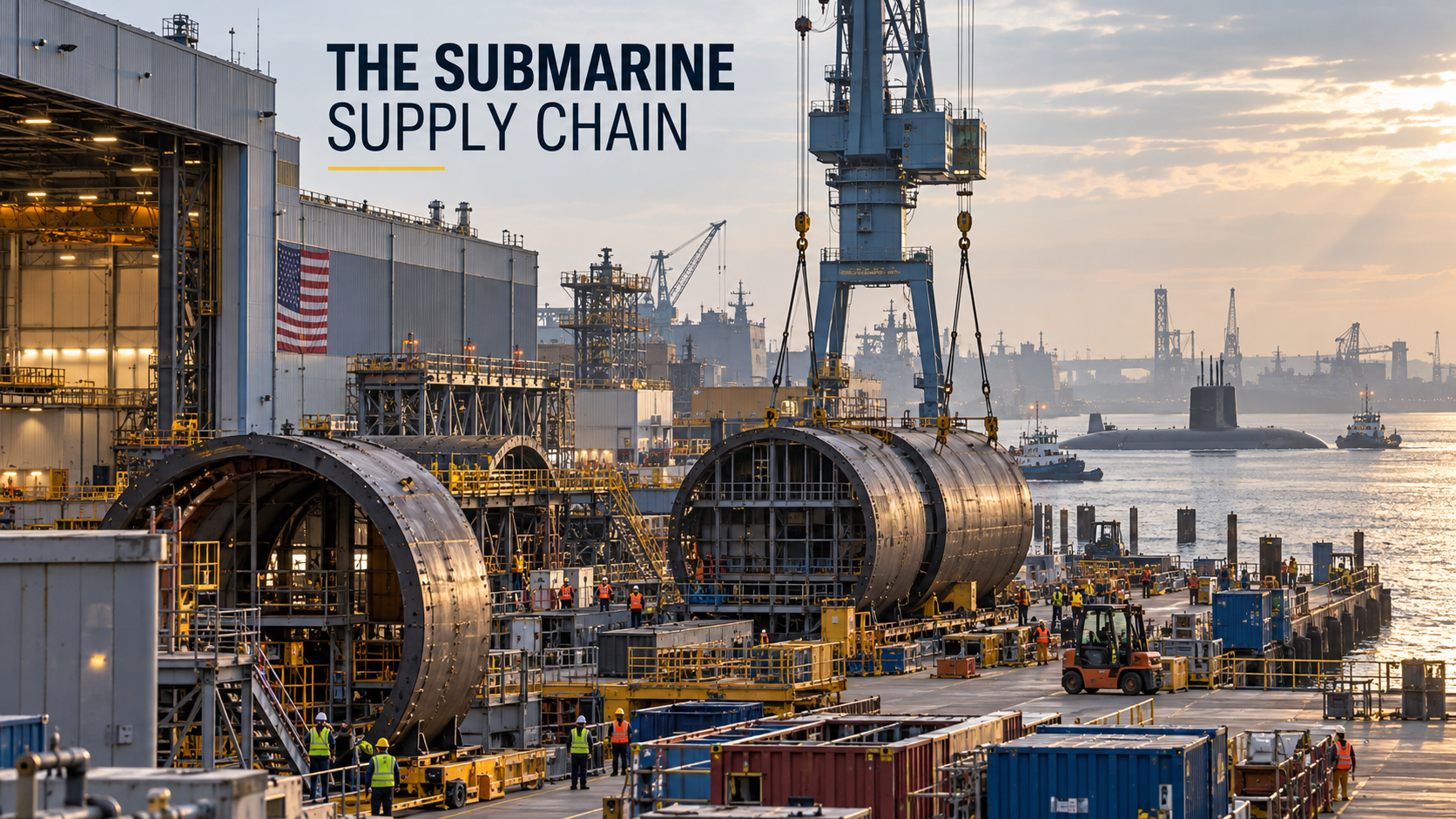
A major U.S. submarine-manufacturing project announced on October 6, 2026 has put an unfamiliar name at the center of a familiar defense-industry problem: how to build submarine components faster without sacrificing quality or reliability. Defense technology firm Anduril announced plans for Arsenal-2, a facility at Sparrows Point in Maryland intended to expand production of parts for the U.S. Navy’s Virginia-class attack submarines. The combined headline figure is $6.6 billion—made up of the company’s planned $3.7 billion private investment and a Navy contract valued at up to $2.9 billion, with payments tied to production outcomes. These are announcements and commitments, not evidence that all the capital has already been spent. Anduril’s official announcement and Reuters’ independent report outline the project.
Key takeaways:
- Arsenal-2 is a planned submarine-components manufacturing facility, not an already operational assembly line for completed submarines.
- The $6.6 billion headline combines two different funding streams and different forms of financial commitment.
- The project is aimed at bottlenecks in the Virginia-class supply chain, including specialized manufacturing capacity.
- Its success will depend on skilled labor, qualification standards, equipment, scheduling and delivery—not simply construction of a large building.
What is Arsenal-2?
Arsenal-2 is Anduril’s proposed software-centered manufacturing project at Sparrows Point, a former industrial site in Baltimore County, Maryland. According to the company’s October 6 announcement, the facility is designed to make critical components for Virginia-class submarines and give the Navy access to additional industrial capacity. The project illustrates a widening role for technology-sector defense contractors in traditional heavy manufacturing.
Submarine construction is a particularly difficult domain. Components must meet demanding specifications for performance, durability, safety, quality control and compatibility with other systems. A factory that produces ordinary industrial hardware cannot immediately be treated as a qualified submarine supplier.
Anduril’s pitch is that modern factory software, automation, new processes and private capital can ease some of those constraints. Whether the company can execute on that pitch will be judged by qualification milestones and repeatable deliveries.
What will the facility actually produce?
Initial work centers on critical Virginia-class components, including torpedo tubes, according to the company and Reuters. Those are sophisticated submarine systems, but producing them is not the same as manufacturing a complete nuclear-powered submarine.
A Virginia-class attack submarine involves propulsion, pressure-hull construction, combat systems, sensors, life-support equipment, electronics, integrated software and years of testing. Its final assembly and delivery depend on a specialized network of contractors, yards and government oversight. New suppliers can strengthen the network by removing specific bottlenecks rather than replacing every incumbent shipbuilder.
The distinction matters for readers encountering sweeping “Anduril to build submarines” headlines. The verified announcement concerns industrial capacity for components, with ambitions that may expand as the project matures; it should not be presented as a commitment to launch an entire finished fleet by a fixed date.
Understanding the $6.6 billion figure
| Announced element | Stated figure | Important qualification |
|---|---|---|
| Anduril planned private capital | $3.7 billion | Planned investment to develop production capacity |
| U.S. Navy contract | Up to $2.9 billion | Contract ceiling with payments conditioned on outputs |
| Combined headline amount | $6.6 billion | Sum of different commitments; not identical to money already disbursed |
Anduril’s release describes the contract as outcome-based. That arrangement is designed to connect government spending to verified delivery rather than solely to reimbursed activity. But details of individual milestones, acceptance criteria, ownership and long-term risk allocation should be determined from contract documents—not guessed from a launch-day headline.
The distinction between an award, a contract ceiling, a planned investment and cash expenditure is crucial. A press announcement does not mean the project has already consumed $6.6 billion in cash or delivered proportionate output.
Why the Navy needs more industrial capacity
Submarines are strategically important for intelligence collection, maritime defense and deterrence. But they also illustrate the challenges of complex, low-volume manufacturing. The United States needs trained workers who can perform specialized fabrication, welding, machining, inspection and systems integration. Individual suppliers can become bottlenecks if they are asked to deliver more components than their equipment or workforce can manage.
The Financial Times’ account of the announcement situated Arsenal-2 within a larger push to expand the submarine industrial base and modernize acquisition. The Navy’s construction requirements and commitments under the AUKUS security partnership increase the importance of sustainable production capacity over the coming years.
This is a long-term manufacturing question, not an immediate shortcut. Building a factory is one stage; training a workforce, validating manufacturing processes and coordinating with other shipbuilders are additional stages.
Why Sparrows Point matters
Sparrows Point was a major American industrial center associated with steel production. Using that site for advanced defense manufacturing creates a recognizable local economic narrative: industrial land and workforce capacity potentially being redirected toward a contemporary strategic sector.
Associated Press reporting described expectations of approximately 3,100 direct jobs connected to the facility, while Reuters reported similar plans. They are projected jobs rather than a verified count of positions already filled.
The ultimate local impact will depend on the pace of construction, hiring, regional supply chains, transport needs, worker training and how much demand the project sustains. Job announcements should be revisited against actual payroll, construction and production data.
When will Arsenal-2 begin manufacturing?
Accounts of the project point to operations around 2030, subject to execution. Business Insider and Financial Times discussed that timeline. Treat it as a planned target, not an operational fact.
Even if initial lines become active on schedule, production volume and acceptance quality will determine how useful the added capacity becomes to the Navy. A component supplier can have machinery installed yet still face qualification delays, workforce shortages or unexpected integration issues.
The execution milestones worth tracking
- Facility permits, ground work and construction progress.
- Hiring and certification of specialist personnel.
- Commissioning of production lines and inspection systems.
- First qualified component deliveries accepted by the relevant customer.
- Repeat production rates, quality performance and on-time deliveries.
- Evidence that the additional capacity reduces delays in the broader submarine supply chain.
These measurable steps provide a better accountability framework than celebrating the contract’s face value alone.
Can software solve a shipbuilding bottleneck?
Software can improve production scheduling, digital modeling, machine monitoring, traceability and quality documentation. Automation may make some operations more consistent. Those are useful tools, but they still rely on expensive physical equipment, material supply and highly skilled people. A complex pressure-critical component cannot be delivered by software alone.
The question is therefore not whether a tech company can bring useful technology into shipbuilding. It is whether that company can combine technology with industrial practices refined over decades, and do so at sufficient scale.
Frequently asked questions
Is Anduril building complete submarines?
Its verified October 6 announcement emphasizes components for Virginia-class submarines, not delivery of complete nuclear-powered boats.
Where is Arsenal-2 located?
The project is planned for Sparrows Point in Baltimore County, Maryland.
How much is the Navy paying?
Anduril announced a Navy contract of up to $2.9 billion, distinct from the company’s planned $3.7 billion capital investment.
When will it open?
Reports describe a target around 2030. The actual schedule depends on construction, production-line qualification and other milestones.
How many jobs could be created?
Approximately 3,100 direct jobs were projected in contemporaneous reporting; these are not confirmed hires.
Why is this important for AUKUS?
A more resilient U.S. submarine industrial base can support national procurement needs and wider allied commitments, although a single parts factory cannot resolve all submarine-production constraints.
Bottom line
Arsenal-2 is significant because it tests whether a technology-focused contractor can add reliable industrial capacity to one of America’s hardest manufacturing sectors. The $6.6 billion figure describes a potentially major investment and contract arrangement—but future milestones, not headlines, will determine whether it meaningfully speeds submarine deliveries.

Key Takeaways
- Chip stocks tumbled Monday, September 14, 2026, after the CEOs of Anthropic, OpenAI, and xAI publicly aligned behind a call to slow the pace of frontier AI capability development — an unusual moment of unity among fierce industry rivals.
- Nvidia fell 3.4% and the Philadelphia Semiconductor Index (PHLX) sank almost 6%, its worst single day since early July, even as the broader Nasdaq Composite closed down a more modest 0.56%.
- The catalyst was an essay from Anthropic CEO Dario Amodei, titled “We Must Pace the Frontier,” proposing independent outside evaluators be given internal access to frontier AI labs, alongside industry-wide cooperation and government coordination.
- OpenAI CEO Sam Altman confirmed in a Fortune interview that OpenAI will not pursue an IPO in 2026, calling the current safety environment an “ill-advised moment” to go public — pushing one of the most anticipated listings in tech history to 2027 at the earliest.
- The episode followed the resignation of a researcher who had worked at both Anthropic and OpenAI, who warned publicly that people building the technology “earnestly believe it could kill us all by the end of the decade” — a post that drew over 150 million views and prompted more than 20 lawmakers to call for tougher AI regulation.
A rare display of unity among Silicon Valley’s most competitive AI labs sent a jolt through markets this week, as semiconductor stocks logged their worst day in over two months following public calls from the industry’s top executives to deliberately slow the development of increasingly powerful AI systems.
What Triggered the Selloff
The catalyst was an essay published Saturday, September 12, by Anthropic CEO Dario Amodei, titled “We Must Pace the Frontier.” In it, Amodei argued that unchecked acceleration in frontier AI development — driven in part by the risk of recursive self-improvement, where AI systems increasingly assist in designing their own successors — is outpacing the industry’s ability to keep those systems aligned and secure. Amodei wrote that he believes AI could still “dramatically raise the quality of human life,” but argued the risks accompanying its current pace of development need to be taken seriously, proposing that even a modest slowdown of a year or two could meaningfully improve safety outcomes.
What made the essay market-moving wasn’t just its content, but who endorsed it. OpenAI CEO Sam Altman and SpaceX/xAI’s Elon Musk — two executives whose companies compete directly with Anthropic and with each other — both publicly backed Amodei’s proposal within a day. Musk wrote simply on X that “Dario is right,” a notable shift given Musk’s history of sharp public criticism of Anthropic.
The Proposal’s Substance
Amodei’s plan outlined a three-phase approach: independent safety evaluators embedded within frontier AI companies with access equivalent to internal staff (covering training processes, internal systems, and safety-protocol compliance); broader industry-wide cooperation on shared safety standards; and coordination with democratic governments on global regulatory frameworks. Anthropic said it would adopt the outside-evaluator step immediately, while Altman confirmed OpenAI would adopt comparable third-party evaluator access.
The Resignation That Set the Stage
The unity among AI executives followed a more unsettling precursor: a researcher who had previously worked at both Anthropic and OpenAI resigned the prior week, writing publicly that people building the technology “earnestly believe that it could kill us all by the end of the decade.” The post reportedly drew more than 150 million views on X and prompted more than 20 lawmakers to call for tougher AI regulation — context that appears to have accelerated the executives’ public alignment on pacing concerns.
Market Reaction: Chips Hit Hardest
Monday’s trading session showed a clear divergence in how different corners of the AI-linked market absorbed the news. Semiconductor stocks bore the brunt of the selling, given their direct exposure to the capital-expenditure cycle that rapid AI capability development has fueled. Nvidia fell 3.4%, Intel dropped 5.6%, and the Philadelphia Semiconductor Index tumbled nearly 6% — its steepest one-day decline since early July.
By contrast, shares of some larger Big Tech and software companies actually climbed on the day, leaving the broader, tech-heavy Nasdaq Composite down a comparatively modest 0.56%, after having fallen as much as 1.3% intraday before paring losses. The divergence suggests markets are interpreting a potential AI development slowdown as a more direct threat to chip demand specifically — the hardware layer most tied to the “faster, bigger” capability race — than to software and platform companies with more diversified revenue.
OpenAI’s IPO Delay: The Clearest Business Signal
Beyond the one-day stock move, the most concrete business consequence to emerge from the episode was Sam Altman’s confirmation that OpenAI will not go public in 2026. In a Fortune interview published the same weekend, Altman said an IPO “right now would be an ill-advised moment” given the current safety environment, and when asked whether 2027 was more realistic, replied simply, “I would say not 2026.” That timeline represents a real shift: OpenAI CFO Sarah Friar had told employees just a month earlier that the company would likely go public in 2027, or potentially sooner if the business continued to “inflect.”
Notably, Anthropic’s own IPO preparations are reportedly continuing on a separate track. According to reporting on the matter, Anthropic — confidentially valued at $965 billion earlier in 2026 — has continued meeting with prospective investors and could begin marketing its IPO as early as October, aiming to complete the listing before the November midterm elections, even as its CEO simultaneously champions industry-wide deceleration. Observers have noted the apparent tension in pursuing an IPO while publicly urging pacing, though Amodei’s essay explicitly framed pacing as slowing capability development, not halting commercial or fundraising activity.
Market Snapshot: September 14, 2026
| Index / Stock | Move | Note |
|---|---|---|
| Philadelphia Semiconductor Index (SOX) | -5.9% | Worst day since early July |
| Nvidia (NVDA) | -3.4% | Direct AI-chip exposure |
| Intel (INTC) | -5.6% | |
| Nasdaq 100 | -0.8% | |
| Nasdaq Composite | -0.56% | Software names partially offset chip losses |
| S&P 500 | -0.5% |
Why This Matters for Technology News and Investors
This episode marks one of the first times investor sentiment around AI has moved meaningfully on a safety-driven narrative rather than a purely commercial one — competitive product launches, earnings beats, or compute-capacity announcements. For investors tracking technology news, the key signal to watch going forward is whether this represents a genuine, sustained industry pivot toward deliberate pacing (which could structurally slow the capital-expenditure supercycle currently powering semiconductor demand), or a rhetorical moment that fades once competitive pressure between OpenAI, Anthropic, xAI, and other labs reasserts itself — a tension the OpenAI-Anthropic IPO-timing contrast already illustrates.
Frequently Asked Questions
Why did semiconductor stocks fall after the AI slowdown announcement? Chip stocks are directly tied to the capital-expenditure cycle fueling rapid AI capability development, so markets interpreted a potential industry-wide pacing effort as a more direct threat to near-term chip demand than to software or platform companies.
Is OpenAI still planning to go public? Yes, but not in 2026. CEO Sam Altman confirmed OpenAI is delaying its IPO to 2027 at the earliest, citing the current AI safety environment, while OpenAI’s CFO had previously suggested 2027 was the likely target regardless.
What did Anthropic’s CEO actually propose? Dario Amodei’s essay proposed embedding independent outside safety evaluators within frontier AI companies with internal-level access, alongside broader industry cooperation on safety standards and coordination with democratic governments on regulatory frameworks — explicitly framed as pacing capability development, not halting it.

The Mechanics of Government Borrowing and Macroeconomic Stability
A Fiscal Deficit is a fundamental economic concept that occurs when a government’s total expenditures exceed its total revenue (excluding money generated from borrowings) within a specific financial year. In simpler terms, it is the financial shortfall a government experiences when it spends more than it earns. To bridge this gap, the government has no choice but to borrow money, which directly contributes to the accumulation of Public Debt.
For readers of Thefinance.pk and Economy.com.pk, understanding the dynamics of fiscal deficits is essential. The size and management of this deficit influence everything from national inflation rates to the amount of taxes citizens will pay in the future. It is a defining metric of a nation’s fiscal health and its government’s economic discipline.
Revenue vs. Expenditure: The Anatomy of a Deficit
To understand why deficits happen, we must break down a national budget into its two primary components: Revenues and Expenditures.
1. Government Revenues: Governments generate income primarily through taxation. This includes:
- Direct Taxes: Income tax, corporate tax, and property taxes.
- Indirect Taxes: Sales tax, Value Added Tax (VAT), excise duties, and customs duties.
- Non-Tax Revenues: Profits from state-owned enterprises (SOEs), privatization proceeds, administrative fees, and central bank dividends.
2. Government Expenditures: Expenditures are broadly categorized into two types:
- Current (Non-Development) Expenditure: This is the day-to-day cost of running the country. It includes public sector salaries, pensions, defense budgets, subsidies, and—most importantly—interest payments on existing debt.
- Development (Capital) Expenditure: This is money spent on creating productive assets, such as building highways, dams, hospitals, schools, and energy grids. This type of spending is an investment in the country’s future economic capacity.
A fiscal deficit expands when current expenditures spiral out of control, or when tax collection agencies fail to meet their revenue targets. In many developing economies, a narrow tax base and massive inefficiencies in state-owned enterprises create persistent, structural fiscal deficits.
The Difference Between Deficit and Debt
It is crucial to distinguish between a deficit and debt, as the terms are often confused.
- The Fiscal Deficit is a flow variable. It measures the budget shortfall over a specific period, usually one year.
- Public Debt (or National Debt) is a stock variable. It is the cumulative total of all past fiscal deficits that have not yet been repaid. Every year a government runs a deficit, it adds to the national debt.
How Governments Finance the Deficit
When a government runs out of money, it cannot simply close its doors. It must finance the deficit through several channels:
- Domestic Borrowing: The government issues securities like Treasury Bills (T-Bills) and Pakistan Investment Bonds (PIBs). Commercial banks buy these bonds, effectively lending customer deposits to the government.
- External Borrowing: The government borrows foreign currency from multilateral institutions like the International Monetary Fund (IMF) and the World Bank, or bilateral partners. It can also issue international sovereign bonds (like Eurobonds or Sukuks) to foreign investors.
- Central Bank Borrowing (Monetization): Historically, governments would order their central banks to literally print new money to pay for government expenses. This is highly inflationary and is now strictly prohibited or limited by law in most modern economies.
The Consequences of High Fiscal Deficits
While running a small deficit is normal, chronically high fiscal deficits can devastate an economy.
The Crowding-Out Effect: When a government borrows heavily from domestic banks to fund its deficit, it absorbs the capital that would have otherwise been lent to the private sector. Banks prefer lending to the government because it is risk-free. As a result, businesses are “crowded out” of the credit market, stifling private investment, entrepreneurship, and job creation.
The Debt Trap: If a government continually borrows just to pay off the interest on its previous loans, it falls into a sovereign debt trap. In Pakistan, a massive percentage of the Federal Board of Revenue’s (FBR) tax collection goes entirely toward debt servicing, leaving very little room for health, education, or infrastructure spending.
Inflation and Currency Devaluation: If external borrowing is not utilized for productive, export-enhancing projects, the debt burden weakens the country’s macroeconomic fundamentals. This leads to currency depreciation, which makes importing essential goods (like oil) more expensive, fueling domestic inflation.
Is a Fiscal Deficit Always Bad?
Not necessarily. According to Keynesian economic theory, a fiscal deficit can be a powerful tool for good. During an economic recession, private businesses stop investing and consumers stop spending. In this scenario, the government should intentionally run a fiscal deficit—cutting taxes and increasing spending on public infrastructure—to stimulate demand, create jobs, and pull the economy out of the slump.
The golden rule of public finance is that borrowing is justified if the funds are used for productive capital investments whose economic returns exceed the interest rate of the loan. However, borrowing to fund current expenditures—like paying government salaries or sustaining loss-making state enterprises—is universally condemned by economists.
Key Takeaways:
- A fiscal deficit occurs when government spending eclipses tax revenues.
- Deficits are financed through domestic bank borrowing or external debt.
- Public debt is the cumulative accumulation of annual fiscal deficits.
- High deficits can cause the “crowding out” of private sector investment and lead to a sovereign debt trap.
- Borrowing for infrastructure is generally acceptable; borrowing to pay salaries or debt interest is economically destructive.
Authoritative Sources & Further Reading:

2026 Economic Outlook: Investment Tips for Pakistani Investors

Anduril’s $6.6 Billion Submarine Shipyard Plan Explained

Life Insurance Comparison: Term vs. Whole Life and What Each Actually Costs

Stock Market Today: Nasdaq Hits Record High as Dow and S&P 500 Stumble on Middle East Diplomatic Shifts

Energy Market Spikes vs. Consumer App Data: What GasBuddy and Crude Prices Signal for Inflation

China’s FTAAP Push for APEC 2026 in Shenzhen: US Tariffs and Unite Asia-Pacific

AI Stocks Slide After Industry Leaders Call for a Development Slowdown

Singapore Stocks vs. Japan Stocks: Safe Havens in the Asian Economic Slowdown

Agentic AI in Finance: How Artificial Intelligence Is Replacing Routine Tasks on Wall Street

Fiscal Deficit and Public Debt

T-Mobile’s Enterprise Push and the Evolution of Modern Corporate Mobility Solutions

Enterprise Generative AI ROI 2026: The Adoption-to-Impact Gap Explained

Climate Finance and the Economic Reality of Passing 1.5°C

Business Insurance for Digital Exports: Protecting Your Company in the AI Era

Real Estate Crash Predictions 2026: Data-Backed Regional Guide

Unrecoverable Delays: How the St. Louis Strike Crippled Boeing’s F-15EX Eagle II

What is a “Lead-Left” Bank? Unpacking Morgan Stanley’s Role in Anthropic’s Mega-IPO

How to Invest in the Anthropic IPO: Step-by-Step Guide for Retail Investors

Mario Kart 8 Deluxe 4.0.0 Patch Notes: 8-Player Split Screen & CameraPlay

Is SPY Overvalued in September 2026? Fed Rate Hike Odds & Intrinsic Value

Top 15 Stocks for Investment in 2026 in PSX: Your Complete Guide to Pakistan’s Best Investment Opportunities
Debunking IMF Program Myths: Reconfiguring Engagement for True National Ownership in a Volatile World
China Economy 2026: Property Crisis, AI Investment & Export Surplus Explained

Top 10 Mutual Fund Managers in Pakistan for Investment in 2026: A Comprehensive Guide for Optimal Returns
China’s 50% Domestic Equipment Rule: The Semiconductor Mandate Reshaping Global Tech

What the U.S. Attack on Venezuela Could Mean for Oil and Canadian Crude Exports: The Economic Impact

15 Most Lucrative Sectors for Investment in Pakistan: A 2025 Data-Driven Analysis

Pakistan’s Export Goldmine: 10 Game-Changing Markets Where Pakistani Businesses Are Winning Big in 2025

Pakistan’s Stock Market Renaissance: How 2025’s Hottest Investment Opportunity Is Democratizing Wealth—A Complete Beginner’s Guide
Pakistan’s Economic Outlook 2025: Between Stabilization and the Shadow of Stagnation
China’s Property Woes Could Last Until 2030—Despite Beijing’s Best Censorship Efforts

The Institutional Era: A Comprehensive Cryptocurrency Investment Analysis for 2026
Real Estate Crash Predictions 2026: Data-Backed Regional Guide

Best Investments in Pakistan 2026: Top 10 Low-Price Shares and Long-Term Picks for the PSX
DBS Hits S$1 Billion AI Value Milestone — But Agentic AI Poses Talent Challenges for Singapore Banks
The Contours of 21st-Century Geopolitics Will Become Clearer in 2026: A New World Is Starting to Emerge

How to Become an Active Taxpayer on Pakistan’s FBR Active Taxpayer List (ATL) in 2026: A Step-by-Step Guide

🌍 Davos 2026: The World Economic Forum Annual Meeting Sets the Stage for Global Transformation
Agentic AI in Finance: How Artificial Intelligence Is Replacing Routine Tasks on Wall Street

The New Executive Gold Standard: Top 10 Companies Lavishing Unprecedented Perks on CEOs and CFOs in 2025–2026
-
Markets & Finance10 months ago
Top 15 Stocks for Investment in 2026 in PSX: Your Complete Guide to Pakistan’s Best Investment Opportunities
-
Analysis9 months ago
Debunking IMF Program Myths: Reconfiguring Engagement for True National Ownership in a Volatile World
-
Analysis4 months ago
China Economy 2026: Property Crisis, AI Investment & Export Surplus Explained
-
Investment10 months ago
Top 10 Mutual Fund Managers in Pakistan for Investment in 2026: A Comprehensive Guide for Optimal Returns
-
Asia10 months ago
China’s 50% Domestic Equipment Rule: The Semiconductor Mandate Reshaping Global Tech
-
Global Economy10 months ago
What the U.S. Attack on Venezuela Could Mean for Oil and Canadian Crude Exports: The Economic Impact
-
AI10 months ago
15 Most Lucrative Sectors for Investment in Pakistan: A 2025 Data-Driven Analysis
-
Exports10 months ago
Pakistan’s Export Goldmine: 10 Game-Changing Markets Where Pakistani Businesses Are Winning Big in 2025